

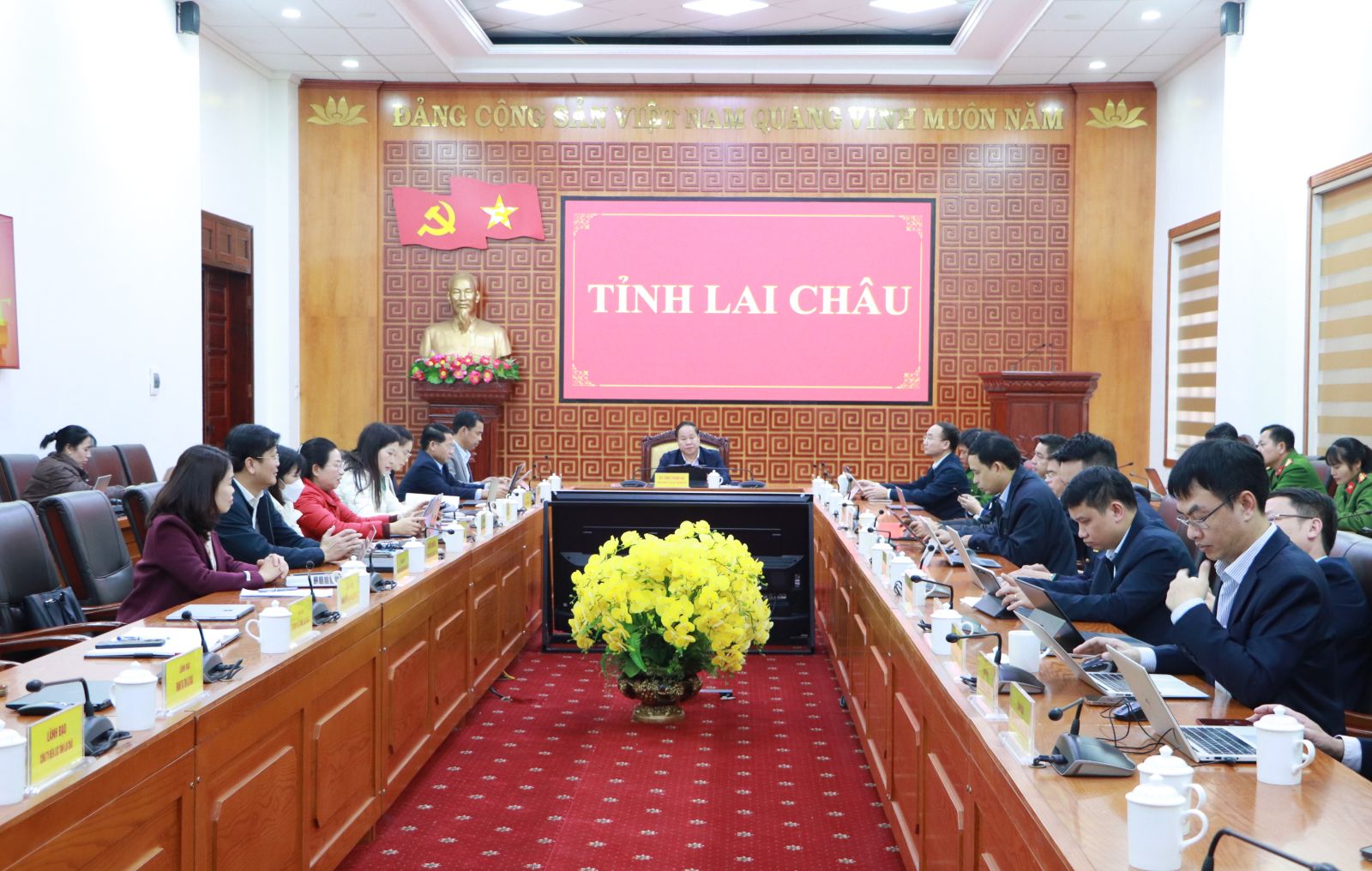
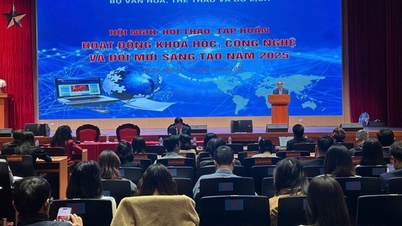
The conference was held in a hybrid format, combining in-person and online participation, connecting to 34 locations in provinces and cities across the country.
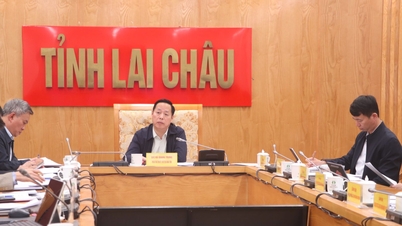
Attending the conference at the Lai Chau provincial branch were Comrade Tong Thanh Hai - Standing Vice Chairman of the Provincial People's Committee, Deputy Head of the Steering Committee on Science , Technology Development, Innovation, Digital Transformation and Project 06 of Lai Chau province; members of the Steering Committee and relevant units…
The year 2025 marks a breakthrough in institutional building, scientific and technological development, innovation, and digital transformation, creating a crucial foundation for the country's rapid and sustainable growth. The implementation of strategic technologies has yielded many outstanding results.
The innovation ecosystem continues to be affirmed on the world map. Vietnam ranks 44th out of 139 countries in the Global Innovation Index, leading the group of lower-middle-income countries; its startup ecosystem ranks 55th globally and 5th in ASEAN.
National digital transformation has achieved tangible and substantive results. The rate of online document processing throughout the entire process has reached over 51%; 100% of ministries, sectors, and localities have interconnected electronic documents and use digital signatures. The National Data Center has been put into operation, and 5G infrastructure covers nearly 40% of the population. The digital economy contributes approximately 18.72% to GDP; revenue from digital technology businesses reached US$198 billion. These results affirm the crucial role of science, technology, innovation, and digital transformation in enhancing national competitiveness and the quality of life for the people.
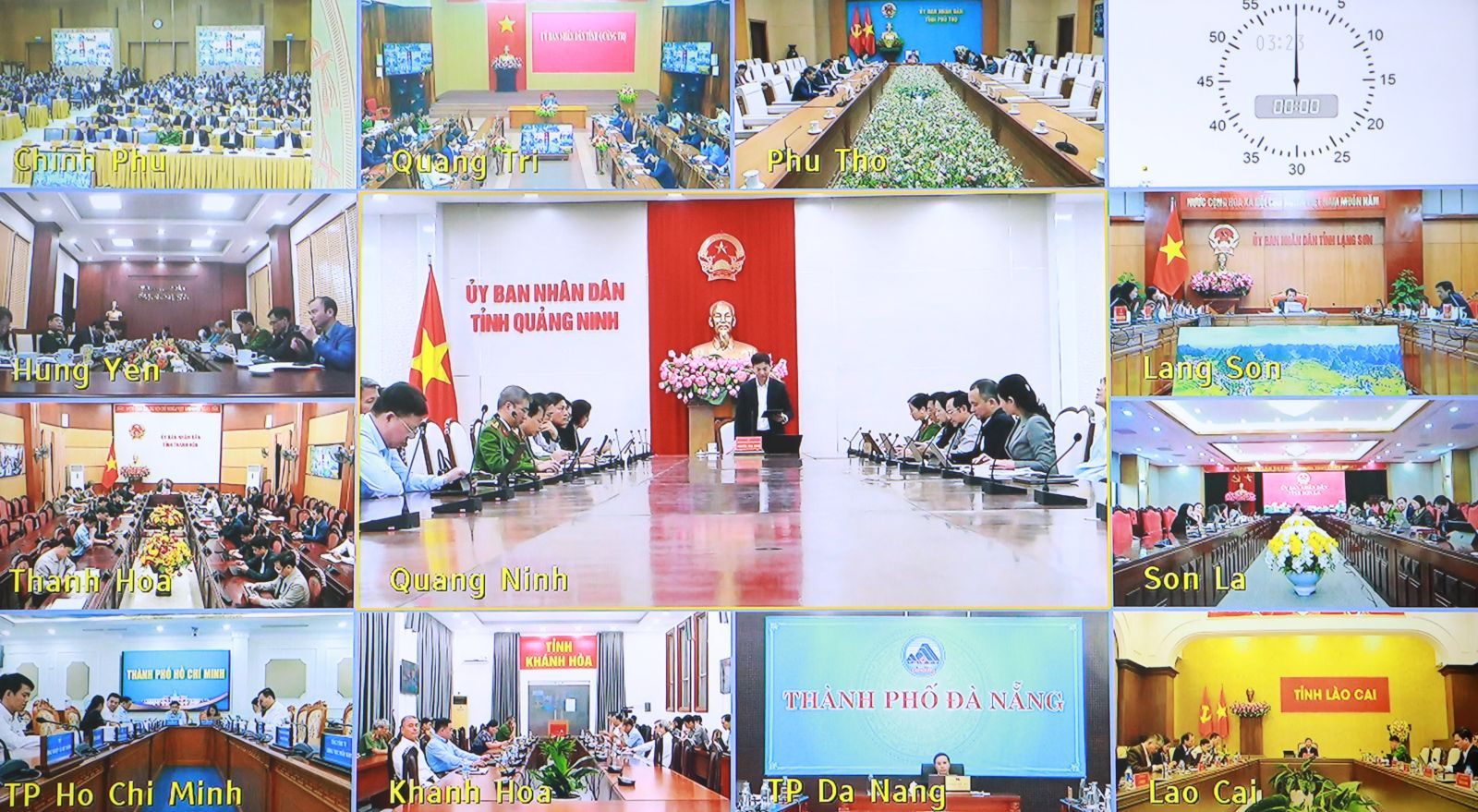
After four years of implementing Project 06, the national digital transformation has achieved many important results. The national population database has been completed, connected with many specialized databases, and has become a common platform serving state management and public service provision.
Notably, the construction of a national database on population, citizen identification, and electronic identification that is "accurate, complete, clean, and active" has created a common platform for the development of digital government and digital economy. The comprehensive online public service system has been expanded, reducing procedures, time, and costs for citizens and businesses, contributing to administrative reform. Utilities such as VNeID, the asset auction platform, digital education, and data management have demonstrated clear effectiveness, contributing to the building of a transparent e-government that prioritizes citizens and businesses.
During the period 2021-2025, administrative reform continues to be identified as one of the three strategic breakthroughs that the Government, the Prime Minister, and the heads of ministries, sectors, and localities are directing decisively and synchronously. The system of guiding and managing documents on administrative reform has been issued fully and promptly; the implementation work is becoming increasingly substantive, creating clear changes throughout the entire state administrative system.
100% of ministries, sectors, and localities have implemented the one-stop shop and integrated one-stop shop mechanisms in handling administrative procedures. Thousands of administrative procedures have been reduced and simplified, significantly contributing to a reduction in compliance costs for citizens and businesses. 100% of ministries, sectors, and localities have connected and integrated electronic documents and use digital signatures in handling work (except for confidential documents).
The rate of online and digitized applications has increased steadily over the years, gradually replacing manual processing methods. The Public Administration Reform Index (PAR INDEX) and the Citizen and Organization Satisfaction Index (SIPAS) have both increased annually, reflecting the effectiveness of reforms and improved service quality. Decentralization and delegation of authority in handling administrative procedures have been expanded, enabling localities to be more proactive and shortening processing times.
During the conference, representatives from ministries, sectors, and localities focused on sharing experiences and proposing solutions to implement the Government's Action Program for implementing Resolution No. 57-NQ/TW in the coming period…
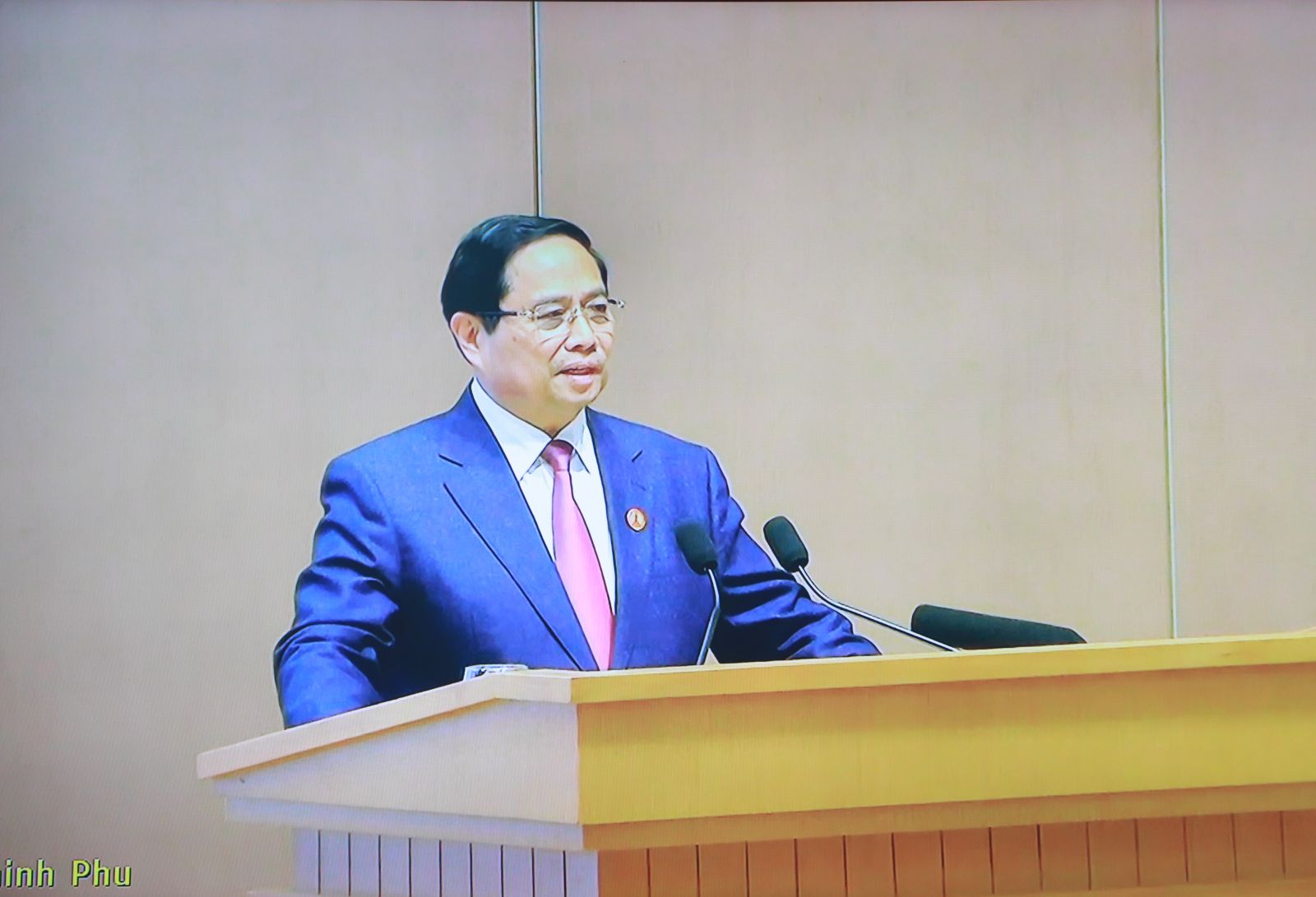
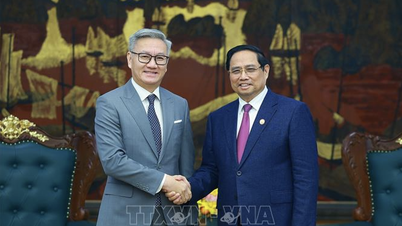
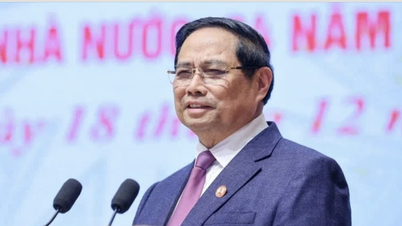
In his concluding remarks at the conference, Prime Minister Pham Minh Chinh acknowledged and commended the efforts of ministries, sectors, and localities in implementing their tasks over the past period. The Prime Minister requested continued strong and decisive reductions in cumbersome administrative procedures, increased inspection and supervision; and accelerated training of human resources, especially high-quality personnel, to meet the requirements of the new situation. Ministries, sectors, and localities need to strengthen coordination, prioritize national and ethnic interests above all else; maintain unity and cohesion, and leverage the combined strength of the entire political system.
The Prime Minister emphasized the importance of building, connecting, and sharing databases, reforming administrative procedures towards simplification, and prioritizing the needs of citizens and businesses. Simultaneously, he stressed the need to continue improving institutions, mechanisms, and policies to effectively implement Resolution No. 57-NQ/TW of the Politburo, ensuring the requirements of digital transformation and green transformation in the new phase. Ministries and sectors need to implement tasks according to the roadmap, accelerate the development of 5G telecommunications infrastructure, and ensure cybersecurity. The Prime Minister also called on the business community to dare to think and act, and for each citizen to proactively learn and master digital technology, contributing to socio-economic development.
Source: https://laichau.gov.vn/tin-tuc-su-kien/chuyen-de/tin-trong-nuoc/so-ket-01-nam-trien-khai-chuong-trinh-hanh-dong-cua-chinh-phu-thuc-hien-nghi-quyet-so-57-nq-tw.html


![[Image] Central Party Office summarizes work in 2025](/_next/image?url=https%3A%2F%2Fvphoto.vietnam.vn%2Fthumb%2F1200x675%2Fvietnam%2Fresource%2FIMAGE%2F2025%2F12%2F18%2F1766065572073_vptw-hoi-nghi-tong-ket-89-1204-jpg.webp&w=3840&q=75)









































































Comment (0)