

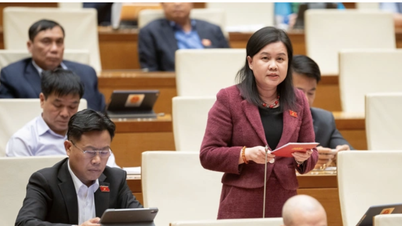
On the morning of November 3rd, continuing the session's agenda, the National Assembly discussed the amended Land Law. Speaking to Nguoi Dua Tin (The Informer) on the sidelines of the National Assembly, National Assembly Deputy Quan Minh Cuong - Head of the Dong Nai Provincial National Assembly Delegation - clearly stated regarding land acquisition for amusement parks, entertainment complexes, and multi-functional complexes alongside commercial and service businesses:
To add a provision for land reclamation for amusement parks, entertainment complexes, and multi-functional complexes alongside commercial and service businesses, Clause 27 of Article 79 is amended and supplemented as follows: "27. Commercial housing projects, mixed-use housing projects, or new urban areas combined with commercial and service businesses, amusement parks, entertainment complexes, and multi-functional complexes are important projects decided by the Provincial People's Council in accordance with local conditions because the current legal framework for tourism infrastructure development is incomplete, not favorable, and does not encourage organizations and individuals to access land resources for tourism infrastructure development."
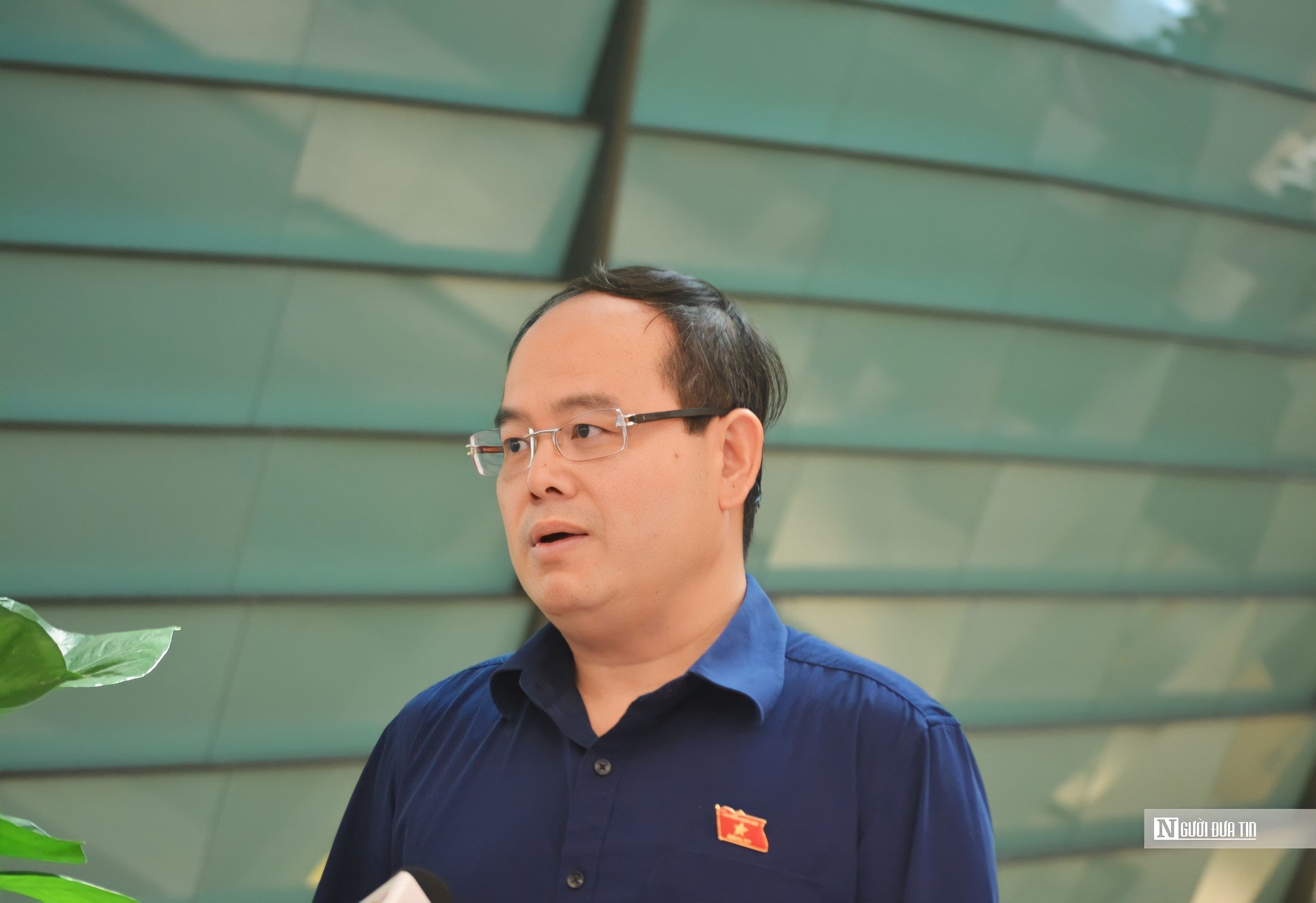
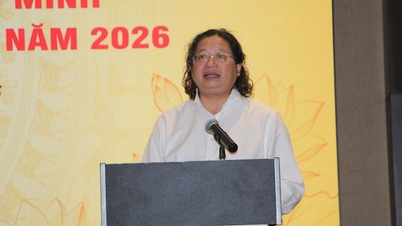
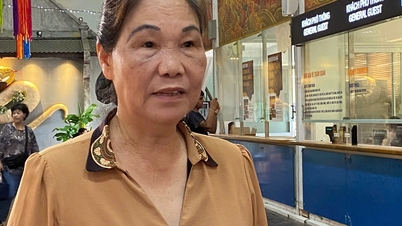
National Assembly Deputy Quan Minh Cuong.
Specifically, the Tourism Law was passed by the National Assembly in June 2017 and came into effect on January 1, 2018. Its scope of regulation covers state management of tourism resources, tourism product development and tourism activities; the rights and obligations of tourists, tourism businesses, other agencies, organizations, individuals, and communities involved in tourism; and state management of tourism.
Therefore, the scope of the Tourism Law does not include the construction, formation, and development of tourism infrastructure and tourism resources.
Meanwhile, other sectors are supported and gain access to land for production and business activities through land acquisition by the State, including for projects such as crude oil storage facilities, warehouses, gasoline and gas pumping stations, or the construction of local markets.
"The fact that the Land Law does not provide for land access for organizations and individuals to develop tourism and services will not encourage the development of tourism infrastructure and destinations," Mr. Cuong stated.
According to Mr. Cuong, previously, the 2003 Land Law also stipulated that tourism and service development projects were subject to land expropriation by the State. Government Decree 84 of 2007 also legalized tourism as a key economic sector and deemed eligible for land expropriation by the State.
Accordingly, the State will reclaim land to develop tourist areas with interconnected infrastructure and business types; and develop outdoor entertainment areas with various types of recreation and entertainment.
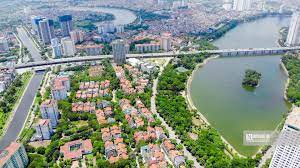
Members of the National Assembly expect the National Assembly to pass the draft amended Land Law in order to unlock resources.
However, according to Mr. Cuong, this provision was removed from the 2013 Land Law, and the draft amended Land Law also does not mention this subject. Meanwhile, Resolution 08/TW of the Politburo continues to affirm that tourism development should become a key economic sector.
"To date, although the draft Land Law (amended) has been revised many times, tourism projects are still not subject to land expropriation, leading to a situation that is inconsistent with reality," Mr. Cuong stated.
Mr. Cuong emphasized that assigning organizations and individuals to implement commercial housing projects or new urban areas combined with commercial business, services, entertainment areas, and multi-functional complexes, considered key projects of the locality, will contribute to promoting the socio-economic development of the locality, synchronizing urban development with tourism and trade;
This will lead to the formation of urban areas with financial, commercial, and tourism centers that attract international investment and tourists to the locality.
This model is also currently being widely applied in several countries around the world and in the region, such as Thailand, Malaysia, Saudi Arabia, etc.
In addition, delegates proposed that the Government be tasked with defining the criteria for "important projects decided by the Provincial People's Council in accordance with local conditions" to facilitate future implementation.
K slightly facilitates resource allocation.
Regarding expectations for the draft Land Law (amended), National Assembly Deputy Vu Tien Loc (Hanoi delegation) stated that the Land Law is an important law related to the lives of the people and the socio-economic development of the country. These days, voters nationwide are looking towards the Ba Dinh Hall to await the National Assembly's important decision on the Land Law.
Currently, the Land Law and related regulations are a major bottleneck hindering the socio-economic development of the country. Therefore, mobilizing land resources for national development is crucial.
Therefore, amending the Land Law in a manner consistent with related laws will become a crucial solution to unlock resources and promote socio-economic development in the coming period.
During the drafting process of the Land Law, voters and people nationwide participated very actively with over 12 million comments; all levels of government, sectors, and scientists also actively contributed their opinions. However, to date, there are still many issues on which opinions differ, but I believe that differing opinions are normal because this is a very complex law.
"I very much hope that at this session, the National Assembly will pass the draft amended Land Law, but it must include solutions to remove obstacles," Mr. Loc said .
Source


![[Photo] Prime Minister Pham Minh Chinh presides over a meeting on private sector economic development.](/_next/image?url=https%3A%2F%2Fvphoto.vietnam.vn%2Fthumb%2F1200x675%2Fvietnam%2Fresource%2FIMAGE%2F2025%2F12%2F20%2F1766237501876_thiet-ke-chua-co-ten-40-png.webp&w=3840&q=75)

























































![[Infographic] Controlling rabies in pet dogs and cats](https://vphoto.vietnam.vn/thumb/402x226/vietnam/resource/IMAGE/2025/12/21/1766288809667_infographic-kiem-soat-benh-dai-tren-dan-cho-meo-nuoi20251221091138.webp)
















Comment (0)