

The leather label on the waistband of jeans is not just a small detail; it offers significant value in both aesthetics and functionality.
The leather label on the waistband of jeans is a small detail, but it offers many benefits, both aesthetically and functionally. While not a particularly striking detail, this leather label has its own history and significance, playing an important role in the fashion industry.
So why are there leather labels on the waistband of jeans?
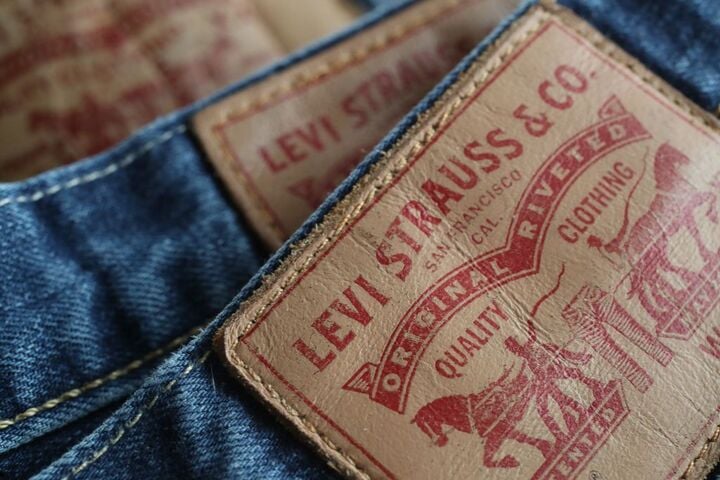
The first leather label on the waistband of jeans appeared in the late 19th century, created by Levi Strauss & Co., the famous American jeans manufacturer.
Characteristics of jeans
Jeans, since their inception in the late 19th century, have become a symbol of strength, durability, and fashion. Initially, jeans were designed as clothing for workers, miners, and laborers, thanks to their durable fabric and high tensile strength.
Although jeans are now a staple in every wardrobe, signature details like leather labels retain their value, embodying durability and quality.
The history of the leather label on the waistband of jeans.
The first leather labels on jeans waistbands appeared in the late 19th century, created by Levi Strauss & Co., a famous American jeans manufacturer. This was Levi Strauss's way of asserting its brand and product quality. Initially, the leather label was designed as an identification mark, and only jeans with a leather label were considered genuine. This was an important detail that helped consumers easily distinguish between real and fake jeans.
Affirming quality and brand
The leather label on the waistband of jeans usually contains the manufacturer's logo or brand name. This is a way for manufacturers to affirm product quality and build credibility. Famous brands like Levi's, Wrangler, and Lee have used leather labels as part of their branding strategy.
They help consumers identify genuine products and prove that the jeans are made from high-quality materials, ensuring durability over time.
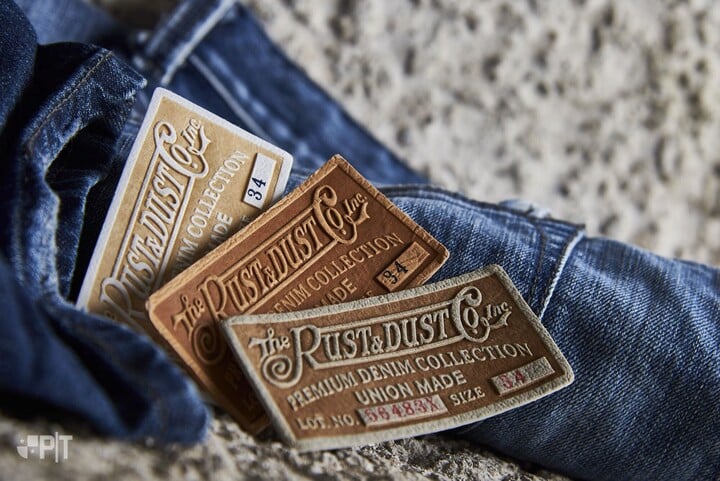
The leather label on the waistband of jeans usually contains the manufacturer's logo or brand name.
Enhance aesthetics and style.
Leather labels are not only valuable for brand recognition but also contribute to the aesthetic appeal of jeans. Leather labels are usually made from natural leather or faux leather, are highly durable, and give a luxurious feel.
Designers often use leather labels with subtle patterns, embossed or debossed brand logos, to add a touch of flair to jeans. This makes the jeans stand out and more attractive, while also enhancing the product's value in the eyes of consumers.
Create differentiation and uniqueness.
Leather labels are also a differentiating factor between different lines of jeans, especially in the fashion industry, where uniqueness and individuality are highly valued. Leather labels with distinctive designs and messages help wearers express their personal style while showing that they own a premium product, unlike ordinary jeans.
Protection and increased durability functions
Another reason leather labels are attached to the waistband of jeans is to help protect the fabric and increase the durability of the waistband. When jeans are worn and used frequently, the waistband can become worn or damaged from friction with belts or other items. Leather labels can help reduce wear and tear in this area, while also providing a more robust and durable appearance.
Fashion trends and lasting value
Leather labels on the waistband of jeans are not only associated with quality but also a symbol of classic fashion trends. Jeans with leather labels often evoke a nostalgic, traditional feel, yet are also modern and eye-catching. This is part of fashion culture, and those who appreciate simplicity and sophistication always seek out jeans with leather labels as a sign of lasting value.
Source: https://giadinh.suckhoedoisong.vn/tai-sao-cap-quan-jeans-lai-co-nhan-da-172241206090507678.htm





![[Photo] General Secretary and President To Lam presides over the meeting to approve the draft report on the results of the second inspection by the Politburo of the Standing Committee of the Hanoi City Party Committee.](https://vphoto.vietnam.vn/thumb/1200x675/vietnam/resource/IMAGE/2026/05/26/1779789811432_a2-bnd-4430-9620-jpg.webp)




































































































Comment (0)