

Heart valve disease is on the rise and is a common cause of cardiovascular disease deaths.
For patients with valvular heart disease, timely treatment helps prevent dangerous complications such as atrial fibrillation, heart failure, blood clot formation, endocarditis, irregular heartbeat, stroke, and death.
 |
| Illustrative image |
According to doctors, the heart has four valves: the mitral valve, the tricuspid valve, the aortic valve, and the pulmonary valve. Heart valves help blood flow in one direction; in patients with heart valve regurgitation, blood flows in the opposite direction.
The mitral valve functions to direct blood flow from the left atrium into the left ventricle and prevent backflow from the left ventricle to the left atrium. If the mitral valve is leaky, blood will flow backward from the left ventricle back to the left atrium during systole. A malfunctioning valve, one that doesn't open and close properly, will affect the heart's ability to pump blood to the body. Thus, heart valves play a very important role.
Common heart valve diseases include: valve stenosis or valve regurgitation. The older a person is, the higher the risk of developing valve regurgitation or other valve-related diseases.
In aortic diseases, the aorta dilates with age, causing valve regurgitation. Possible causes of heart valve regurgitation include: valve degeneration, infectious endocarditis, genetic factors, etc.
In asymptomatic patients, a routine echocardiogram will be ordered during a health check-up. If the results show mitral or aortic regurgitation of 1/4 or 2/4, medical treatment will be prescribed.
However, before that, the doctor will investigate the cause of the valve leakage. If treatment involves medication, the patient should still be monitored annually, every six months, or consulted when experiencing fatigue, shortness of breath, or rapid heartbeat during exertion.
Heart valve regurgitation can be detected even in patients who only undergo general health checkups; they may be asymptomatic and the leak may be incidentally discovered during an ultrasound examination.
If one of the four heart valves is severely leaky, the patient may experience symptoms such as: reduced exercise capacity, fatigue, chest pain, palpitations, feeling of rapid heartbeat, dizziness, fainting... These are common signs of heart valve disease.
If severe heart valve regurgitation is not detected in time, it can lead to complications including:
Heart failure, which reduces left and right heart ejection fraction, can lead to dangerous arrhythmias, decreased quality of life, and increased mortality rates.
The risk of infection from the oral cavity is that bacteria can travel through the bloodstream into the damaged heart chamber, leading to complications such as infective endocarditis, which can result in stroke or embolism in all the blood capillaries in the organ. Patients may experience septic shock and death.
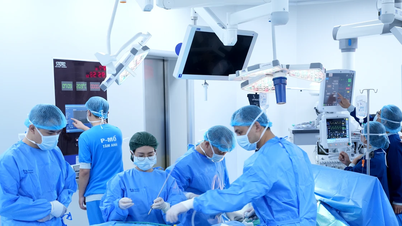
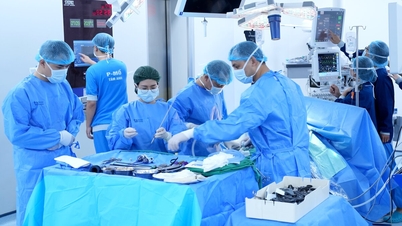
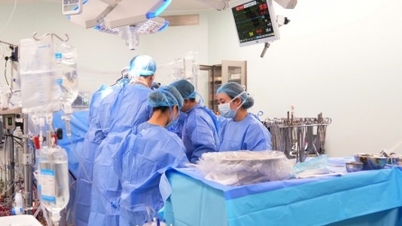
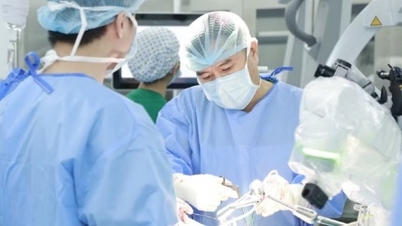
According to MSc. Tran Thuc Khang, Cardiology Center, Tam Anh General Hospital, Ho Chi Minh City, heart valve surgery is currently still basically open-heart surgery.
This means that during surgery, the heart stops beating and the patient's circulation is supplied by an extracorporeal heart-lung machine. In modern open-heart surgery, to treat valvular heart disease, surgeons can repair or replace one or more diseased heart valves through the skin.
Minimally invasive techniques, such as surgery through a small incision in the right chest combined with a minimally invasive video-assisted surgical system, are gaining increasing attention and wider use, especially in mitral valve diseases.
However, not all valvular heart disease conditions can be treated with invasive techniques. The decision of when to perform open-heart surgery versus invasive surgery depends on many factors.
For example, the surgery may involve one or multiple valves, whether mitral valve surgery is associated with coronary artery disease, whether the patient's aorta is significantly dilated, whether the patient's chest cavity is structurally sound, whether the patient is obese, whether the heart failure is severe, and whether there is any pathology in the iliac aorta and arteries of the lower limbs.
In invasive surgical techniques, patients need to receive extracorporeal circulation via the cerebrovascular artery. Therefore, before choosing a surgical method, the surgeon must examine and assess the patient and discuss the advantages of that method directly with the patient.
Minimally invasive techniques offer many advantages and similar safety to open surgery. Some notable advantages include: less pain, shorter surgical scars, and faster recovery time because patients do not need a midline sternum incision. Furthermore, complications related to the incision, especially bleeding and infection, are less frequent. As a result, patients have shorter hospital stays and lower costs.
This is an ultrasound-guided anesthesia technique. The anesthesiologist will insert a catheter (a small tube) into the space between the erector spinae muscles, which are the muscles on either side of the patient's spine. The catheter has a syringe system and an automatic pump.
During cardiac insufflation, the surgeon will pre-mix a specific dose of anesthetic according to a protocol, and the anesthetic will be released within 48 to 72 hours after surgery. The anesthetic penetrates the surface of the erector spinae muscle and the nerve roots within the erector spinae, blocking central nervous system signals passing through the spinal cord scar tissue. This helps reduce pain for the patient.
According to Dr. Khang, this method offers the advantage of significantly reducing post-operative pain. Previously, post-operative pain relief in thoracic and cardiovascular surgery was often achieved using intravenous morphine preparations.
At high doses, morphine can cause respiratory depression, leading to complications such as urinary retention and vomiting. In some patients with hyperpulmonary nephrosis, morphine dependence and addiction may develop. Erectile dysfunction block (EDB) helps reduce the amount of morphine used post-operatively, thus reducing morphine-related complications.
According to Dr. Nguyen Duc Hung, Deputy Head of the Cardiology Department at Tam Anh General Hospital in Hanoi , not all lesions are suitable for percutaneous procedures.
Therefore, before proceeding with transcatheter valve repair or replacement, patients need a thorough examination, including minimally invasive investigations, to ensure anatomical suitability. Only if the valve defect is deemed suitable can transcatheter valve repair be performed.
For other valve defects such as pulmonary artery valve defects, if pulmonary leakage occurs after surgery for congenital or congenital open-heart disease, transcatheter pulmonary artery valve replacement (TAVR) may be performed.
Alternatively, tricuspid valve regurgitation can be repaired or replaced transcatheterly. The difference between transcatheter valve replacement and other techniques lies specifically in the approach taken.
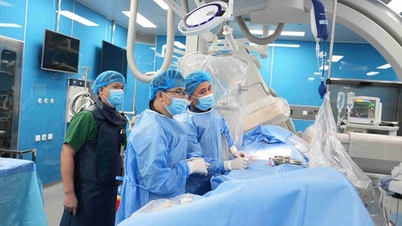
During transcatheter valve replacement, we create an access point to a blood vessel in the thigh. From this access point, instruments are inserted to reach specific heart chambers such as the mitral valve, pulmonary artery valve, and tricuspid valve.
Because it is minimally invasive, this method helps patients recover quickly, reduces bleeding, and minimizes infection. However, it is crucial to carefully assess whether this solution is suitable for the patient before making a decision and providing consultation.
Source: https://baodautu.vn/tang-nhanh-benh-ly-van-tim-d225691.html



































































































Comment (0)