

- Standard, professional, and focused on customer satisfaction.
- Use customer satisfaction as a measure of effectiveness.
- Strong reforms to local administration.
The average administrative reform index for provincial departments and agencies in 2023 was 82.49%, an increase of 0.94% compared to 2022 (which reached 81.55%); no unit scored below 70%. Analysis shows that the increase in the average value is due to the improved rate of digitized documents and administrative procedure processing; the rate of citizens and businesses not having to re-provide previously approved information, documents, and papers when carrying out administrative procedures; and the significantly improved rate of online applications and online payment processing by agencies and units compared to the previous year.
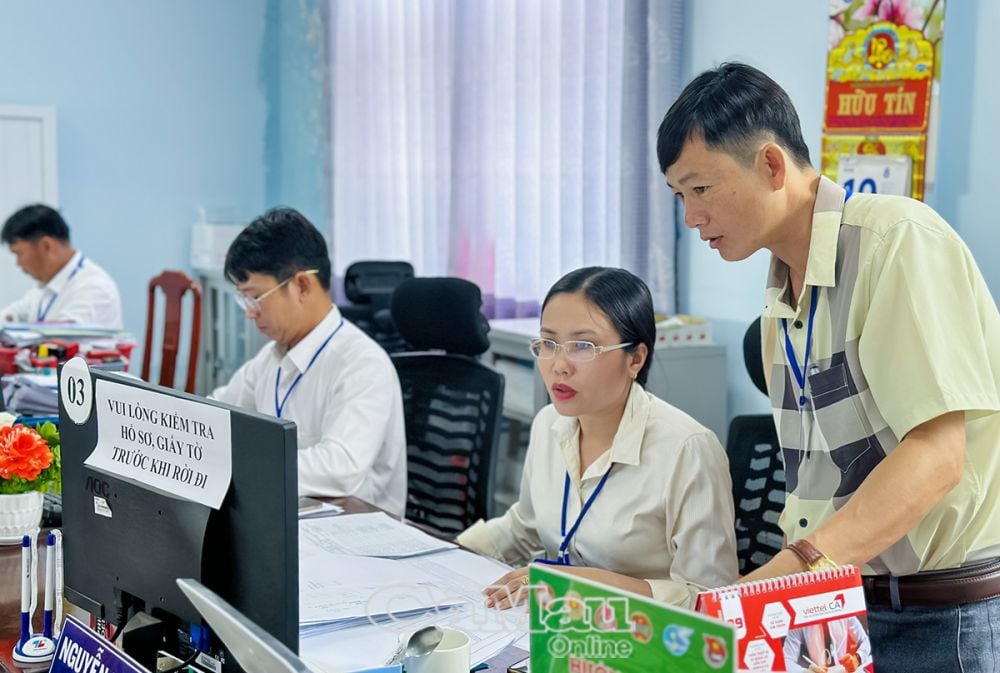
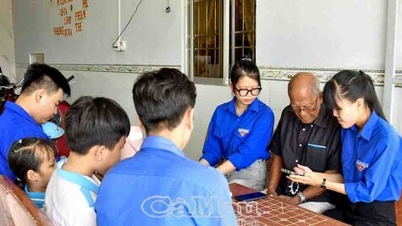
The One-Stop Service Center in Cai Nuoc town is increasingly improving in terms of human resources and infrastructure to meet the needs of people in handling administrative procedures.
The Department of Justice topped the ranking with 88.25%, consistently ranking highly for many years (2nd in 2022, 3rd in 2021). Furthermore, the Department of Justice achieved maximum scores in many criteria and sub-criteria, such as: updating and advising on the publication of administrative procedures in accordance with regulations; the percentage of citizens and businesses who do not need to re-provide previously approved information, documents, or papers when carrying out administrative procedures; and a 100% rate of online payment applications.
Mr. Vo Thanh Tong, Director of the Department of Justice, said: “As the agency advising the Provincial People's Committee on the field of justice, the unit has focused on resolving administrative procedures to ensure they are carried out quickly for the people. Notably, procedures such as criminal record checks, birth registration, and marriage registration via electronic means have seen reduced processing times, creating convenience for citizens. At the same time, the unit has coordinated with the Provincial Police, connecting VNeID, and sharing data. Initially, there were many difficulties, as most people were slow in completing these procedures, so justice officials focused on providing guidance. The Department of Justice regularly organizes inspection and guidance teams to remind and encourage the completion of assigned tasks.”
Ranked second is the Department of Education and Training, which improved its ranking in 2023, with many provincial-level initiatives in administrative reform recognized; advising on legal documents, updating and advising on the publication of administrative procedures in accordance with regulations; and achieving a high percentage of documents and work files processed online...
However, among the three units at the bottom of the ranking are the Department of Transport, the Department of Construction, and the Department of Health . The Department of Construction maintained its ranking compared to 2022, while the Department of Transport ranked last (dropping 3 places compared to 2022).
The review revealed that the main reasons were the lack of recognized provincial-level initiatives in administrative reform; the presence of department-level and equivalent leaders, civil servants, and public employees disciplined at the level of reprimand or higher; and the absence of affiliated public service units increasing their level of financial autonomy for recurrent expenditures during the year. Furthermore, the Department of Transport received the most negative points compared to the other units.
Furthermore, in terms of areas, among the seven areas, the civil service reform area scored the highest, reaching 89.25%. According to the assessment results, most provincial departments and agencies performed quite well in the recruitment and employment of civil servants and public employees; the appointment of leadership positions at the department level and equivalent; and the annual evaluation and classification of civil servants and public employees.
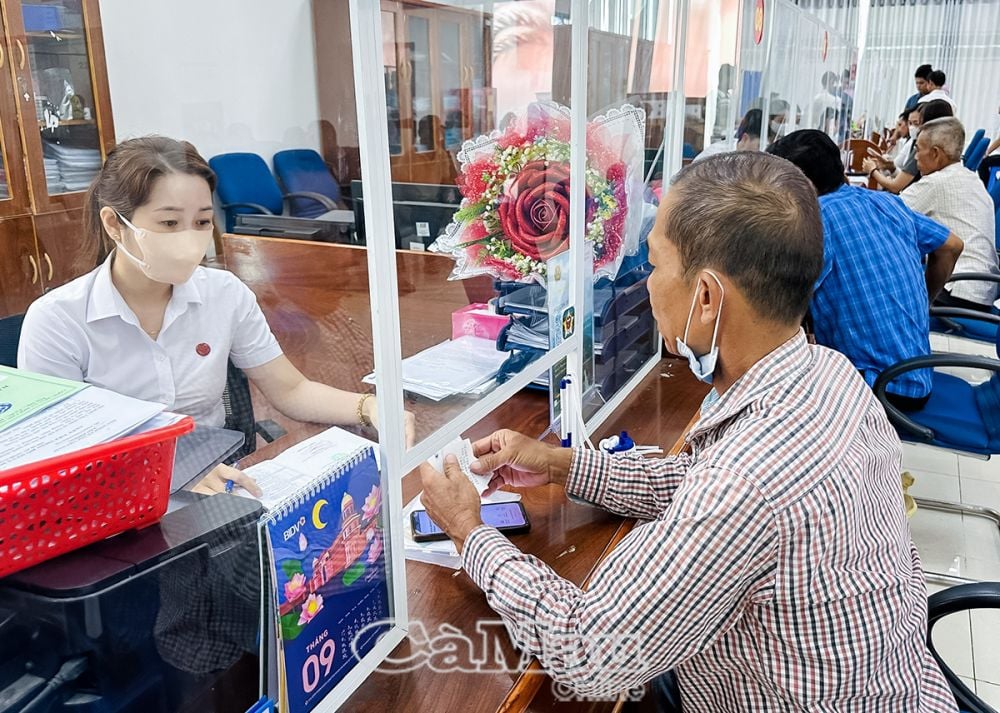 Citizens come to the Provincial Administrative Procedures Center to handle administrative procedures.
The area of public finance reform received the lowest score due to several reasons, including: the lack of affiliated public service units increasing their autonomy in recurrent expenditure; the failure to reduce direct budget spending for public service units compared to 2021; the slow progress in implementing recommendations following financial and budgetary audits; and the fact that some units did not comply with regulations on the mechanism of autonomy and accountability in the use of administrative funds during the year.
Ms. Le Thi Kim Chung, Deputy Chief of the Provincial People's Committee Office, assessed: "Although many solutions and initiatives have been implemented in the field of administrative procedure reform and improving the quality of service for people and businesses, there are still cases of delayed processing of applications. Sociological surveys show that many people still have to travel multiple times to complete administrative procedures; people are dissatisfied with the process of handling administrative procedures; administrative procedures in some areas are still cumbersome and complicated, making it difficult for people to follow; in some cases, civil servants provide unclear and inconsistent guidance, causing inconvenience to people and businesses..."
With those results, along with some limitations, Ms. Le Thi Kim Chung suggested: “Units should strengthen the direction and management of administrative reform, through the development of feasible and appropriate annual plans related to administrative reform. Attention should be paid to allocating resources to implement administrative reform tasks, ensuring the completion of set goals and objectives. At the same time, continue to promote the application of information technology in resolving administrative procedures, effectively implementing electronic copy authentication, digitizing administrative procedure resolution results, online applications, etc., contributing to improving the satisfaction level of people and businesses in the province when participating in administrative procedures.”
Hong Nhung
Source: https://baocamau.vn/tang-toc-de-nang-muc-do-hai-long-a34512.html


![[Photo] General Secretary and President To Lam presides over a meeting on preparations for the review of one year of operation of the three-tiered government system.](https://vphoto.vietnam.vn/thumb/1200x675/vietnam/resource/IMAGE/2026/06/02/1780391821195_a1-bnd-4595-9717-jpg.webp)






![[Video] Prime Minister Le Minh Hung: Completing breakthrough mechanisms to develop an international financial center](https://vphoto.vietnam.vn/thumb/402x226/vietnam/resource/IMAGE/2026/06/02/1780416130959_tt-jpg.webp)

![[Video] General Secretary and President To Lam: Shifting from completing the restructuring of the apparatus to ensuring its smooth operation.](https://vphoto.vietnam.vn/thumb/402x226/vietnam/resource/IMAGE/2026/06/02/1780415840629_tbt-jpg.webp)









































































Comment (0)