

When criteria become the foundation

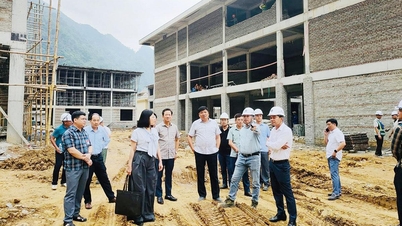
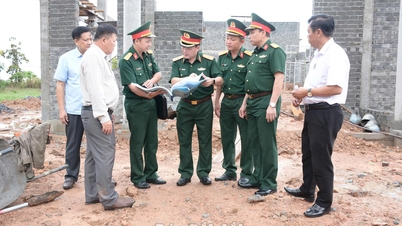
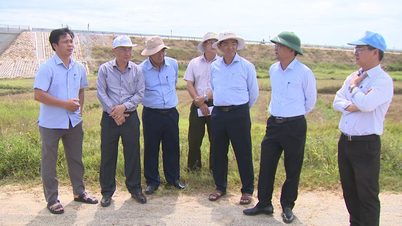
In Quang Duc commune, at the beginning of April 2026, the commune held a groundbreaking ceremony for six projects to renovate, upgrade, and beautify rural residential infrastructure and social welfare facilities in the area. These projects include: renovating and upgrading the road leading to the residential area of Moc 13 village; renovating and upgrading the Na Ly dam and canal; upgrading the road from village 5 to the highway toll station; and constructing and renovating school buildings belonging to Quang Duc Primary and Secondary School, Quang Duc Kindergarten, and Quang Duc Ethnic Boarding Primary and Secondary School.
Upon completion, these projects are expected to contribute to improving the infrastructure for the local population, meeting their needs for transportation, education, and production, and creating further impetus for local socio -economic development. Among them, the project to renovate and upgrade the road leading to the residential area of Moc 13 village is identified as a key item, with a length of over 1.6 km and a total investment of approximately 4.3 billion VND, of which the Provincial Veterans Association contributed 1.5 billion VND. The road has been renovated and paved with asphalt to suit the terrain conditions, contributing to meeting the transportation and goods delivery needs of the people.

Besides investing in synchronized infrastructure, Quang Duc commune has identified the development of modern and sustainable agriculture as one of the important tasks in building new rural areas according to the criteria set for the 2026-2030 period. Accordingly, the locality focuses on transforming the crop structure and supporting people in applying science and technology to production to improve economic efficiency.
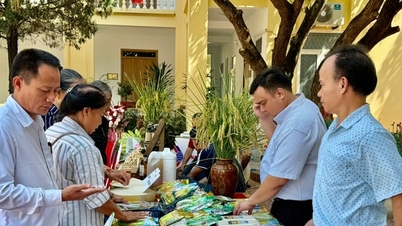
One of the models being implemented is taro cultivation on a scale of 4.5 hectares, involving 10 households. Since its implementation in early 2026, the commune's Service Supply Center has regularly provided technical guidance on care and monitored the plant's growth to improve productivity and product quality. The model is expected to be ready for harvest after 8-10 months. Initial results show that the model is suitable for local conditions, contributing to diversifying the crop structure, opening up new avenues for economic development, increasing people's income, and providing a basis for the commune to evaluate and replicate it in the future.

Transformations in infrastructure and production are contributing to the increasingly vibrant appearance of rural areas and improving the living conditions of the people.
Rural areas are constantly changing.
Building on the foundations achieved in the New Rural Development program, many rural areas in the province are continuing to innovate towards a more civilized and modern direction, better meeting the needs of the people.
One of the highlights is the work of ensuring social security and caring for policy beneficiaries. In 2025, Quang Ninh completed the construction and repair of houses for 273 households of people with meritorious services to the revolution and relatives of martyrs, achieving 100% of the plan. From the beginning of 2026 to the present, housing support programs, poverty reduction, care for the elderly and vulnerable people have continued to be implemented synchronously in localities. During the Lunar New Year of the Horse 2026, the entire province distributed more than 292,600 gifts with a total cost of approximately 194 billion VND. At the same time, the province is developing a plan for the period 2026-2030 on New Rural Development, sustainable poverty reduction and socio-economic development in ethnic minority and mountainous areas, linked with a mechanism for resource allocation to gradually narrow the regional disparity.

The province continues to maintain many social welfare policies at a level higher than the national average. Significant resources from the budget are prioritized for healthcare, education, social protection, support for students in disadvantaged areas, and people in mountainous, border, and island regions, contributing to improving living conditions and access to essential services for the people. Total social welfare expenditure in the first quarter of 2026 reached approximately 855 billion VND.
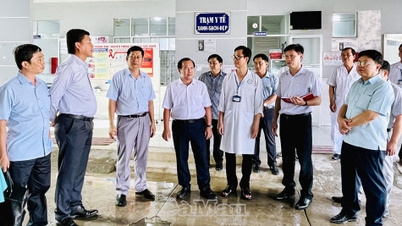
In the healthcare sector, Quang Ninh continues to prioritize investment in infrastructure, improving the quality of medical examination and treatment, strengthening the grassroots healthcare network, and creating conditions for people, especially in remote areas, to access healthcare services more easily. The health insurance coverage rate reached 96.37% of the population; 96.5% of communes, wards, and special zones met the National Criteria for Commune Health.
Education continues to receive attention, with 91.6% of schools meeting national standards. Many school buildings have been constructed in mountainous and island areas, and policies supporting disadvantaged students and students from ethnic minority communities have been effectively implemented. Notably, starting from the 2026-2027 school year, all secondary school students in the province will receive a free set of textbooks.

The changes in rural Quang Ninh are not only reflected in the increasingly modern appearance but also in the gradually improving quality of life. As people have better access to essential services, opportunities for economic development, education, healthcare, and a stable life, truly livable rural areas are becoming more and more evident.
Source: https://baoquangninh.vn/tu-dat-chuan-den-nang-cao-chat-luong-song-3409742.html
![[Photo] General Secretary and President To Lam presides over a meeting with the Central Organizing Committee.](https://vphoto.vietnam.vn/thumb/1200x675/vietnam/resource/IMAGE/2026/06/03/1780482764658_a1-bnd-4741-3342-jpg.webp)

![[Photo] First session of the 14th Congress of the Vietnam Trade Union](https://vphoto.vietnam.vn/thumb/1200x675/vietnam/resource/IMAGE/2026/06/03/1780465947883_ndo_br_img-3852-jpg.webp)
![[Photo] Secretary of the National Assembly Party Committee, Chairman of the National Assembly presides over the meeting of the Standing Committee and Executive Committee of the National Assembly Party Committee.](https://vphoto.vietnam.vn/thumb/1200x675/vietnam/resource/IMAGE/2026/06/03/1780480353201_ndo_br_bnd-2585-jpg.webp)









































![[Video] Sunset at Lap An Lagoon – Where the sun sets over the fishing nets](https://vphoto.vietnam.vn/thumb/1200x675/vietnam/resource/IMAGE/2026/05/31/1780192137701_beach-landscape-sea-water-nature-grass-745871-pxhere-com.jpeg)





























Comment (0)