

Against the backdrop of severe environmental pollution, natural disasters, and climate change, the final oversight topic of the 15th National Assembly term not only demonstrates the National Assembly 's attentiveness and decisive action on pressing issues of life, but also affirms the consistent message of the highest state power body: green growth and sustainable development are central to the national strategy.
Over the past 30 years, since the first Environmental Protection Law was passed, the National Assembly has enacted many important laws and resolutions related to environmental protection and sustainable development. Among them, the 2020 Environmental Protection Law is considered a breakthrough in institutional reform, shifting strongly from a pollution management mindset to a sustainable development and green economy management approach, laying the legal foundation for a circular economy model, and paving the way for green finance instruments and carbon markets...
However, in practice, pollution levels continue to increase, especially in large cities. Air pollution, household waste, industrial wastewater, and wastewater from craft villages are not being treated effectively. Environmental infrastructure remains outdated, and only a small percentage of urban wastewater is treated. Many policies on waste sorting and recycling are slow to be implemented due to a lack of coordinated infrastructure and social awareness...
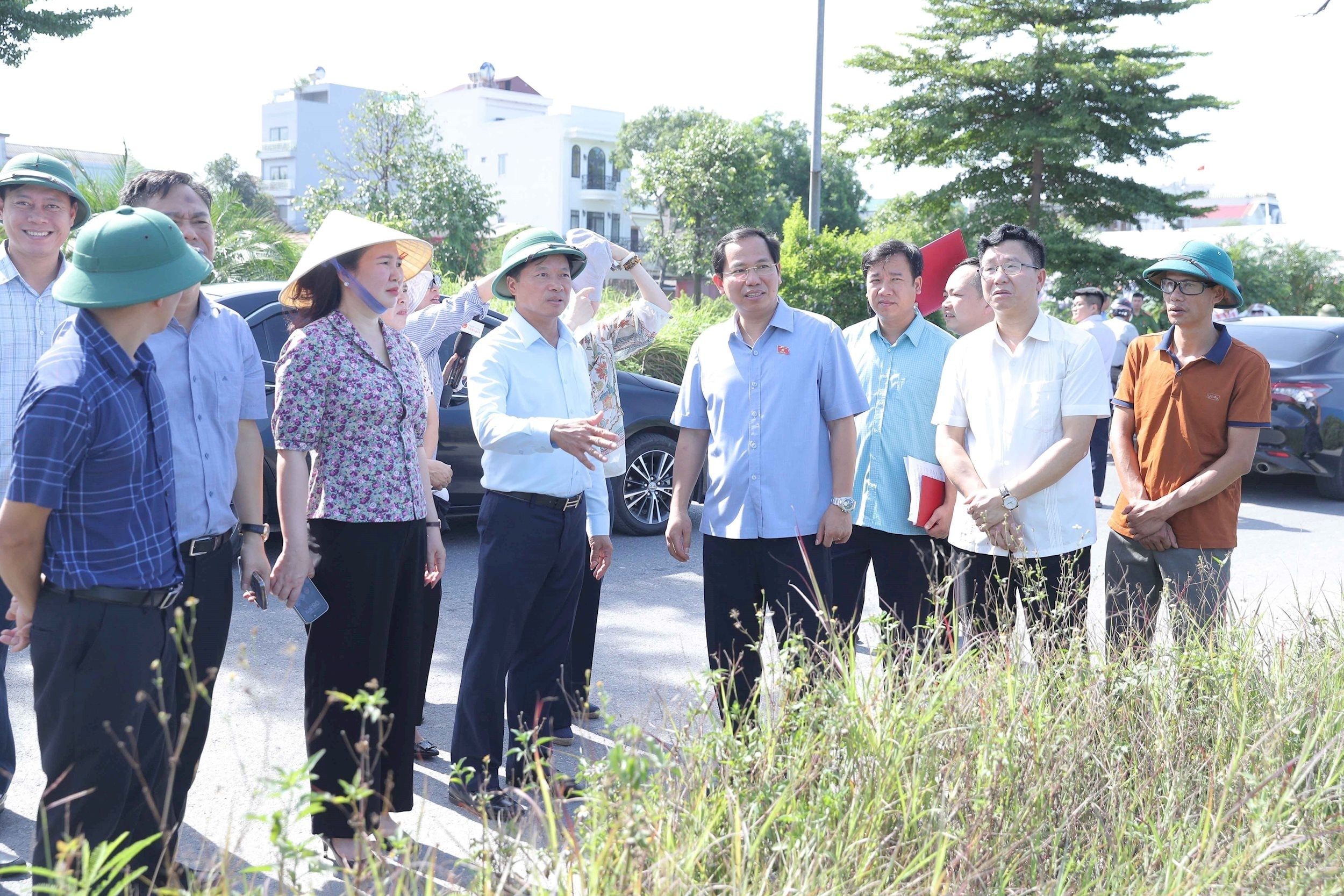
Through on-site monitoring, the National Assembly's supervisory delegation pointed out many objective and subjective causes, among which a fundamental cause is that the awareness and sense of responsibility regarding the importance of environmental protection for sustainable development among some Party committees, government agencies, organizations, businesses, and the people are still inadequate. In some places and at some times, there is still a mindset prioritizing economic growth and attracting investment while neglecting environmental protection; some businesses consider environmental protection as an additional cost; and the development and promulgation of local environmental technical standards have not been given sufficient attention…
International environmental experts warn that if Vietnam's GDP doubles in the next 10 years without adequate attention to environmental protection, environmental pollution will triple compared to the present; for every 1% increase in GDP, the damage caused by environmental pollution will amount to 3%.
In addition to economic losses, environmental pollution also has a negative and direct impact on human health, with the proportion of spending on health protection and care in 2015 being approximately 0.3% of GDP, increasing to 1.2% of GDP in 2020.
These warnings indicate that environmental protection is no longer an option, but a prerequisite for rapid and sustainable economic development, especially in the context of Vietnam's goal of achieving continuous double-digit growth for many years to come. Green growth and sustainable development is a development model where all decisions – from planning and investment to resource utilization – must be viewed through an "environmental lens," as recommended by the Supervisory Delegation: there must be a change in mindset and a thorough improvement of institutions and organizations for the decisive, effective, and efficient implementation of environmental policies and laws.
As the central body in institution building and leading the transformation of the green development model, the National Assembly, in today's oversight session, needs to focus on discussing and agreeing on key contents in the thematic oversight resolution, ensuring that it is "implementable, controllable, and measurable." Specifically, it is necessary to amend the Law on Environmental Protection as soon as possible to overcome bottlenecks in both institutional and organizational implementation; develop a Law on Climate Change to create a legal framework for implementing international commitments on net zero emissions; and complete the legal framework for the carbon market, helping Vietnam proactively integrate and take advantage of opportunities from a low-carbon economy...
Simultaneously, the National Assembly needs to "commission" the 16th National Assembly to prioritize the improvement of financial policies for environmental protection, through amending regulations on environmental taxes, fees, and charges; increasing the efficiency of managing and using the Environmental Protection Fund; and encouraging social mechanisms for green investment, green bonds, and public-private partnerships in the environmental sector...
Through substantive oversight and concrete, decisive action, the National Assembly is strengthening the solid institutional foundation for green growth and sustainable development, creating breakthroughs in the transformation towards a green, equitable, and responsible economy for future generations. This is also the path for Vietnam to achieve prosperous and sustainable development in the new era.
Source: https://daibieunhandan.vn/tang-truong-xanh-va-trong-trach-cua-quoc-hoi-10393224.html


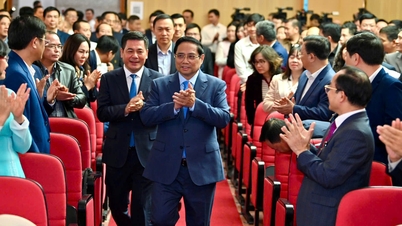
![[Photo] Prime Minister Pham Minh Chinh attends the Conference on the Implementation of Tasks for 2026 of the Industry and Trade Sector](/_next/image?url=https%3A%2F%2Fvphoto.vietnam.vn%2Fthumb%2F1200x675%2Fvietnam%2Fresource%2FIMAGE%2F2025%2F12%2F19%2F1766159500458_ndo_br_shared31-jpg.webp&w=3840&q=75)







































































Comment (0)