

(HNMO) - The drafting of the amended Law on Credit Institutions aims to improve regulations and address the difficulties and shortcomings of the law on credit institutions; and to legalize and create a legal framework for handling bad debts of credit institutions.
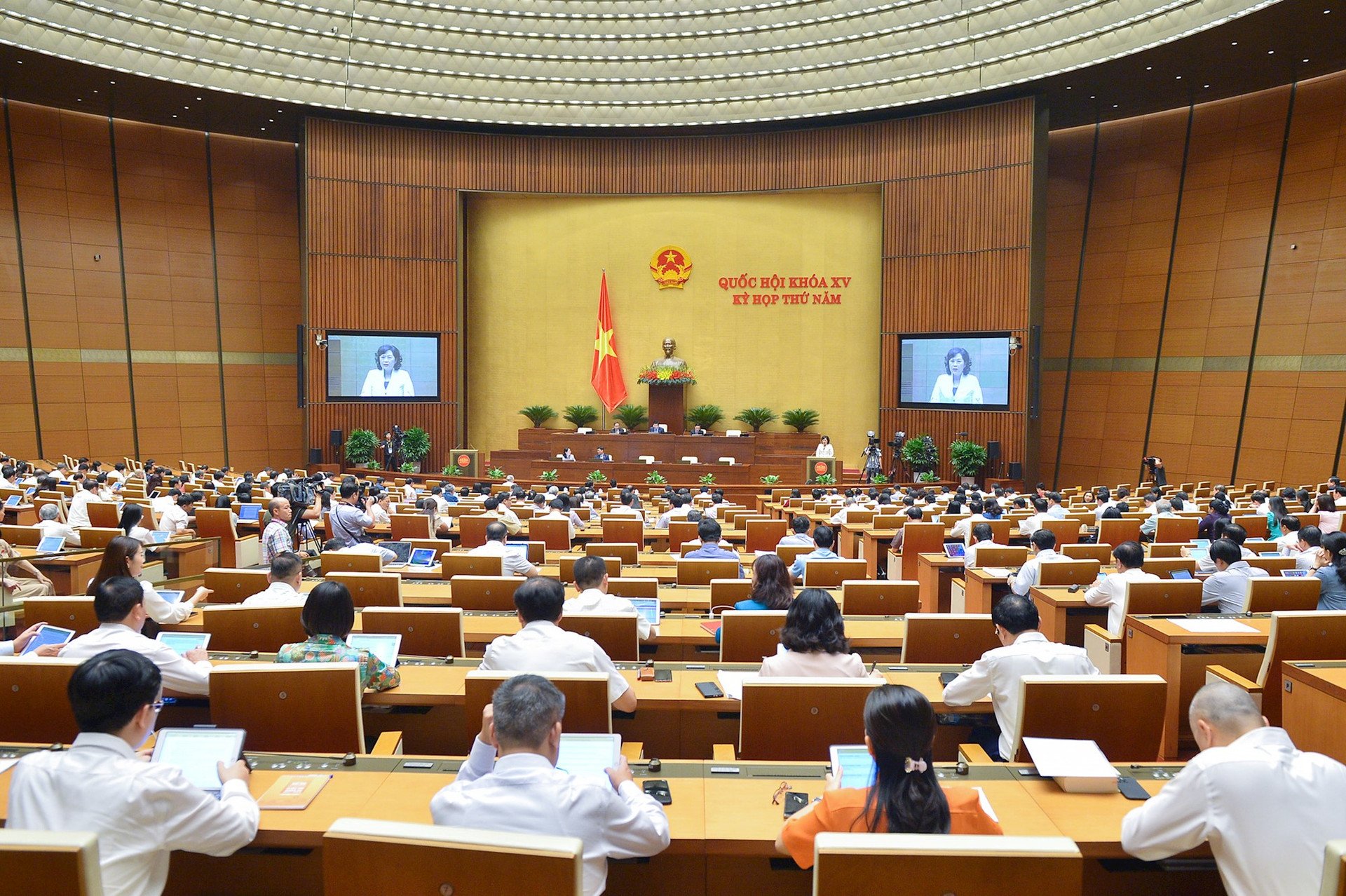
Continuing the agenda of the fifth session of the 15th National Assembly, on the morning of June 5th, under the chairmanship of Vice Chairman of the National Assembly Nguyen Khac Dinh, Governor of the State Bank of Vietnam Nguyen Thi Hong, authorized by the Prime Minister, presented the draft Law on Credit Institutions (amended). Governor Nguyen Thi Hong stated that the purpose of drafting the Law on Credit Institutions (amended) is to strengthen risk prevention, enhance the capacity for self-inspection and internal control, and increase accountability of credit institutions. Simultaneously, it aims to develop tools for managing credit institutions; to detect violations early and promptly address the responsibilities of individuals managing and operating credit institutions. It also aims to strengthen decentralization and delegation of authority coupled with inspection, supervision, and individual accountability; and to ensure transparency in banking operations.
The amended Law on Credit Institutions also aims to ensure the safety of the credit institution system; strengthen inspection and supervision measures by the State Bank of Vietnam. At the same time, it involves the participation of the Government Inspectorate , the Ministry of Finance, and other ministries and agencies to manage and control credit activities, combat manipulation, vested interests, and cross-ownership; handle situations of mass depositor withdrawals; and establish effective mechanisms for restructuring credit institutions under special supervision.

Regarding the approach to drafting the Law, the Governor of the State Bank of Vietnam stated that the drafting of the Law on Credit Institutions (amended) needs to adhere closely to the views of the Party and the State in order to perfect the legal framework on monetary and banking activities, restructure credit institutions to ensure system safety, enhance transparency and openness, and conform to market principles and best international practices, facilitating the digital transformation process in the banking sector.
Regarding the scope of application, the draft Law inherits the provisions of the current Law on Credit Institutions and adds provisions on handling bad debts and handling collateral assets of bad debts. Regarding the subjects of application, the draft Law adds state-owned organizations with the function of buying, selling, and handling bad debts as an applicable subject.
The Governor of the State Bank of Vietnam stated that, with the goal of improving people's access to credit, the draft Law has amended and supplemented regulations on credit granting. This includes simplifying procedures for consumer loans and small loans for daily living expenses; establishing a legal framework for providing banking services through electronic means; and promoting digital transformation in banking operations, such as adding regulations governing credit granting activities via electronic means.

Regarding restrictions to ensure safety in the operations of credit institutions and to limit risks from credit concentration, the draft Law amending and supplementing regulations aims to reduce the credit limit ratio for a single customer, and for a customer and related parties. At the same time, the draft Law also amends and supplements regulations adjusting the limits on capital contributions and share purchases of credit institutions to enhance the public nature of their operations.
Presenting the report on the review of the draft Law on Credit Institutions (amended), the Chairman of the National Assembly's Economic Committee, Vu Hong Thanh, stated that one of the new points, but one that caused considerable concern for the review committee from the initial review stage, was the addition of a provision allowing the State Bank of Vietnam to intervene early in credit institutions.
Accordingly, the draft Law allows for the use of special loans right from the early intervention stage, while also expanding some concepts such as unsecured loans, designated special loans; setting the interest rate for special loans at 0%/year and a support mechanism for credit institutions providing special loans. Specifically, banks are eligible for early intervention when they experience mass withdrawals leading to insolvency, or when they fail to maintain their solvency and capital adequacy ratios for 3 and 6 consecutive months, respectively, and have accumulated losses exceeding 20% of their charter capital and reserve funds.
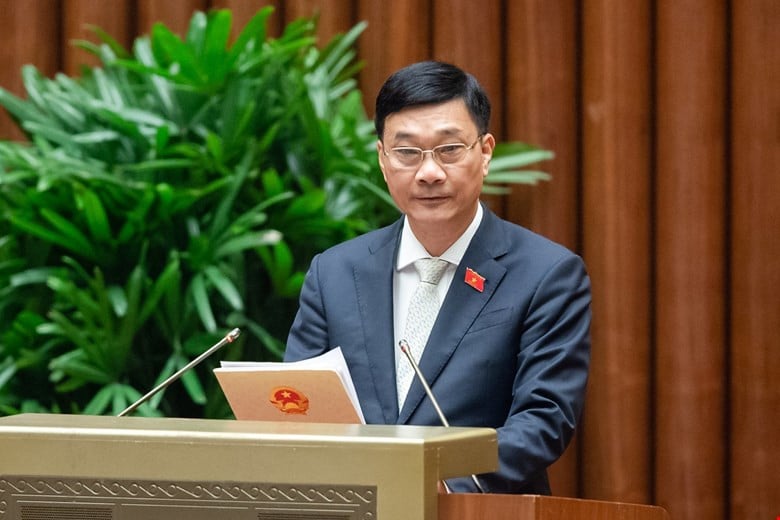
One of the measures applied to this group is special loans, requiring no collateral, with a 0% annual interest rate from the State Bank of Vietnam, deposit insurance, and other banks. The Economic Committee believes that the State Bank of Vietnam, acting as the lender of last resort, providing special loans is necessary to ensure liquidity, system safety, prevent mass withdrawals, and maintain social security and order.
"However, it is necessary to review the cases that allow access to special loans, ensuring they are only applied in cases of mass withdrawals or when there is a risk of collapse affecting the safety of the banking system, causing social instability. The State Bank of Vietnam must be responsible for decisions to grant special loans and provide support solutions to struggling credit institutions, even if they do not use state budget funds, but indirectly affect the budget," the auditing agency emphasized.
Source


![[Photo] Enchanting ancient rose garden on the mountainside in Nghe An](/_next/image?url=https%3A%2F%2Fvphoto.vietnam.vn%2Fthumb%2F1200x675%2Fvietnam%2Fresource%2FIMAGE%2F2025%2F12%2F19%2F1766109900916_vuon-hong-chin-do-thu-hut-du-khach-toi-check-in-o-ha-noi-3-20162778-1671624890024-1671624890104198100259.jpeg&w=3840&q=75)
![[Photo] General Secretary To Lam visits the exhibition space showcasing books, photo exhibitions, and achievements of digital transformation in journalism.](/_next/image?url=https%3A%2F%2Fvphoto.vietnam.vn%2Fthumb%2F1200x675%2Fvietnam%2Fresource%2FIMAGE%2F2025%2F12%2F19%2F1766110879215_1766110240024-jpg.webp&w=3840&q=75)



























































































Comment (0)