

In fact, planks don't actually reduce belly fat. The main benefits of planks are improved body control, abdominal muscle strength, and increased mobility during exercises, especially cardio activities like walking, running, swimming, or cycling, according to the health website Verywellfit (USA).
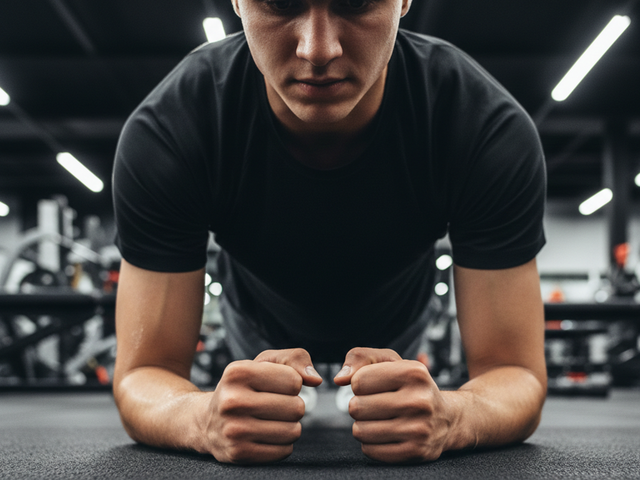
If the person doing the plank exercise can no longer maintain proper posture or is tensing their neck excessively, it's a sign that the duration or difficulty of the exercise needs to be reduced.
PHOTO: AI
Therefore, the order in which you do planks or cardio should be considered based on your workout goals and muscle fatigue level. In fact, core muscles are active not only during planks but also during cardio exercises such as running, cycling, or swimming.
When running, the abdominal and deep back muscles help keep the body stable. This shows that the plank plays a supportive role, making running movements more stable.
Sports studies show that during high-intensity cardio exercise, especially sprinting, core muscles are more prone to fatigue. Doing a plank immediately afterward can negatively impact technique and performance. For example, core fatigue can lead to arching the back, loss of pelvic control, or tensing the shoulders and neck, resulting in incorrect exercise posture.
Therefore, if the goal of your workout is to improve plank performance and enhance abdominal muscle control, you should do planks first, followed by cardio. When your abdominal muscles are strong and not yet fatigued, you will find it easier to maintain the correct posture, breathe evenly, and clearly feel your abdominal muscles working.
However, if you do planks first, you shouldn't overdo it. Plank sets should be short, around 15-30 seconds each. This method helps activate the core muscles without causing muscle fatigue, thus not affecting the performance of the subsequent cardio workout.
For those working out to lose fat and tone their entire body, the order in which they do planks or cardio isn't that important. The effectiveness of fat loss depends primarily on the total calorie expenditure and consistency.
Whether you plank before or after, you need to pay attention to some warning signs. While planking, if you can no longer maintain proper posture, are no longer breathing evenly, experience lower back pain or soreness, or are excessively tense in your shoulders and neck, these are signs that you need to reduce the duration or difficulty of the plank, according to Verywellfit .
Source: https://thanhnien.vn/tap-plank-hay-cardio-truoc-se-tot-hon-cho-co-bung-185260119155919231.htm
































![[Photo] Reception to welcome General Secretary and President To Lam and his wife on their State visit to the Philippines](https://vphoto.vietnam.vn/thumb/1200x675/vietnam/resource/IMAGE/2026/06/01/1780295488620_vna-potal-chieu-dai-chao-mung-tong-bi-thu-chu-tich-nuoc-to-lam-va-phu-nhan-tham-cap-nha-nuoc-toi-philippines-8798060-7855-jpg.webp)

































































Comment (0)