The North Korean destroyer, which had partially tilted, is now upright again, but the extent of the damage and how they will move the ship to a repair location remain unclear.
Báo Khoa học và Đời sống•05/06/2025
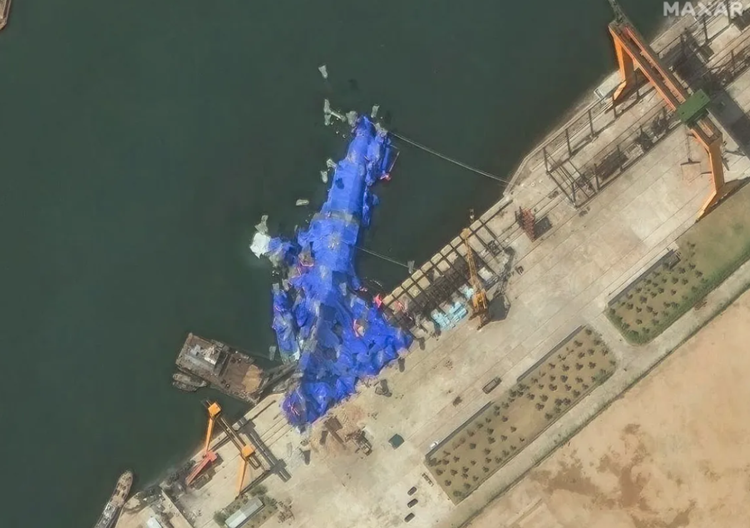
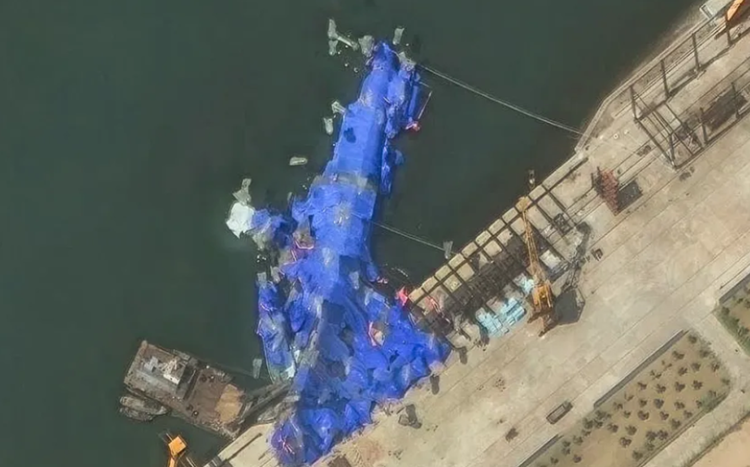
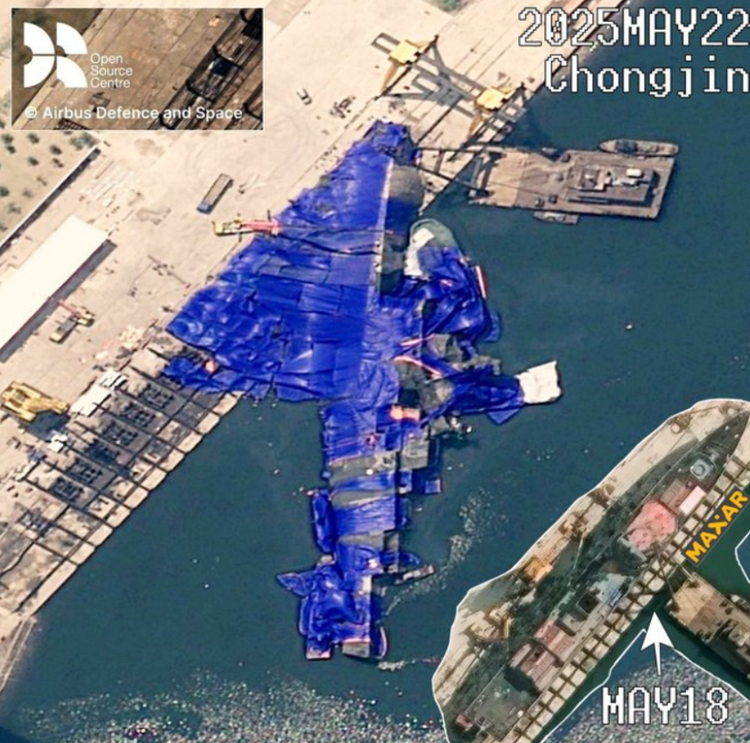
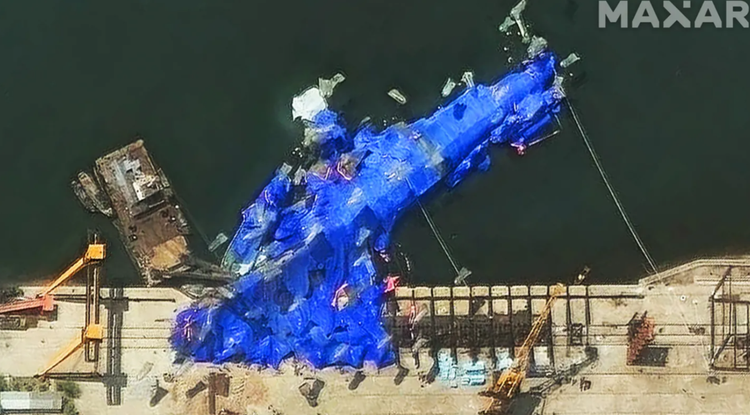
North Korea appears to be making some progress in restoring the second 5,000-ton destroyer of the Choi Hyun class, after it capsized and partially sank following an incident at its launch ceremony last month. Photo: @2025 Maxar Technologies. Recent images of the warship show that it has now returned to an upright position, although the goal of restoring the frigate before the end of this month remains very unclear. Photo: @2025 Maxar Technologies.
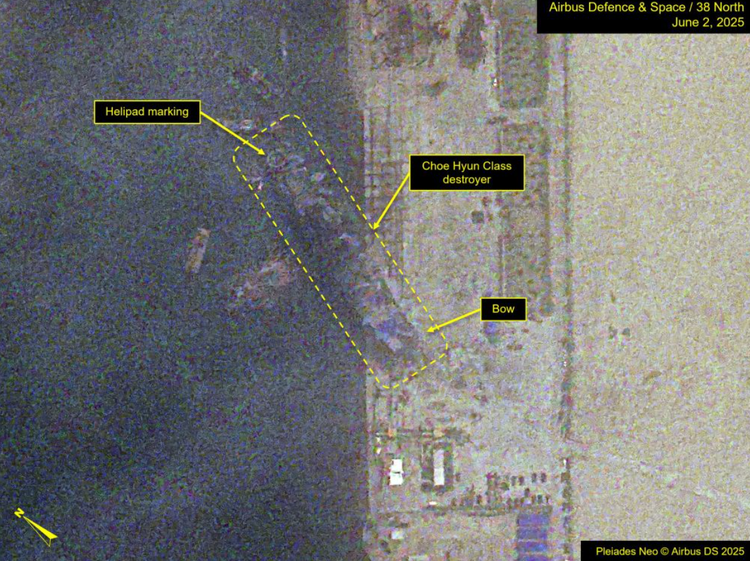
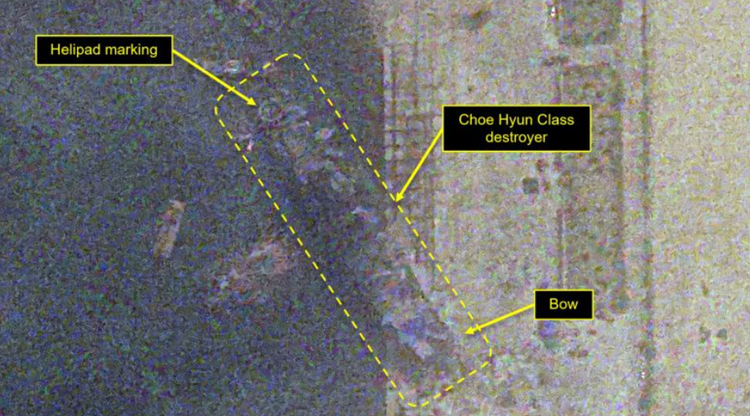
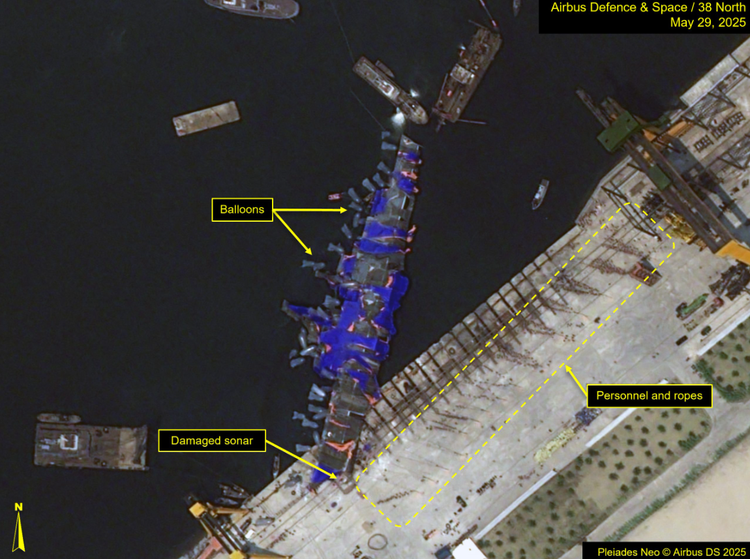
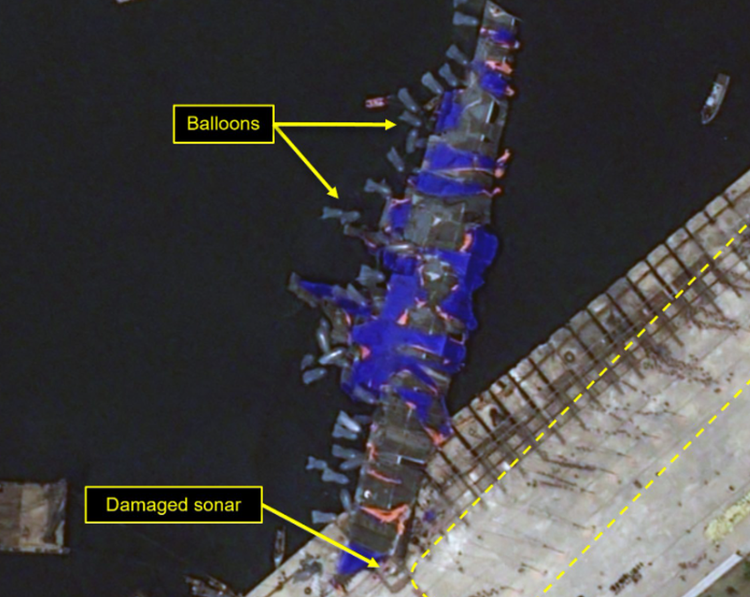
38 North, a website specializing in analysis of North Korea, recently published satellite imagery from Airbus Defense and Space showing the scene at the Chongjin Shipyard on June 2nd. The image shows the warship in an upright position for the first time since its unsuccessful launch on May 21st. Photo: @Pleiades NEO/Airbus DS 2025. Despite the light cloud cover, it's not difficult to notice that the flight deck (for helicopter landing pads), along with the stern, and the overall shape of the ship appear to have stabilized again. Photo: @Pleiades NEO/Airbus DS 2025. 38 North also noted that workers can be seen pulling ropes from the dock in an attempt to manually adjust the warship, as seen in a separate satellite image taken by Airbus Defense and Space on May 29. Photo: @Pleiades NEO/Airbus DS 2025.
As can be seen, there are at least 30 buoys or airbags placed along the ship, presumably to help stabilize it. Other reports suggest these are containment balloons, although that doesn't seem to make sense in this case. Photo: @Pleiades NEO/Airbus DS 2025. If the ship has been successfully repositioned, then what the next steps in this repair process might be remains unclear. Photo: @Roger. At the same time, transporting it to another shipyard could be a major challenge, especially if the hull is severely damaged. Photo: @2025 Maxar Technologies.
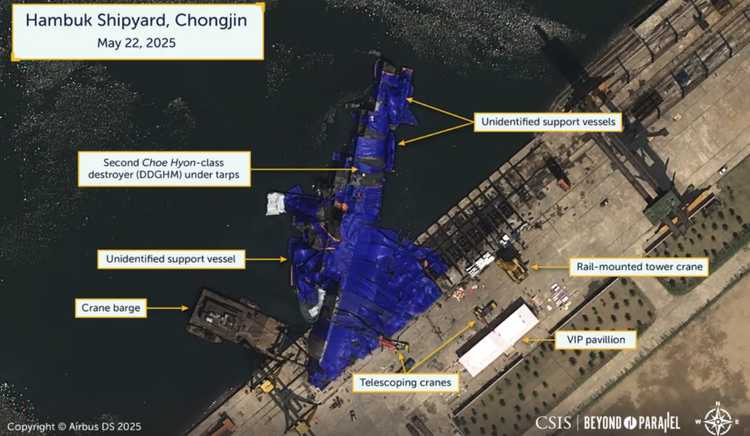
Seeking outside help, including from Russia or China, could be an option. Photo: @Center for Strategic and International Studies (CSIS). While getting the 5,000-ton destroyer back into an upright position is an achievement, there is likely more less obvious, but more important, work ahead. The way it sits, with part underwater and the other part on shore, is also a precarious situation. Photo: @Pleiades NEO/Airbus DS 2025.

 Báo Khoa học và Đời sống•05/06/2025












![[Photo] Prime Minister Pham Minh Chinh holds a phone call with the CEO of Russia's Rosatom Corporation.](/_next/image?url=https%3A%2F%2Fvphoto.vietnam.vn%2Fthumb%2F1200x675%2Fvietnam%2Fresource%2FIMAGE%2F2025%2F12%2F11%2F1765464552365_dsc-5295-jpg.webp&w=3840&q=75)


![[Photo] Closing Ceremony of the 10th Session of the 15th National Assembly](/_next/image?url=https%3A%2F%2Fvphoto.vietnam.vn%2Fthumb%2F1200x675%2Fvietnam%2Fresource%2FIMAGE%2F2025%2F12%2F11%2F1765448959967_image-1437-jpg.webp&w=3840&q=75)






















![[OFFICIAL] MISA GROUP ANNOUNCES ITS PIONEERING BRAND POSITIONING IN BUILDING AGENTIC AI FOR BUSINESSES, HOUSEHOLDS, AND THE GOVERNMENT](https://vphoto.vietnam.vn/thumb/402x226/vietnam/resource/IMAGE/2025/12/11/1765444754256_agentic-ai_postfb-scaled.png)












































Comment (0)