

Spain has just announced its squad for the 2026 World Cup, featuring many familiar names. Pedri, Rodri, Lamine Yamal, Nico Williams, and Dani Olmo continue to be the cornerstone of coach Luis de la Fuente's plans.
However, what attracted the most attention from the Spanish media was a completely different detail: for the first time in World Cup history, the Spanish national team did not call up any players from Real Madrid.
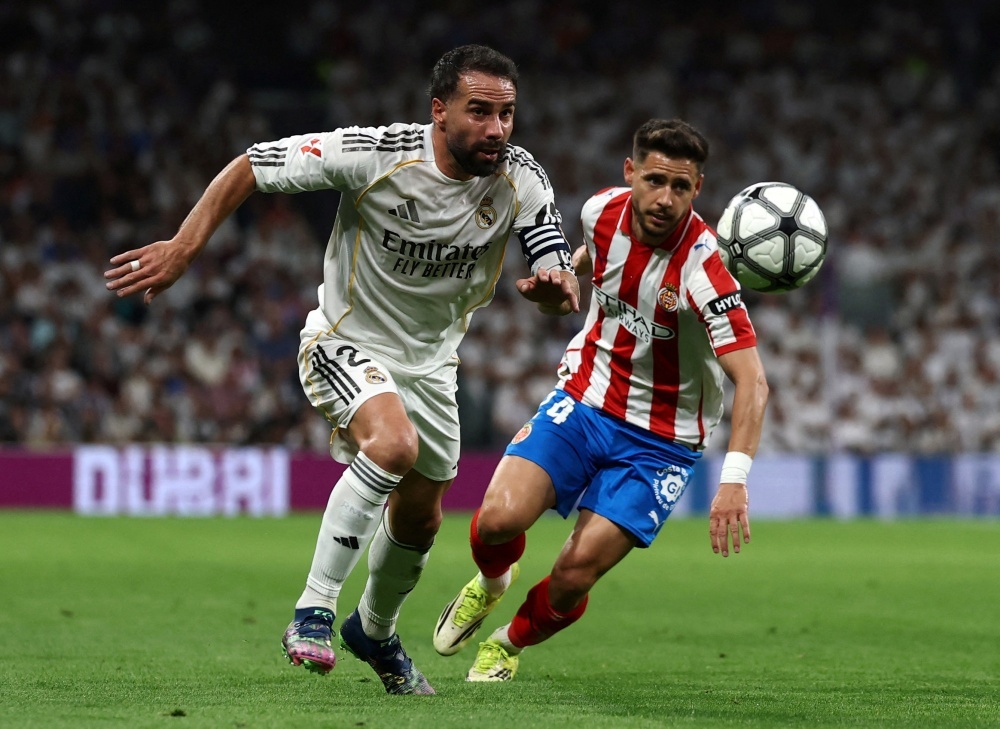 |
Carvajal is no longer fit enough to perform at Real Madrid or for the Spanish national team. |
That's enough news to spark a major debate in a country where Real Madrid has long been seen as the symbol of Spanish football power. But looking closer at how De la Fuente has built the team over the past two years, this decision isn't actually that surprising.
Spain chose stability over fame.
De la Fuente didn't build the Spanish national team around big names or commercial value. He selected players who fit the system, prioritizing tactical execution and team cohesion.
That explains why players who haven't reached their best physical condition, such as Yamal, Nico Williams, and Mikel Merino, have been retained. They are crucial links in the operational structure of "La Roja".
Conversely, Real Madrid players no longer play a central role in the team's current style of play.
Dani Carvajal's form has declined due to age and injuries. Fran Garcia and Gonzalo Garcia haven't yet established themselves as key players. Dean Huijsen is a promising prospect, but he hasn't yet surpassed the central defenders De la Fuente has relied on for a long time.
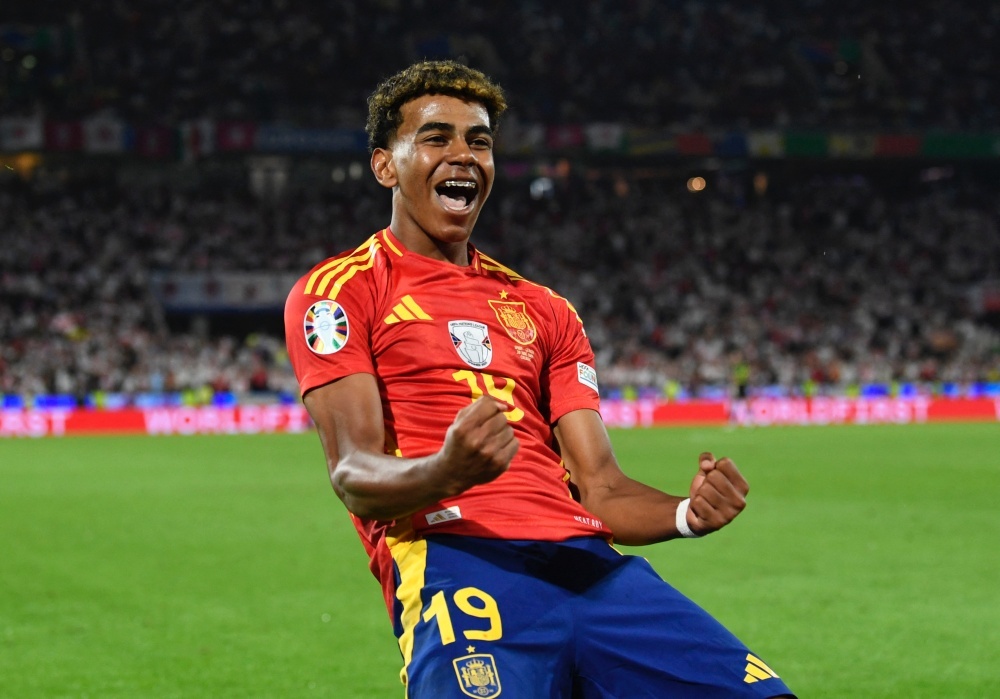 |
Yamal is the new "lifeblood" of "La Roja". |
More importantly, the current Spanish squad bears a strong resemblance to Barcelona, Arsenal, and Athletic Bilbao. Pedri, Gavi, Yamal, Dani Olmo, and Nico Williams create a style of football that is fast-paced, controlled, and dynamic. That's what De la Fuente prioritizes.
In some ways, the Spanish national team right now resembles a team built more on teamwork than on brand power.
Real Madrid's absence is more of a club problem than a national team problem.
The absence of Real Madrid players actually reflects another problem: the disconnect between the Royal Club and the traditional identity of Spanish football.
In recent years, Real Madrid has shifted strongly towards a globalized model for its squad. Their most important stars come from Brazil, France, England, or Uruguay. Jude Bellingham, Vinicius, Kylian Mbappe, Federico Valverde, and Rodrygo are the centerpiece of this project at the Bernabeu.
This helps Real Madrid maintain their strength in the Champions League, but it also leads to a dwindling number of high-quality Spanish players at the club.
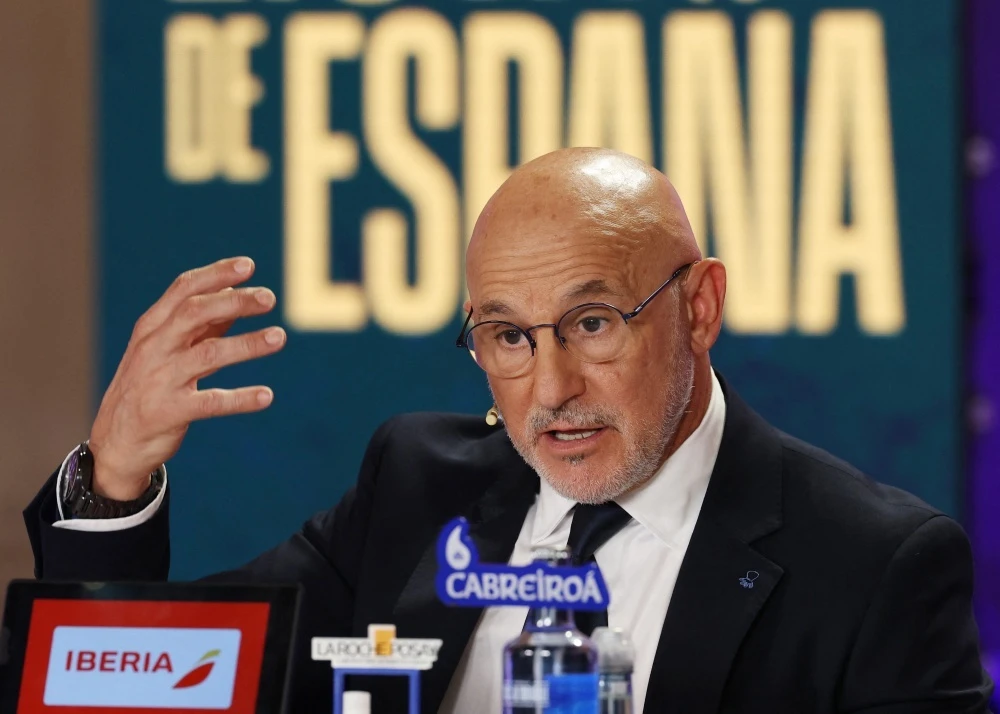 |
De la Fuente had good reason for not calling up any Real Madrid players for the World Cup. |
In contrast, the current Spanish national team is built around a young generation with a very distinct style. They are technically gifted, accustomed to ball control, and play with high intensity. This is the kind of football that is more influenced by Barcelona, Athletic Bilbao, or Mikel Arteta's Arsenal than by Real Madrid.
Therefore, the big question is no longer "Will Spain be weaker without Real Madrid players?", but rather "How much can Real Madrid still contribute to the current Spanish national team?".
In fact, "La Roja" still entered the World Cup as a title contender. They had Rodri in midfield, Yamal on the right flank, Pedri as the playmaker, and Nico Williams as a game-changer. These were all players capable of deciding matches at the highest level.
The absence of Real Madrid may diminish the Spanish national team's symbolic significance. However, from a professional standpoint, De la Fuente's team still possesses all the necessary foundations to compete for the 2026 World Cup title.
Source: https://znews.vn/tay-ban-nha-van-on-ma-khong-can-real-madrid-post1654091.html
![[Image] Hanoi's urban life under the challenge of a "scorching hot" environment](https://vphoto.vietnam.vn/thumb/1200x675/vietnam/resource/IMAGE/2026/05/25/1779706979265_nang-nong-t5-2026-minh-duy-7-4636-jpg.webp)



![[Image] Close-up view of the interchange connecting the two expressways and Long Thanh Airport.](https://vphoto.vietnam.vn/thumb/1200x675/vietnam/resource/IMAGE/2026/05/25/1779703378210_ndo_br_z7863716673926-224453a31600126cce10622af6290afd-4549-jpg.webp)


















































Comment (0)