

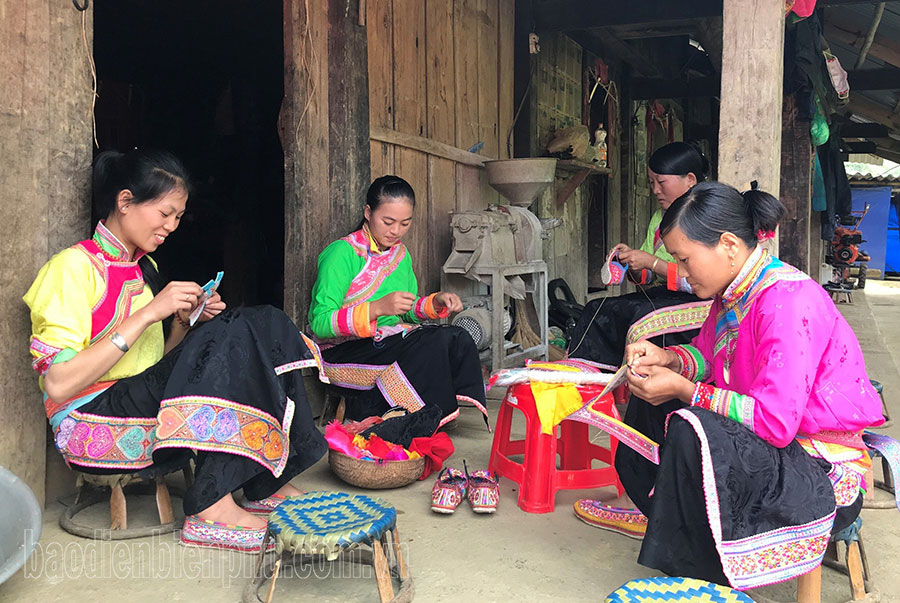
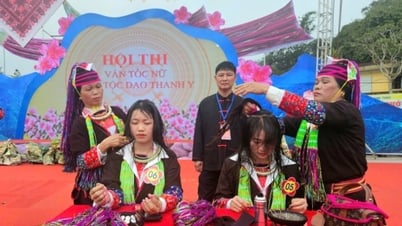
In a market economy, people can have all their needs met with readily available goods, without spending much time or effort manufacturing those products. This directly impacts the sustainable development of traditional handicraft heritage such as the embroidery of Xa Phang shoes and the blacksmithing of the Mong people. The Xa Phang people, residing in villages and clans in the districts of Muong Cha, Tua Chua, Nam Po, etc., have preserved many unique and distinctive traditional cultural features in their daily lives and work, with the embroidery of shoes being a prime example. The embroidery of shoes among the Xa Phang people is practiced and passed down within families and communities, not only transmitting knowledge and professional skills but also containing profound humanistic messages about the positive, diligent, patient, and persistent lifestyle of the Xa Phang ethnic group. This helps preserve the traditional embroidered shoemaking craft of the Xa Phang people, positively impacting the education of the younger generation and contributing to community cohesion. To make a pair of embroidered shoes, a Xa Phang woman must prepare the materials, choose a shoe style suitable for the user, cut the sole, create the patterns, and embroider. Completing a pair of embroidered shoes takes a Xa Phang woman 10-12 days. Meanwhile, with the current market economy, buying a pair of shoes or sandals is very simple, and the style and type can be easily changed depending on the environment and usage.
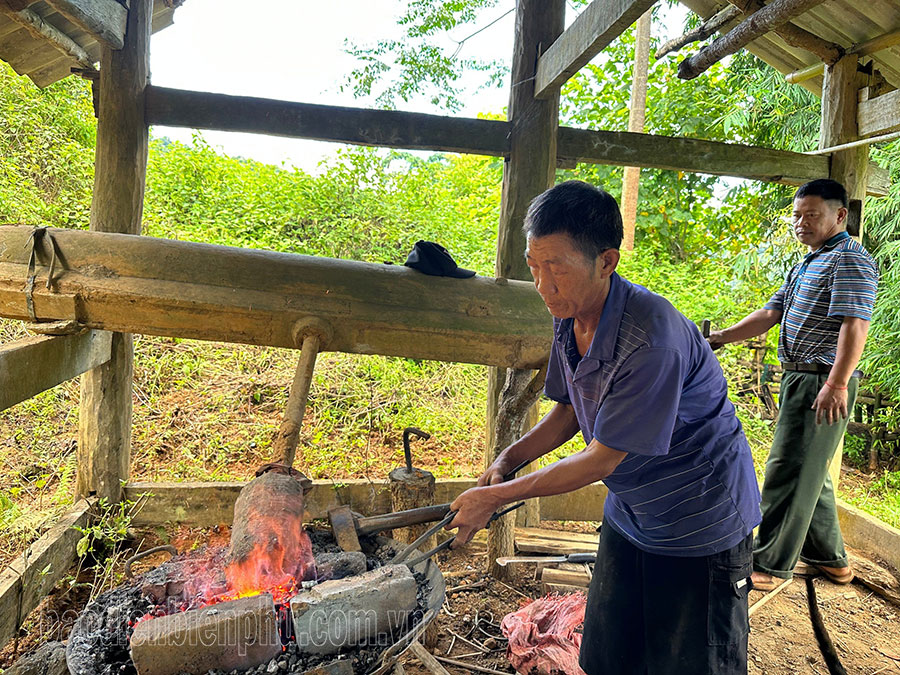
Similarly, the Hmong people's blacksmithing is a long-standing traditional craft passed down through generations, producing hoes, knives, sickles, plow blades, and other tools essential to their agricultural activities in the highlands. The Hmong typically live on high mountain slopes, cultivating on narrow terraced fields with steep inclines, requiring oxen and buffaloes for plowing as machines are unsuitable. The plow blades and hoes, forged in the fiery furnaces of the blacksmiths, are both hard and flexible, ensuring efficient soil turning and suitability for the terrain. Blacksmithing demands strength, skill, perseverance, and creativity from the craftsman to produce exquisite products that serve both as useful tools and reflect the unique traditional culture of the Hmong people. However, nowadays, with the widespread application of modern casting and forging techniques, and the abundance of readily available tools in markets, traditional blacksmithing has become limited to providing basic tools for self-sufficiency within individual households. This also creates pressure to preserve, safeguard, and transmit the intangible cultural heritage of the Hmong blacksmithing craft.
The Xa Phang people's shoe embroidery craft and the Mong people's blacksmithing craft are just two intangible cultural heritages currently facing pressure for preservation in the province. Dien Bien is home to 19 ethnic groups; each with its own unique traditional cultural identity, from clothing and architecture to customs, traditions, and beliefs, creating a rich and diverse tapestry of ethnic groups. Preserving and promoting the value of cultural heritage is a practical activity aimed at building a culture rich in identity. However, the impact of market mechanisms is posing many challenges to the preservation of Dien Bien's cultural heritage.
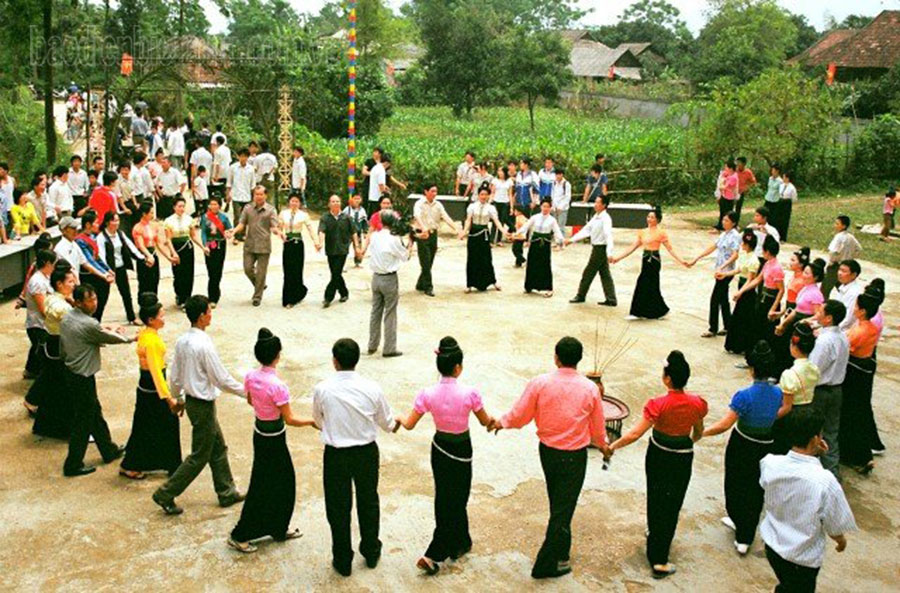
Traditional ethnic costumes, once meticulously handcrafted with unique patterns to identify each ethnic group, are now fading away and gradually disappearing. People no longer dedicate much time to traditional crafts; everyday clothing and tools are readily available at the market. The cultural landscape has also altered the practice of cultural heritage, creating an imbalance between preservation and development. For example, the traditional architecture of the White Thai people in Muong Lay, after resettlement due to the Son La hydroelectric project, no longer features many stilt houses with stone roofs; many community customs and practices are no longer maintained.
One challenge in preserving cultural heritage is the continuation, use, and transmission of traditional culture to the younger generation, as they are increasingly less interested in, inheriting, and promoting the nation's traditional culture. The development of modern audiovisual media attracts young people's attention and interest in using them rather than learning about traditional culture. Furthermore, there is a lack of adequate incentives and policies to motivate artisans to play a role in preserving and transmitting cultural heritage.
Dien Bien possesses a rich cultural heritage system, but the preservation of this heritage faces many challenges. To preserve, protect, and promote the traditional cultural heritage that generations have built and passed down, and to create momentum for economic development, requires the joint efforts and solidarity of all ethnic communities through practical and appropriate actions.
Source
















![[Photo] Reception to welcome General Secretary and President To Lam and his wife on their State visit to the Philippines](https://vphoto.vietnam.vn/thumb/1200x675/vietnam/resource/IMAGE/2026/06/01/1780295488620_vna-potal-chieu-dai-chao-mung-tong-bi-thu-chu-tich-nuoc-to-lam-va-phu-nhan-tham-cap-nha-nuoc-toi-philippines-8798060-7855-jpg.webp)





















































Comment (0)