

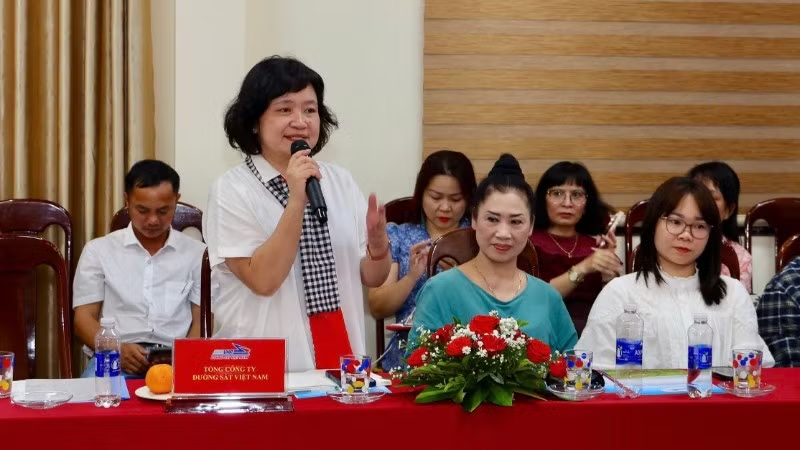
In many current models of creative writing, field trips are particularly inspiring for writers. No longer writing from a distance of observation, writers directly immerse themselves in the rhythm of professional life, listening to the memories, sacrifices, and quiet beauty behind each task. This interaction with life enriches creative material, giving works greater emotional depth and a clearer contemporary feel.
The recent field trip along the central Vietnam railway line, organized by the Vietnam Railway Corporation and the Vietnam Railway Workers' Union, is a prime example. Over several consecutive days, artists and writers participated in seminars, met with historical witnesses, interacted with workers, and observed the realities of train stations, routes, and mountain passes. They truly embarked on a journey of intense literary and creative work, with emotions, data, and the creative process unfolding simultaneously along each leg of the journey.
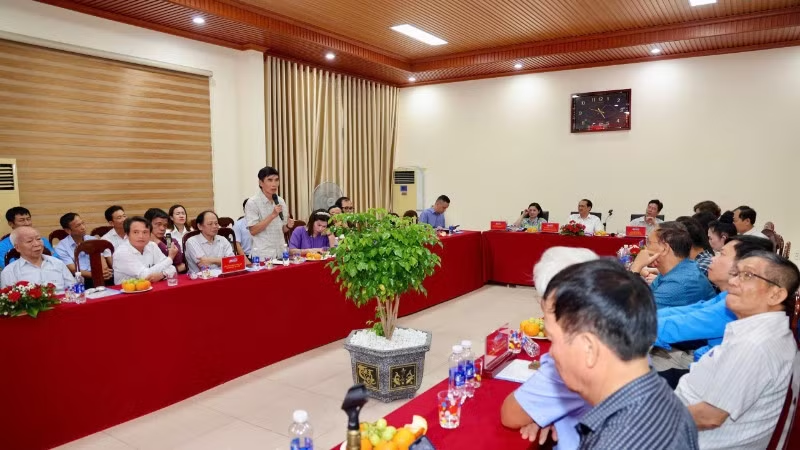
The group comprises writers from different generations. These include writers who were soldiers during the country's difficult times, such as Vu Ngoc Thu, Thai Chi Thanh, and Nguyen Huu Quy; writers of the next generation who are making an impression on the literary scene: Nguyen Xuan Thuy, Nguyen Thuy Anh, Nguyen Quang Hung, Le Vu Truong Giang, Nguyen Van Hoc, Phung Thi Huong Ly, Dau Thi Hoai Thanh, and Le Thuy Bac; and photographers like Quang Tuan and Tran Vu Thanh, creating a diverse group of writers with varying professional backgrounds and rich artistic perspectives.
During the discussions, many artists and writers admitted that, prior to the trip, their understanding of the railway industry in particular and the lives of workers in many professions in general was limited, mainly based on superficial perceptions. Only when they directly experienced it, met track inspectors, train drivers, signalmen, and level crossing guards, and witnessed night shifts in mountainous areas or difficult working conditions, did they truly feel the depth, pressure, and silent sacrifices behind all the operations.
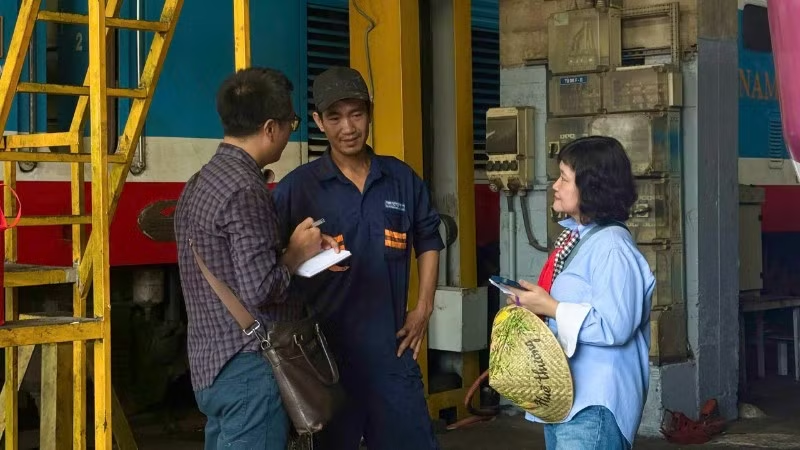
The gap between initial perceptions and real-life realities further highlights the necessity of field trips, both to enrich creative material and to bring literature closer to working people in today's life.
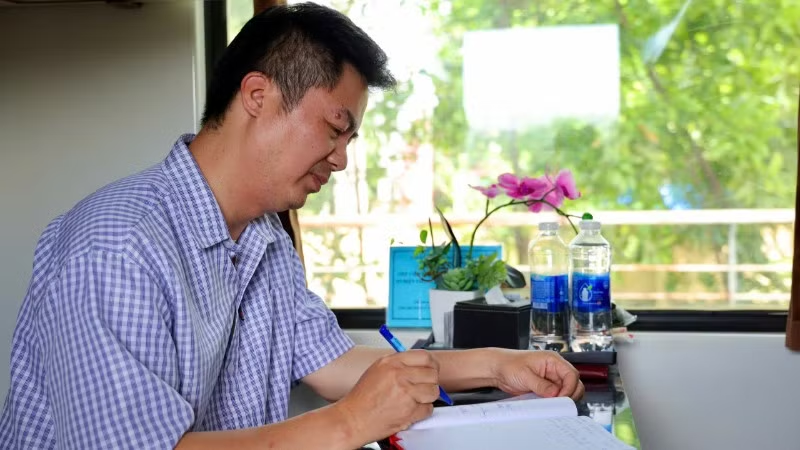
During the railway's trip, the artists and writers had almost no real rest. They spent their days constantly moving between bridges, railway stations, and production facilities. In the evenings, before their breaks, they would share stories with witnesses and workers. Many also took advantage of short breaks on the train to sketch ideas, write, and complete their works while the delegation continued its journey.
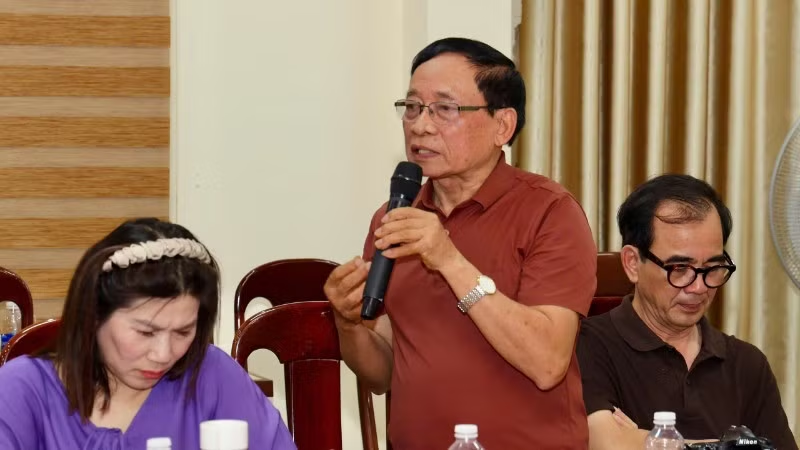
This pace differs from the traditional writing camp model that was familiar many years ago. In the current context, with journalism and literature both under pressure to innovate their approach to reality, many writers choose to go straight to the "hot spots" of working life instead of waiting for inspiration in isolation.
Interestingly, older writers, those who had experienced war or had many years of practical work experience, adapted very quickly to the new pace of work. They brought with them a wealth of life experience, keen observation skills, and remarkable professional resilience.
During conversations with railway workers, many veteran writers also shared their own memories of a time when trains were the lifeline connecting the home front with the battlefront. Listening to the literary works read aloud at the event, many retired and active officials and workers were deeply moved and wanted to have handwritten copies or autographs from the artists to keep as mementos.
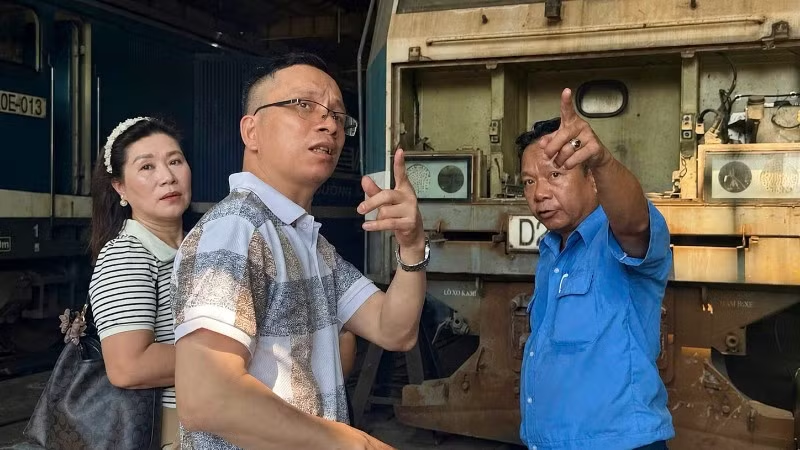
An older writer in the group jokingly said, "This kind of trip is more tiring than the old-style writing camp, but it's also more refreshing because life just rushes into us." Meanwhile, the younger generation brings a new energy to such trips. They are quick to adapt to multi-platform working methods, simultaneously filming, photographing, and documenting, while also updating their emotions in real time. What's valuable is that they don't stop at superficial enthusiasm but proactively delve into the fates of individuals, the specifics of their professions, and the social and historical changes within their context.
Through experience, artists and writers realize that today's workers are no longer depicted as one-dimensional figures. They face the pressures of making a living, are affected by technological changes, and possess a need for recognition of their spiritual value. Railway workers, like those working on the lines amidst high, cloud-covered mountain passes, or the station attendants at small train stations, are truly individuals with their own unique memories, feelings, hopes, and professional pride.
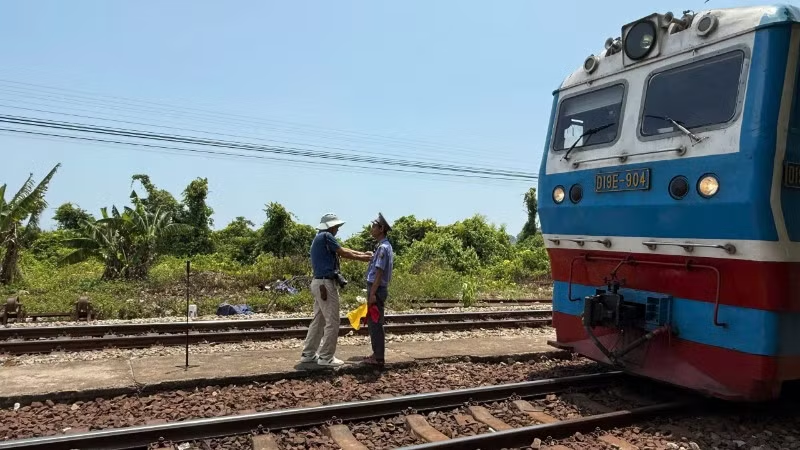
That is a realm of reality rich in literary potential, and to write authentically, artists and writers must change their approach. They cannot write solely through imagination or old patterns; they need to return to the breath of life, long journeys, sincere conversations, and direct contact with the realities of their profession.
According to Ms. Duong Thi Mo, Vice President of the Vietnam Railway Trade Union, accompanying artists and writers on field trips is a valuable opportunity for the professional values and silent sacrifices of workers to be more deeply disseminated through literature, art, and journalism.
Based on the above experience, the organizing unit hopes to see more authentic and emotionally rich works about the lives of workers, contributing to fostering professional pride and inspiring the younger generation to continue their commitment to the industry. The unit is always ready to support and create the best conditions for artists and writers because when literature and art are closer to the reality of labor, the humanistic values of the industry will be preserved for longer in life.
Behind these inspiring field trips lies considerable organizational pressure for the host organizations. Unlike traditional residency-based writing camps, these groups travel constantly, with packed schedules, and many destinations are located far from urban centers, in harsh weather conditions, or directly related to the production and operation of the organization. This requires the organizing committee to prepare very scientifically , meticulously, and flexibly, from transportation, working hours, connecting with subjects, arranging seminars, to ensuring the safety of the group throughout the journey.
Furthermore, for artists and writers to truly access the depths of working-class lives, organizers cannot simply showcase achievements or superficial images. More importantly, there must be openness and a willingness to share the professional difficulties and the quieter stories behind each job. This is something not every profession or organization is willing to do, because opening the door to working-class life for writers requires genuine companionship, trust in literature and art, and a desire to honor professional values through a profound and humane perspective.
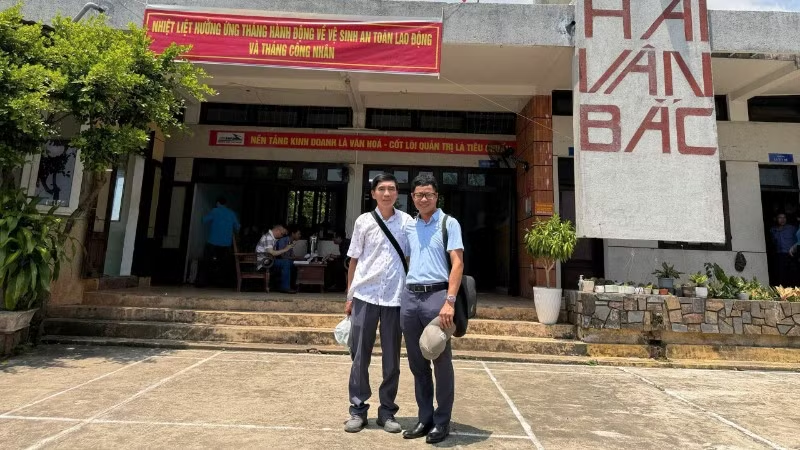
During the recent trip to central Vietnam, the close coordination between the Vietnam Railways Corporation, the Vietnam Railways Trade Union, and local units contributed to significant results. The effectiveness of the trip gradually translated into numerous high-quality literary, journalistic, and photographic works, serving specialized publications, creative competitions, and the cultural and spiritual life of the workers.
Many participating writers did not limit themselves to one genre. Some writers wrote essays, short stories, poetry, and journalistic notes, like Nguyen Xuan Thuy; others, like Nguyen Quang Hung and Nguyen Van Hoc, found inspiration for numerous collections of poems about railways after the trip. The atmosphere of creative work was continuous throughout the journey.
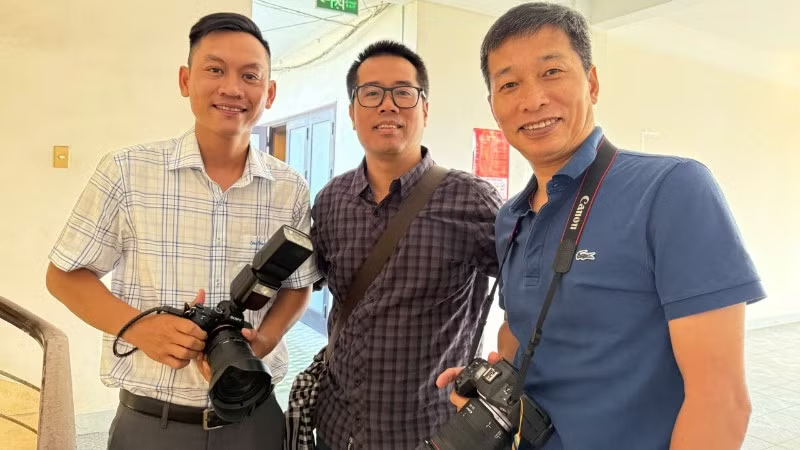
More importantly, the trip helped discover and honor many talented and creative individuals within the railway industry. A prime example is poet Dang Hieu Dan, a lecturer and Master of Mechanical Engineering, currently working and managing at the Da Nang Railway College branch. Behind his professional technical work lies a rich literary life with many poems that reflect profound thoughts, quiet yet enduring, just like the nature of his profession.
Or take Tran Ngoc Tien, a train driver in the Hai Van Pass Railway Team. Normally, he's involved in navigating treacherous mountain passes, but when he's not driving, he takes his camera and accompanies the working group to capture authentic moments of his colleagues' lives and the routes in central Vietnam. His photographs are impressive because of their intimate perspective and rich professional emotion, which can only be obtained from someone who truly lives in the working environment.
The flexibility of the practical creative environment has facilitated the emergence of artistic abilities that were previously dormant within the industry. Workers become the subjects of many works, and often they themselves are the creators, telling the story of their profession with a wealth of life experiences.
The effectiveness of these field trips, alongside the system of works, also lies in the direction that demonstrates a remarkable connection model between businesses, organizations, and artists. Thanks to this, employees will become the subjects of memories, inspiration, creative aspirations, and professional cultural values that need to be disseminated and celebrated.
Source: https://nhandan.vn/tham-nhap-thuc-te-de-van-chuong-gan-hon-voi-doi-song-post965364.html
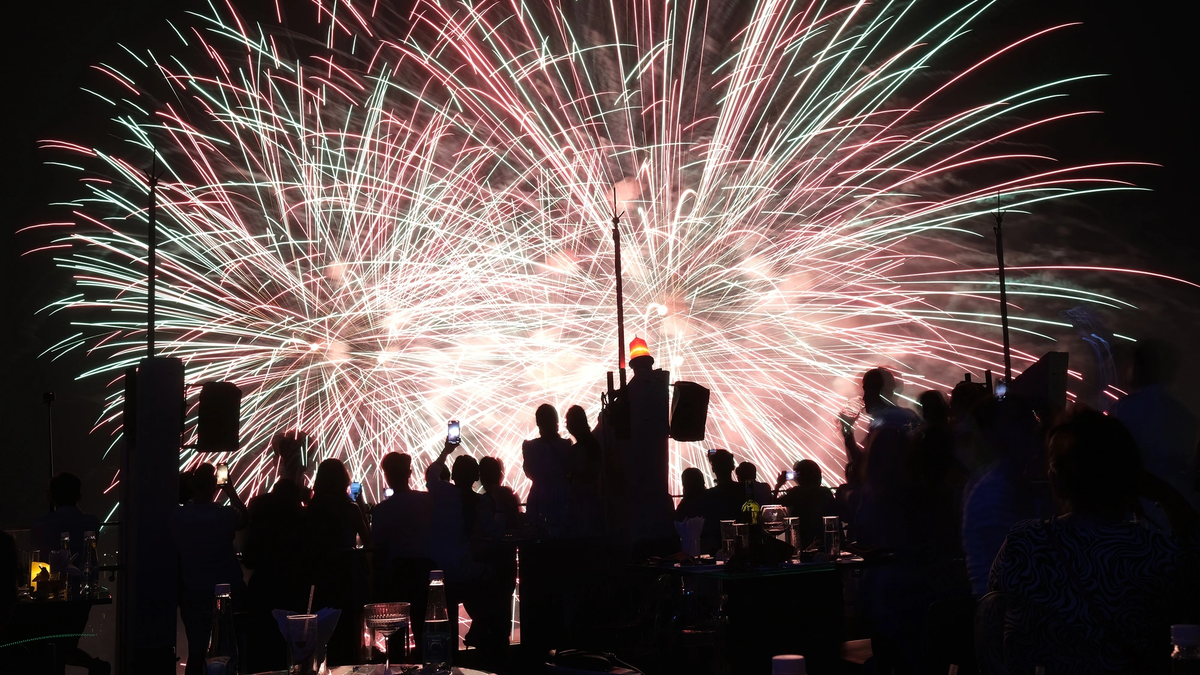

![[Photo] The heat at the fireworks display site on the opening night of the Da Nang International Fireworks Festival 2026](https://vphoto.vietnam.vn/thumb/1200x675/vietnam/resource/IMAGE/2026/05/27/1779889741485_ndo_br_z7872039145157-fecaba5112f39e8352544099d7ef4738-5140-jpg.webp)
































































Comment (0)