

In the Vietnamese box office race at the end of April, the two most prominent names were neither family comedies, nor action films, nor dramas. They were Phi Phong: Blood Demon of the Sacred Forest and Five- Dish Pig – two horror films that both explore spiritual and folklore themes.
According to Box Office Vietnam, Phi Phong: Blood Demon of the Sacred Forest reached 175 billion VND by the afternoon of May 3rd, after surpassing 100 billion VND in just 6.5 days with approximately 1.2 million tickets sold – the fastest speed ever recorded for a Vietnamese horror film. The film "Five-Toed Pig" also had a strong opening, earning around 37-38 billion VND after three days in theaters and now exceeding 87 billion VND , amidst direct competition from many other Vietnamese films during the April 30th holiday.
These figures are not meaningless when talking about the horror genre. Since 2024, Vietnamese horror films have had a remarkable streak of success: "Ma Da" (The Ghost) grossed over 127 billion VND , "Quy Cau" (The Dog Demon ) over 100 billion VND , "Ca Am" (The Fish Demon) around 96 billion VND , and "Lam Lai Voi Ma " (Getting Rich with Ghosts) around 128 billion VND . In 2025, "Quy Nhap Trang" (The Corpse Demon) reached nearly 150 billion VND ; and in 2026, "Quy Nhap Trang 2" (The Corpse Demon 2) left theaters with nearly 134 billion VND . Horror films are no longer a few isolated lucky cases, but a sign that a genre has found its commercial formula.
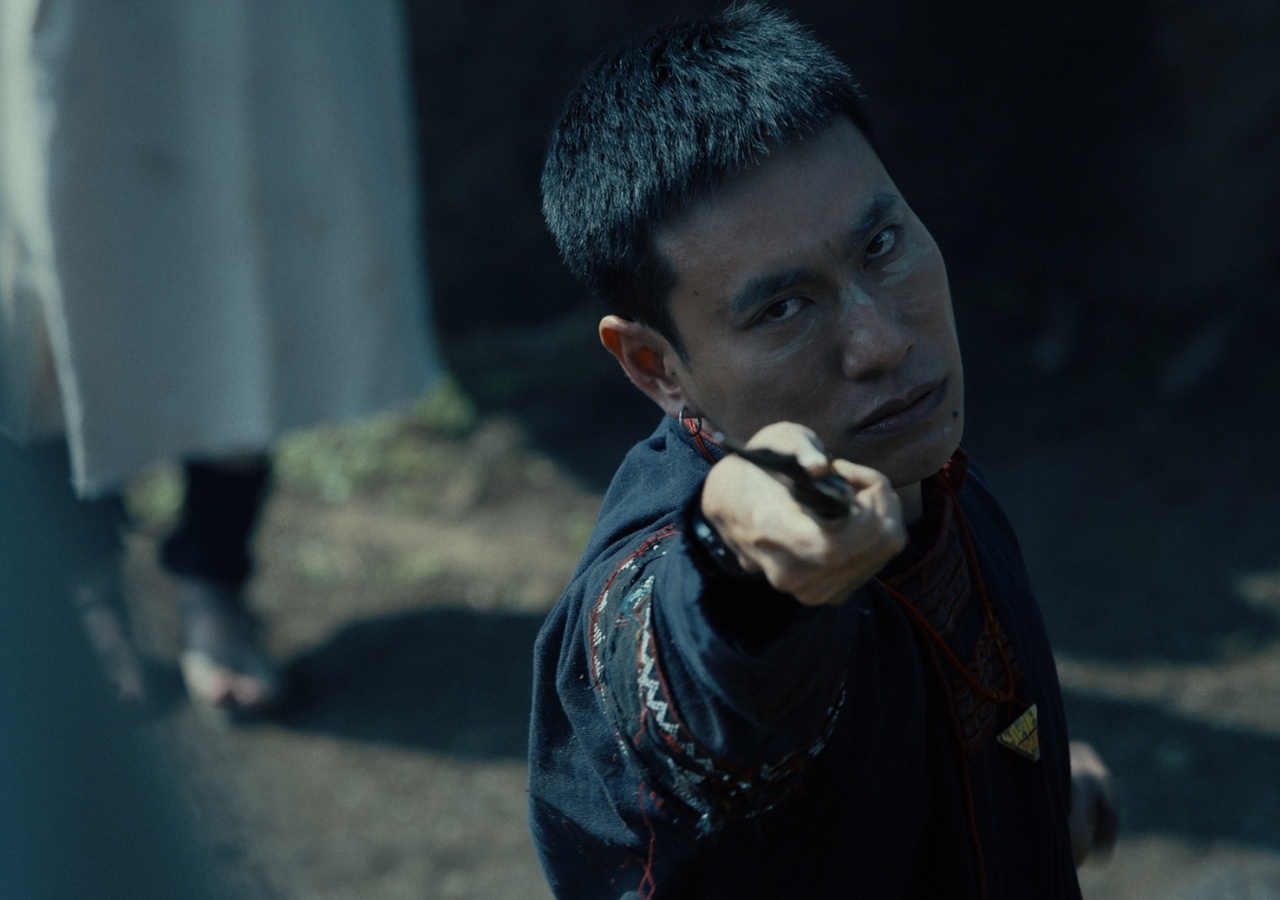 |
The screen fee is currently topping the Vietnamese box office. |
Horror films don't need huge budgets to be successful.
The appeal of horror films to investors lies in the fact that this genre can generate very strong emotional responses without necessarily requiring a large budget. Director Do Quoc Trung of Phi Phong revealed to the press that the average budget for many Vietnamese horror films is currently under 20 billion VND . This is lower than the 20-30 billion VND of many dramas and significantly lower than the 50-60 billion VND of films requiring elaborate staging, typically action films. Director Do Quoc Trung also noted that horror films are "easy to sell in Vietnam," partly because they don't need to rely on overly expensive stars or complex large-scale scenes.
The production logic of horror films differs significantly from other genres. An action film requires vehicles, explosions, stunts, set design, insurance, and post-production special effects. A period or fantasy film requires costumes, settings, props, and CGI.
Conversely, horror can work effectively in an old house, an abandoned hospital, a forest, or a dimly lit room. The confined space doesn't detract from the experience; in fact, it often intensifies the feeling of claustrophobia. Low light, which might be considered a technical limitation in other genres, becomes an aesthetic language of horror.
This is why low-budget horror films have often generated massive box office success worldwide . The Blair Witch Project is a classic example. According to The Numbers , the film had a production budget of around $600,000 and grossed over 400 times that amount globally. Paranormal Activity followed a similar path. Its budget was around $450,000 , with some media outlets even claiming it was initially shot for only about $15,000 , while its global revenue was over 430 times that budget.
Even with increased budgets, the return on investment for horror films remains very attractive. Jordan Peele's Get Out had a budget of around $4.5 million and grossed over $255 million worldwide. A Quiet Place had a budget of around $17 million and grossed over $340 million . These aren't "cheap" films in the absolute sense, but they are still very modest when compared to superhero, action, or science fiction blockbusters with budgets of hundreds of millions of dollars.
The key point is that horror films don't need to sell to everyone to succeed. With lower budgets, the break-even point is lower. A drama or action film in Vietnam with an investment of 50-60 billion VND needs much higher revenue to cover production, distribution, marketing costs, and theater commissions. A horror film under 20 billion VND , if it reaches tens of billions, can become a worthwhile investment; and if it exceeds 100 billion VND, the profit margin can be very attractive.
In Vietnam, this is particularly noteworthy because the market is still relatively small. Films grossing nearly 500 billion VND like " Mai" or 700 billion VND like "Red Rain" are major exceptions, not the average for every project. And especially, in times when the market lacks blockbusters, horror films become a good mid-range option – meaning they don't require massive investments like blockbusters, but still have the potential to generate hundreds of billions in revenue if they tap into the right audience.
With Vietnamese films, another noteworthy point is the use of folklore. Films like "The Dog Demon," "The Skin Ghost," "Cam," "The Corpse Possessed by the Demon," "Phi Phong ," and "The Five-Toed Pig" don't just sell general fear. They connect fear to beliefs, legends, rural settings, family taboos, or folk memories. This is an advantage that foreign horror films find difficult to replace.
A Japanese ghost might be terrifying, an American house might be haunted, but a curse, a custom, or a familiar oral tradition in a local culture creates a more intimate, personal, and unsettling feeling. Fundamentally, however, the current quality of Vietnamese horror films lags far behind global horror blockbusters in terms of creativity.
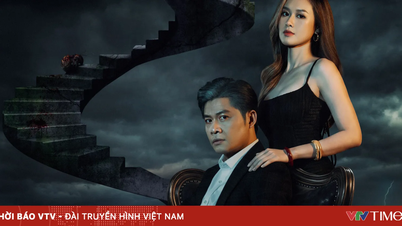
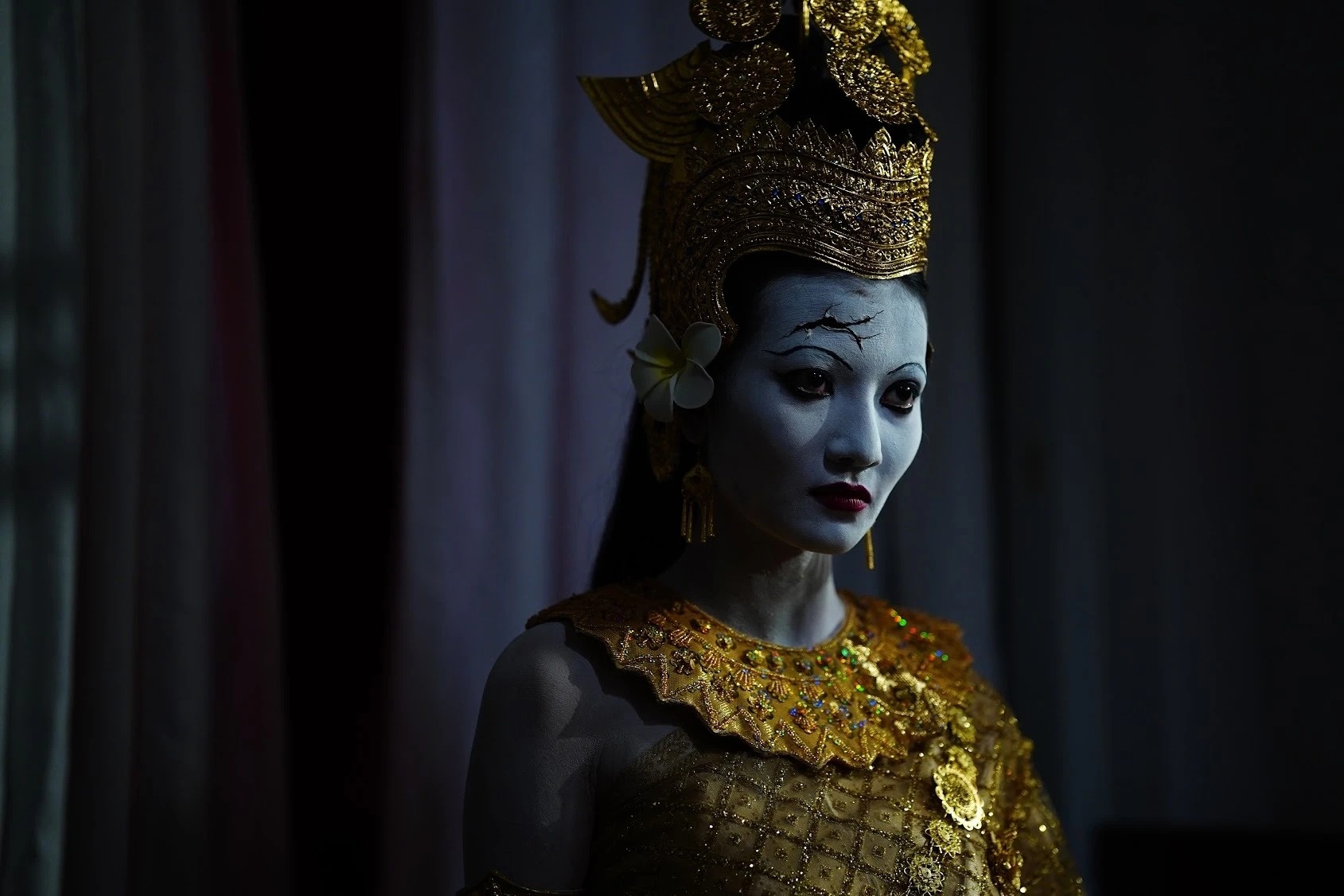 |
The film "Five-Toe Pig" leads the pack of films released during the April 30th holiday. |
Why do audiences like paying to be scared?
If it were just about being cheap, horror films wouldn't have lasted this long. What keeps this genre with audiences is a more complex psychological mechanism. It's that humans aren't just afraid; in safe conditions, they can even seek fear as a pleasurable experience.
Psychologist Paul Rozin calls this phenomenon "benign masochism," which can be understood as the enjoyment of negative sensations when the experiencer knows they are not actually dangerous. Eating spicy peppers, riding roller coasters, going to haunted houses, watching horror movies all fall into this category. The body reacts as if it is in danger with symptoms such as a rapid heartbeat, muscle tension, and altered breathing. But the mind knows that one is sitting in a theater, in front of a screen, in a controlled situation. It is the gap between the biological response and actual safety that creates the pleasure.
Researchers at Aarhus University's Recreational Fear Lab call this "recreational fear." This research group specializes in examining frightening but voluntary activities, from horror movies to haunted houses, to understand why people actively seek out feelings of unease. One key finding of this research is that fear is most appealing when it lies in a balanced state: strong enough to stimulate, but not so strong as to cause trauma or make viewers want to quit.
Coltan Scrivner, a researcher on "morbid curiosity," also argues that humans are drawn to scary content partly because it allows us to simulate danger. When watching a haunting, a monster, a murderer, or a supernatural force, viewers are exposed to a threatening situation without the real-life consequences. From an evolutionary perspective, horror films can function as a form of "emotional rehearsal," that is, practicing how to react to danger in a simulated environment.
This explains why horror films are particularly effective in theaters. Unlike many genres that can be watched at home with little loss of experience, horror greatly benefits from the crowd. A jump scare doesn't just startle one person; it triggers a reaction from others. A scream elicits laughter. A moment of silence creates tension throughout the theater. The fear then becomes a collective experience, no longer a personal one.
This is also why horror films often have a strong word-of-mouth effect. People don't just say whether a film is "good" or "bad." They say this scene made the whole theater scream, that scene made the person next to them cover their eyes, or that someone left the theater. These off-screen stories become part of a natural marketing campaign. With The Blair Witch Project , the initial internet marketing campaign leveraged the very ambiguity between reality and fiction to turn the film into a cultural phenomenon. With Paranormal Activity , the strategy of a limited release followed by a wider release based on audience reaction also turned the screams in theaters into marketing material.
In Vietnam, this is even more evident because social media plays a major role in movie-going decisions. A horror film can go viral not only through trailers, but also through reaction videos , reviews asking "is it scary?", debates about supernatural details, or warnings like "those with weak hearts shouldn't watch." These types of content create a sense of challenge. Viewers go to see the film not just to find out the story, but to test themselves to see if they're scared, if the scenes are truly intense, and if the film lives up to the hype.
However, the success of this genre also has its limits. When the market realizes that horror is profitable, the number of films will increase rapidly. The risk of saturation is therefore very real. Many projects exploiting ghosts, spirits, and folklore in a short period of time can easily become tiresome. A genre that was once appealing because of its novelty can quickly become boring if it repeats too many motifs, such as abandoned houses, curses, ghosts, nighttime noises, and jump scares at the end of the hallway. For example, the recent film "Five -Toed Pig" also received complaints about its overuse of jump scares.
Therefore, the question is not just whether Vietnamese horror films will still sell tickets in the coming period, but whether filmmakers can go beyond the mere scare tactics. Get Out succeeded because it used horror to address issues of race and bodily freedom. A Quiet Place used monsters to tell a story about family, loss, and the instinct to protect one's children. Train to Busan is not just a zombie film, but also a story about class, selfishness, and fatherhood. These films demonstrate that horror is most powerful when fear doesn't stand alone, but clings to a social anxiety or an emotion the viewer already carries in their life.
For Vietnam, the potential lies in its rich source of indigenous cultural material, including folk beliefs, village stories, family memories, rituals, the gray areas between morality and superstition, between modernization and the unexplained.
If only the surface is explored, horror films will stop at a few jump scares. If explored more deeply, this genre could become one of the effective ways for Vietnamese cinema to attract more domestic and regional audiences.
Source: https://znews.vn/thang-lon-vi-kinh-doanh-noi-so-hai-o-rap-viet-post1630867.html


![[Image] Close-up view of the interchange connecting the two expressways and Long Thanh Airport.](https://vphoto.vietnam.vn/thumb/1200x675/vietnam/resource/IMAGE/2026/05/25/1779703378210_ndo_br_z7863716673926-224453a31600126cce10622af6290afd-4549-jpg.webp)


![[Image] Hanoi's urban life under the challenge of a "scorching hot" environment](https://vphoto.vietnam.vn/thumb/1200x675/vietnam/resource/IMAGE/2026/05/25/1779706979265_nang-nong-t5-2026-minh-duy-7-4636-jpg.webp)




















































































Comment (0)