

- Mud is scattered all over Provincial Road 978.
- Voters have petitioned for dredging of silt and waste treatment on the Bac Lieu - Ca Mau canal.
Along with the development of shrimp farming, difficulties have arisen in the process of renovating ponds, especially in handling the amount of dredged silt after many years of production. This is also an issue that has been repeatedly raised by the people and local authorities at meetings with voters regarding the development of the coastal fisheries economy .
Pressure from production realities
Nam Can commune is a low-lying coastal area directly affected by tides, resulting in a large amount of silt deposition annually. After a period of farming, a thick layer of mud accumulates under the water channels, reducing circulation and affecting the pond environment and production efficiency. Therefore, people are forced to dredge the channels periodically to improve the shrimp ponds.
According to many households, dredging is necessary every 2-3 years. Some households adopt a rotational system, renovating only 1-2 canals each year to reduce costs and the area required for silt accumulation.
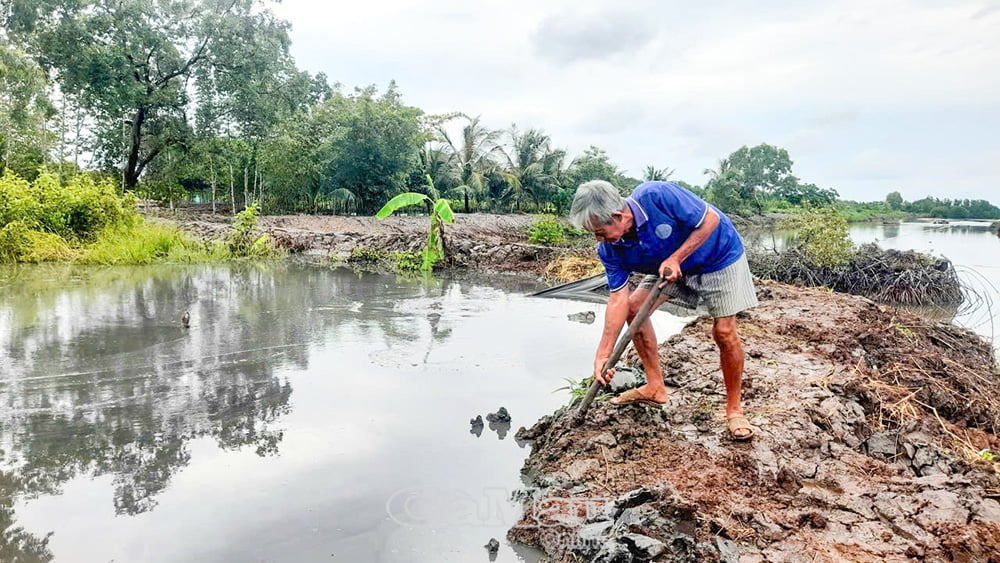 Past experience has shown that not all households can ensure proper mud and soil containment.
However, the biggest challenge currently is the increasing amount of silt generated, while the storage area in the fish ponds is no longer sufficient. According to regulations, dredged silt must be collected in enclosed areas to prevent it from spilling into the environment and affecting the ecosystem and water sources. In reality, some households still discharge silt directly into the environment due to insufficient storage space.
Mr. Tran Thanh Toan, from Chong My hamlet, Nam Can commune, said: "Over the years of shrimp pond renovation, the amount of accumulated mud has increased significantly, while the storage area is no longer sufficient. People want to utilize or sell this mud to reduce renovation costs, but current regulations do not allow it."
Not only the people, but also the local authorities have repeatedly petitioned relevant agencies to consider resolving the difficulties. At a recent meeting with constituents by the National Assembly delegation, the Chairman of the People's Committee of Nam Can commune, Vo Van Hanh, proposed the need for a more appropriate mechanism regarding the amount of dredged mud from coastal aquaculture ponds. According to him, this is mainly natural alluvial deposits that accumulate annually, with unique characteristics different from those of conventional mineral exploitation.
Appropriate management mechanisms are needed.
In reality, the mud in coastal shrimp farming areas is mainly saline silt deposited naturally by tides and currents over many years of production. Dredging aims to improve the ponds, clear waterways, and create a favorable environment for aquatic life to thrive; it is not a commercial land exploitation activity.
Many believe that a separate mechanism should be established for the amount of silt generated during the reclamation of aquaculture ponds in coastal areas. This mechanism should clearly distinguish between dredging activities for production purposes and illegal land exploitation to ensure management is appropriate to local realities.
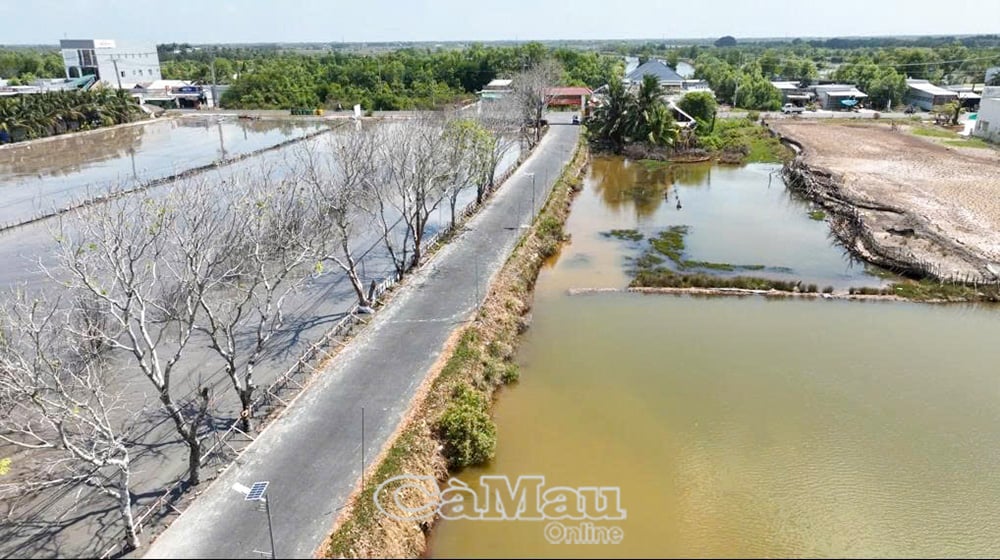 Locals proactively use mud and soil barriers during the land reclamation season.
In addition, many residents have suggested considering allowing the utilization or sale of dredged mud within certain limits, under strict government supervision, in order to minimize negative consequences and reduce the cost of renovating fish ponds.
Establishing a specific mechanism for handling dredged mud from coastal aquaculture areas will not only help alleviate difficulties for local people but also create conditions for stable production, protect the ecological environment, and contribute to the sustainable development of the fisheries sector – a key economic sector of the Ca Mau coastal region in the coming years.
Thanh Vu
Source: https://baocamau.vn/thao-go-vuong-mac-trong-xu-ly-dat-bun-vung-nuoi-tom-ven-bien-a129251.html
![[Photo] General Secretary and President To Lam presides over a meeting on preparations for the review of one year of operation of the three-tiered government system.](https://vphoto.vietnam.vn/thumb/1200x675/vietnam/resource/IMAGE/2026/06/02/1780391821195_a1-bnd-4595-9717-jpg.webp)






































































Comment (0)