

Boarding schools are struggling.
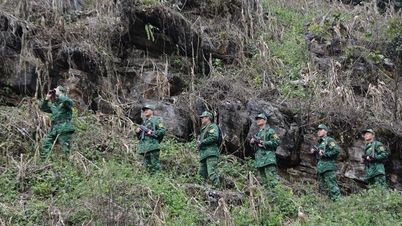
Lao Cai has over 180km of border with China. Following the administrative reorganization in 2025, the province now has 9 border communes and wards.
Apart from Lao Cai ward, which has more favorable development conditions, most of the remaining areas are high mountainous regions with difficult transportation and impoverished living conditions for the people.
In those areas, the journey to school for students has never been easy. Some have to walk dozens of kilometers through the forest, climbing hills and wading through streams to get to class. When the rainy season comes, landslides and traffic jams make studying even more difficult.
For many ethnic minority families, keeping their children in school regularly is already a great effort. Therefore, investing in education in border regions is an investment in the long-term future of this land on the nation's frontier.
For many years, given the scattered population, building schools very close to individual communities has been difficult. In some areas, only a few households live in isolation, tens of kilometers from the commune center. To keep students in school, the local education sector has adopted a boarding school model as a practical solution.
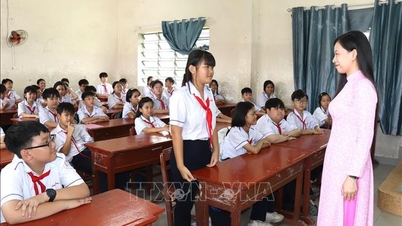
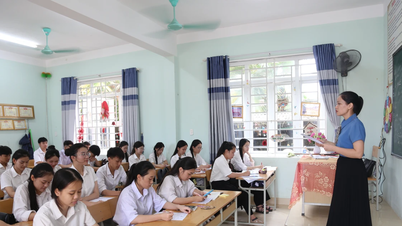
In many places, boarding schools operate almost like residential schools. Students eat and stay at the school during the week; some don't get to go home until the weekend, or even the end of the month. Teachers not only teach but also manage and care for students, from meals and sleep to self-study time.
Na Loc Primary and Secondary School is an example. The school's boarding area was designed for about 60 students but is actually serving nearly 100 boarding students. As the number of students increases, the living space becomes cramped and overcrowded. Sleeping areas, kitchens, water supply, and restrooms are all under immense pressure.
Mr. Ngo Hong Cuong, Principal of Na Loc Primary and Secondary School, said that what worries the teachers the most is that students still face many disadvantages even in the place where they rely on to study.
According to Mr. Cuong, despite the efforts of the government, the education sector, teachers, and parents, the living conditions for students are not yet as adequate as desired. The greatest aspiration of the school, parents, and students is to have a proper boarding school – a place where students can study, live, play, and participate in activities in better conditions.
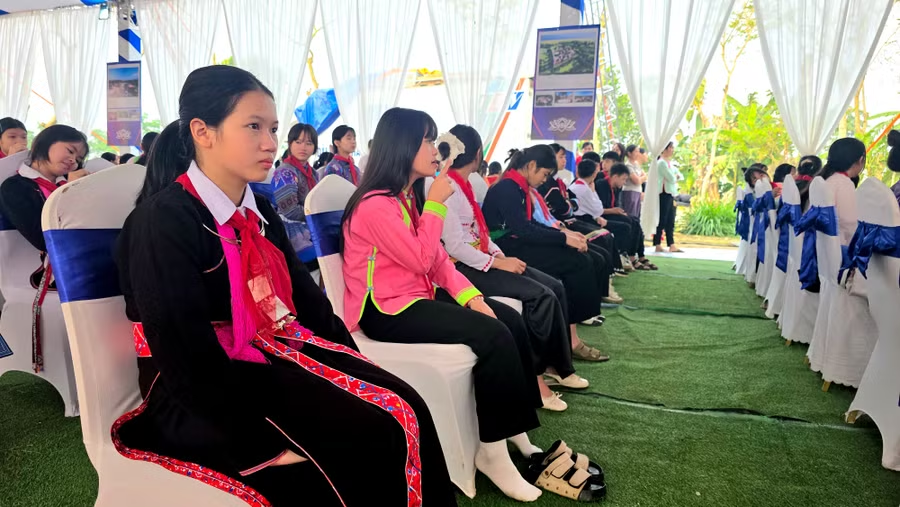
Giang Quynh Nga, a 9th-grade student from Na Loc Primary and Secondary School, shared that she and her classmates were very happy to learn that the local authorities would be building a new boarding school, as it meant they would no longer have to walk long distances to school.
According to Nga, studying at a boarding school not only allows students to learn in better conditions but also to participate in recreational activities, develop life skills, and enhance their abilities. In particular, being supervised and cared for by teachers at school gives parents greater peace of mind.
Mr. Trang Seo Hoa, a parent with a child studying at Na Loc Primary and Secondary School, believes that sending children to boarding school is the wish of many families in border areas, because in this environment, children develop independence, discipline, and good living habits.
According to Mr. Hoa, if children receive better education and more comprehensive training in life skills and physical fitness, parents will feel more secure about their children's future.
These observations show that the need for a proper boarding school is not unique to each school, but stems from the realities of life in border regions. The semi-boarding model has helped keep students attending classes, but in the long run, it remains only a temporary solution.
To ensure that students in border regions receive more comprehensive care, investing in standardized boarding schools has become an urgent requirement.
Expectations begin with education.
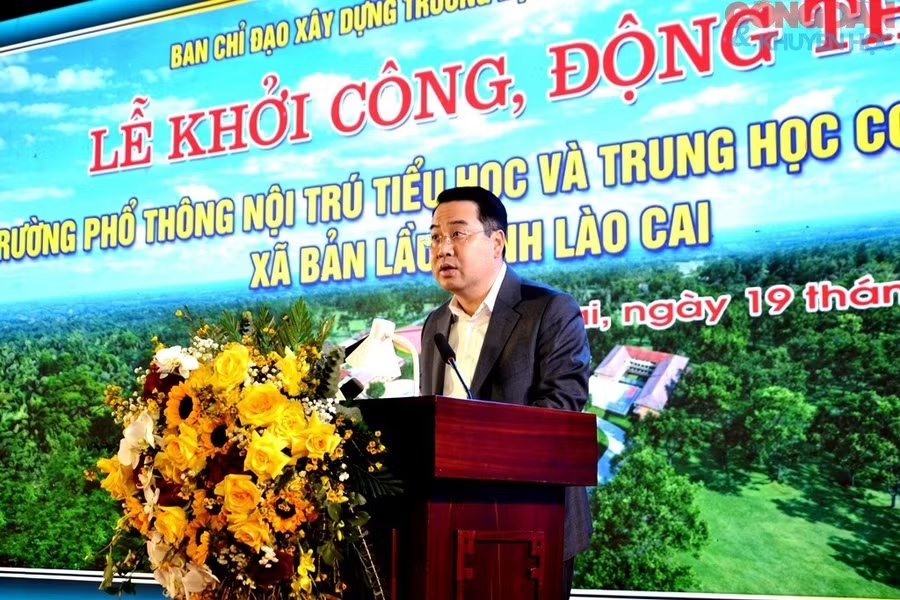
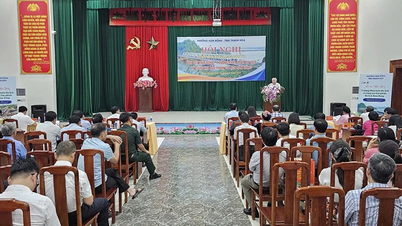
From that long-awaited aspiration, in March 2026, along with 17 other provinces and cities nationwide, Lao Cai held a groundbreaking ceremony for the construction of a multi-level boarding school in the border area.
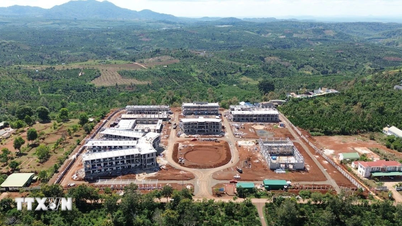
According to the approved project, Ban Lau Primary and Secondary Boarding School will be built on an area of approximately 5 hectares, meeting the teaching, learning, and living needs of about 980 boarding students.
The school has a total investment of 230 billion VND, with integrated facilities such as classroom buildings, administrative buildings, student dormitories, teacher's staff quarters, a multi-purpose hall, a canteen, and other essential technical infrastructure. The project is designed in a modern style while still reflecting the rich cultural identity of the highland ethnic groups.
Previously, starting in November 2025, Lao Cai province began construction on four boarding schools for primary and secondary levels in the border communes of A Mu Sung, Y Ty, Muong Khuong, and Pha Long. The simultaneous investment in these projects demonstrates a long-term vision for the future of education in the province's border regions.
When completed, these schools will provide food, accommodation, education, and training for tens of thousands of students, the majority of whom are children from ethnic minority groups. This will alleviate their worries about long distances, floods, and reduce the risk of dropping out of school due to geographical distance or family circumstances.
More importantly, boarding schools create a more holistic educational environment where students live in a structured community, develop independent skills, participate in cultural and sports activities, and cultivate a sense of discipline and community spirit.
Regarding preparations for operating the new schools, Mr. Luyen Huu Chung, Director of the Department of Education and Training of Lao Cai province, said that the local education sector has coordinated early with the People's Committees of communes in border areas to review and arrange the staffing structure to suit educational facilities in the area, ensuring the fulfillment of common educational tasks.
The placement of teachers in boarding schools will be based on the allocated staffing quota, ensuring that they meet the required standards, job positions, and local needs. The sector also prioritizes the use of experienced administrators, teachers, and staff in boarding and semi-boarding school management; giving priority to local teachers and those from ethnic minority groups; and paying attention to the teaching staff for English, Chinese, and Information Technology.
From the reality of boarding facilities struggling to meet demand to the gradual development of large-scale boarding facilities, it is clear that Lao Cai is progressively addressing the educational challenges in its border region in a more fundamental and long-term manner.
In the border regions of our country, each boarding school that springs up not only illuminates knowledge but also contributes to safeguarding the people, the land, and the borders through the most sustainable means: education.
In November 2025, Lao Cai province commenced construction on four multi-level boarding schools in border communes: Muong Khuong, Pha Long, Y Ty, and A Mu Sung. Specifically, the Muong Khuong Rural Primary and Secondary School has a total investment of 215 billion VND, with 28 classes and 980 students; the Pha Long Rural Primary and Secondary School has an investment of 220 billion VND, with 28 classes and 980 students; the Y Ty Rural Primary and Secondary School has an investment of 260 billion VND, with 28 classes and approximately 980 students; and the A Mu Sung Rural Primary and Secondary School has an investment of 250 billion VND, with approximately 36 classes and 1,260 students.
On March 19th, the Bản Lầu Rural Primary and Secondary School project commenced with a total investment of 230 billion VND, meeting the learning and living needs of approximately 980 boarding students.
Source: https://giaoducthoidai.vn/thap-lua-hoc-duong-noi-phen-dau-to-quoc-post779192.html


![[Photo] General Secretary and President To Lam presides over the meeting to approve the draft report on the results of the second inspection by the Politburo of the Standing Committee of the Hanoi City Party Committee.](https://vphoto.vietnam.vn/thumb/1200x675/vietnam/resource/IMAGE/2026/05/26/1779789811432_a2-bnd-4430-9620-jpg.webp)





































































Comment (0)