

Along its banks, over the centuries, the river has carried heavy loads of silt and layers of cultural sediment, layers upon layers of traces of ancient civilizations that once existed, leaving behind many mysteries for posterity.
Evidence from 2400 years ago
This place still preserves traces of two civilizations, Sa Huynh and Champa, shimmering and mysterious through layers of sediment.
Archaeological sites that have been excavated and those still lying silently under the dust of time are all located around the ruins of the ancient capital of Tra Kieu. The lower reaches of the Thu Bon River, where the footprints of various eras have converged, include many traces of Sa Huynh settlements.
The Go Ma Voi site is located on a barren sand dune 3km southeast of the ruins of Tra Kieu citadel. This site is considered a large burial site belonging to the Sa Huynh culture. Archaeologists have excavated and found the most diverse and abundant number of artifacts compared to other similar sites in the region. Some of the representative artifacts at this site date back approximately 2,400 years.
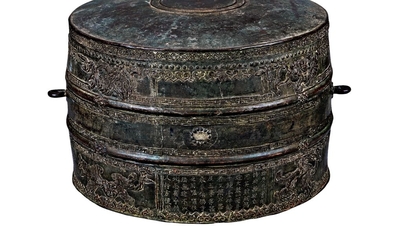
Evidence of this culture was found at the Go Dua site, located northwest of the My Son temple complex, a site with a different ecosystem from the Go Ma Voi site. Artifacts excavated at the Go Dua site are now on display in a museum. Alongside the burial jars are a considerable number of burial goods, including exquisite jewelry made of precious stones, glass, and agate. Iron tools, such as shovel-shaped tools, are rarely found at other similar sites within the Sa Huynh cultural space.
Where sediments tell stories of a thousand years.
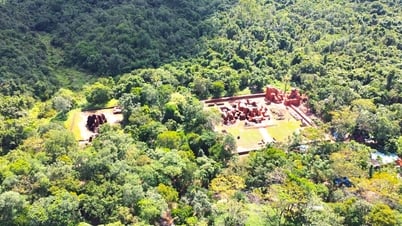
The footprints of history seem to linger for a considerable time in the mysterious land of the sacred Thu Bon River. Through observation, association, and speculation based on artifacts and relics, we can envision a glorious period following the Sa Huynh era: the ancient Champa Kingdom of Lam Ap, home to important architectural structures such as the Tra Kieu citadel and the My Son temple complex.
Time has eroded and destroyed a considerable amount of the unique artistic and architectural values of the ancient Cham people, but what remains is closely linked to the mystical beauty of the Thu Bon River, which was revered as a sacred river in the beliefs of the ancients.
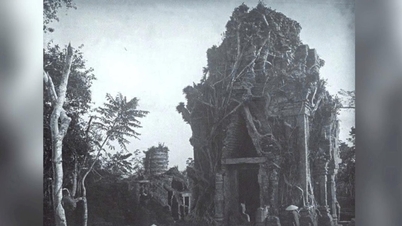
In the late 1920s, French archaeologist Clay conducted a large-scale excavation of relics within the Tra Kieu citadel. Based on the results of the archaeological excavation, Clay was able to map out the scale of the ancient citadel and prove that Tra Kieu citadel was indeed the ancient capital of Simhapura. This included the main temple, which was over 40 meters high. If it had survived to this day, it would have been considered the most massive temple in ancient Champa architecture in Southeast Asia.
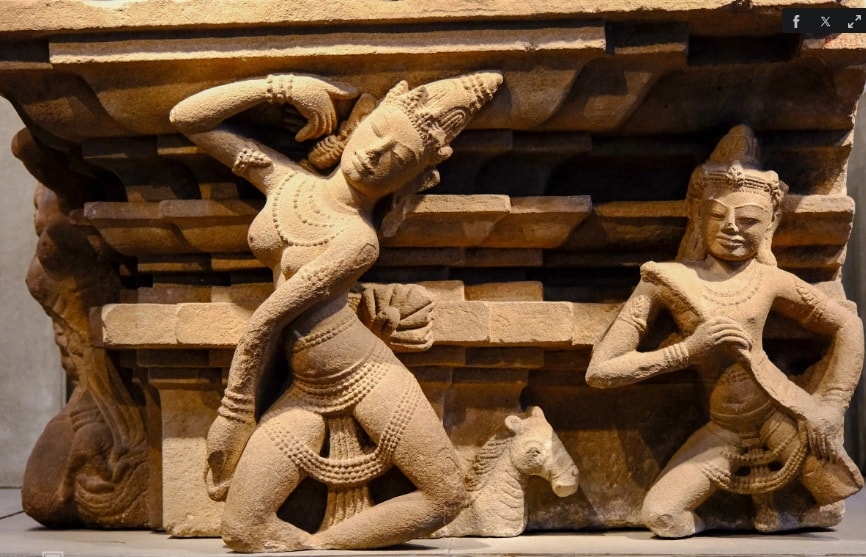
Within this temple complex is a massive altar, surrounded by reliefs of dancers gracefully performing before a lotus throne. This altar, along with countless statues of deities, has become a masterpiece of ancient sculpture that remains in the world . The magnificent sculptures here demonstrate a clear transformation in Champa art, forming the renowned artistic style known as the Tra Kieu style.
Even though it has fallen into ruin after nearly a millennium, the remnants of the Simhapura Tra Kieu citadel buried underground still reveal to future generations its richness. These remnants both supplement and deepen our knowledge of an ancient capital that has been lost for almost 1,000 years.
Witnesses to two successive civilizations
The ruins of the Champa kingdom of Lam Ap have given way to a new era of Vietnamese migrants who came here to settle and establish their lives—a great southward migration that we rarely notice in our daily lives amidst the busy cycles of seasons and vegetation. The new land, once familiar to the ancestors, is now the old, rooted land for future generations. These initial adaptations to sacred land have become a unique cultural characteristic of the people of Quang Nam.
It can be said that, along the plains on the southern bank of the Thu Bon River, the farmers of Quang Nam province have always lived alongside the mysteries of legends, myths, and relics, densely marked by the footsteps of their predecessors. If we listen carefully, the past will tell us something. This voice may emanate from the precious artifacts and relics that remain and that we can admire in the Quang Nam region.
The Thu Bon River is not just a river, but also an eternal witness to the continuity between the Sa Huynh and Champa civilizations. Its flow carries within it the prayers of our ancestors, leading us back to glorious and mysterious chapters of history. It is along the banks of this sacred river that the story of a land where two civilizations met and intertwined has been told.
Source: https://baodanang.vn/theo-dau-song-thieng-3302778.html

![[Photo] National Assembly Chairman Tran Thanh Man working with the Standing Committee of the National Assembly's Ethnic Council](https://vphoto.vietnam.vn/thumb/1200x675/vietnam/resource/IMAGE/2026/05/21/1779337435930_ndo_br_1-jpg.webp)



















![[Image] "Journey of Hope" promotes the organ and tissue donation movement in Vietnam.](https://vphoto.vietnam.vn/thumb/1200x675/vietnam/resource/IMAGE/2026/05/20/1779294400833_1-8910-jpg.webp)























































Comment (0)