

With a high sense of responsibility, from the beginning of the year, the civil enforcement agencies in the province have been focusing their efforts on resolving cases with high determination to complete the assigned targets and tasks.
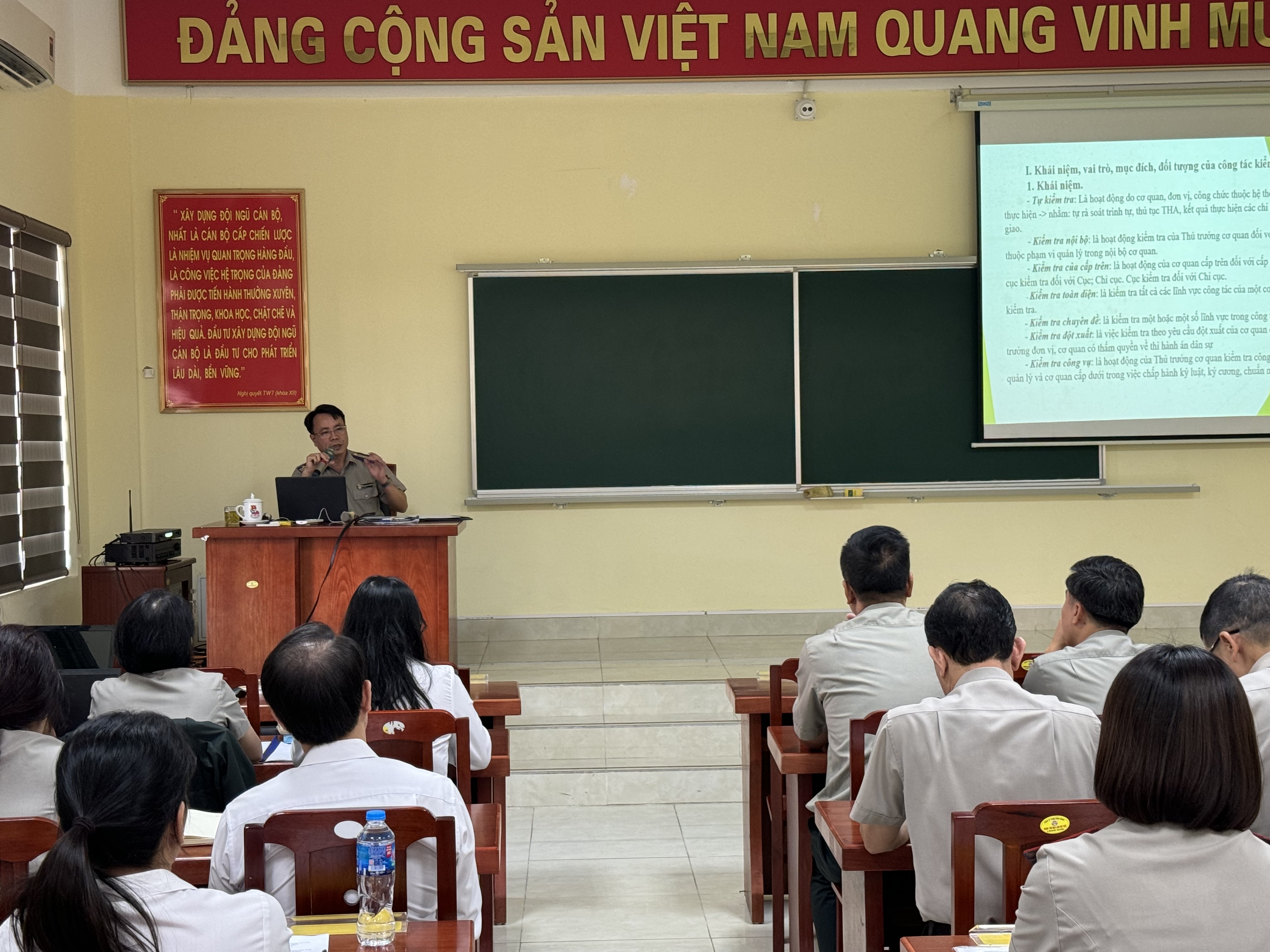
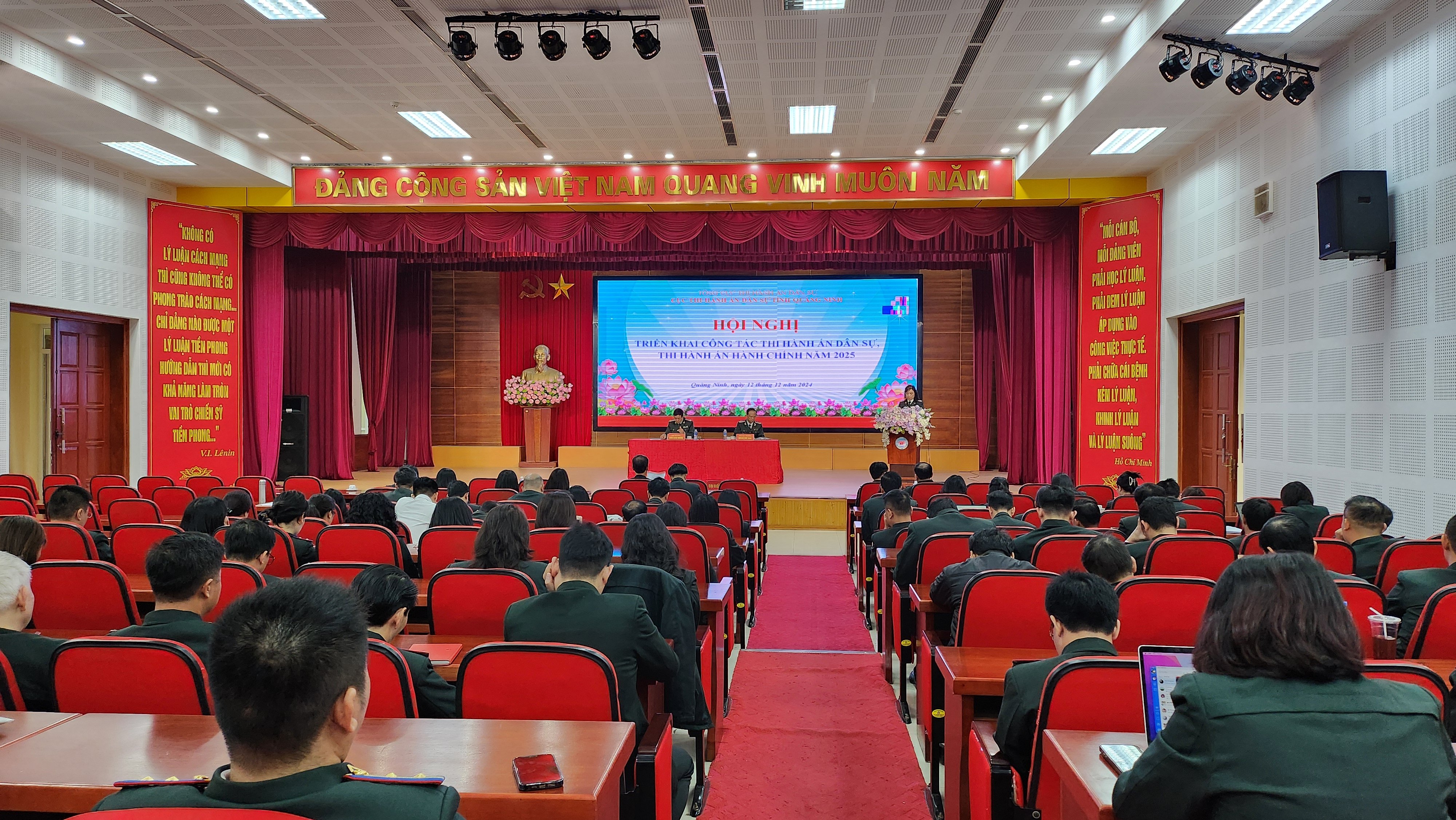
In 2024, the civil judgment enforcement work saw many positive changes. The results of civil judgment enforcement reached 85.49% in terms of cases, exceeding the General Department's target of 83.55% by 1.85%, and in terms of monetary value, reached 52.06%, exceeding the General Department's target of 46.65% by 5.41%. 2,609 cases were carried over to the next period. According to assessments, the majority of cases carried over from 2024 to 2025 were difficult to enforce. In addition, units received and handled many new cases with complex characteristics, posing demands and challenges for the province's civil judgment enforcement system.
Mr. Dinh Khac Khang, Director of the Provincial Enforcement Department, stated: To further improve the effectiveness of enforcement work in the province, based on the results achieved in the past year, in the coming time, the entire enforcement system of the province will continue to proactively overcome existing shortcomings and limitations; implement a comprehensive set of solutions; strengthen administrative discipline; and uphold the sense of responsibility of civil servants, especially the role of the head of the department in management, direction, and operation in a thorough manner, with "clear objectives, clear responsibilities, clear tasks, clear timelines, clear accountability, clear outputs, and clear results".
At the beginning of the year, the leadership of the Provincial Enforcement Department proactively followed the Central Committee's Resolutions, the Provincial Party Congress's Resolutions, concretized the requirements and tasks according to the National Assembly's Resolutions, and the Ministry of Justice 's key work program in the field of civil judgment enforcement, monitoring administrative judgment enforcement, and developing specific programs and plans to focus on leading and directing the implementation of tasks.
The units effectively implemented Official Letter No. 2586/CRHADS-NV dated October 24, 2024, outlining key tasks for 2025, and Official Letter No. 2759/CTHADS-KTr dated November 12, 2024, implementing directives from the General Department of Civil Judgment Enforcement to the Provincial Civil Judgment Enforcement Department. Heads of the two-level civil judgment enforcement agencies continued to closely adhere to the political tasks of the sector and locality; focused on leadership, direction, and organization of implementation; and proactively advised local Party committees, authorities, and the Civil Judgment Enforcement Steering Committee at the same level on civil judgment enforcement work, especially in verifying conditions for judgment enforcement and enforcing judgments with the mobilization of forces.
At the same time, the units promptly advised the Steering Committee for Enforcement of Judgments at the same level to direct relevant agencies and departments in the locality to coordinate well with the Enforcement of Judgments agency in enforcing cases that are enforceable, with small amounts of money to be enforced, but where the debtor has assets to fulfill the judgment. For these cases, it is necessary to proactively verify and classify each case, thereby developing specific plans, proposing effective solutions, and organizing effective enforcement. They must resolutely organize coercive enforcement in cases that are enforceable but where the debtor is reluctant, evading, or unwilling to comply, especially in cases that have been pending for more than one year without being completed.
The units also focused on improving the quality and effectiveness of inspection and self-inspection work, with self-inspection being the primary focus to promptly detect and address shortcomings and violations; promptly correct and remedy violations and shortcomings mentioned in inspection conclusions... thereby ensuring compliance with the procedures for enforcing judgments as prescribed by law. Emphasis was placed on effectively handling citizen complaints and denunciations, assigning capable leaders and officials to handle citizen complaints in accordance with regulations; resolving complaints and denunciations regarding judgment enforcement in accordance with legal regulations on procedures, timelines, etc.; resolving issues promptly at the grassroots level, preventing the emergence of complex and protracted cases; and reducing the occurrence of new, urgent, and complex complaints and denunciations regarding judgment enforcement.
In addition, strengthen administrative discipline and order. Focus on improving the organizational structure and personnel in accordance with directives from higher levels; enhance the training of successor cadres and high-quality human resources; ensure the stable, streamlined, and efficient operation of enforcement agencies throughout the province, meeting the political requirements of the sector.
Source
![[Photo] General Secretary and President To Lam presides over a meeting on preparations for the review of one year of operation of the three-tiered government system.](https://vphoto.vietnam.vn/thumb/1200x675/vietnam/resource/IMAGE/2026/06/02/1780391821195_a1-bnd-4595-9717-jpg.webp)





























![[Image] Affirming the aspirations and new standards of the Vietnamese real estate market in the new era.](https://vphoto.vietnam.vn/thumb/1200x675/vietnam/resource/IMAGE/2026/06/03/1780441948766_giai-thuong-bat-dong-san-2026-minh-duy-6-7364-jpg.webp)









































































Comment (0)