

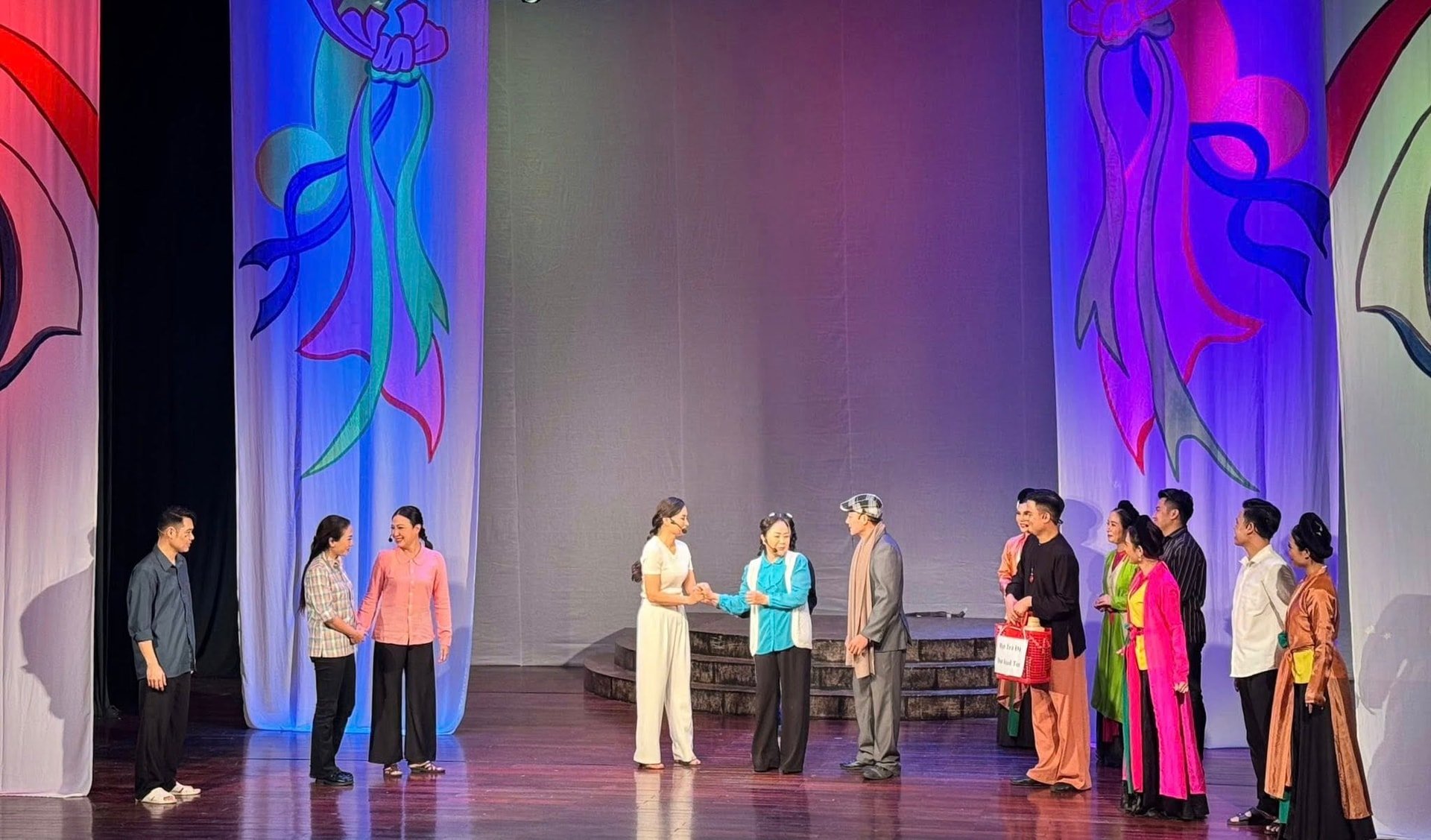
In fact, these two performances immediately attracted the audience's attention, as Cheo is a traditional art form that has been established for centuries, with rather strict rules regarding melodies, structure, and performance style.
In other words, experiments related to the art of Cheo (Vietnamese traditional opera) always carry a certain degree of sensitivity: creativity must be strong enough to make a difference, but if it's not reasonable, it can easily ruin the structure and turn the work into a play mixed with Cheo elements.
From that perspective, Dao Lieu demonstrates the significant efforts of the Hanoi Cheo Theatre team – an institution known for its dynamism and willingness to explore new approaches in Cheo art.
Even the title of the play is suggestive of multiple layers of meaning: "Dao Lieu" is the name of a familiar traditional Vietnamese opera melody, with a seemingly playful tune that nonetheless contains the longing for youth and the yearning for happiness of a woman. More broadly, in traditional art, "dao" is the term used to refer to female roles. Therefore, the character of "Dao Lieu" in the play carries both symbolic meaning and reflects the everyday life of the character.
The story in Bui Vu Minh's play isn't overly complicated: Mrs. Lieu is an elderly cheo (traditional Vietnamese opera) artist, always carrying the memories of a lifetime dedicated to cheo performances and roles that nurtured the souls of viewers. Upon retirement, she faces the indifference of her family – and more broadly, of society – when it comes to cheo and traditional art. Loneliness and disappointment lead her to constantly question the gap between the world of what she believes in and the real world, where those values are considered alien.
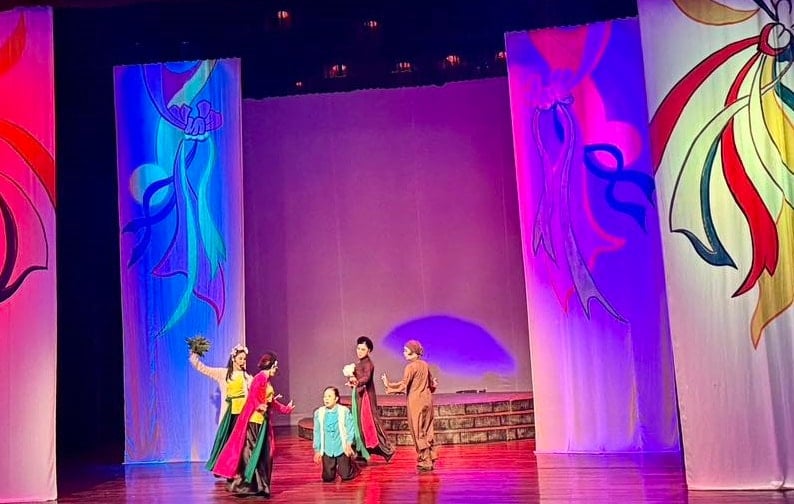
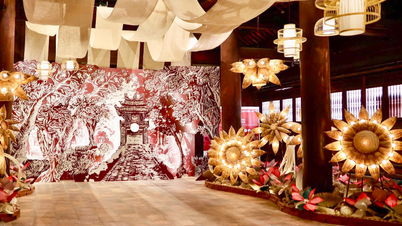
Director People's Artist Tran Hoai Thu chose a minimalist setting for Dao Lieu when staging the play. Almost 70 minutes of the performance unfolds in a single setting, where the stage is almost completely empty, with only a backdrop and four silk panels bearing traditional patterns. This space forces the acting to become the central focus, and the 70 minutes of the play consist almost entirely of dialogues and internal monologues of Mrs. Lieu (Meritorious Artist Minh Nhan).
The most elaborate part of those monologues is the scene where Mrs. Lieu successively encounters classic characters of Cheo (Vietnamese traditional opera): Xuy Van, Thi Mau, Thi Kinh, and Chau Long. Each character carries a distinct personality and fate characteristic of traditional Cheo, and also represents a piece of memory that helps viewers feel the loneliness and the dream of preserving traditional values of the artist who has dedicated her life to Cheo.
The 6th International Festival of Experimental Theatre 2025 will take place from November 15th and will conclude on the evening of November 30th in Ninh Binh .
In contrast to this highly symbolic setting is a 'base' reflecting modern life: the comedic elements of the character Dat 'the tea vendor,' the everyday faces, and the pragmatism within Mrs. Lieu's family. This contrast clearly illustrates the flow of the play: traditional Vietnamese opera (cheo) in memory is always beautifully radiant, but cheo in contemporary life is easily obscured by the fast pace of life and the pragmatic priorities of the time...
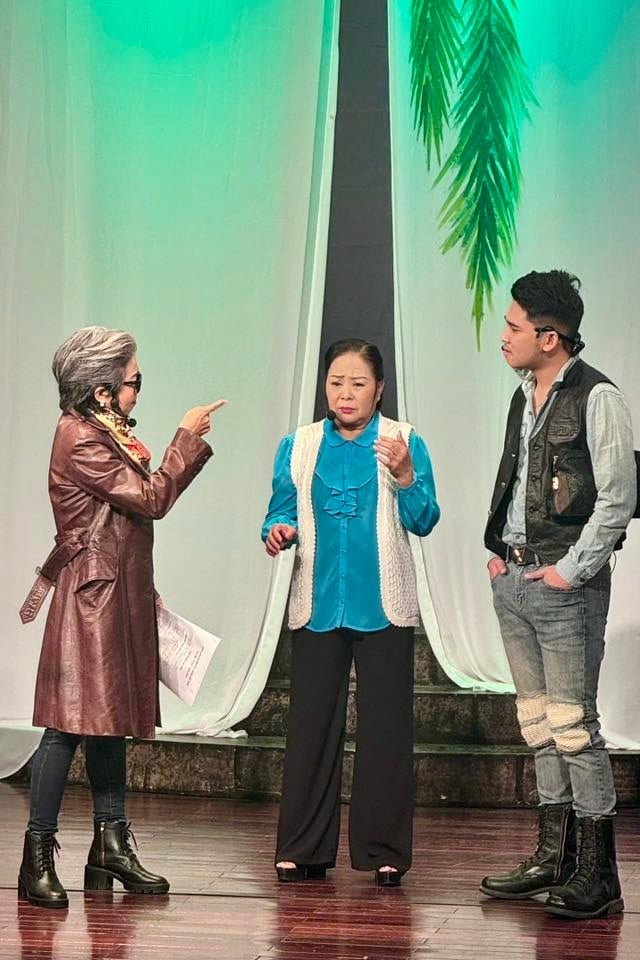
In the other performance, "Love Story" by the Army Cheo Theatre takes a different approach, focusing on structure and music. The play tells a story about love, honor, and responsibility – issues that seem familiar but are always relevant in life. And instead of choosing a linear narrative, the work features multiple characters participating in the storytelling, creating a flexible rhythm and an open structure – quite interesting compared to the typical characteristics of Cheo.
Furthermore, the music of "Love Story" is also handled in a new way: alongside the familiar pentatonic scale, the team incorporates polyphonic harmonies, Western polyphony, double harmonies, and even electronic drums. These elements aim to expand the possibilities for emotional expression – an approach suitable for modern audiences.
As shared by the creative team at the festival's panel discussion, the art of Cheo (Vietnamese traditional opera) is inherently symbolic, narrative, and lyrical, so experimentation requires careful consideration. Aware of these limitations, the performance chose a cautious approach: only changing elements that could enrich the performance language without altering the essence of Cheo. Within that framework, the team was still bold enough to experiment with some new musical arrangements and forms of expression, aiming to bridge the gap between Cheo and today's younger audience.
Notably, at the same seminar, many experts emphasized that the current experiments are only the beginning, because the success of a performance needs to be proven over time and its ability to sustain a lasting presence in theatrical life.
With traditional art forms like chèo (Vietnamese traditional opera), innovation requires a scientific and cautious approach: Experimentation lies not in fancy details or unconventional elements, but in finding new ways of expression while still building upon the inherent foundations of the art form.
The two experimental cheo plays at the festival should therefore be viewed in the same spirit: Initial innovations are positive and necessary, but they must continue to be observed and adjusted to create a lasting impact. Because if the differences only remain 'on the surface' without touching the audience's emotions, the experiment is unlikely to become a sustainable value.
Just like how the play Dao Lieu ends: Mrs. Lieu's solace doesn't come from the past, but from her granddaughter – who grew up listening to lullabies and traditional folk songs, and later decided to follow in her footsteps. Traditional arts like folk opera can only thrive when young people are willing to continue the legacy, building upon the foundation laid by previous generations.
According to VNASource: https://baohaiphong.vn/thu-nghiem-theo-cach-cua-cheo-528131.html
![[Image] Checking the security conditions at the exam site, ready for the 10th grade exam.](https://vphoto.vietnam.vn/thumb/1200x675/vietnam/resource/IMAGE/2026/05/28/1779943458889_z7872507660648-d764421a26e8cd7b61d70d142a48a685-jpg.webp)



![[Photo] Opening Ceremony of the National People's Council Conference on the Implementation of Directions and Tasks for the 2026-2031 Term](https://vphoto.vietnam.vn/thumb/1200x675/vietnam/resource/IMAGE/2026/05/28/1779939257690_ndo_br_bnd-1991-jpg.webp)





























































Comment (0)