

By 2030, in addition to the 28 already planned airports, the Government has decided to add two more airports: Thanh Son (Ninh Thuan) and Bien Hoa ( Dong Nai ).
According to the Prime Minister's approval decision dated June 7th, the national airport system for the period 2021-2030 is planned according to a hub-and-spoke model with two main hubs in Hanoi and Ho Chi Minh City.
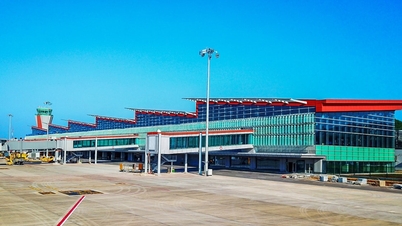
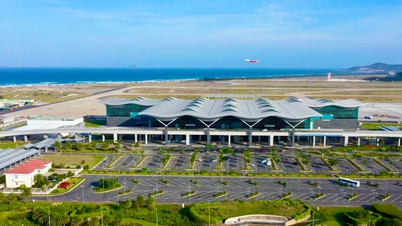
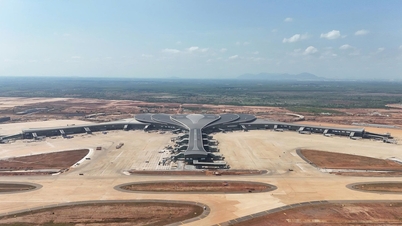
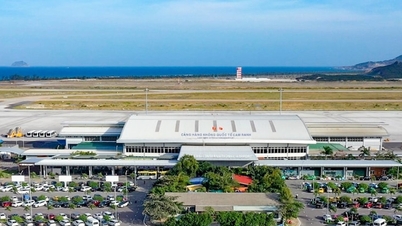
By 2030, the country will maintain the current 14 international ports, including: Van Don, Cat Bi, Noi Bai, Tho Xuan, Vinh, Phu Bai, Da Nang, Chu Lai, Cam Ranh, Lien Khuong, Long Thanh, Tan Son Nhat, Can Tho , and Phu Quoc.
The 16 domestic ports include: Lai Chau, Dien Bien, Sa Pa, Na San, Dong Hoi, Quang Tri, Phu Cat, Tuy Hoa, Pleiku, Buon Me Thuot, Phan Thiet, Rach Gia, Ca Mau, Con Dao, Thanh Son, and Bien Hoa. Among these, Thanh Son and Bien Hoa airports are planned for dual-use, serving both military and civilian purposes.
Thus, the Prime Minister has decided to add Thanh Son and Bien Hoa airports as domestic airports. The country will now have 16 domestic airports instead of the 14 previously proposed by the Ministry of Transport.
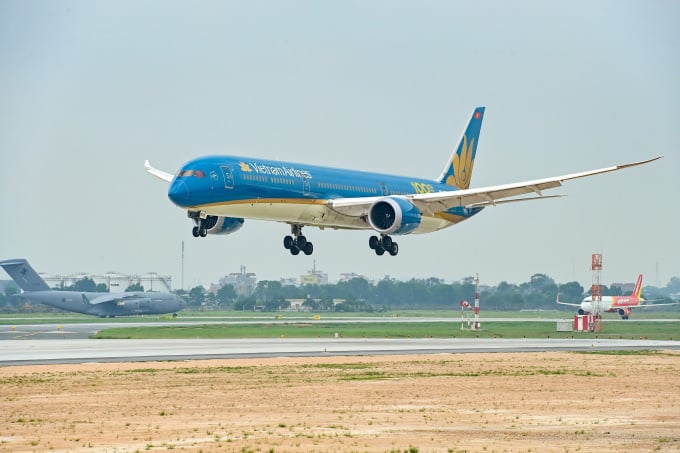
Noi Bai Airport is the only international airport in the Capital Region. Photo: Giang Huy
By 2050, Vietnam will have 33 airports. Of the 14 international airports in this period, Cat Bi will be replaced by Hai Phong airport, located in Tien Lang district. Of the 19 domestic airports, three new airports will be added: Cat Bi, Cao Bang, and a second airport in the Capital Region.
The government has decided that the second airport in the Capital region will be for domestic passenger transport, instead of being an international airport as proposed by the Hanoi People's Committee.
Add local airports when eligible.
In response to numerous local proposals for airport construction, the Government has stated that it will study and assess the feasibility of planning for several ports serving national defense and security; some important locations for emergency response; and locations with potential for tourism and service development. The addition of an airport to the planning will be considered when conditions are met, including a thorough assessment of needs, technical requirements, investment resources, and related impacts.
This proposed list includes 12 airports: Ha Giang (in Tan Quang commune, Bac Quang district); Yen Bai (Nam Cuong ward, Yen Bai city); Tuyen Quang (Nang Kha commune, Na Hang district); Gia Lam military airport (Long Bien district, Hanoi); Bac Ninh (Xuan Lai commune, Gia Binh district); Ha Tinh (Cam Nam commune, Cam Xuyen district); Kon Tum (Mang Den town, Kon Plong district); Quang Ngai (An Hai commune, Ly Son district); Binh Thuan (Ngu Phung commune, Phu Quy district); Khanh Hoa (Van Thang commune, Van Ninh district); Dak Nong (Quang Khe commune, Dak Glong district) and Tay Ninh (Phuoc Ninh commune, Duong Minh Chau district).
420 trillion VND is needed to implement the plan.
The Prime Minister's decision clearly states that priority will be given to investing in the construction or expansion of important international airports that serve as hubs, such as Long Thanh, Tan Son Nhat, Noi Bai, Da Nang, Cam Ranh, and Phu Quoc. The government will gradually upgrade and effectively operate existing airports, invest in new airports, and strive to ensure that over 95% of the population has access to airports within a 100 km radius.
The target for 2030 is a total passenger volume through ports of approximately 275 million (accounting for 1.5-2% of the transportation market share and 3-4% of the total inter-provincial passenger transport volume). The total cargo volume through the ports is expected to be approximately 4.1 million tons (accounting for 0.05-0.1% of the transportation market share).
In addition to airports, the plan also includes the placement of logistics centers at ports with a transport demand exceeding 250,000 tons per year. These logistics centers will connect transportation routes for goods at Noi Bai, Tan Son Nhat, Van Don, Cat Bi, Da Nang, Chu Lai, Long Thanh, Can Tho, and several other ports. Chu Lai Airport will become an international cargo transshipment logistics center.
The capital investment needed for the airport system by 2030 is approximately 420,000 billion VND, to be mobilized from the state budget, non-budgetary sources, and other legal sources. New airports will attract investment through public-private partnerships (PPP).
The airport project is the final plan developed by the Ministry of Transport over the past two years and approved by the Government, following four specialized plans for roads, maritime transport, railways, and inland waterways.
According to the initial draft in 2021 by the Ministry of Transport, the country was expected to have 28 airports by 2030 and 31 airports by 2050. Many localities subsequently proposed building airports to meet the travel needs of their citizens, develop tourism, and contribute to national security and defense. At the end of 2022, the Civil Aviation Authority of Vietnam and its consulting firm reviewed and worked with each locality to assess the feasibility of planning and transportation needs.

The planned airport network in Vietnam is expected to be developed by 2050.
Source link
![[Photo] General Secretary and President To Lam presides over a meeting with the Central Organizing Committee.](https://vphoto.vietnam.vn/thumb/1200x675/vietnam/resource/IMAGE/2026/06/03/1780482764658_a1-bnd-4741-3342-jpg.webp)

![[Photo] Secretary of the National Assembly Party Committee, Chairman of the National Assembly presides over the meeting of the Standing Committee and Executive Committee of the National Assembly Party Committee.](https://vphoto.vietnam.vn/thumb/1200x675/vietnam/resource/IMAGE/2026/06/03/1780480353201_ndo_br_bnd-2585-jpg.webp)
![[Photo] First session of the 14th Congress of the Vietnam Trade Union](https://vphoto.vietnam.vn/thumb/1200x675/vietnam/resource/IMAGE/2026/06/03/1780465947883_ndo_br_img-3852-jpg.webp)











































![[Video] Sunset at Lap An Lagoon – Where the sun sets over the fishing nets](https://vphoto.vietnam.vn/thumb/1200x675/vietnam/resource/IMAGE/2026/05/31/1780192137701_beach-landscape-sea-water-nature-grass-745871-pxhere-com.jpeg)




























Comment (0)