

The Ministry of Construction has just approved the master plan for Van Don International Airport and received the proposal for the Cam Ranh International Airport master plan from the Civil Aviation Authority of Vietnam (CAAV) for the period 2021-2030, with a vision to 2050.
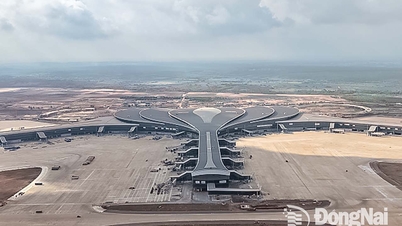
According to the approved plan, Van Don International Airport in the Van Don Special Economic Zone ( Quang Ninh province), during the period 2021-2030, is planned to meet the 4E standard according to the classification of the International Civil Aviation Organization (ICAO), with a capacity of approximately 2.5 million passengers and 5,000 tons of cargo per year.
In terms of operational infrastructure, the airport retains its existing 3,600-meter-long runway, while extending the parallel taxiway and completing the connecting taxiway system. Terminal T1 continues to operate at a capacity of 2.5 million passengers per year.
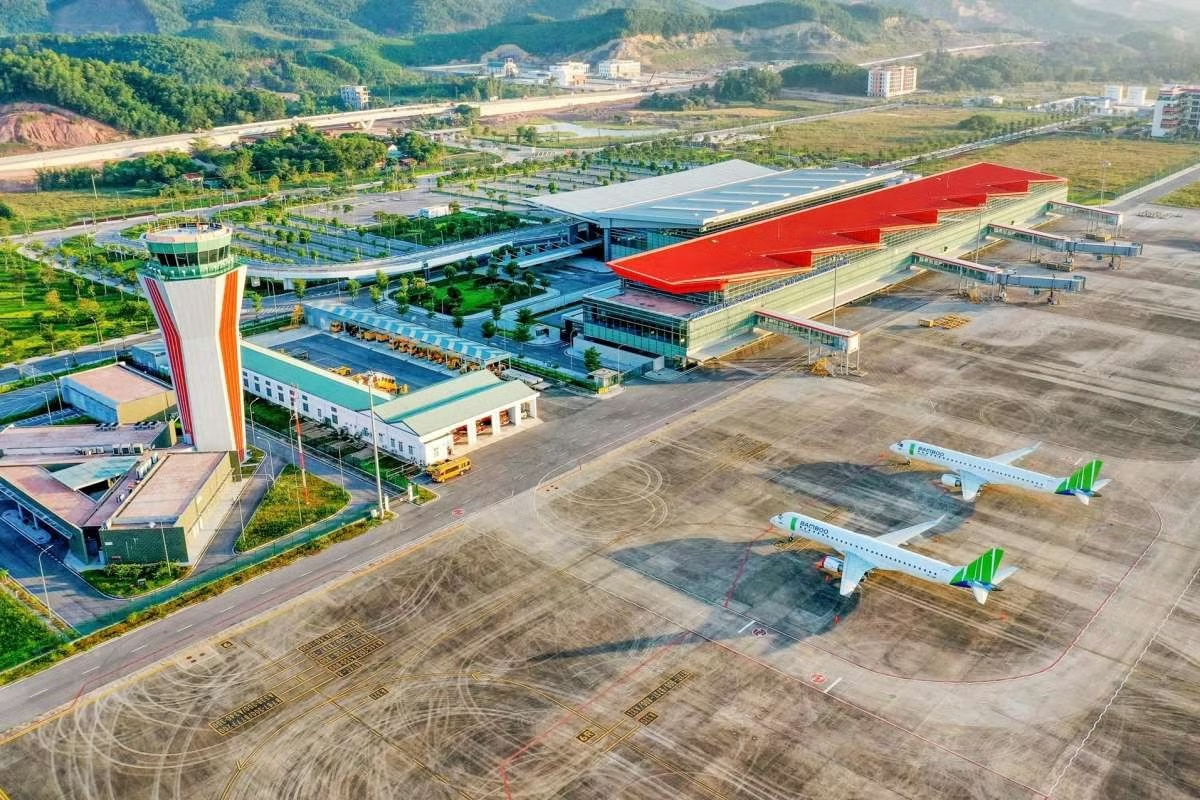
According to the plan for 2050, Van Don International Airport will increase its capacity to approximately 20 million passengers and 200,000 tons of cargo per year. Notably, the plan includes the addition of a second 3,000-meter runway, expansion of the apron to approximately 34 parking positions, and the construction of two new passenger terminals, T2 and T3.
The plan also shows that the land requirement for Van Don Airport will increase from over 390 hectares in the 2021-2030 period to nearly 500 hectares by 2050.
According to a proposal from the Civil Aviation Authority of Vietnam, Cam Ranh International Airport in Bac Cam Ranh ward, Khanh Hoa province, is also planned to become a dual-use international airport for both civilian and military purposes. During the period 2021-2030, the airport is planned to reach level 4E and military airport level I, with a capacity of approximately 19 million passengers and 50,000 tons of cargo per year.
According to the proposed plan, Cam Ranh will retain one existing runway while constructing a new 3,350-meter-long runway for the remaining runway. The taxiway system will be extended and additional connecting and rapid exit taxiways will be added to enhance operational capacity. The aircraft parking apron will be expanded to approximately 45 positions by 2030.
Regarding passenger infrastructure, the airport will construct a new Terminal 1 and expand Terminal 2, increasing the total capacity to 19 million passengers per year. The cargo area will be located north of the aircraft parking apron with a capacity of approximately 50,000 tons of cargo per year.
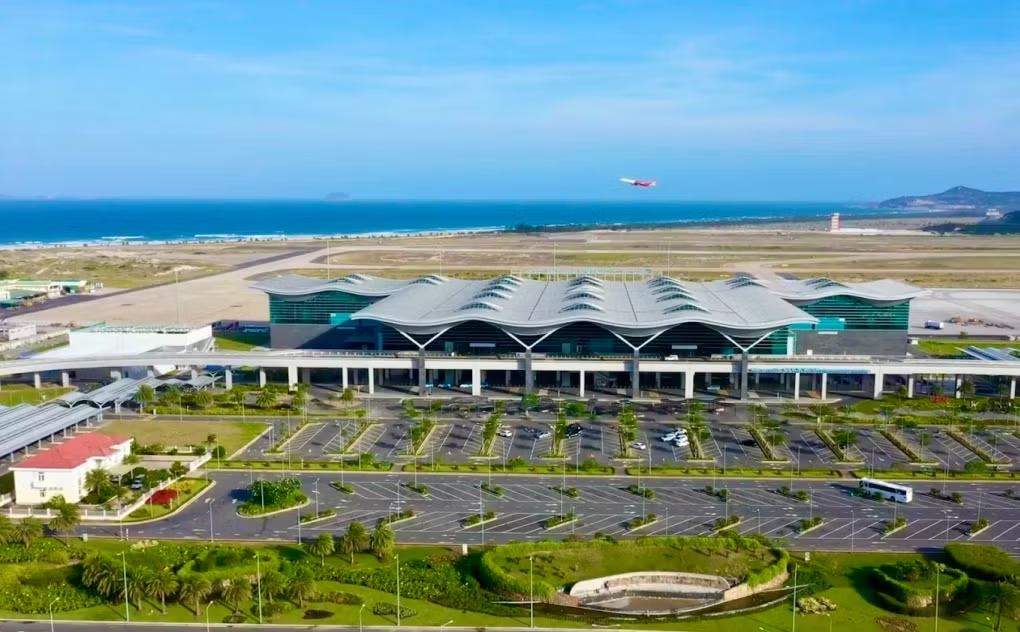
By 2050, Cam Ranh International Airport is envisioned to reach a capacity of 36 million passengers and 100,000 tons of cargo per year. The aircraft parking area is expected to increase to approximately 70 positions; simultaneously, studies will be conducted on the construction of a new air traffic control tower as needed and the passenger terminal system will be expanded.
Regarding the national airport system planning, the Ministry of Construction stated that according to the current plan, the country will have 30 airports by 2030, and the vision for 2050 is 33 airports. In addition, 12 potential locations are still being studied for inclusion in the plan.
The Ministry of Construction assesses that the scale of Vietnam's airport planning is comparable to that of other countries in the region. According to the plan for 2030, over 95% of the population will have access to airports within a 100 km radius, higher than the world average of approximately 75%.
By the end of this year, the Ministry of Construction expects to complete the preparation, approval, and adjustment of detailed planning for airports requiring investment and development.
Source: https://tienphong.vn/bo-xay-dung-duyet-mo-rong-san-bay-van-don-cam-ranh-post1845889.tpo
![[Photo] Ba Lang An Lighthouse - the "eye of the sea" amidst the "rock museum" of Quang Ngai province.](https://vphoto.vietnam.vn/thumb/1200x675/vietnam/resource/IMAGE/2026/05/29/1780038698840_anh-man-hinh-2026-05-29-luc-14-10-42.png)


![[Image] Pleasant weather helps students enter the 10th grade entrance exam with confidence.](https://vphoto.vietnam.vn/thumb/1200x675/vietnam/resource/IMAGE/2026/05/29/1780034401612_ngay-1-thi-lop-10-minh-duy-8-5009-jpg.webp)

















































































Comment (0)