

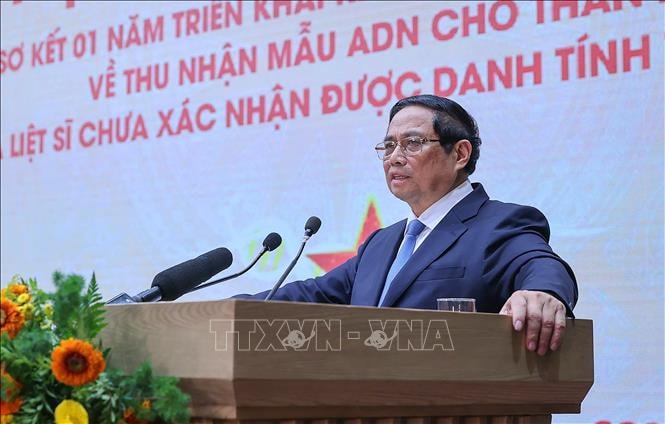
The conference was held in person at the Hanoi venue and online to police departments in 34 provinces and cities nationwide. Attendees included leaders from ministries, departments, and central agencies; and leaders from provinces and centrally-administered cities.
After one year of implementing Plan No. 356/KH-BCA-C06 (Plan 356) on the collection of DNA samples for relatives of unidentified martyrs, the Department of Administrative Management of Social Order (C06), Ministry of Public Security, has closely coordinated with ministries, sectors, and localities to collect 57,273 samples for Vietnamese Heroic Mothers, biological mothers, and relatives of martyrs nationwide.
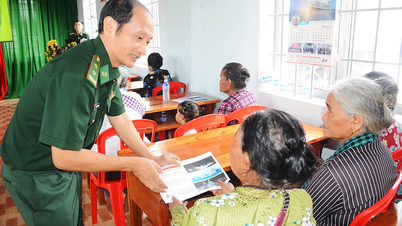
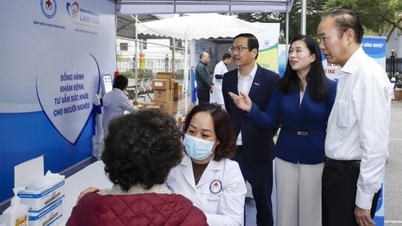
In various localities, C06 coordinated with PC06 and local police to organize more than 500 mobile collection sessions for elderly and infirm relatives of martyrs who were unable to travel, and organized centralized sample collection in 34 provinces and cities.
The Ministry of Public Security has directed local police units to review citizens residing in their areas, coordinating with People's Committees at all levels and local Interior departments to collect, survey, and digitize information into a database. The linked and digitized information contributes to ensuring accuracy when collecting DNA samples for relatives of fallen soldiers. Furthermore, the collected information on fallen soldiers is a particularly important source of information for improving the verification and matching of DNA information between the remains of fallen soldiers and their relatives.
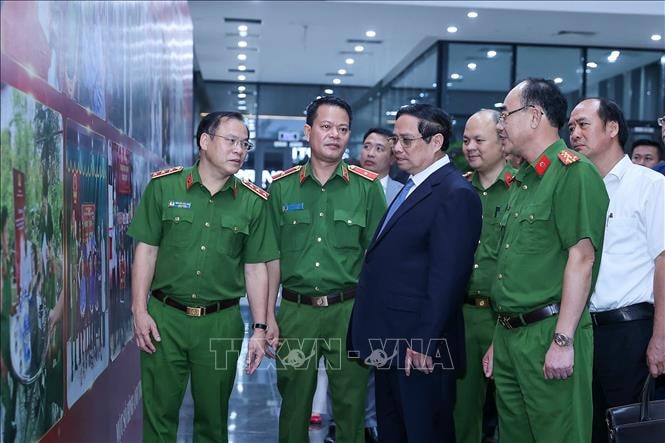
As of July 20, 2025, C06 had completed the analysis of 11,138 DNA samples from relatives of fallen soldiers, and simultaneously updated the National Identity Card database with over 10,000 DNA data entries of relatives of fallen soldiers. C06 chaired meetings with the Department of Social Policy - Ministry of National Defense, the Department of Meritorious Persons - Ministry of Interior, and DNA testing laboratories for remains and relatives of fallen soldiers.
The Ministry of Interior has received and transferred samples of remains and DNA samples from relatives to laboratories for analysis and comparison. The laboratories have analyzed 5,493 DNA results out of a total of 17,726 samples of remains and relatives that were handed over. The remaining samples are still being analyzed and tested.
Through the comparison of data on the remains of fallen soldiers with data on their relatives, 16 cases were identified where the DNA of the remains matched the maternal lineage DNA of 27 relatives of fallen soldiers. C06, in coordination with the Department of War Invalids and Martyrs - Ministry of Interior, completed the dossiers for recognizing the identities of 16 heroic fallen soldiers.
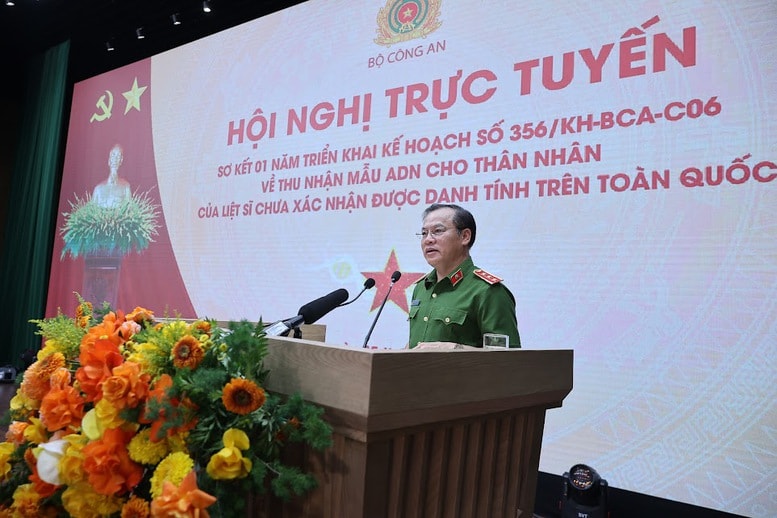
The conference assessed that, despite significant initial results, the work of collecting DNA samples for relatives of unidentified martyrs still faces limitations and difficulties due to the elderly or deceased relatives of the martyrs; the lack of databases and records on information about martyrs and their relatives; the low results achieved in many localities due to insufficient coordination among ministries, agencies, and units; and the failure to effectively promote the Party and State's policies for meritorious individuals through effective communication.
Representatives from ministries, sectors, and localities shared experiences and proposed solutions to improve the effectiveness of collecting DNA samples for relatives of unidentified martyrs nationwide, especially in areas such as coordination; application of science and technology; data interconnection and sharing; and the socialization of DNA sample collection for martyrs' relatives.
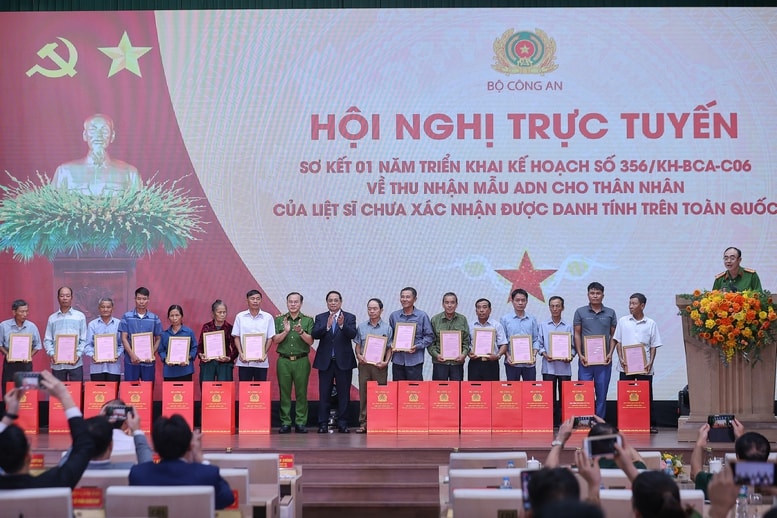
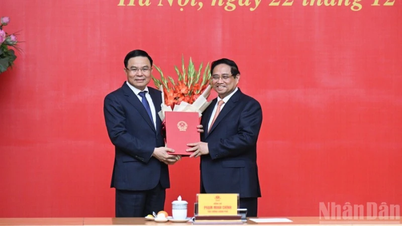
Prime Minister Pham Minh Chinh and leaders of the Ministry of Public Security and the Ministry of Interior presented the Decision on identifying the remains of martyrs whose information was incomplete to representatives of 15 martyrs' families.
Organizations and individuals who have made significant contributions are awarded commemorative plaques recognizing their meritorious service and support in the work of identifying the remains of fallen soldiers.
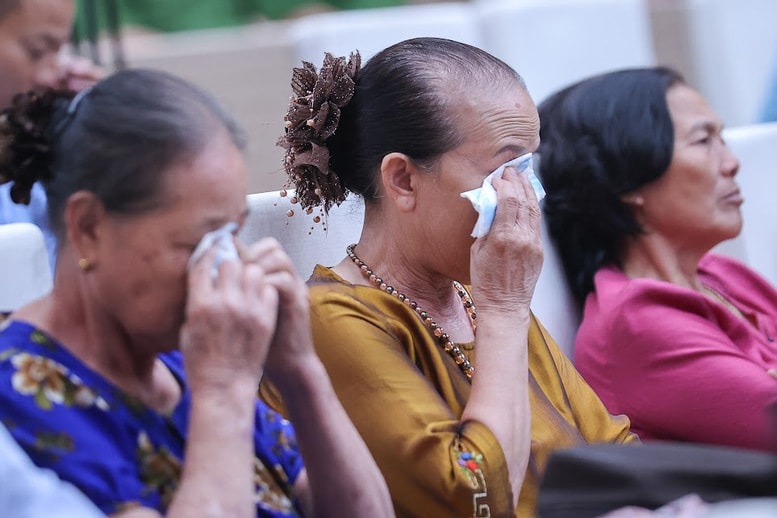
Upon receiving the decision identifying the remains of fallen soldiers, the relatives of the martyrs were deeply moved to officially recognize the graves and remains of their loved ones after decades of anxious waiting; they expressed their gratitude to the Party, the State, and the people for always remembering and honoring those who sacrificed themselves for the independence and freedom of the Fatherland and the happiness of the people.
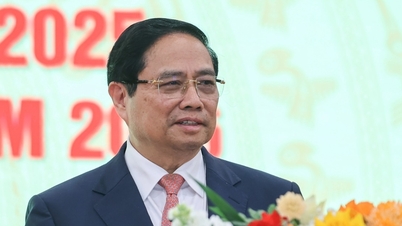
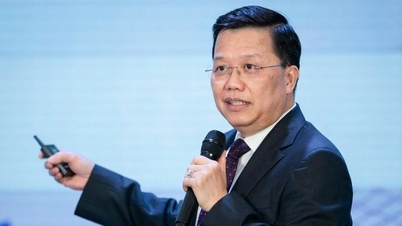
Speaking at the conference, on behalf of the Party and State leaders and on behalf of General Secretary To Lam, Prime Minister Pham Minh Chinh expressed his deepest gratitude to the heroic martyrs, Vietnamese Heroic Mothers, wounded soldiers, sick soldiers, and relatives of martyrs nationwide. He stated that this conference is part of a series of events commemorating the 78th anniversary of the Day of Wounded Soldiers and Martyrs (July 27, 1947 - July 27, 2025).
Prime Minister Pham Minh Chinh emphasized: Collecting DNA samples for relatives of unidentified martyrs is a deeply humane program; it demonstrates responsibility, morality, and is a command from the heart towards the outstanding sons and daughters who sacrificed themselves for the independence and freedom of the Fatherland, and for the happiness of the people.
Expressing his emotion at the noble deeds and actions of the People's Public Security officers and soldiers, as well as the people and businesses, in their efforts to collect DNA samples for the relatives of unidentified martyrs, demonstrating the spirit of national solidarity, the Prime Minister stated: Compared to the sacrifices of the martyrs and the contributions of their families, no matter how much we do, it will never be enough!
The Prime Minister stated that, during the wars for independence, freedom, national reunification, and noble international duties, our country had over 1.2 million martyrs; over 900,000 remains of martyrs have been collected, but approximately 300,000 remains remain unidentified. Nationwide, there are about 652,000 wounded soldiers, 198,000 sick soldiers, over 132,000 Heroic Vietnamese Mothers, and 320,000 people affected by Agent Orange and dioxin.
Although the war is long over, countless families still await information about the graves and remains of their loved ones. Therefore, the search for and verification of the identities of fallen soldiers remains a matter of utmost urgency, especially when facing the challenges of time and increasingly difficult climatic and weather conditions.
Emphasizing that DNA identification is not only about biological information but also a key to restoring historical memories for relatives of martyrs, and a crucial tool for connecting the past, present, and future, affirming the moral values and unique humanistic identity of our nation, the Prime Minister stated that the Party and State consider the search for and collection of martyrs' remains and the verification of their identities as an important and sacred task for the entire political system and society; requiring investment with dedication, intellect, technology, compassion, diligence, and the joint efforts and support of the people and businesses.
Reviewing the results of one year of implementing Plan 356, which have yielded very important results reflecting the efforts of relevant agencies, businesses, and the entire society, the Prime Minister commended the efforts of the Ministry of Public Security, the Ministry of National Defense, the Ministry of Interior, localities, and units; the responsible coordination of relevant ministries, sectors, and agencies; and the valuable support of the business community, people, organizations, and individuals.
The Prime Minister emphasized that the number of unidentified martyrs remains very large, and as time passes, other conditions become increasingly difficult. Therefore, we must act with a high sense of responsibility, upholding the tradition of "national solidarity and brotherhood," and the principle of "remembering the source when drinking water; remembering the planter when eating fruit," to express our gratitude and honor those who sacrificed for the independence and freedom of the Fatherland, and for the well-being and happiness of the people.
Prime Minister Pham Minh Chinh directed leaders at all levels, sectors, and localities, especially the heads of the entire political system, the Fatherland Front, various sectors, organizations, and the people, along with the police force, to review, mobilize, and collect samples from the relatives of fallen soldiers; to balance and allocate budget and mobilize social resources for the work of collecting and analyzing DNA as well as gene sequencing of the remains of fallen soldiers.
The Prime Minister emphasized the need to strengthen outreach to individual households and relatives of martyrs, especially in remote areas, ethnic minority regions, and places with limited access to information; to regularly review, inspect, and monitor work progress according to plan, promptly identify obstacles and propose solutions to overcome them; and to simultaneously promote emulation, reward, and summarize best practices to replicate them.
The Prime Minister has assigned the Ministry of Interior to advise on and issue a comprehensive plan for the collection of biological samples from relatives of unidentified martyrs; the Ministry of Public Security will continue to coordinate with relevant units and localities to strengthen the application of digital technology, maximize the use of population data, connect biological and genetic data, and accelerate the process, striving to basically create and collect complete information on all unidentified martyrs by the end of 2027; collect and analyze DNA samples from relatives of eligible martyrs for integration into the gene bank; and build an integrated data system closely connected with the Ministry of National Defense, the Ministry of Interior, and the People's Committees of localities to create a synchronized and effective coordination network.
The Ministry of National Defence, particularly the search and information gathering teams, connects with the Ministry of Public Security, the Ministry of Interior, and local People's Committees to identify fallen soldiers. The Ministry of Science and Technology, the Ministry of Health, and the Vietnam Academy of Science and Technology continue to research and apply advanced biotechnology, and provide in-depth training in DNA techniques to enhance analytical capabilities for identification work, ensuring the highest possible accuracy.
The Ministry of Finance, in coordination with other ministries and agencies, must urgently resolve obstacles, allocate funds, and provide clear and transparent guidance on the payment of DNA testing costs, avoiding delays that could affect the overall progress.
Chairpersons of the People's Committees of provinces and cities, especially those with a large number of unidentified martyrs such as Quang Tri, Hue, Da Nang, and the central provinces, are requested to conduct a comprehensive review, compile a list, and develop a plan to collect DNA samples from the relatives of martyrs, ensuring that DNA sample collection is completed before June 30, 2026; and that testing, analysis, and updating into the gene bank are completed by December 31, 2026.
Businesses and scientific and technological organizations continue to collaborate on research, technical improvements, and optimization of the genetic data system for fallen soldiers. Press and media agencies are strengthening the dissemination of gratitude to fallen soldiers, amplifying the noble moral and humanitarian values of the nation, commensurate with the contributions made by our brothers and sisters in carrying out this special task.
The Vietnam Fatherland Front Committee, social organizations, and mass organizations should play a key role and coordinate closely with the police and military forces in launching emulation movements to widely disseminate information to the entire population about the important significance of this work.
The Prime Minister affirmed that the application of DNA technology in identifying fallen soldiers, building databases and gene banks for fallen soldiers is a major scientific and legal step forward in fulfilling the sacred duty, noble responsibility, and sincere feelings of the Party, the State, the entire people, and the entire political system towards those who sacrificed for the Fatherland.
The Prime Minister hopes and believes that in the future, many more martyrs will be brought back to their names, hometowns, and families; so that no martyr is forgotten, and no martyr's family has to wait in vain; contributing to alleviating the pain of war for each family and the entire nation; and fulfilling our duty to those who bravely fought and sacrificed so that our country could have peace and unity, and the people could enjoy prosperity and happiness as they do today.
Source: https://hanoimoi.vn/thu-tuong-xac-minh-danh-tinh-liet-si-la-bon-phan-thieng-lieng-la-menh-lenh-tu-trai-tim-710442.html


































































Comment (0)