

With the current railway capacity, the volume of goods imported and exported by rail between Vietnam and neighboring markets remains very small compared to the total import and export turnover of the countries. According to statistics from 2025, at the Dong Dang international border gate, the value of goods imported and exported by rail between Vietnam and China accounted for only about 5% of the total import and export volume.
"Discrepancy" in hardship
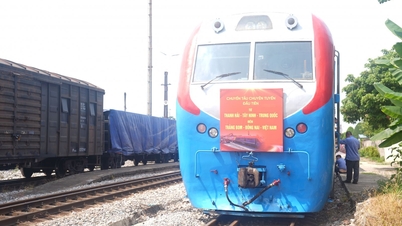
According to a report by the Vietnam Railway Authority, Vietnam's national railway system currently has 7 main lines, including 2 international connections with China and through China to third countries (such as Russia, Mongolia, Central Asia, and Europe): the Lao Cai - Hanoi - Hai Phong line and the Hanoi - Dong Dang line. Deputy Director Nguyen Tien Thinh noted that Vietnam's railway system, built during the French colonial period (1901-1910), has a narrow gauge of 1,000mm, small curve radii, uses diesel locomotives, and operates at low speeds. These factors hinder the efficiency of international rail transport between Vietnam and China.
Meanwhile, China has switched to the world standard gauge of 1,435mm, leading to goods transported by rail between Vietnam and China having to be transshipped between the two gauges. This increases transport time and costs, reducing the attractiveness of rail transport compared to other modes of transport. Goods exported to China and goods temporarily imported, re-exported, or transiting through Vietnam to China (and vice versa) via the Lao Cai railway border gate must be transshipped between 1,000mm gauge trains (Vietnam) and 1,435mm gauge trains at Hekou station (China).
Goods from southern provinces or from Thailand, Laos, etc., transiting through Vietnam to China, via the Dong Dang railway station, must be transshipped by truck to Bang Tuong station, or transferred to 1,435mm gauge trains right from Yen Vien station. Due to outdated technical infrastructure standards and mismatched track gauges, the Vietnam-China intermodal railway line can only handle a very small volume of import and export goods, not commensurate with its potential.
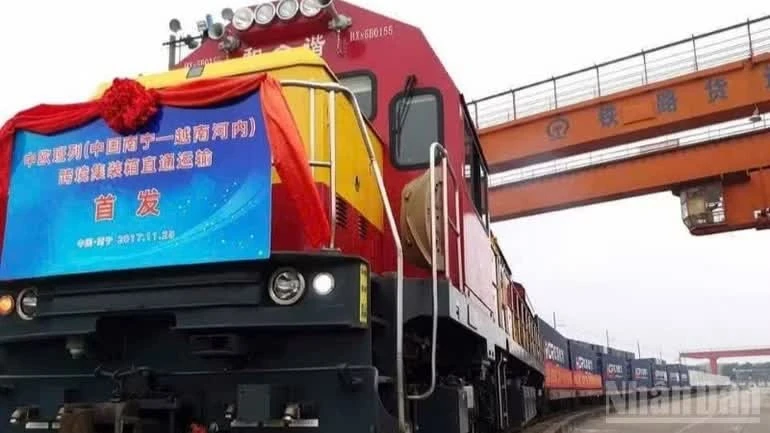
Currently, Vietnam's international intermodal transport network is organized through eight international intermodal stations: Lao Cai, Yen Vien, Hai Phong , Dong Dang, Giap Bat, Song Than, Kep, and Cao Xa. These stations serve as key hubs connecting Vietnam's railway transport with the Chinese railway network and the Eurasian intermodal transport system, via 13 transport corridors of the Organization for Railway Cooperation (OSJD). Rail connections through China are currently the most convenient for transporting goods to China and from China onward to third countries.
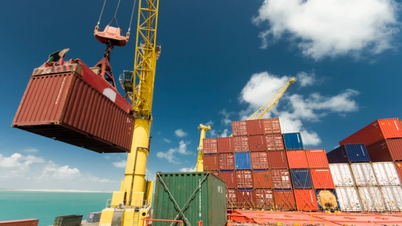
China's railway system currently boasts one of the world's largest and most modern networks, serving a market of over 1.4 billion people and ranking among the world's leading in import and export cargo volumes. Through connections with China, Vietnamese goods can be easily transported to countries in Europe, Central Asia, Mongolia, and the Russian Federation. Between 2021 and 2025, the total volume of international intermodal freight transport through the two main railway border crossings of Lao Cai - Son Yeu and Dong Dang - Bang Tuong is projected to reach approximately 5.1 million tons; with 1.12 million tons transported in 2025 alone, a 19% increase compared to 2024.
In fact, the Vietnam-China railway alone transported over 1 million tons of goods in 2025, an increase of nearly 30% compared to the previous year, showing a clear shift towards rail transport in import and export activities. Besides the volume of directly imported and exported goods, there are also containers transiting through China to third countries, contributing to the promotion of international logistics.
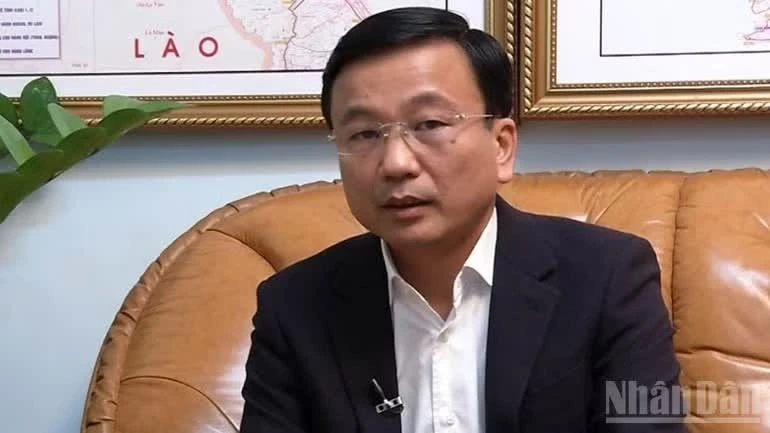
“With its large-scale transport capacity, international rail transport has become a strategic logistics channel, helping to reduce transportation and logistics costs for businesses; increasing the capacity for customs clearance of import and export goods; directly connecting Vietnamese goods with the Chinese, Central Asian, and European markets through the Asia-Europe transport network; and promoting the development of production, trade, and logistics services along economic corridors,” Mr. Nguyen Tien Thinh assessed.
During the period 2021-2025, the total volume of international intermodal freight transport through the two main railway border gates of Lao Cai-Son Yeu and Dong Dang-Bang Tuong is expected to reach approximately 5.1 million tons; in 2025 alone, it is projected to reach 1.12 million tons, a 19% increase compared to 2024. In fact, the Vietnam-China railway transport route alone will transport over 1 million tons of goods in 2025, an increase of nearly 30% compared to the previous year, demonstrating a clear shift towards rail transport in import and export activities.

Therefore, investing in and constructing new standard-gauge railway lines connecting to China will contribute to reducing logistics costs and enhancing the competitiveness of the economy, strengthening connectivity and promoting international intermodal transport through the Eurasian railway network.
Completing the international transport corridor
According to the Railway Network Planning for the period 2021-2030, with a vision to 2050, Vietnam's railway network will connect Asia and Europe via China to participate in international intermodal transport on three routes: Lao Cai - Hanoi - Hai Phong (component project 1, investing in infrastructure connecting stations and station squares, using domestic capital, commenced on December 19, 2025), Hanoi - Dong Dang and Hai Phong - Ha Long - Mong Cai (these two routes are currently receiving technical assistance from the Chinese government for detailed planning since September 2025, with planning to be completed in 2026).
Deputy Minister of Construction Nguyen Danh Huy emphasized that the Ministry of Construction is researching and preparing to invest in strategically important railway lines that directly connect with China. At the same time, the upgrading of international railway lines and stations is also being studied to develop them into international logistics centers and freight terminals, aiming to improve container handling capacity, organize international freight trains, and connect with other modes of transport.
Specifically, the new Hanoi - Dong Dang railway line (approximately 156km) and the Hai Phong - Ha Long - Mong Cai railway line (approximately 187km) are planned to be built to 1,435mm gauge standards, electrified, and capable of transporting both passengers and freight. Passenger trains will have a speed of 160km/hour, and freight trains 120km/hour. Initially, a single track is planned, with future expansion to double tracks. The Ministry of Construction is currently tasking the Railway Project Management Board with preparing pre-feasibility studies for these two railway lines, finalizing investment preparations, and securing funding for the projects.
The Ministry of Construction is researching and preparing to invest in strategically important railway lines that directly connect with China. Simultaneously, the upgrading of international railway lines and stations is also being studied to develop them into international logistics centers and freight terminals, aiming to improve container handling capacity, organize international freight train services, and connect with other modes of transport.
With the Lao Cai - Hanoi - Hai Phong railway line having a main line length of approximately 391km, single track, 1,435mm gauge, transporting both goods and passengers; and a total investment of approximately VND 203,231 billion, the Railway Project Management Board is currently preparing a feasibility study report for Component Project 2 (investment in railway construction, expected to use ODA loans and domestic capital). The project is expected to be approved in Q3/2026, with construction commencing in Q4/2026.
To anticipate intermodal railway projects, the railway industry is gradually improving its multimodal transport mechanism, strengthening connections between railways and seaports, inland container depots (ICDs), roads, and industrial zones, thereby forming a comprehensive logistics chain from production to export.
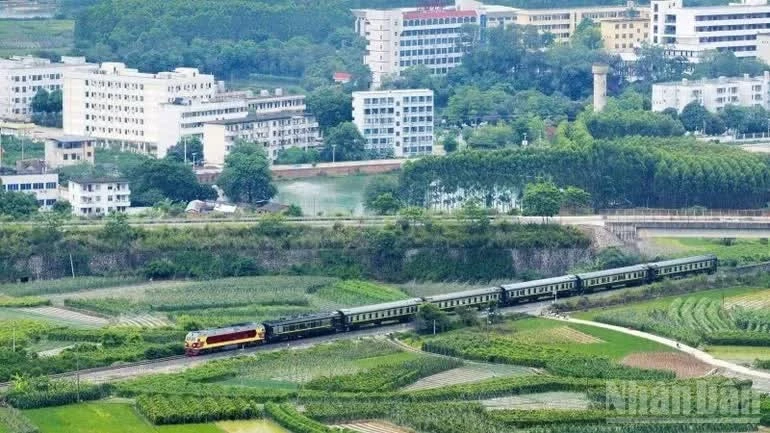
In addition, authorities are coordinating with relevant ministries and agencies to simplify customs, quarantine, and international transport procedures, creating favorable conditions for import and export goods to travel by rail through border checkpoints. “Vietnam continues to strengthen cooperation with countries in the region and international organizations in the railway sector, especially within the framework of the Organization for Railway Cooperation (OSJD), to promote transport connectivity with the Eurasian railway network,” Deputy Minister Nguyen Danh Huy affirmed.
In the near future, Vietnam is also studying options for connecting its domestic railway system with international transport corridors, aiming to leverage Vietnam's geoeconomic position within the Eurasian transport network, while contributing to reducing logistics costs and enhancing the competitiveness of the economy.
Source: https://baolaocai.vn/tiem-nang-lon-cua-duong-sat-lien-van-post897776.html


![[Photo] General Secretary and President To Lam presides over a meeting with the Central Organizing Committee.](https://vphoto.vietnam.vn/thumb/1200x675/vietnam/resource/IMAGE/2026/06/03/1780482764658_a1-bnd-4741-3342-jpg.webp)

![[Photo] Secretary of the National Assembly Party Committee, Chairman of the National Assembly presides over the meeting of the Standing Committee and Executive Committee of the National Assembly Party Committee.](https://vphoto.vietnam.vn/thumb/1200x675/vietnam/resource/IMAGE/2026/06/03/1780480353201_ndo_br_bnd-2585-jpg.webp)






















![[Photo] First session of the 14th Congress of the Vietnam Trade Union](https://vphoto.vietnam.vn/thumb/1200x675/vietnam/resource/IMAGE/2026/06/03/1780465947883_ndo_br_img-3852-jpg.webp)




















![[Video] Sunset at Lap An Lagoon – Where the sun sets over the fishing nets](https://vphoto.vietnam.vn/thumb/1200x675/vietnam/resource/IMAGE/2026/05/31/1780192137701_beach-landscape-sea-water-nature-grass-745871-pxhere-com.jpeg)

























Comment (0)