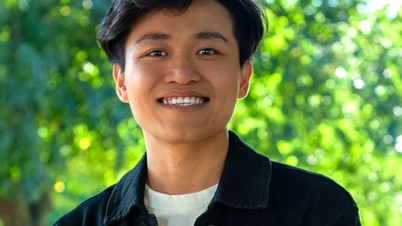
Upon receiving a research offer from Harvard University – a symbol of global academic excellence – Dr. Duong Thanh Tai was presented with an opportunity many scientists dream of. Instead of embarking on a prestigious academic research career, he chose a different path, returning to the hospital environment, where every academic achievement must immediately answer the question, "How does it help patients?"
That decision not only came as a surprise to professionals, but also clearly reflected the educational and academic philosophy he pursued: knowledge must be linked to practice and real-world problem-solving.

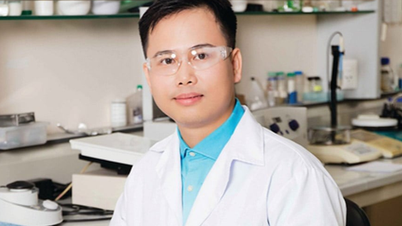
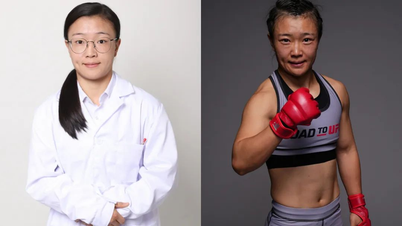
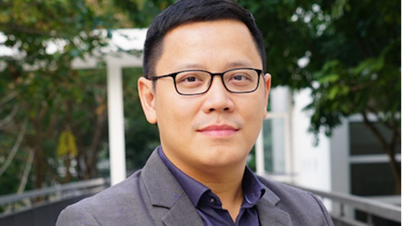
Dr. Duong Thanh Tai.
Twelve years of studying and working simultaneously opened doors to research in Canada and the United States.
Dr. Duong Thanh Tai was born in 1986 in Thai Nguyen. In 2002, his entire family moved to Bien Hoa, Dong Nai – a major turning point in his teenage years. At that time, he always felt he had to work twice as hard to avoid falling behind his peers . Those years instilled in him discipline, perseverance, and the belief that only through education could he change his life.
He passed the entrance exam for the Physics major at the University of Science - Vietnam National University Ho Chi Minh City. His first few years of university were a major shock in terms of learning methods and the difficulty of the subject matter. While many of his friends dropped out, he chose to stay, changed his learning approach, and consistently won scholarships.
In 2009, just 10 days after defending his thesis, he started working at the Oncology Department of Dong Nai General Hospital as a medical physics engineer.
“ Stepping from the lecture hall into the radiotherapy room was a real shock. The problem was no longer on paper but connected to real patients; mistakes meant real consequences,” he recounted. However, it was the clinical environment that helped him realize: Physics is not just a pure science, but the direct foundation of modern treatment.
Realizing that his university knowledge was insufficient to handle complex clinical cases, he returned to school to pursue a master's and then a doctorate, while still working full-time at the hospital. In this way, Tài spent 12 years studying and working simultaneously.
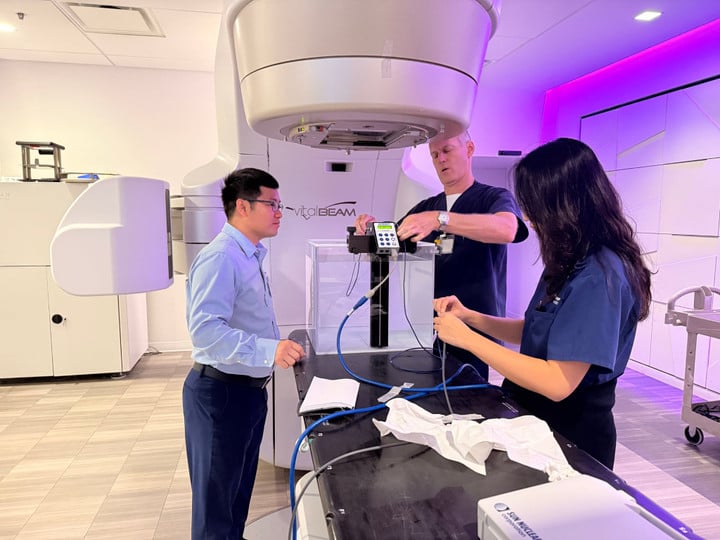
Dr. Duong Thanh Tai participated in an intensive training course on SBRT radiotherapy techniques at UT Southwestern University, USA.
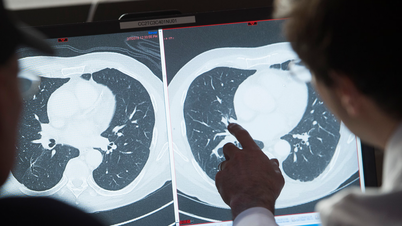
His doctoral dissertation focused on solving a pressing problem at the hospital at the time: how to implement intensity-modulated radiotherapy (IMRT) on older linear accelerators lacking multileaf collimators (MLCs).
To solve this problem, he applied the Monte Carlo method to simulate the accelerator and recalculate the dosage to ensure absolute accuracy. From that reliable database, he successfully applied the JO-IMRT technique. This solution helps head and neck cancer patients in Dong Nai access advanced technology, significantly reducing complications during treatment.
During the course of his research, he proactively sought opportunities and won scholarships to participate in intensive training courses at the International Centre for Theoretical Physics (ICTP, Italy). The solid foundation of knowledge he gained during this period became crucial, opening the door for him to pursue postdoctoral research in Canada.
At Western Ontario University (Canada), Duong Thanh Tai participated in projects on targeted radiotherapy. There, he realized a major difference: it wasn't just about being right, but about being innovative; it wasn't just about being accurate, but about being optimized.
“My supervising professor treated me like a collaborator, constantly asking ‘why’ and ‘is there a better way?’ That forced me to think critically and become more confident in my studies ,” he said.
This foundation led him to his next opportunity – a postdoc research offer from Harvard University.
Rejecting Harvard: A turning point that shaped the careers of Vietnamese intellectuals.
When he received a research offer from Harvard University – an opportunity many people dream of – Dr. Duong Thanh Tai made a different decision. Instead of continuing on a purely research path, he chose to return to the hospital environment.
“ After many years away from the hospital, I realized I missed the clinical environment. There, every problem that arose was a living academic question,” he said. He wondered: what is the point of research if it doesn’t stem from the reality of treatment?
Instead of continuing on a purely academic path, he went to the United States to work as a clinical medical physicist at the Abben Cancer Center, Spencer Hospital. For him, this wasn't a detour, but a profound educational choice: academia must be connected to life, and knowledge must solve real problems.
Currently, Dr. Duong Thanh Tai is a medical physiotherapist at the Abben Cancer Center. He is responsible for evaluating and approving radiotherapy plans, calibrating equipment, and supervising advanced techniques such as SBRT and SRS.
"Here, doing your job properly isn't enough; you also have to follow the law, the procedures, and the safety standards," he said. What he's most attached to isn't the technology, but the moment a patient rings the bell signaling the end of their treatment.
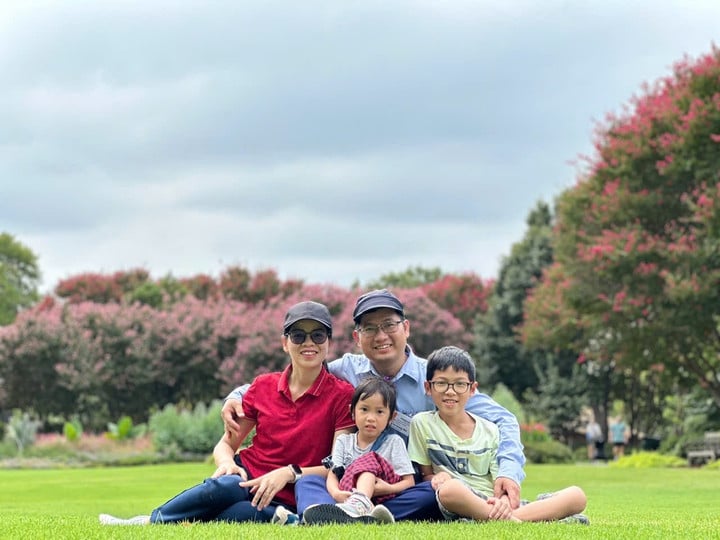
His small family, a strong source of emotional support, allows him to focus on his work and pursue his passions in a foreign land.
Connecting medical physics education in Vietnam and the world.
Over the next 5-10 years, Duong Thanh Tai aims to further develop his expertise within the US healthcare system, while also acting as a bridge to bring advanced radiotherapy techniques to Vietnam and build high-quality clinical research teams.
"The ultimate goal is for Vietnamese intellect to not only learn but also contribute to global medical knowledge," he said.
Alongside his work in the US, the 8X generation PhD founded the Vietnamese Medical Physics Community (VMPC) – a community connecting Vietnamese medical physicists both domestically and internationally, sharing internationally recognized materials, scholarships, and professional experience.
What he is most passionate about is helping Vietnamese students and researchers overcome their inferiority complex: " The equipment may not be as good, but knowledge and thinking skills can absolutely be on par ." For him, education is not just about training skills, but also about instilling confidence in the younger generation.
Source: https://vtcnews.vn/tien-si-viet-tu-choi-harvard-de-tro-lai-benh-vien-ar1000144.html




![[Photo] General Secretary and President To Lam presides over a meeting on preparations for the review of one year of operation of the three-tiered government system.](https://vphoto.vietnam.vn/thumb/1200x675/vietnam/resource/IMAGE/2026/06/02/1780391821195_a1-bnd-4595-9717-jpg.webp)














![[Image] Affirming the aspirations and new standards of the Vietnamese real estate market in the new era.](https://vphoto.vietnam.vn/thumb/1200x675/vietnam/resource/IMAGE/2026/06/03/1780441948766_giai-thuong-bat-dong-san-2026-minh-duy-6-7364-jpg.webp)






























Comment (0)