

Enhance your inner strength.
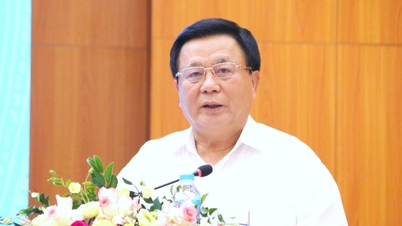
"Besides the achievements made, human development in our country still has many limitations and has not fully met the requirements of the new development era," - Chairman of the Central Theoretical Council, Professor Dr. Nguyen Xuan Thang frankly pointed out at the national scientific conference "Human Development in Vietnam in the New Era: Scientific Basis and Policy Orientations" on the afternoon of May 25th.
According to Professor Nguyen Xuan Thang, the country is entering a new era of development with very high demands on the quality of growth, national competitiveness, and rapid, sustainable development. Human development is not only a scientific and policy issue of immediate significance, but also directly related to enhancing endogenous strength, resources, and development momentum. Compared to the requirements of building socialism and the common development standards of the world, the quality of Vietnamese people still lags significantly, especially in terms of creativity, science and technology , digital skills, labor productivity, the ability to master modern technology, and international competitiveness.
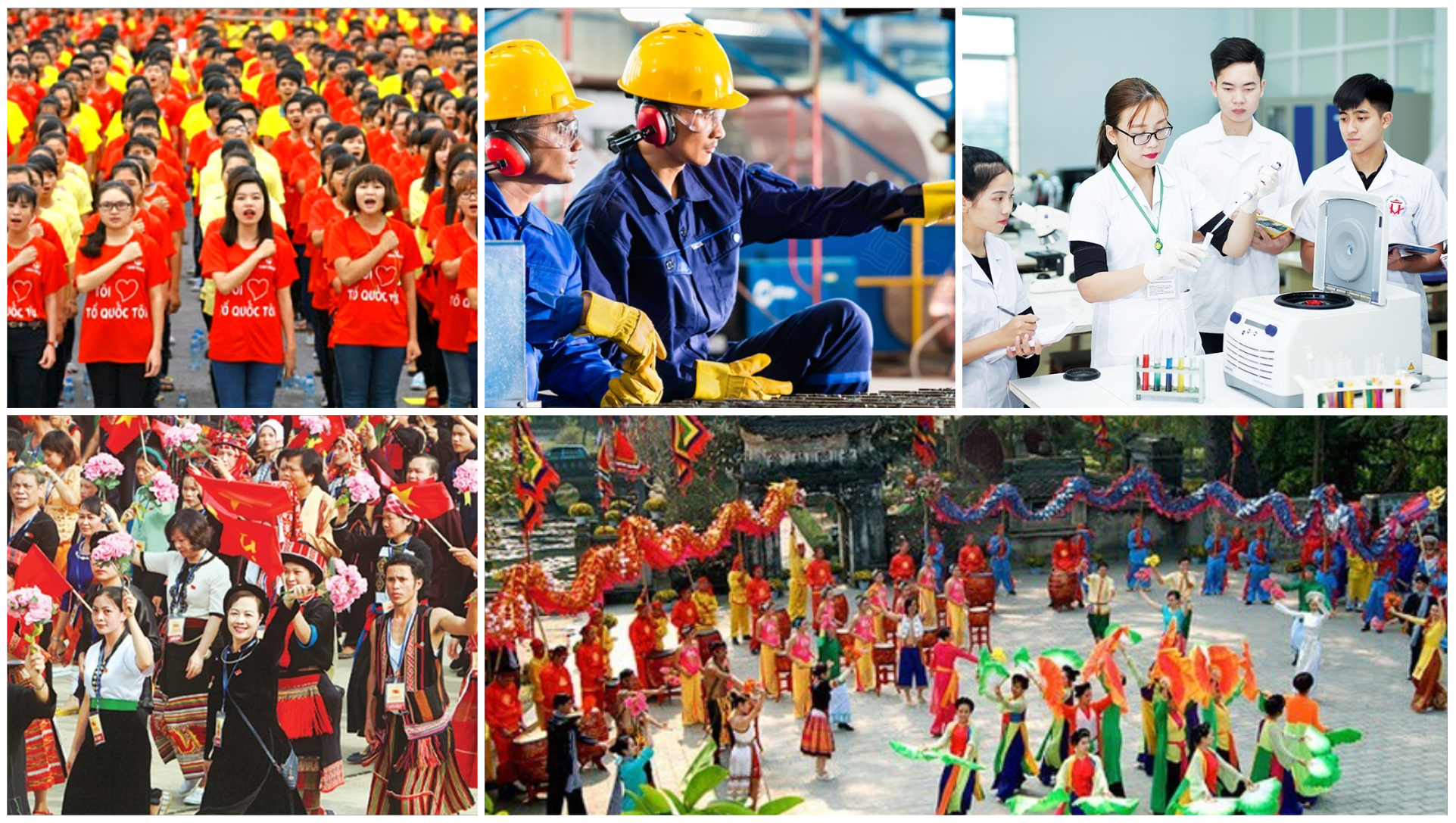
Agreeing with this viewpoint, Associate Professor Pham Duy Duc, former Director of the Institute of Culture and Development, Ho Chi Minh National Political Academy, delved into an analysis of the context of cultural transformation. According to him, human development is not limited to socio-economic indicators, but is increasingly linked to cultural adaptability, the ability to maintain identity, and creative capacity in a multicultural and digital environment. Cultural transformation in Vietnam is operating as a two-way mechanism: simultaneously absorbing external elements and restructuring the internal value system to adapt to the new context. However, without the capacity for selective and value-oriented approach, this process risks leading to consequences such as cultural hybridization, loss of identity, or cultural deviation.
“The core challenge today is not just whether or not there is adaptation, but in what direction and with what capacity. This gap requires a synchronized system of solutions from the level of values, institutions to education and cultural practices,” Associate Professor Dr. Pham Duy Duc observed.
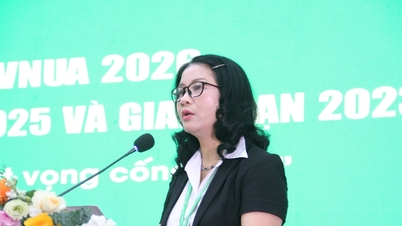
The current context makes the demands for human development more profound and complex. To this end, Associate Professor Dr. Nguyen Thi Thu Phuong, Director of the Vietnam Institute of Culture, Arts, Sports and Tourism, stated that the digital economy, digital transformation, artificial intelligence, heritage preservation, protection and promotion of the diversity of cultural expressions, the cultural industry, and forms of global connectivity are changing the conditions for social development.
Human development now needs to be viewed more broadly than simply raising living standards or expanding access to social services. The focus of development is increasingly tied to the capacity for participation, the capacity for choice, and the ability to transform development conditions into valuable actions in social life. This is linked to the capacity for creativity, adaptation, and value creation in a highly interconnected and rapidly changing environment.
Culture determines the ability to go far.
Professor Ho Sy Quy, former Director of the Institute of Social Sciences Information, Vietnam Academy of Social Sciences, believes that in the process of realizing the goals set by the 14th Party Congress, "removing institutional bottlenecks" to consolidate and strengthen the level of integration in political and economic institutions is of decisive importance. Here, culture must go hand in hand with development, creating "internal strength"—people with the character and capacity to realize the aspirations for development.
"The challenge for Vietnamese culture during this period of breakthrough development is that culture must not only accompany development, but must also take a leading role , serving as the foundation for shaping the quality of individuals and the nation. If the economy determines the capacity to move quickly, then culture determines the ability to go far," emphasized Professor Ho Sy Quy.
One of the prerequisites for positive cultural transformation is the existence of a cultural value system that serves as a "guiding principle." In the context of globalization and digitalization, this value system needs to both inherit core traditional values (patriotism, compassion, solidarity, love of learning, etc.) and supplement them with modern values such as creativity, social responsibility, adaptability, and critical thinking.
Dr. Pham Thi Hoang Ha, Director of the Institute of Scientific Socialism, Ho Chi Minh National Academy of Politics, stated that the holistic development of human beings is inseparable from cultural values. If intellect and physical abilities are considered the foundation, then morality, social responsibility, and culture must be the driving force. Along with spiritual values, examining these values helps define the Vietnamese person in a socialist society.
To transform the challenges of the era into opportunities for the comprehensive development of Vietnamese people, the core issue is not restricting cultural exchange or slowing down cultural change, but rather enhancing the capacity for cultural adaptation in a proactive, directed, and creative manner. According to Associate Professor Dr. Nguyen Thi Thu Phuong: “Human development in Vietnam is entering a phase that requires greater emphasis on the subjective capacity and creative participation of individuals in cultural life. Achievements in improving living standards, expanding access, and building institutions continue to be important foundations. The current challenge is how to connect these conditions to foster creative capacity, participation capacity, and value-creating capacity in socio-cultural life.”
Source: https://daibieunhandan.vn/tiep-bien-van-hoa-phat-trien-con-nguoi-viet-nam-10418077.html
![[Photo] General Secretary and President To Lam presides over the meeting to approve the draft report on the results of the second inspection by the Politburo of the Standing Committee of the Hanoi City Party Committee.](https://vphoto.vietnam.vn/thumb/1200x675/vietnam/resource/IMAGE/2026/05/26/1779789811432_a2-bnd-4430-9620-jpg.webp)















































Comment (0)