

As the peak of the hot season approaches, the issue of saving electricity in production becomes more urgent than ever. For businesses, electricity is not only used to operate machinery but also directly contributes to the cost of goods sold.
To achieve an economic growth target of 10% or more, Conclusion 18 of the 2nd Conference of the 14th Central Committee of the Communist Party of Vietnam required: "Thoroughly prevent and combat waste" and "effectively and economically exploit resources and energy." Therefore, saving electricity in production is one of the important activities and is being actively implemented.
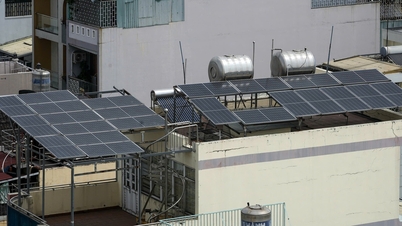
At Wistron Vietnam, a massive roof area of nearly 24,000 m2 has been covered with solar panels, enabling the company to self-finance almost 9% of its factory's electricity needs. The persistent development of a green factory not only brings energy efficiency but also helps the company stay ahead of sustainable development trends to meet the demands of the international market.
Mr. Lin Chih Hung, Deputy General Director of Wistron Vietnam, said: "The factory premises are also equipped with a comprehensive energy monitoring system, and we promote energy-saving habits in the daily work of our employees. As a result, we have recorded a nearly 24% reduction in total energy consumption."
As for Sunhouse, a manufacturer of household appliances, despite the scorching 40°C weather outside in recent days, thanks to its negative pressure cooling system combined with a water filter and fresh air supply, the temperature inside the factory has been reduced by 3 to 10°C. This system optimizes operation and maintenance while saving 50% to 70% of energy consumption compared to using industrial fans or conventional air conditioners.
Mr. Tran Van Dat, Director of the Household Appliances Factory - Sunhouse Group, said: “Investment costs are reduced by about 50% compared to individual fans. With an assembly workshop of 500m², the system helps save about 60% of electricity for cooling.”
This year, the Ministry of Industry and Trade aims to save at least 3% of the total national electricity consumption. In particular, during the peak hot months (April to July), the required saving rate is at least 10%. This is a challenge that demands concerted efforts from regulatory agencies down to individual production facilities.
Mr. Nguyen Sinh Nhat Tan, Deputy Minister of Industry and Trade, stated: "The Ministry of Industry and Trade has also assigned relevant agencies and units to work with, and requested localities to work with, manufacturers and businesses to adjust production and business hours; as well as shift electricity usage and reduce load during peak hours."
By proactively shifting shifts, innovating technology, and standardizing according to green standards, Vietnamese businesses are demonstrating proactive steps in the face of energy challenges. This not only means reducing costs for businesses but also becomes a source of sustainable growth for the future, fulfilling the spirit of the Central Committee's Conclusion 18.
Source: https://vtv.vn/tiet-kiem-dien-de-tang-suc-canh-tranh-100260528202214431.htm

![[Image] Pleasant weather helps students enter the 10th grade entrance exam with confidence.](https://vphoto.vietnam.vn/thumb/1200x675/vietnam/resource/IMAGE/2026/05/29/1780034401612_ngay-1-thi-lop-10-minh-duy-8-5009-jpg.webp)



![[Photo] Ba Lang An Lighthouse - the "eye of the sea" amidst the "rock museum" of Quang Ngai province.](https://vphoto.vietnam.vn/thumb/1200x675/vietnam/resource/IMAGE/2026/05/29/1780038698840_anh-man-hinh-2026-05-29-luc-14-10-42.png)














































































Comment (0)