

In the first nine months of 2024, the Vietnamese real estate market witnessed many positive developments, reflected in the recovery of supply, selling prices, and increased demand from buyers. Alongside this, many real estate projects and businesses made their mark through concrete activities, bringing new vitality to the market.
Positive change
According to a report by Savills Vietnam, in the first nine months of 2024, apartments priced above VND 4 billion accounted for 70% of total apartments sold. Notably, apartment prices in major cities like Hanoi and Ho Chi Minh City continued to record significant growth. In Hanoi, the price of new apartments increased by 6%, reaching an average of VND 69 million/m²; while in Ho Chi Minh City, the price of new apartments reached VND 68 million/m². This price surge reflects the market's high demand and activity.
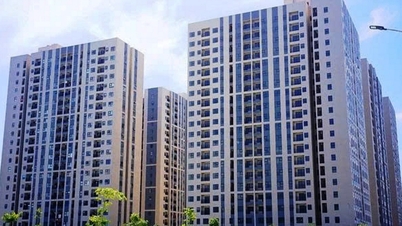
Newly launched luxury apartment projects in Hanoi and Ho Chi Minh City have received significant customer interest, with absorption rates reaching 60%-80%. These projects not only contribute to increasing market supply but also attract a large number of residents thanks to their modern infrastructure, amenities, and convenient transportation connections.
Large real estate companies such as Vingroup, Novaland, and Sun Group have made significant strides in project implementation and business expansion. A prime example is Hoa Binh Construction Group, one of the largest contractors in the construction sector, which received support from the Vietnam Investment and Development Bank ( BIDV ) with a credit line extension of up to VND 4,000 billion. This not only helped Hoa Binh overcome its difficulties but also serves as a positive sign of recovery for major real estate companies.
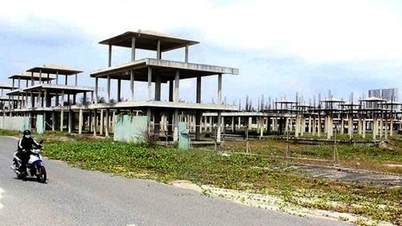
A series of mega-projects by Novaland Group, including Aqua City (Dong Nai) and NovaWorld Phan Thiet (Phan Thiet), have recorded a certain recovery with a steady increase in transactions after legal obstacles were gradually resolved.
The positive transformation of the real estate market in the first nine months of 2024 stemmed not only from the economic recovery and actual demand from the people but also from the removal of legal obstacles. The enactment of the 2024 Land Law, the 2023 Housing Law, and the 2023 Real Estate Business Law created a more transparent legal framework for businesses and investors. Regulations on land valuation, licensing procedures, and land clearance were significantly improved, minimizing the legal barriers frequently encountered by real estate businesses.
For example, real estate projects in Ho Chi Minh City have had difficulties related to obtaining permits for basement construction resolved. Decisions 3803/QD-UBND and 3804/QD-UBND of the Ho Chi Minh City People's Committee serve as the basis for approving the overall site plan, leading to the completion of updating and adjusting construction permits for real estate projects in the area... With these decisions, it is expected that legal obstacles at projects in Ho Chi Minh City will gradually be removed.
According to Mr. Nguyen Toan Thang, Director of the Department of Natural Resources and Environment of Ho Chi Minh City, the 2024 Land Law and Decree 71/2024 regulating land prices have resolved many issues related to land use fees that have not yet been calculated for projects in Ho Chi Minh City. Currently, the city has about 200 real estate projects with land finance issues. In 2024, Ho Chi Minh City will resolve these issues for 36 projects and issue approximately 17,500 land use certificates.
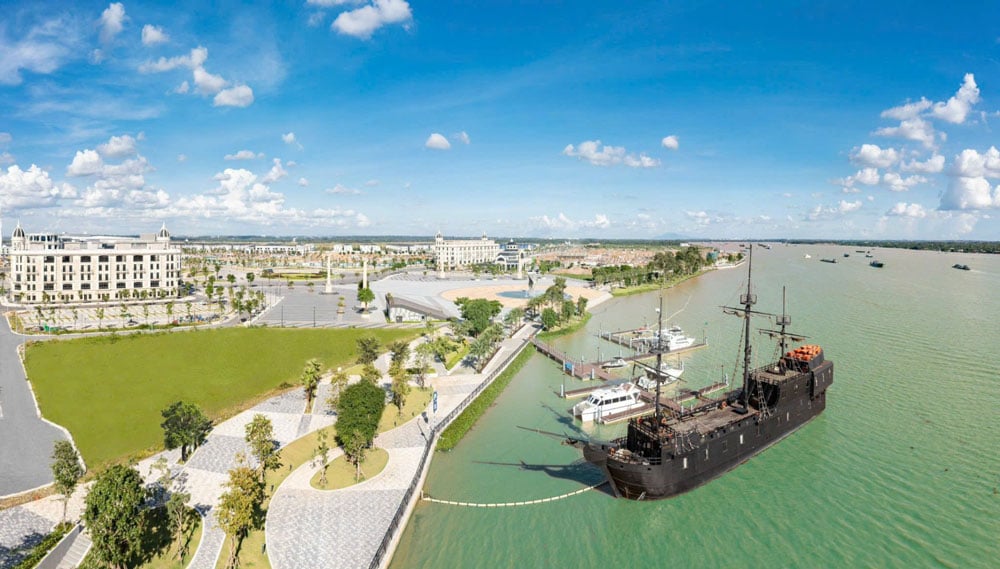
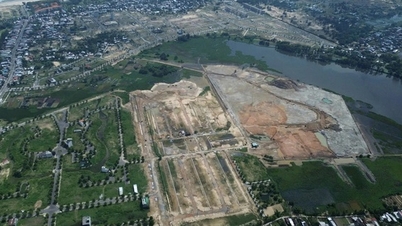
A section of the Aqua City urban area (305 hectares) developed by Novaland Group is gradually having its obstacles resolved. Photo: NGUYEN TUAN
In particular, recently, recognizing that the removal of legal obstacles for real estate projects in Dong Nai is slower than in neighboring provinces, the Chairman of the People's Committee of Dong Nai province, Mr. Vo Tan Duc, emphasized that priority will be given to resolving difficulties related to the C4 zoning plan in Bien Hoa City. This zoning plan covers an area of up to 1,500 hectares with large-scale projects including: residential and urban areas such as Long Hung residential area (227 ha), Phuoc Hung island commercial and service urban area (286 ha) invested by DonaCoop, Dong Nai Waterfront urban area (170 ha) by Nam Long Investment Corporation and Aqua City urban area (305 ha) by Novaland Group.
Furthermore, credit policies from the State Bank of Vietnam have also contributed to market stability. According to a report by the State Bank of Vietnam, as of the end of June 2024, real estate lending had increased by 4.6%, with real estate business lending increasing by 10.3%, and notably, lending for home purchases increasing by 1.2%. This demonstrates the financial system's support for the real estate sector, while also strengthening the confidence of investors and homebuyers.
According to Dr. Can Van Luc, Chief Economist of BIDV, the real estate market has officially entered a positive recovery phase. A stable macroeconomic environment, controlled inflation, and gradually improving legal policies have created favorable conditions for stronger real estate market growth in the coming period. In addition, investment in transportation infrastructure, especially metro lines in Hanoi and Ho Chi Minh City, will continue to be a crucial factor driving market growth.
Difficulties and challenges still remain.
However, in the context of the Land Law 2024, the Housing Law 2023, and the Real Estate Business Law 2023 having just come into effect, the real estate industry still faces a series of difficulties and challenges. Without appropriate measures, these will exacerbate long-standing shortcomings.
According to the Ministry of Construction, one of the most important points of the 2024 Land Law is the abolition of the old land price framework. Instead, the land price list will be updated annually, determining prices closer to market value. This means that the investment costs for construction and development of real estate projects will increase, leading to a 15%-20% increase in real estate and housing prices. This change could create difficulties for both investors and homebuyers. On the other hand, if the new land price list is not strictly enforced, it will create opportunities for speculation and market manipulation, leading to increased inequality in home ownership opportunities among different social classes.
Another important proposal is to consider taxing those who own multiple properties, but this should be based on the principle of creating value for society. Dr. Nguyen Van Dinh, Vice President of the Vietnam Real Estate Association and President of the Vietnam Real Estate Brokers Association, emphasized that taxation should not be based solely on the number of properties owned but should also consider the purpose of use. Those who buy properties to rent out, creating added value for the community, should not be bound by this tax policy.
Ms. Do Thu Hang, Director of Savills Hanoi, believes that taxing second properties requires thorough preparation and ensuring nationwide consistency. Without uniformity in the management system and technical measures such as bank transactions and asset declarations, the tax will not achieve the desired effect and may even disrupt the market.
A key factor contributing to rising housing prices is the imbalance between supply and demand. Currently, the supply of housing is far too low compared to demand, especially in the affordable housing segment suitable for middle and low-income earners. To regulate the market, the Ministry of Construction proposes unblocking the real estate supply by removing legal obstacles in stalled projects and promoting the launch of new projects.
According to Ms. Ho Thi Thu Mai, Director of a housing company in Vietnam (Hanoi), if there are no decisive measures from the government and businesses to increase supply, especially in the social housing and affordable housing segments, the market will face serious consequences. People with genuine housing needs will find it difficult to own a home, and the "price surge" could lead to instability for the entire market.
Tighten regulations on land auctions.
One of the key methods for generating revenue from real estate for the state budget is through land use rights auctions. The Ministry of Construction believes that allocating and leasing land through auctions has limited negative practices, reduced favoritism, and increased revenue. However, this process also faces many limitations, most notably the phenomenon of "auction brokers" colluding to create "artificial prices" to manipulate the market.
To address the negative aspects of land use rights auctions, the Ministry of Construction proposes increasing the deposit amount for participating in auctions and shortening the payment period after winning the auction to prevent speculation and the creation of artificial price levels. This regulation helps minimize the situation where people participate in auctions with the intention of buying and reselling for profit; instead, only those with genuine needs will participate.
Today's seminar is titled "Identifying the Real Estate Market at the End of 2024 and Beginning of 2025".
The seminar, organized by Nguoi Lao Dong Newspaper, will take place at 8:00 AM on October 10th in the auditorium on the second floor of Nguoi Lao Dong Newspaper building, 123-127 Vo Van Tan Street, Vo Thi Sau Ward, District 3, Ho Chi Minh City. This is an opportunity for management agencies, businesses, and experts to come together and propose solutions to further promote market development in the future.
The seminar focused on the following topics: the current state of the real estate market and future forecasts; the impact of three new laws related to the real estate market and the implementation of guiding documents; and issues related to land price lists and taxes.
Source: https://nld.com.vn/tim-them-giai-phap-cho-bat-dong-san-196241009213859647.htm






















































































Comment (0)