

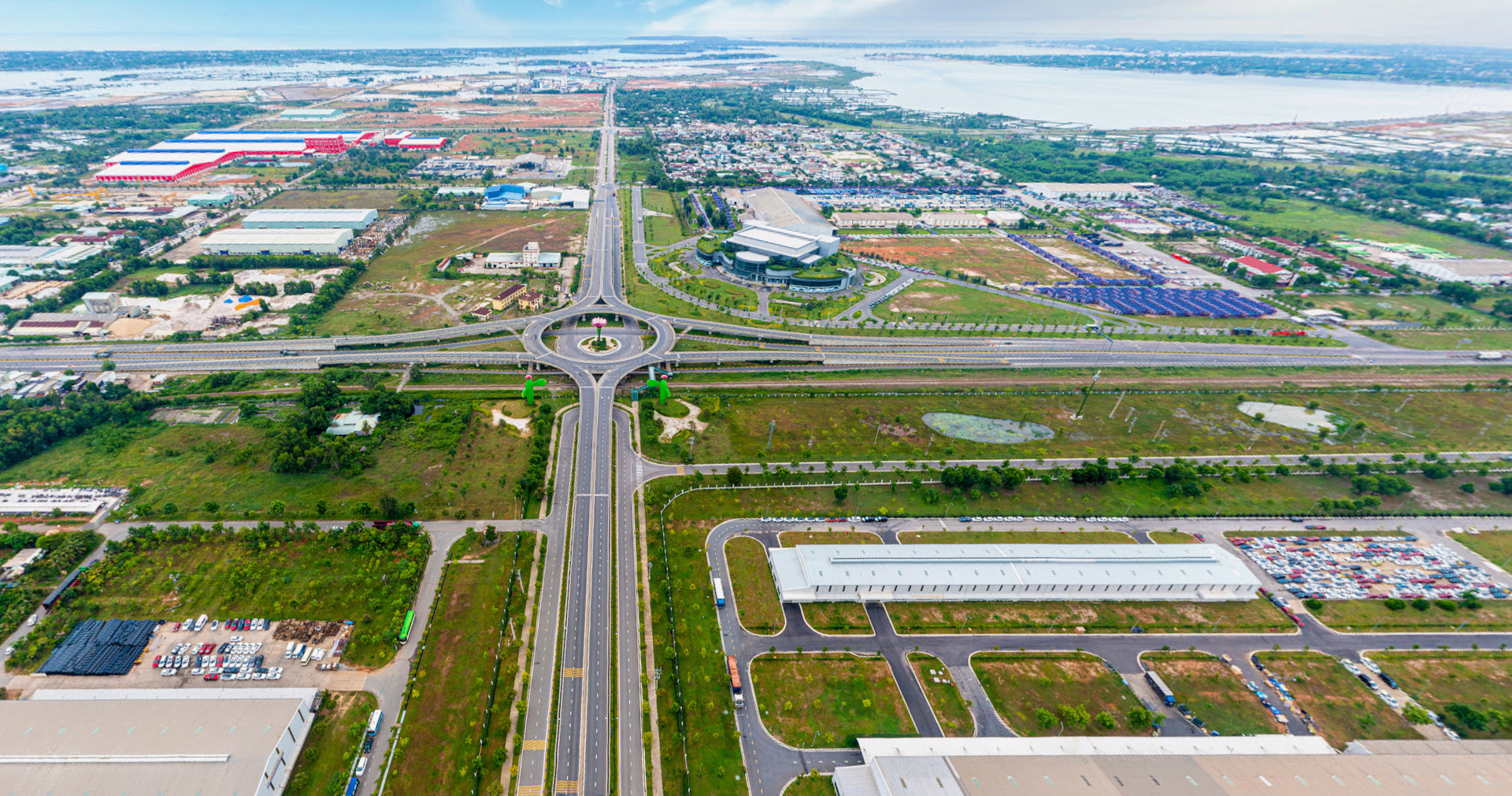
* Sir, what opportunities will Da Nang have when the Free Trade Zone is put into operation?
- Mr. Nguyen Cong Tien: As the first locality in the country to be assigned to pilot the Free Trade Zone model, Da Nang has the opportunity to create a new economic development space with breakthrough institutional and international integration features.
First and foremost, this model allows the city to experiment with mechanisms and policies based on international standards, thereby gradually enhancing its competitiveness, improving the investment and business environment, and attracting high-quality foreign direct investment, especially in high-tech, logistics, trade, and modern service sectors.
A particular advantage of Da Nang is that its free trade zone does not operate in isolation, but is part of a relatively complete and mutually supportive economic ecosystem.
Along with the high-tech zone, industrial parks, concentrated information technology zones, and especially the Vietnam International Finance Center in Da Nang, which has become operational, the Free Trade Zone forms a chain linking production, research and development, logistics, and financial services.
This integration allows investors to locate multiple stages of the value chain in the same area, thereby improving operational efficiency and fostering long-term commitment to the city. This also forms the basis for Da Nang's development towards a modern, integrated economic ecosystem, rather than developing functional zones separately.
Furthermore, with its strategic location linked to the East-West Economic Corridor, Lien Chieu Port, and the international airport system, the Free Trade Zone creates favorable conditions for Da Nang to gradually develop into a hub for goods transshipment, production, and logistics for the Central region and, more broadly, the Asia-Pacific region.
This is an opportunity for the city to participate more deeply in the global supply chain, while creating a ripple effect and promoting socio-economic development not only for Da Nang but also for the entire Central region.
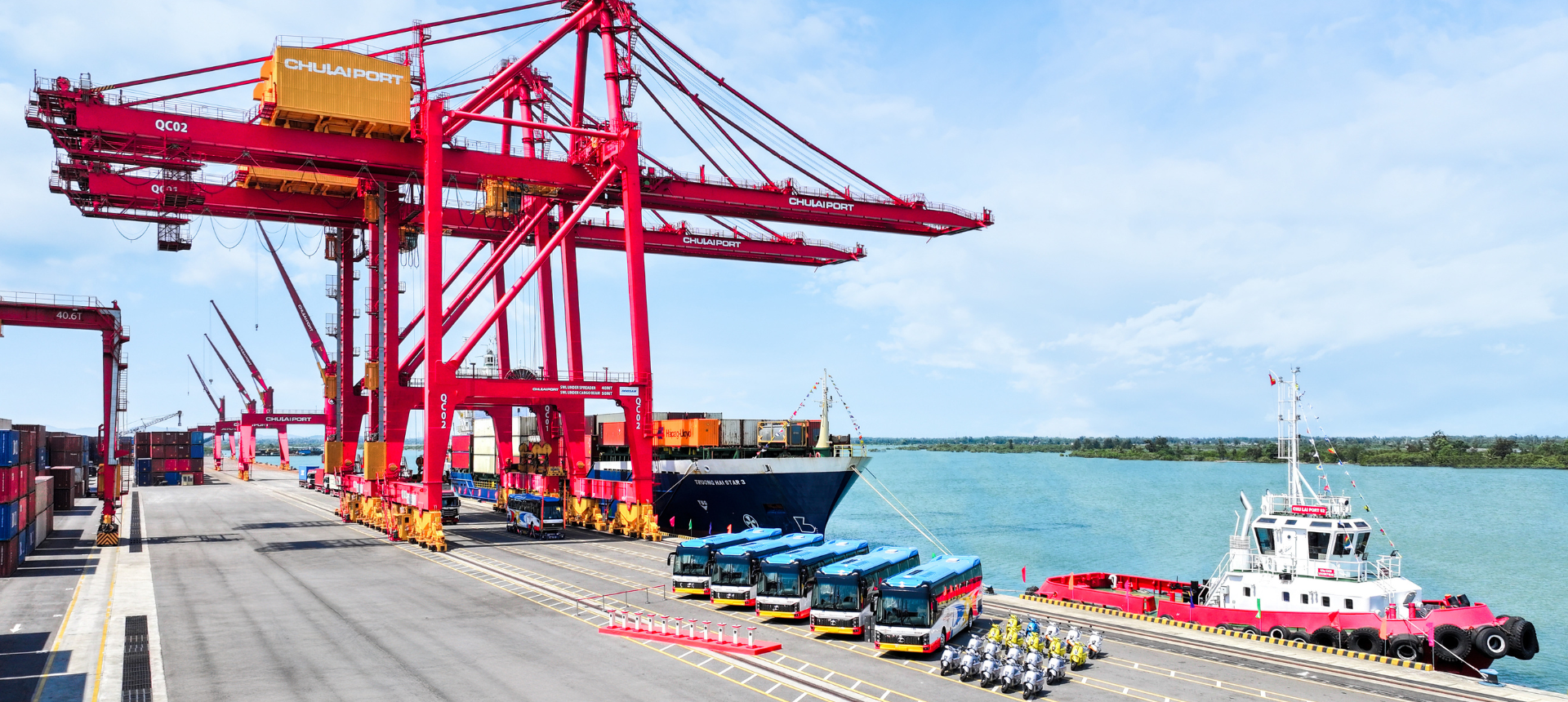
* What new and modern methods of trading goods will be adopted in the free trade zone?
- Mr. Nguyen Cong Tien: The Da Nang Free Trade Zone operates using modern business methods, linked to international value chains and supply chains.
A free trade zone is an integrated economic institution encompassing production, processing, logistics, trade, and services; in which goods are value-added through multiple stages before reaching consumers or being re-exported to international markets.
The first group of methods consists of value-added logistics and distribution activities. Goods from abroad can be brought into bonded warehouses within the Free Trade Zone for storage, sorting, repackaging, labeling, finishing, and quality control, before being distributed to various markets.
This is a common practice in leading free trade zones around the world , allowing businesses to optimize costs and time, while transforming the area into a regional transit and distribution hub, rather than just a final point of sale.
The second group of methods involves trade linked to processing and re-export. Businesses can import raw materials, components, and semi-finished products into the Free Trade Zone for processing, assembly, and completion before exporting them.
This is a group of activities with the potential to generate high added value and have a positive ripple effect on the local economy, as it attracts manufacturing investment, creates jobs, and promotes the formation of local supply chains.
The third group of methods is cross-border digital and e-commerce. Free trade zones facilitate the formation of international order fulfillment centers, integrated logistics and payment trading platforms, and digital distribution models with simplified customs procedures.
In particular, the simultaneous presence of the Vietnam International Finance Center in Da Nang allows for the connection of commercial services with financial services, payments, and capital flow management. This is a combination not found in every free trade zone and provides a basis for developing integrated commercial-financial-technology business models.
The fourth group of modes of operation includes commercial activities related to display, trading, and experience. Free trade zones can form international goods display and trading centers, duty-free retail spaces, as well as models combining trade with high-quality services such as shopping tourism, healthcare, and technology experiences.
However, it should be recognized that this is a component within the overall plan, not the main activity of the Free Trade Zone.
In essence, a free trade zone operates within an integrated ecosystem encompassing logistics, manufacturing, trade, finance, and technology.
This integration, combined with its location near Lien Chieu Port, the international airport system, and the East-West Economic Corridor, will help Da Nang gradually participate more deeply in regional supply and value chains, creating sustainable added value for the city's economy and the Central region.
* What difficulties and obstacles are still remaining, sir?
- Mr. Nguyen Cong Tien: The establishment of free trade zones in Vietnam in general and Da Nang in particular is facing a number of systemic obstacles, first and foremost the incomplete legal framework.
This is a completely new model, while the current legal system (regarding customs, taxes, investment, land, etc.) is designed for traditional economic zones, and therefore lacks consistent and unified regulations to operate a free trade zone according to international standards.
Therefore, although the National Assembly has approved the pilot program, many sub-legal documents and coordinated inter-sectoral cooperation are still needed to concretize it into a practical operating mechanism.
In addition, a major challenge is the issue of resources and organizational implementation, especially land clearance, large-scale infrastructure investment, and attracting strategic investors in the initial phase.
The investment costs are very high, the risks are high, and this is a new model without precedent in Vietnam, making investors cautious.
At the same time, designing the management and operation model (one-stop shop, customs control, functional zoning, etc.) requires ensuring both smooth operation and strict control, so it needs time to be perfected.
What outstanding results have been achieved in attracting investment to the Free Trade Zone?
- Mr. Nguyen Cong Tien: Currently, efforts to attract investment into the Free Trade Zone are being implemented proactively.
The city has issued a plan to attract strategic investors and is actively promoting and working with many international partners to introduce the development direction and investment opportunities in the functional areas of the Free Trade Zone.
In the process of attracting investment to the Free Trade Zone, the city simultaneously and synchronously implemented two groups of tasks from the outset: focusing on attracting investors to develop infrastructure for all seven locations; and proactively promoting, approaching, and building relationships with secondary investors, including manufacturing, R&D, logistics, trade, and service businesses that will operate directly within the zone.
Early engagement with secondary investors during the infrastructure development phase ensures that once the infrastructure is completed, the Free Trade Zone already has a pool of potential investors to attract, thereby shortening the occupancy time. Furthermore, developing infrastructure to a standardized level also lays the foundation for efficient operation and maintaining long-term attractiveness to investors.
In terms of specific results, some projects have made significant progress.
Notably, at locations FTZ2 (75ha) and FTZ5 (90ha), the city has approved the investment plan and selected investors, with construction expected to begin in 2026.
Other locations such as FTZ3 (500ha) and FTZ4 (335ha) have also had their investment approval dossiers assessed and are currently being submitted to the competent authorities for consideration and decision.
At the same time, the city has completed the adjustment of its master plan covering approximately 1,881 hectares, creating an important foundation for attracting investment in the future.
Thank you very much, sir!
Source: https://baodanang.vn/tin-hieu-moi-tu-khu-thuong-mai-tu-do-3338482.html


![[Image] Pleasant weather helps students enter the 10th grade entrance exam with confidence.](https://vphoto.vietnam.vn/thumb/1200x675/vietnam/resource/IMAGE/2026/05/29/1780034401612_ngay-1-thi-lop-10-minh-duy-8-5009-jpg.webp)
![[Photo] Ba Lang An Lighthouse - the "eye of the sea" amidst the "rock museum" of Quang Ngai province.](https://vphoto.vietnam.vn/thumb/1200x675/vietnam/resource/IMAGE/2026/05/29/1780038698840_anh-man-hinh-2026-05-29-luc-14-10-42.png)









































































Comment (0)