

It is expected that after the Government submits the restructuring plan to the competent authorities, the number of provincial-level administrative units will be significantly reduced compared to the present. When the number of provincial-level administrative units is reduced by half, the administrative apparatus will be streamlined and efficient, leading to breakthroughs.
The number of provincial-level administrative units will be reduced by approximately 50% after the reorganization.
The issue of streamlining and reorganizing the administrative apparatus is entering its "final stage" and is receiving great expectations from Party members, officials, and all sectors of the population. The National Assembly's report on citizen petitions clearly states: Voters and the people trust and have high expectations for the decisive directives of the Central Party Committee, directly led by General Secretary To Lam, and of the National Assembly and the Government, regarding the implementation of the policy of reforming and streamlining the organizational structure of the political system to ensure efficient, effective, and effective operation.
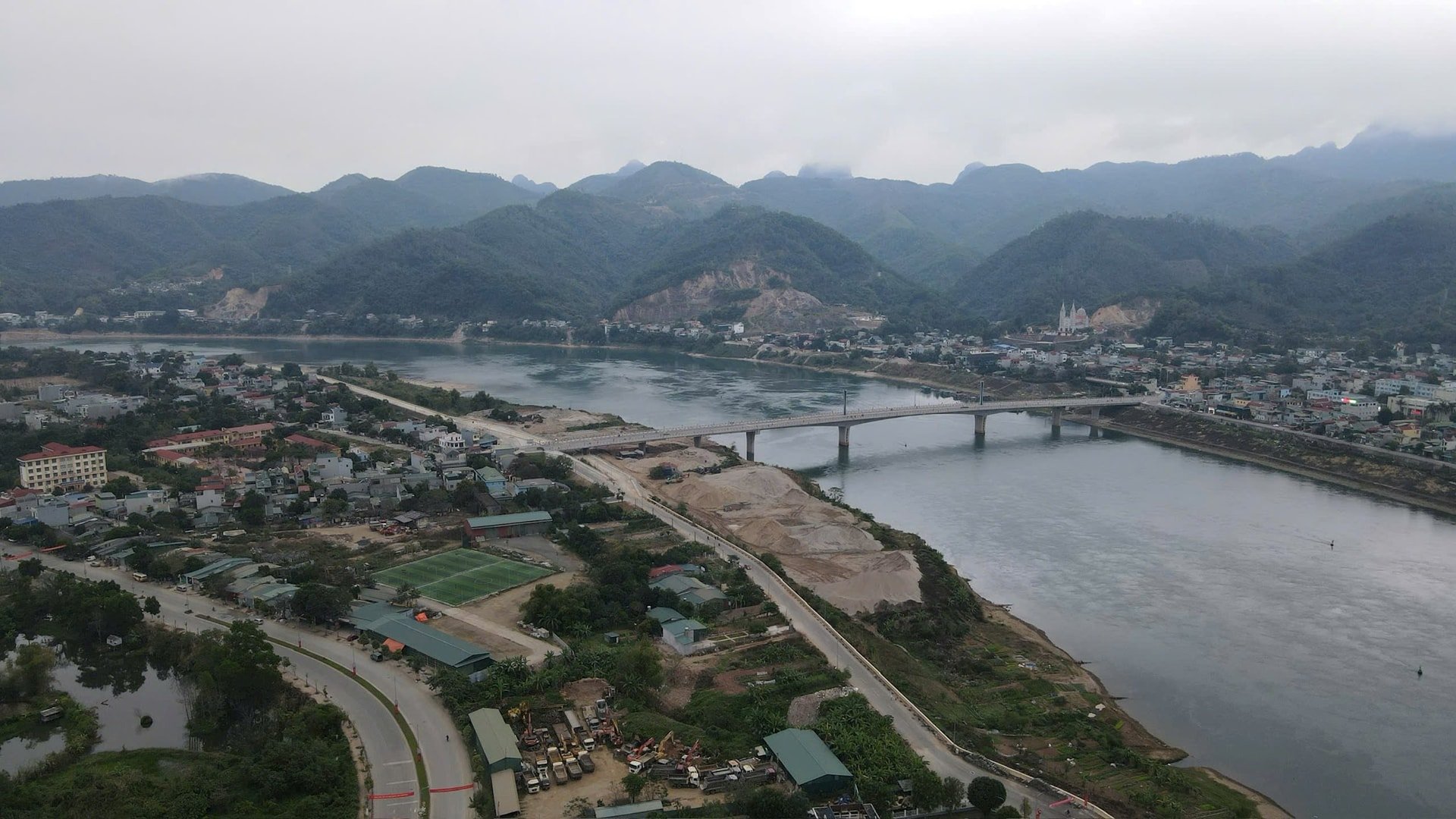
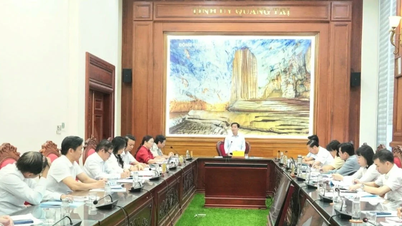
Presiding over the meeting of the Standing Committee of the Government Party Committee, continuing to give opinions on the Project for rearranging and reorganizing administrative units at all levels and building a two-tiered local government, and further refining the Project for submission to competent authorities, the Secretary of the Party Committee and Prime Minister Pham Minh Chinh concluded: The meeting unanimously agreed to submit to competent authorities a plan that, after rearrangement, will reduce the number of provincial-level administrative units by approximately 50% and grassroots-level administrative units by approximately 60-70% compared to the current situation.
According to Minister of Home Affairs Pham Thi Thanh Tra, the reorganization of administrative units is not simply about streamlining the number of administrative units, but must aim for a larger goal: expanding the development space and creating a foundation and impetus for the country. This also ensures the long-term stability of the system and organization. The reorganization of administrative units is not a short-term change that will require adjustments every few decades, but rather an expansion of space for stable development for centuries, with a long-term strategic nature, ushering the country into a new era.
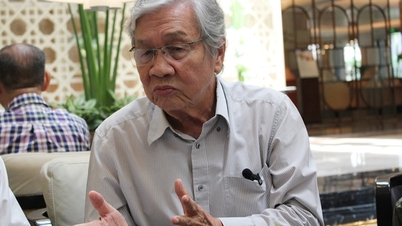
Expressing his agreement with the proposed plan to reduce the number of provincial-level administrative units by approximately 50% after reorganization, Mr. Le Viet Truong - former Deputy Chairman of the National Assembly's Committee on National Defense and Security (now the National Assembly's Committee on National Defense, Security and Foreign Affairs) - said that the policy of streamlining agencies in the political system to ensure effective and efficient operation requires a synchronized approach, and reducing provincial-level administrative units is reasonable and appropriate after 40 years of implementing the reform policy. Because after 40 years, the momentum has been exhausted, it is now necessary to create new momentum.
Mr. Truong gave an example: Previously, there wasn't enough rice to eat, but thanks to the "contract farming" system (contracting out 10 and 100 units) that empowered the people, Vietnam has risen to become the world's second-largest rice exporter. However, if farming remains fragmented and small-scale, it's difficult to apply high-tech science and technology to production, so now we need to develop a "large-scale model farm" and consolidate land.
“I give that example to show that this time, if we want to create a major breakthrough to unleash national strength in all fields, then reorganizing and streamlining the apparatus must become a real revolution. Other countries drive cars, while we still rely on motorbikes and walking; how can we narrow the gap with other countries, how can we rise up? Therefore, we cannot have sluggish growth; we must achieve double-digit growth from now until 2045 so that our country becomes a modern, high-income nation,” Mr. Truong said, adding that for large-scale projects by foreign businesses, the “big players,” they need to implement construction on a large scale, across 2-3 provinces. If one province agrees while another doesn't, we have to persuade them. If we keep “discussing back and forth,” they will invest in other countries, and we will lose opportunities.
"Therefore, streamlining and reducing the number of provincial-level agencies is reasonable to align with the central government's structure after the restructuring, which has reduced many ministries and departments, and to avoid the dispersion of resources. Because 'a poor family that allocates resources to many children will have limited and fragmented resources. To thrive, we must streamline and reduce the number of provincial-level agencies'," Mr. Truong emphasized.
Associate Professor Dr. Dao Duy Quat - former Deputy Head of the Standing Committee of the Central Committee for Ideology and Culture (now the Central Committee for Propaganda and Mass Mobilization) - believes that merging provinces is to create new development spaces for the provinces; to create new momentum and new determination for the country to develop rapidly, accelerate, and break through.
"Strategic opportunities have emerged and are emerging. If we don't seize these opportunities, we will fall into the middle-income trap from which it will be difficult to escape. Many countries around the world have been trapped because they fell into this trap," Mr. Quat said.
How should we arrange them?
However, the crucial issue being raised is how to reorganize the provinces so that the new provinces can leverage their strengths and develop after the reorganization. Based on an analysis of principles and criteria, especially regarding the proposed reorganization, names, and administrative-political centers of the provincial-level administrative units, Prime Minister Pham Minh Chinh requested that, in addition to criteria such as natural area and population size, the reorganization of administrative units should also consider criteria related to history, traditions, culture, ethnicity, geographical conditions, socio-economic development level, and infrastructure.
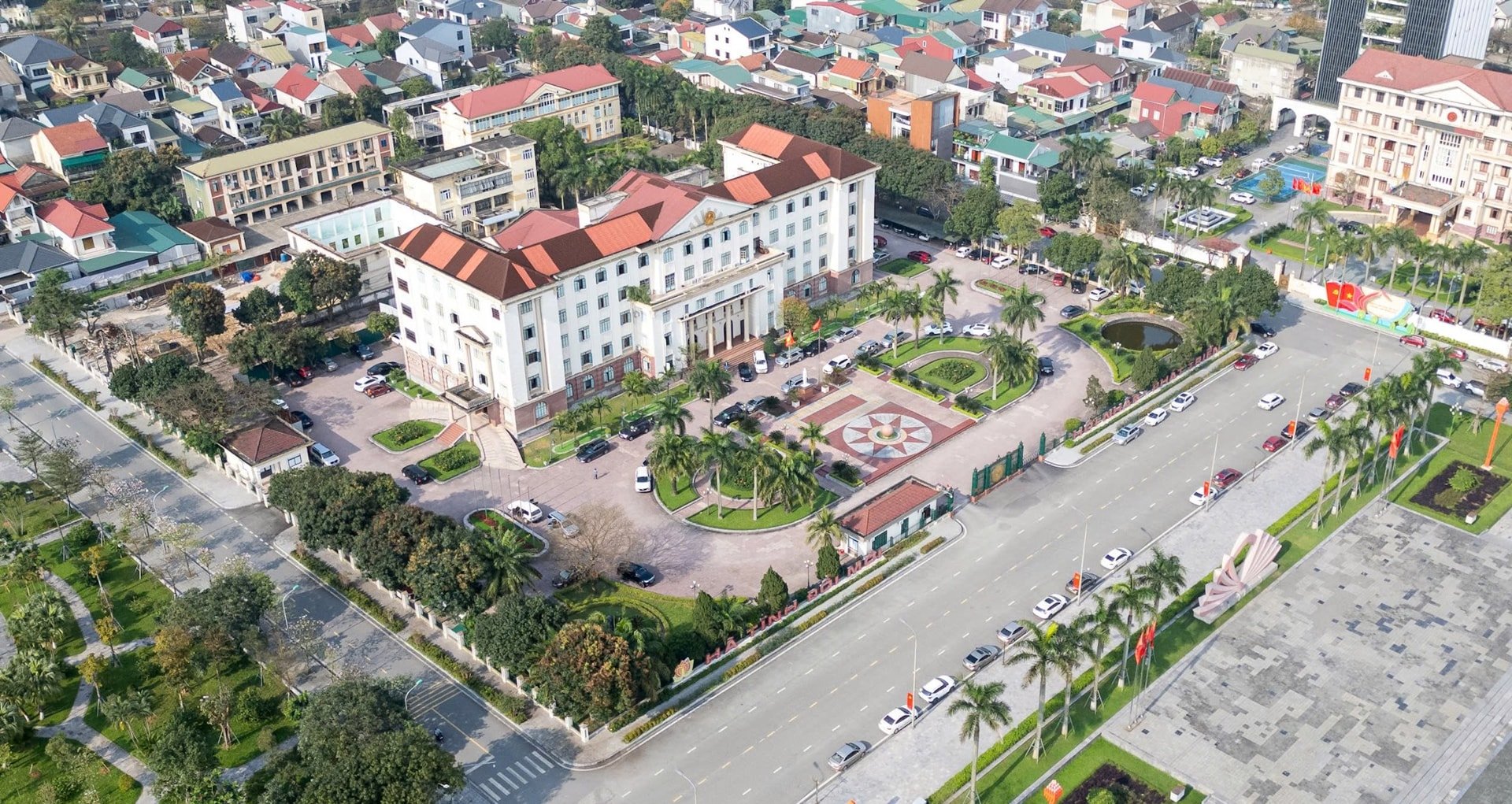
Regarding the proposed arrangement, Associate Professor Dr. Dao Duy Quat suggested: For example, one province might have a coastline, another a plain, and yet another a midland and mountainous region. However, when these provinces are merged, they will encompass plains, midlands, mountains, and coastlines. This will create new development opportunities.
According to Mr. Quat, development space must be understood broadly, encompassing not only land but also water resources and airspace. The advantages of land, water, midland, and mountainous areas must be considered to maximize socio-economic development. We must change our way of thinking; being narrow-minded will hinder development because each region has its own unique characteristics.
According to Mr. Quat, when reorganizing provincial-level administrative units, the important thing is not whether there are many or few remaining provinces, but rather that after the reorganization, new spaces must be created – spaces for development that are still within the regional linkages already divided by the central government into 6 socio-economic development regions.
National Assembly Deputy Truong Xuan Cu (Hanoi delegation) stated that merging provinces aims to expand development space and direction, encompassing forests, seas, plains, and better regional linkages. “For example, if Kon Tum merges with Quang Ngai; Gia Lai with Binh Dinh; Ninh Thuan, Binh Thuan, and Lam Dong, we would have land, forests, and seas, creating horizontal linkages. Furthermore, wealthy provinces should ‘merge with poorer provinces’ to support each other’s growth. For instance, if Kon Tum merges with Quang Ngai, Quang Ngai will be the driving force pulling Kon Tum up,” Mr. Cu said, suggesting that merging “wealthy with wealthy” or “combining forests with seas” would allow for faster export of products to the sea, enhancing logistics. In other words, it must be linked to the economic development space to achieve breakthroughs. "Ha Tinh could merge with Quang Binh; Da Nang and Quang Nam, all coastal provinces, would further enhance the strengths of exploiting the marine economy. The goal is to ensure that after the merger, all provinces have advantages for development. Merging two poor provinces would only increase their area and population, but would hinder economic development," Mr. Cu proposed.
Dr. Ngo Trung Hai, former Director of the National Institute of Urban and Rural Planning (Ministry of Construction), raised the issue: Each province has its own potential, and when all that potential is combined, what should be prioritized, and what overlaps should be discarded. Combining them will reveal many functions and potentials of the provinces to choose from.
Citing examples such as China, with its large population but few provinces (only 33), yet numerous cities within each province; or Hoan Kiem district in Hanoi contributing as much to the budget as "several provinces combined," Mr. Hai expressed that a model where people are satisfied, development is strong, and society becomes increasingly wealthy and beautiful is a good model, and a "measure" of efficiency.
Associate Professor Dr. Dao Duy Quat: Paying attention to staff after restructuring.

After the reorganization of provincial-level administrative units, attention must be paid to the selection of officials. The decisive factor is the people. The quality of officials must be assessed, because after the reorganization, there will be a large number of people to choose from. It is necessary to base the selection on the practical experience and work efficiency of the officials to organize, deploy, and manage forces, creating a unified and effective combined force, and ultimately, a vision. Therefore, the assessment must be based on the substance of the people, not just their qualifications. The number of provinces reduced is not as important as creating new development space and selecting qualified officials after the merger. If the merger is completed without selecting good officials, it will not be effective.
Source: https://daidoanket.vn/sap-xep-don-vi-hanh-chinh-cap-tinh-tinh-gon-bo-may-de-vuon-minh-but-pha-10301536.html
![[Photo] First session of the 14th Congress of the Vietnam Trade Union](https://vphoto.vietnam.vn/thumb/1200x675/vietnam/resource/IMAGE/2026/06/03/1780465947883_ndo_br_img-3852-jpg.webp)
![[Photo] General Secretary and President To Lam presides over a meeting with the Central Organizing Committee.](https://vphoto.vietnam.vn/thumb/1200x675/vietnam/resource/IMAGE/2026/06/03/1780482764658_a1-bnd-4741-3342-jpg.webp)



![[Photo] Secretary of the National Assembly Party Committee, Chairman of the National Assembly presides over the meeting of the Standing Committee and Executive Committee of the National Assembly Party Committee.](https://vphoto.vietnam.vn/thumb/1200x675/vietnam/resource/IMAGE/2026/06/03/1780480353201_ndo_br_bnd-2585-jpg.webp)



































![[Video] Sunset at Lap An Lagoon – Where the sun sets over the fishing nets](https://vphoto.vietnam.vn/thumb/1200x675/vietnam/resource/IMAGE/2026/05/31/1780192137701_beach-landscape-sea-water-nature-grass-745871-pxhere-com.jpeg)




























Comment (0)