

The Ebola outbreak, with its epicenter in the Democratic Republic of Congo, continues to be complex. To date, the Democratic Republic of Congo has reported over 1,000 suspected cases and at least 246 deaths. Neighboring Uganda has reported nine confirmed cases and one death.
Today (May 31), a newborn baby died from Ebola at a hospital in the town of Mongwalu, eastern Democratic Republic of Congo, after being born to a mother infected with the virus. The dangerous nature of the current outbreak is due to the Bundibugyo strain, for which there is currently no approved vaccine or specific treatment.
 |
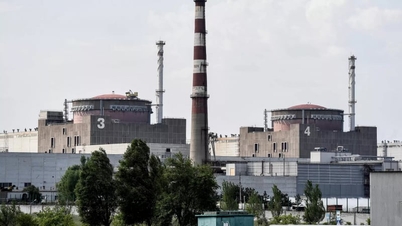
| Illustration photo: Reuters |
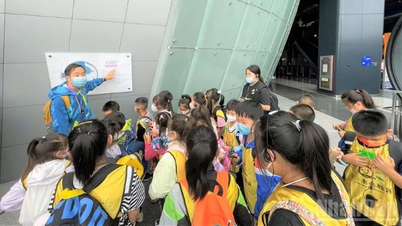
Doctors in the Democratic Republic of Congo also note that children are more susceptible to illness due to their underdeveloped immune systems and limited hygiene awareness. To raise awareness, schools in eastern Democratic Republic of Congo are trying to educate students about the disease and health measures to minimize its spread.
Doctors Without Borders (MSF) said the rapid spread of Ebola in the Democratic Republic of Congo was “alarming,” while containment efforts and the delivery of humanitarian aid were being hampered by “major restrictions,” such as border and airport closures. The WHO has also repeatedly warned that the ongoing conflict in the Democratic Republic of Congo is significantly hindering the response to the Ebola outbreak.
Present in Bunia, the epicenter of the Ebola outbreak in the Democratic Republic of Congo, the Director-General of the World Health Organization (WHO), Tedros Adhanom Ghebreyesus, met with government officials, community leaders, humanitarian organizations, and health partners to support the Ebola response efforts.
Tedros emphasized: “I think the key to success is solidarity and mutual support, which is our best form of immunity, and especially, the focus must be on community engagement, of course with government leadership. So, we need to work closely with the community, listen to them, understand the issues they raise, and work together to solve those problems. I think this will help us stop this outbreak.”
The World Health Organization (WHO) also stated that early detection and community involvement in combating the epidemic remain crucial to saving lives. The WHO said it is currently working with the governments of the Democratic Republic of Congo and Uganda to accelerate the evaluation of drugs and vaccines, and to expand medical treatment capacity. Three potential treatments and two potential vaccines have been moved into further research.
Anais Legand, a technical officer at the World Health Organization (WHO), said: “We now have potential treatments and vaccines, and WHO is working closely with the governments of both countries to support the assessment of these potential health responses, while urgently strengthening care capacity to ensure all patients in affected communities have access to optimal supportive care, which helps save lives.”
Meanwhile, the United States, Mexico, and Canada have announced unified public health measures for those entering from areas of Africa at highest risk of Ebola infection. Canadian authorities announced that this coordinated approach aims to protect citizens as well as the millions of travelers, fans, athletes, and tourists expected to attend the upcoming 2026 FIFA World Cup.
According to Tran Nga/VOV1
Source: https://baovinhlong.com.vn/quoc-te/202605/tinh-hinh-lay-lan-dich-ebola-van-dang-bao-dong-4291fcf/

![[Photo] Admire the coral "masterpiece" amidst the million-year-old heritage of Dak Lak province.](https://vphoto.vietnam.vn/thumb/1200x675/vietnam/resource/IMAGE/2026/05/31/1780221235105_anh-man-hinh-2026-05-31-luc-16-53-27.png)

![[Photo] The General Secretary, President and his wife begin their state visit to the Philippines.](https://vphoto.vietnam.vn/thumb/1200x675/vietnam/resource/IMAGE/2026/05/31/1780230559452_anh-man-hinh-2026-05-31-luc-19-28-11.png)
![[Photo] Solemn bathing ceremony and Buddha procession in Hue](https://vphoto.vietnam.vn/thumb/1200x675/vietnam/resource/IMAGE/2026/05/31/1780228263543_1-jpg.webp)













![[Video] Sunset at Lap An Lagoon – Where the sun sets over the fishing nets](https://vphoto.vietnam.vn/thumb/340x192/vietnam/resource/IMAGE/2026/05/31/1780192137701_beach-landscape-sea-water-nature-grass-745871-pxhere-com.jpeg)




































![[Photo] Admire the coral "masterpiece" amidst the million-year-old heritage of Dak Lak province.](https://vphoto.vietnam.vn/thumb/402x226/vietnam/resource/IMAGE/2026/05/31/1780221235105_anh-man-hinh-2026-05-31-luc-16-53-27.png)



























Comment (0)