

The Can Gio reclaimed land urban tourism area, covering 2,870 hectares, is planned to be a seaside tourist area, resort tourism, conference and seminar center combined with accommodation, hotels, and an iconic 108-story high-rise tower.
The Can Gio reclaimed land urban tourism area, covering 2,870 hectares, is planned to be a seaside tourist area, resort tourism, conference and seminar center combined with accommodation, hotels, and an iconic 108-story high-rise tower.
On January 24th, the Vice Chairman of the Ho Chi Minh City People's Committee, Bui Xuan Cuong, signed Decision No. 340 approving the detailed planning project at a scale of 1/500 for the Can Gio coastal tourism urban area.
The project is located in Long Hoa commune and Can Thanh town, Can Gio district, and consists of 4 subdivisions: A, B, C, and D-E.
Accordingly, zone A, covering approximately 953.23 hectares, is planned as an ecological residential area integrated with tourism services at the gateway to the Can Gio coastal tourism urban area.
Subdivision B, covering approximately 659.87 hectares, comprises residential areas, tourist resorts, urban public service facilities (healthcare, education, administrative offices, commercial services, offices, etc.), urban green spaces, and a hub for technical infrastructure and urban technical infrastructure systems, all aligned with the modern and smart city development plan.
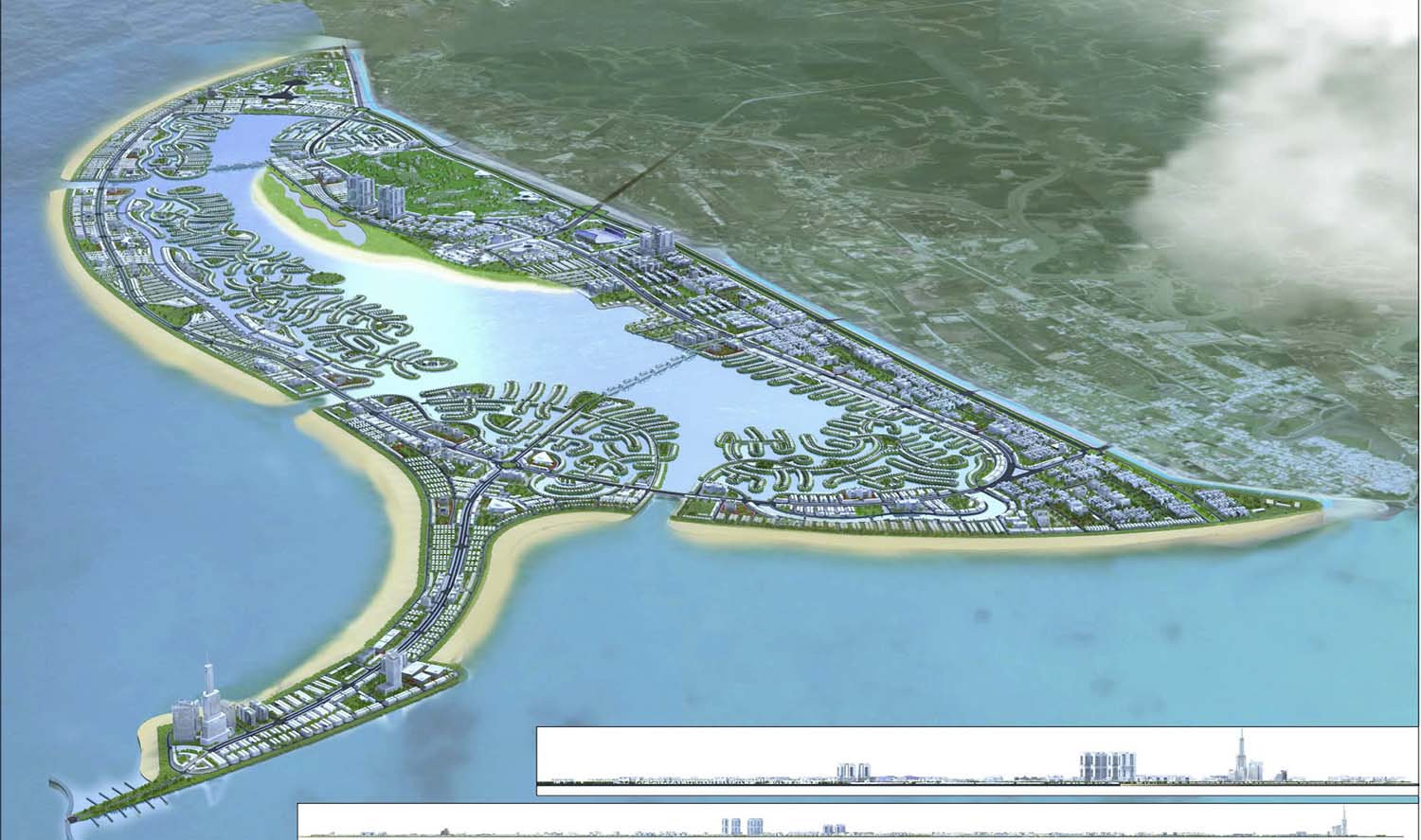 |
| Perspective view of the 2,870-hectare Can Gio coastal tourism urban area. |
Zone C, covering approximately 318.32 hectares, is the central area for finance, economy, commerce, services, offices, and a port. It is a modern urban area comprising residential areas (terraced houses (limited), villas, and high-rise apartments) that are modern and civilized.
Zone D, approximately 480.46 hectares, is a high-end commercial and resort center and modern urban area comprising residential areas (townhouses and villas) meeting modern and smart criteria; and Zone E, approximately 458.12 hectares, consists of water bodies, canals, and urban-level green spaces.
Regarding the organization of architectural and landscape space, Zone A, as a gateway zone, not only serves urban functions but also incorporates functional spaces such as a golf course, themed parks, urban green spaces, and a public beach.
Specifically, the landmark buildings at the main gateway include the Theater and commercial and service buildings in the central area. These include land plots A3-27 and A3-24.
The area along the Can Thanh - Long Hoa Boulevard, the central ring road, and roads T4, T5, and D7 is planned to feature terraced houses and townhouses combined with commercial and service facilities, thereby creating the main commercial and service axes for the planning area.
The golf course area is planned to include administrative buildings, a clubhouse, and a 36-hole golf course.
Urban park areas connected to the beach serve as the central green space of the urban area. These areas require a harmonious integration of functions through a system of trees along the coast and main landscape axes. The green landscape areas should have a rich rhythm, amenities, and attractive scenery.
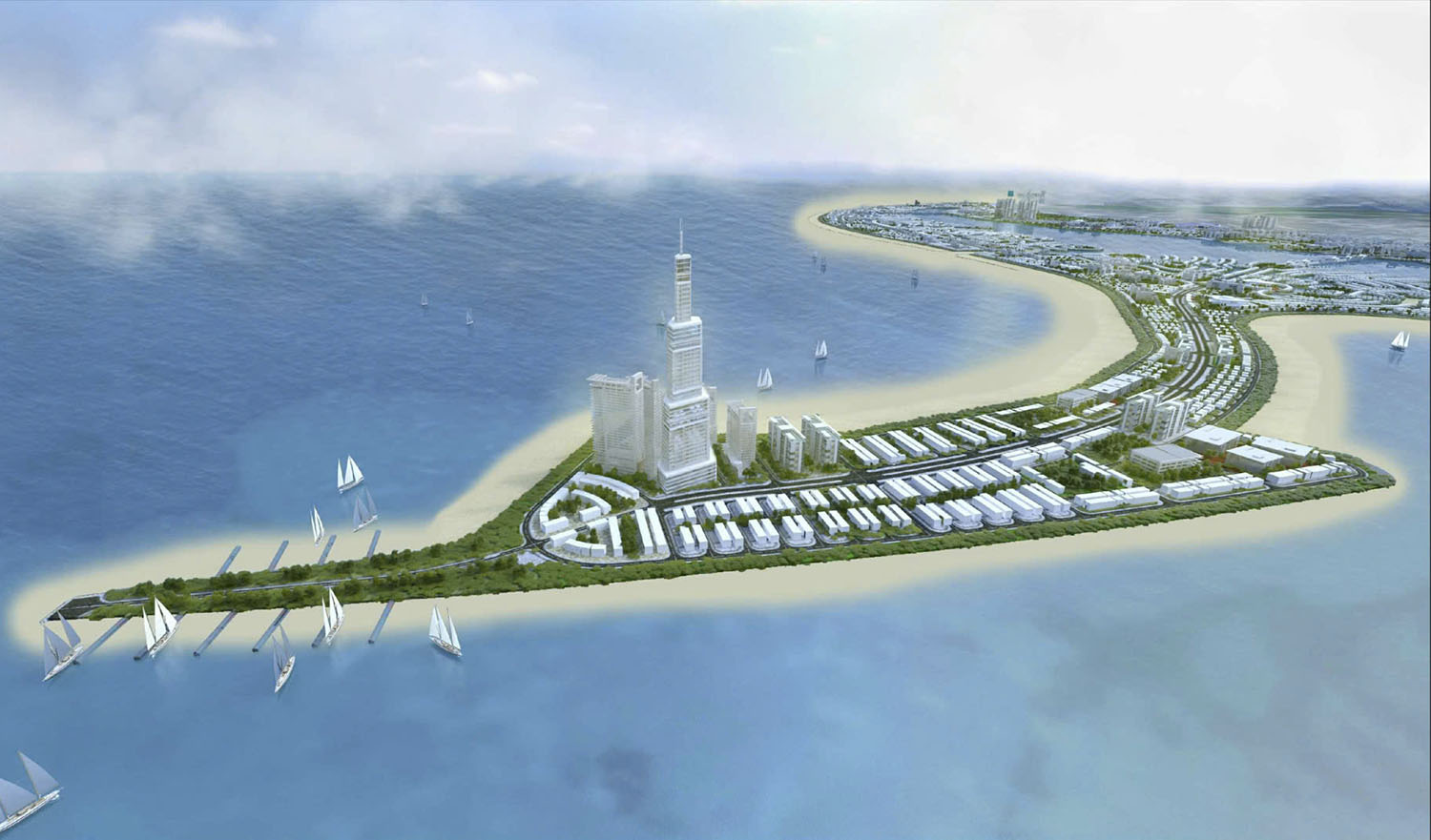 |
| The iconic 108-story tower located at the Lighthouse Point area is the main landmark in Zone C. |
In Zone B, the landmark area at the main gateway is planned to include a stadium, commercial and service facilities, and a cultural and sports center. The architectural design is intended to be a focal point and will combine with the landmark buildings in Zone A to form a cluster of landmark buildings for the entire 2,870-hectare Can Gio coastal tourism urban area.
Notably, social housing is concentrated in blocks B1, B2, and B3, providing easy access to the main connecting roads of the area. The internal landscape architecture of social housing needs to be studied and developed to be in harmony with the overall landscape of the area, while also providing the best living space for residents.
In Zone C, the architectural and landscape design is linked to the commercial and service building designated C1-24, which is a cluster of commercial centers located at the intersection of the central ring road and the C7 landscape axis road. This building has a large floor area and an impressive architectural style, attracting residents and tourists to shop and enjoy themselves.
The mixed-use residential and service complex, designated C3-30, is a landmark structure featuring a 108-story iconic tower located at the Lighthouse Point, along the main scenic thoroughfare. It is designated as a mixed-use complex encompassing commercial, service, office, and hotel spaces, visible from all parts of the urban area. This complex boasts both impressive height and modern architectural design, making it an iconic landmark for the entire city.
In zone DE, which is a tourism and resort zone, functional spaces include: ecological residential areas, urban green spaces, a central park, and a tourist resort area.
Specifically, the key landmark areas include commercial and service buildings (lot D3-38) and the central park (lot D4-62). Along the central ring road, it is planned to feature terraced houses and townhouses combined with commercial and service facilities, thus creating the main commercial and service axes for the planning area.
The central park area is the central green space of the urban area, requiring a harmonious integration of functions through a system of trees, promenades, and main landscape axes. The green landscape areas should have a rich rhythm, amenities, and attractive scenery.
The eco-residential area is accessible to neighboring areas of the Can Gio coastal tourism zone via central waterfront roads and green spaces and open areas, forming a distinctive landscape axis for the coastal urban area. The planned villa housing projects are designed with environmentally friendly and distinctive architectural approaches, aiming to optimally utilize green spaces and water features integrated into each building.
Can Gio Urban Tourism Joint Stock Company - the investor - plans to implement the project from April 2025 to 2030.
The maximum population of the Can Gio coastal tourism urban area is 228,506 people. The estimated number of tourists across the entire project is approximately 8.887 million per year.
Source: https://baodautu.vn/batdongsan/tphcm-duyet-quy-hoach-1500-khu-do-thi-lan-bien-can-gio-d242800.html
![[Photo] First session of the 14th Congress of the Vietnam Trade Union](https://vphoto.vietnam.vn/thumb/1200x675/vietnam/resource/IMAGE/2026/06/03/1780465947883_ndo_br_img-3852-jpg.webp)
![[Photo] Secretary of the National Assembly Party Committee, Chairman of the National Assembly presides over the meeting of the Standing Committee and Executive Committee of the National Assembly Party Committee.](https://vphoto.vietnam.vn/thumb/1200x675/vietnam/resource/IMAGE/2026/06/03/1780480353201_ndo_br_bnd-2585-jpg.webp)
![[Photo] General Secretary and President To Lam presides over a meeting with the Central Organizing Committee.](https://vphoto.vietnam.vn/thumb/1200x675/vietnam/resource/IMAGE/2026/06/03/1780482764658_a1-bnd-4741-3342-jpg.webp)



































![[Video] Sunset at Lap An Lagoon – Where the sun sets over the fishing nets](https://vphoto.vietnam.vn/thumb/1200x675/vietnam/resource/IMAGE/2026/05/31/1780192137701_beach-landscape-sea-water-nature-grass-745871-pxhere-com.jpeg)
























Comment (0)