

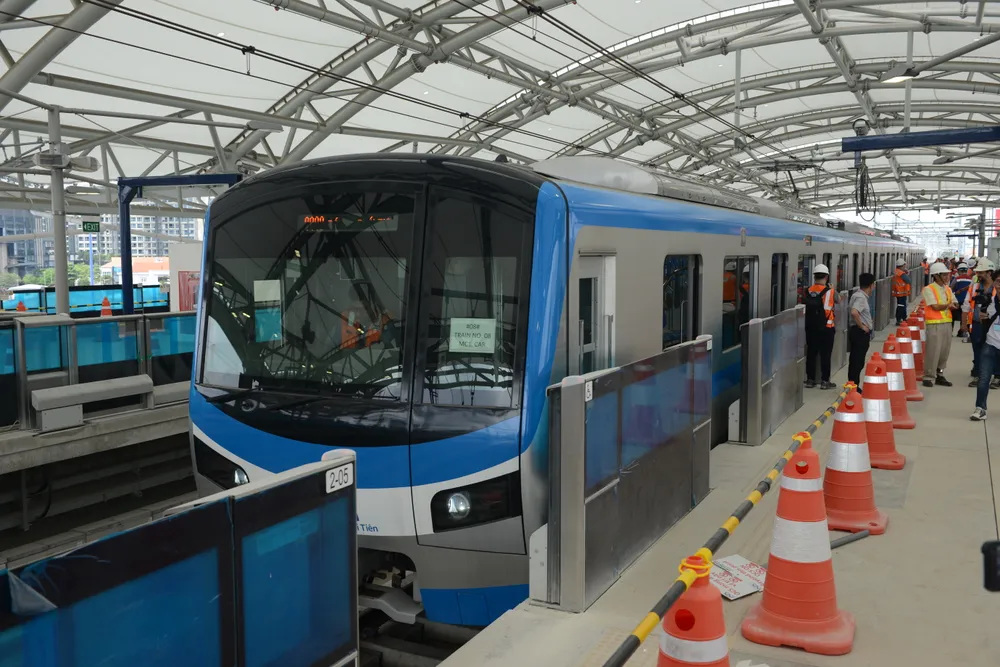
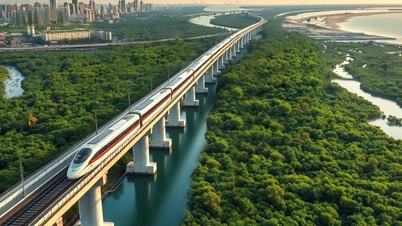
Vice Chairman of the Ho Chi Minh City People's Committee Nguyen Manh Cuong recently signed Decision No. 2962/QD-UBND to implement the Project on training and fostering cadres, civil servants, and public employees to serve the development of the Ho Chi Minh City urban railway network system in the period 2025 - 2030, with a vision to 2050.
According to the plan, the city aims to develop a highly qualified workforce of managers, engineers, and experts capable of mastering urban rail technology according to UITP, UIC, and IRSE standards. Training will focus on core areas such as: infrastructure engineering, signaling and control, power supply and electrification, operation and maintenance, project management, urban planning and TOD (Transit-Oriented Development), safety, and environmental protection.
The city also emphasized the need to strengthen policy planning capacity, state management, and the application of advanced technologies such as BIM, GIS, AI, and automation in training and metro operation practices.
The project aims to build a standardized, systematic training system that connects theory and practice. Ho Chi Minh City aims to gradually reduce its dependence on foreign experts, progressively forming a team of engineers and specialists capable of independently mastering the technology and operation of the metro system.
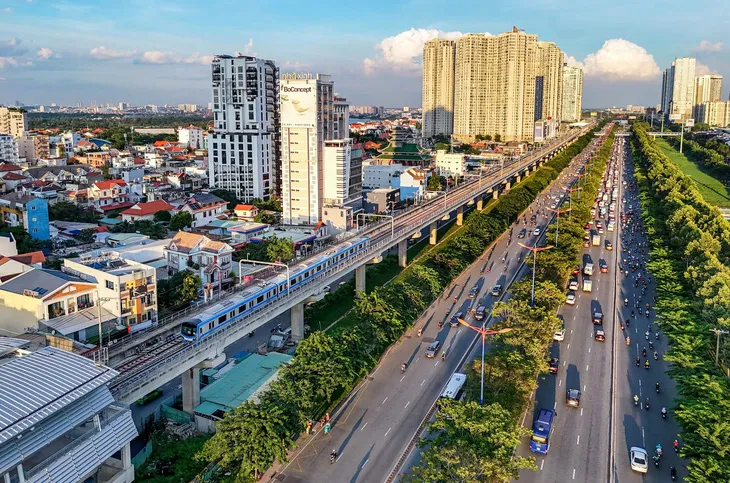
The project involves implementing long-term training programs at the undergraduate, master's, doctoral, or equivalent levels for officials, civil servants, and public employees who are included in the planning process or who require in-depth expertise. Short-term training includes general training for senior leaders and advanced training for department heads, specialists, and engineers in the field of urban railways.
The training content includes metro development strategy, legal framework, finance and investment, TOD planning, engineering, signaling and control technology, train operation, safety management, risk control, operational simulation, and project management.
For the 60 state management officials in urban railways, approximately 50% will receive specialized training between now and 2030, with 5-10 achieving master's degrees. Between 2030 and 2035, approximately 80% will receive specialized training, with 30% holding master's degrees and 10% pursuing doctoral degrees. Between 2035 and 2045, 100% will be standardized, with over 50% holding master's degrees and 10-20% holding doctoral degrees.
Project management personnel for urban railway projects will be trained from now until 2030, with 50% receiving specialized training, including 10-15 pursuing master's degrees. From 2030 to 2035, approximately 80% will receive specialized training, with 30% pursuing master's degrees and 10% pursuing doctoral degrees. From 2035 to 2045, approximately 100% will receive specialized training, with at least 50% holding master's degrees and 20% holding doctoral degrees. 100% of directly involved leaders will participate in annual general and advanced training.
Each year, Ho Chi Minh City strives to send at least 50% of its urban railway management staff to study tours and training programs abroad, in order to update their knowledge of technology, management experience, and operation of modern metro systems.
The project is divided into phases: 2025-2030, 2030-2035, and 2035-2045, accompanied by a regular evaluation mechanism to adjust to the investment progress of metro lines and actual human resource needs. The city requires metro consulting, construction, and operation units to proactively develop internal training plans, ensuring that the workforce is updated with new technologies and meets international standards.
Source: https://www.sggp.org.vn/tphcm-dao-tao-can-bo-phat-trien-mang-luoi-duong-sat-do-thi-post826429.html

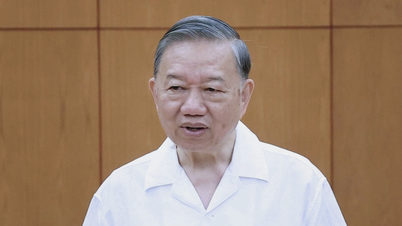
![[Photo] General Secretary and President To Lam presides over a meeting with the Central Organizing Committee.](https://vphoto.vietnam.vn/thumb/1200x675/vietnam/resource/IMAGE/2026/06/03/1780482764658_a1-bnd-4741-3342-jpg.webp)
![[Photo] First session of the 14th Congress of the Vietnam Trade Union](https://vphoto.vietnam.vn/thumb/1200x675/vietnam/resource/IMAGE/2026/06/03/1780465947883_ndo_br_img-3852-jpg.webp)
![[Photo] Secretary of the National Assembly Party Committee, Chairman of the National Assembly presides over the meeting of the Standing Committee and Executive Committee of the National Assembly Party Committee.](https://vphoto.vietnam.vn/thumb/1200x675/vietnam/resource/IMAGE/2026/06/03/1780480353201_ndo_br_bnd-2585-jpg.webp)


































![[Video] Sunset at Lap An Lagoon – Where the sun sets over the fishing nets](https://vphoto.vietnam.vn/thumb/1200x675/vietnam/resource/IMAGE/2026/05/31/1780192137701_beach-landscape-sea-water-nature-grass-745871-pxhere-com.jpeg)




















Comment (0)