

 |
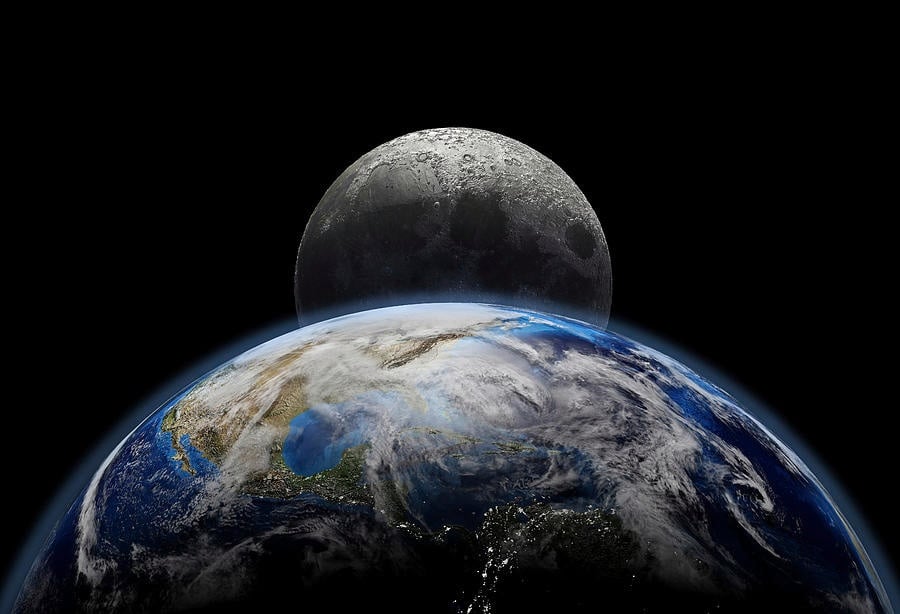
The Moon's changing position will affect Earth's rotation speed and day length. Image: Pixels . |
Over the next few weeks, the Earth will rotate faster, causing some days to be less than 24 hours long.
Specifically, on July 9th, July 22nd, and August 5th, 2025, the Moon will be closer and increase the Earth's rotation speed, making each day shorter than normal by 1.3-1.51 milliseconds, according to Livescience . Each millisecond is equal to one thousandth of a second.
A day is the time it takes for a planet to complete one rotation around its axis, currently estimated by humans to be approximately 86,400 seconds or 24 hours. However, the actual rotation speed of the Earth is affected by many factors such as the position of the Moon and the distribution of mass on the planet, so it is not always exactly 24 hours.
For billions of years, the Earth has tended to slow down its rotation, causing the length of the day to increase. Researchers estimate that about 1-2 billion years ago, a day on Earth was only about 19 hours long. This was because the Moon was closer to the Earth than it is now, creating a stronger gravitational force that caused the Earth to rotate faster.
As the Moon gradually moved further away, the average length of days became longer, reaching the 24-hour mark we see today.
However, in recent years, scientists have observed a reversal of this trend. In 2020, they discovered that the Earth was rotating faster than it had since 1970.
July 5, 2024, is the shortest day since 1970, lacking 1.66 milliseconds compared to 24 hours, according to Timeanddate .
This year, on July 9th, July 22nd, and August 5th, the Moon will be closest to the Earth's poles. Gravity will increase the planet's rotation speed, making the days shorter than usual.
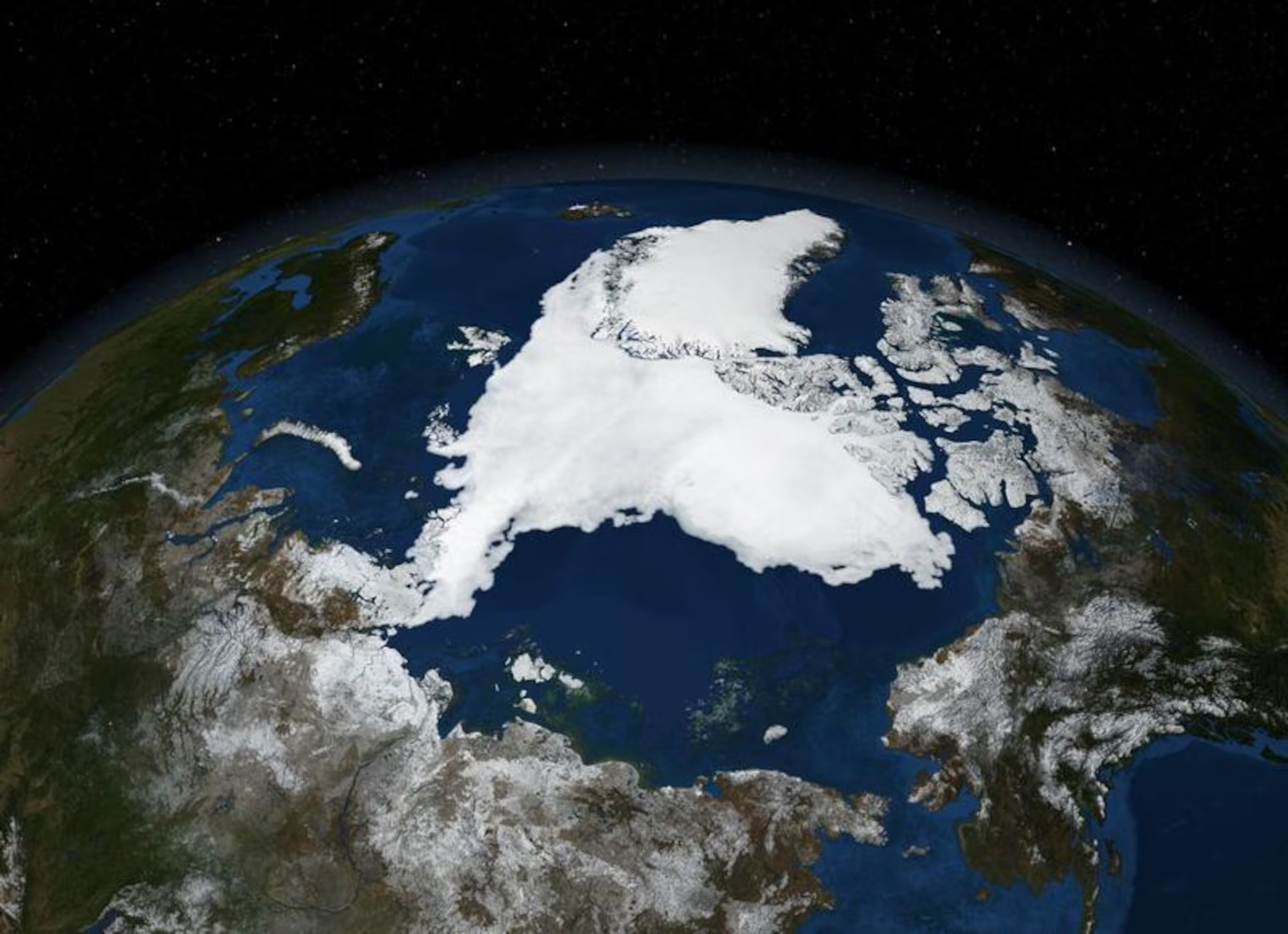 |
Melting ice also affects the Earth's rotation speed and day length due to its influence on weight distribution. Photo: Reuters . |
In addition, human activities are also contributing to changes in the Earth's rotation speed.
NASA has calculated that melting ice and moving groundwater, altering the distribution of weight, have caused the length of the day to increase by 1.33 milliseconds per century between 2000 and 2018.
Even single events can affect the Earth's rotation speed. For example, the 2011 earthquake in Japan shortened the length of a day by about 1.8 microseconds. A microsecond is one millionth of a second.
On the affected days, the clock will still count a full 24 hours because the difference is too small for people to notice in their daily lives.
Only when the length of the day differs by more than 0.9 seconds or 900 milliseconds do people need to adjust their time zones. When this happens, the International Earth Rotation and Reference System (IERS) adds a "leap second" to Universal Time (UTC) to resynchronize the time.
Source: https://znews.vn/trai-dat-sap-quay-nhanh-hon-lam-ngay-ngan-lai-post1567256.html

![[Image] Hanoi's urban life under the challenge of a "scorching hot" environment](https://vphoto.vietnam.vn/thumb/1200x675/vietnam/resource/IMAGE/2026/05/25/1779706979265_nang-nong-t5-2026-minh-duy-7-4636-jpg.webp)


![[Image] Close-up view of the interchange connecting the two expressways and Long Thanh Airport.](https://vphoto.vietnam.vn/thumb/1200x675/vietnam/resource/IMAGE/2026/05/25/1779703378210_ndo_br_z7863716673926-224453a31600126cce10622af6290afd-4549-jpg.webp)


























































































Comment (0)