

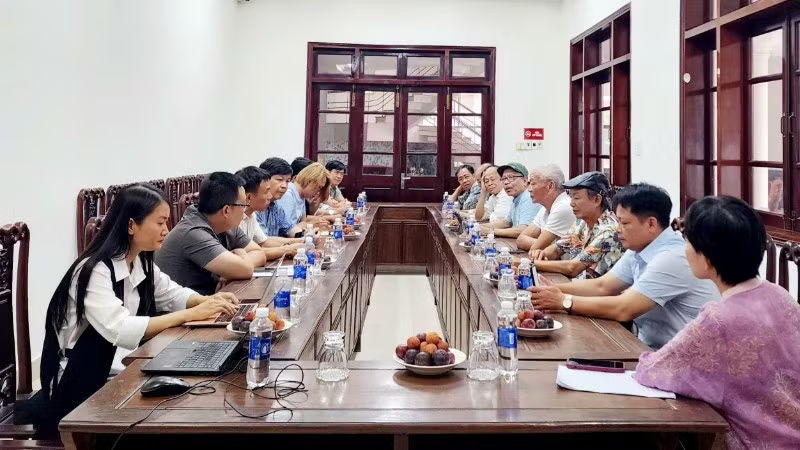
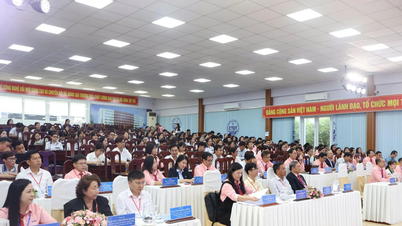
The frank and multifaceted discussions at the "AI and Writers Today" seminar demonstrated the growing interest of writers in the rapid development of artificial intelligence and its impact on contemporary literary life.
The increasing prevalence of AI-powered products is raising many questions for writers: Can AI-assisted products be considered literary works? Is the use of AI in writing considered a creative activity? How should writers respond to the rapid development of technology? How will AI impact professional ethics and the responsibility of writers to their readers? And how will works using AI be viewed in current literary competitions?
The discussion was open but also full of reflection. Although each artist offered a different perspective, most opinions converged on a common point: AI can assist humans in many stages of the creative process, but it cannot replace the emotions, experiences, and human depth that constitute the core value of literature.
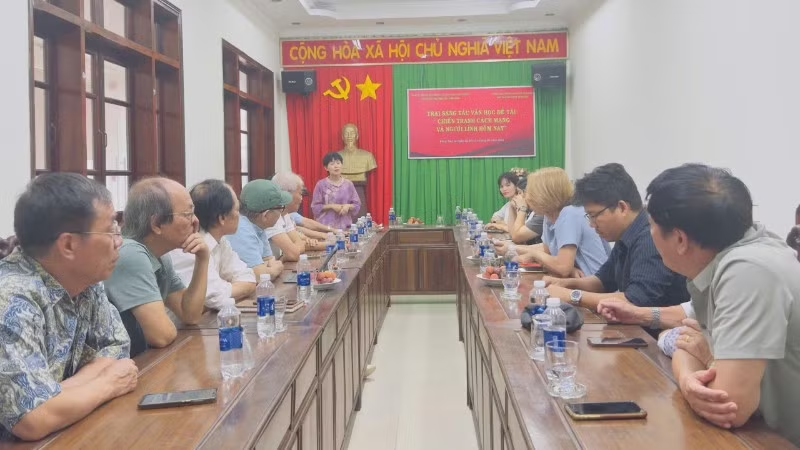
Poet Nguyen Minh Duc believes that he has always considered AI merely a tool, a means of support. According to him, AI is an intelligent tool that can greatly assist in research, data retrieval and synthesis, and professional support in many different fields. However, what AI will never be able to provide is the emotional life of human beings.
He explained that humans are socio-biological entities with unique life experiences, emotional clashes, and feelings. These crucial values are what create the depth of literature. If AI were used to write, the work would lose the breath of real life as well as the perspective of the writer's soul. Therefore, he has never used AI in his literary creations to date.
Sharing that viewpoint, poet Dinh Tien Hai sees AI as an inevitable product of modern society, and believes that people should not avoid or fear technology. According to him, AI is essential for life today and sometimes even surprises people with its information processing capabilities. But what distinguishes literature from AI-generated products is its real details, even "real wounds," the loneliness and real tears of humanity.
"Literature needs a perspective, the sensitivity of a human being to the pain of the times, the suffering of humanity, and authentic images," said poet Dinh Tien Hai. Therefore, writers don't need to fear AI, because what makes literature valuable doesn't lie in the smoothness of language, but in the human ability to perceive and express life through their talent, experience, and cultural depth.
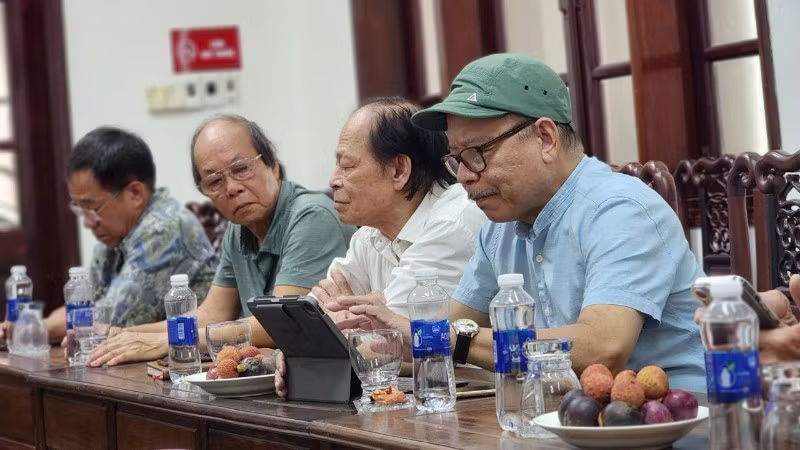
Writer Dinh Phuong, prose editor of the Army Literature and Arts Magazine, expressed regret over writers who have stories and details of life but choose not to write them themselves, instead providing data for AI to write for them. According to him, literature is not about the "smoothness," "cleanliness," or "monotony" of words. Literature is about emotion and creativity, including the awkwardness and stumbles in the labor of words that create each writer's unique voice.
In today's increasingly fast-paced life, writers believe they need to slow down to observe, listen, and delve into their innermost feelings. It is this slowness that creates depth and individuality in literature. Many opinions at the seminar also recognized that AI can be a useful tool if writers know how to use it appropriately and avoid becoming dependent on it.
Writer Thai Chi Thanh believes that AI is an artificial intelligence created by humans and can be a very powerful tool for writers in researching, expanding vocabulary, and even assisting with the structure of their works. AI has the ability to synthesize and generalize information very quickly. However, according to him, AI cannot create entirely new things on its own because its nature is still to process data based on what already exists.
Sharing the same viewpoint, writer Nguyen Vu Dien also believes that AI can become an "assistant" for writers in the digital age. He once tried using AI but after a while realized that the products created by AI were often generic, lacking individuality, and easily resembled each other. More worryingly, if writers become too dependent on AI, they may gradually lose their creativity, become lazy in their thinking, and become reliant on technology. He emphasized that in literature and art, the most important thing remains the personal imprint of the writer. A literary work only truly comes alive when it carries the unique and unmistakable voice, emotions, and perspective of its author.
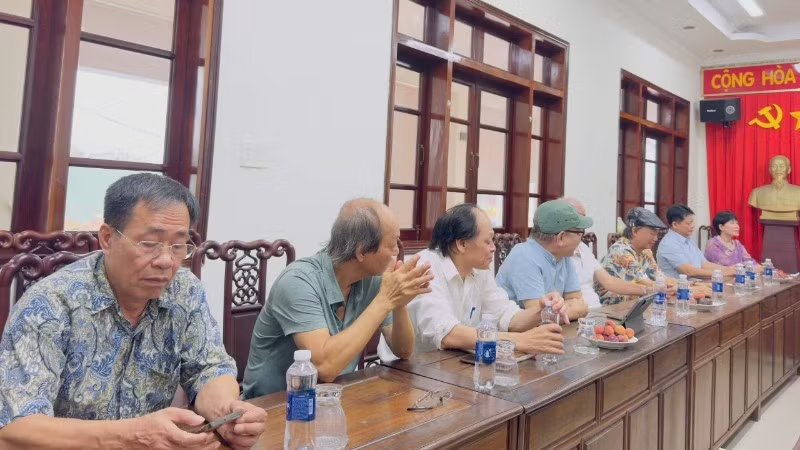
Poet Tran Minh Tien likens AI to Google in the past – a tool that helps expand human capabilities, not to replace humans. When writers master this tool, they will have more time and resources to delve deeper into the core values of literature. Conversely, if misused, technology itself will cause humanity to lose its literary value.
At the seminar, many opinions also expressed concern about the risk of AI making creative activities easy, industrialized, and eroding the emotions of writers. Writer Ho Thi Linh Xuan argued that no matter how productive AI becomes, it is still just a "machine voice." Simply knowing how to ask questions or issue commands, users can receive "well-rounded," "adequate" products. If writers overuse AI due to a lack of ideas or laziness in thinking, literature risks becoming a form of "word production," "wearing out" creativity.
According to the female writer, AI can assist in looking up information, facts, terminology, or proofreading, but a valuable work of literature must always bear the mark of a human being. Because only humans have memories, experiences, and emotions – which create the unique personality and voice of each author. "As a reader, I will not read works that are technically perfect but bland, soulless, and mass-produced in a short period of time," she shared.
Poet Dang Ba Khanh also believes that AI can replace many human jobs, but in literature, works with lasting vitality must be born from the genuine emotions of the writer. He likens each work to a "spiritual child born from the pain of childbirth," which must be defined by the "bloodline" of its creator. Meanwhile, poet Nguyen Nhu sees AI as a "tornado" that can sweep away the inherent emotions and moods of writers and poets. According to him, AI is both "lovable" and "hateful," and in artistic creation, it is more "hateful," because it easily leads writers away from their true emotions.
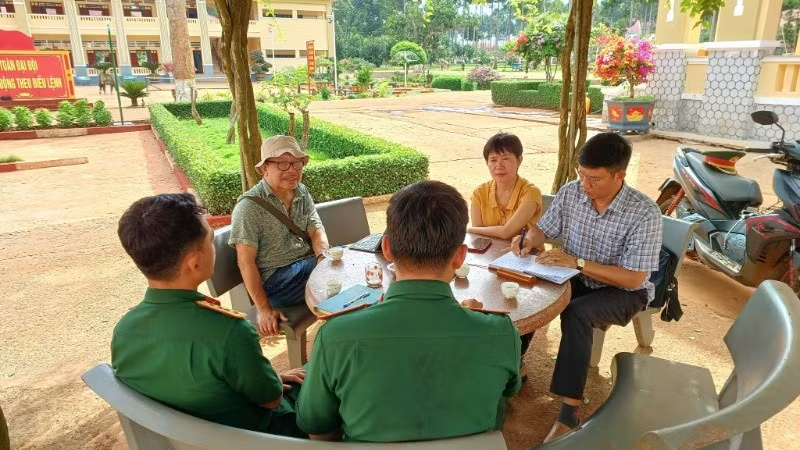
One of the most thought-provoking comments at the seminar was that of poet Van Phi. According to him, AI can write very quickly and smoothly, but this very smoothness "flattens" all emotions with anonymous, synthesized languages. The poet stated that he always views poetry as a way of expressing his innermost feelings, a release of his true emotions. Therefore, with poetry, the author wants to express his thoughts through real experiences and spontaneous moments of life.
"I imagine relying on AI to write is like asking someone else to write your poem for you and then putting your name on it. What's left of yourself then?" he shared. According to the author, even if a writer encounters creative difficulties, silence is a more honest choice than borrowing emotions and ultimately blurring their own identity.
At the seminar, editors of the Military Arts and Literature Magazine also shared the reality that there have been works showing signs of using, or even abusing, AI. Although identifying and determining the extent of intervention remains difficult, especially as technology becomes increasingly sophisticated, professionals can still recognize it through the "smoothness" of the writing, the lack of life experience, emotions, and personal tone in the works.
According to editors, a genuine literary work is created from the depth of life, the creative personality, and the artistic labor of the writer. Products bearing the mark of AI often lack depth, authentic life details, and emotional impact. Therefore, in addition to adapting to new technologies, writers need to be more aware of professional ethics, creative self-respect, and responsibility towards their readers.
Throughout the history of literature, each period has seen changes in technology and creative methods. However, what gives literature its enduring vitality has never been the tools used, but rather the human ability to confront life, the times, and oneself.
Amidst the increasingly dizzying pace of technology, many writers today seem to be choosing to return to the most fundamental values of writing: living more deeply, observing more closely, listening more, and being more honest with their emotions. Because, after all, literature is also the spiritual imprint of humanity before life.
Source: https://nhandan.vn/tran-tro-cua-nguoi-cam-but-truc-van-de-ai-post965242.html

![[Photo] Ba Lang An Lighthouse - the "eye of the sea" amidst the "rock museum" of Quang Ngai province.](https://vphoto.vietnam.vn/thumb/1200x675/vietnam/resource/IMAGE/2026/05/29/1780038698840_anh-man-hinh-2026-05-29-luc-14-10-42.png)
![[Image] Pleasant weather helps students enter the 10th grade entrance exam with confidence.](https://vphoto.vietnam.vn/thumb/1200x675/vietnam/resource/IMAGE/2026/05/29/1780034401612_ngay-1-thi-lop-10-minh-duy-8-5009-jpg.webp)

























































Comment (0)