

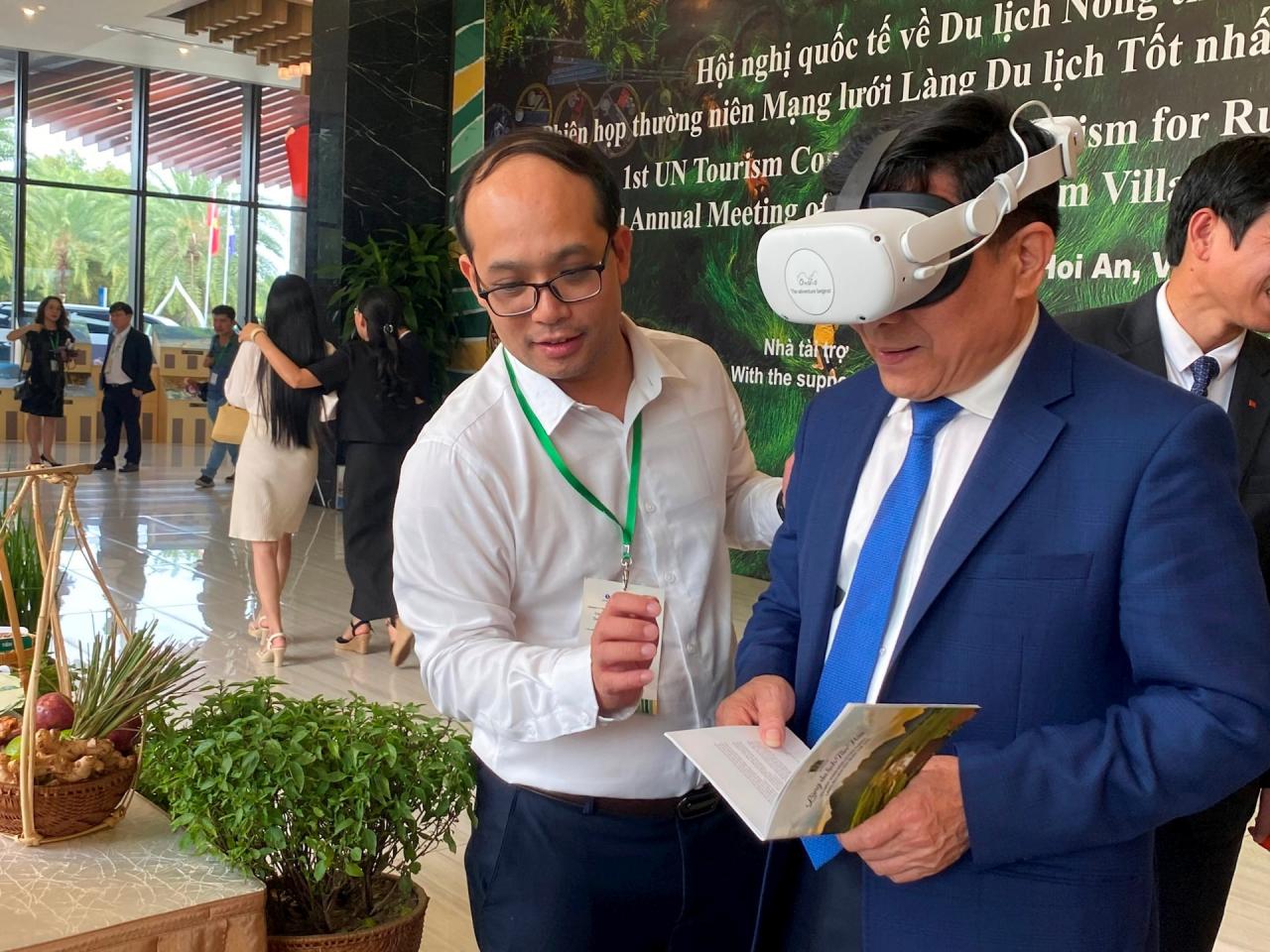
From flood-prone area to tourist village
Tan Hoa commune (Minh Hoa district, Quang Binh province) is surrounded by limestone mountain ranges and many caves. It is also the flood-prone area of Minh Hoa during the months of September to November every year.
Mr. Truong Thanh Duan, Chairman of the Tan Hoa Commune People's Committee, said that every year during the rainy season, people have to go up the mountain to set up tents to escape the floods. In 2011, some households came up with the idea of making floating rafts by joining 20-30 empty barrels together, but they could only hold belongings, and people still had to go up the mountain to set up tents to escape the floods. Since 2012, a few households have improved the rafts into floating houses with four stakes fixed at the four corners of the house.
Based on the idea of floating houses, in 2015, Oxalis Company organized an annual mixed-race competition with events including rowing, running, mountain climbing, and cave exploration, attracting 100 domestic and international athletes.
The campaign aimed to raise funds for the construction of flood-resistant houses. By 2023, Tan Hoa had nearly 620 floating houses built, ensuring that 100% of households could live in flood-resistant conditions and adapt to the weather.
Tourism in Tan Hoa officially developed in 2014 with products such as cave exploration, trekking, and camping in the forest, thanks to Oxalis. The company also reorganized homestay activities in floating houses, even during flood season. More than 120 villagers participate in tourism, earning an average income of 8 million VND per month.
After 10 years of tourism development, the poverty rate in Tan Hoa commune, which was over 85% (2010), has decreased to 2.65% (2023). In 2023, Tan Hoa was honored by the World Tourism Organization as one of the best villages in the world.
Establishing mechanisms for rural tourism development.
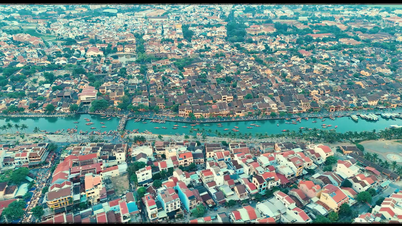
In Quang Nam, the decentralization and empowerment of communities in tourism development has been quite natural and strong. People participate in all tourism activities, create products, and benefit from these activities. The State plays the role of creating opportunities and conditions for villages and communities to develop.
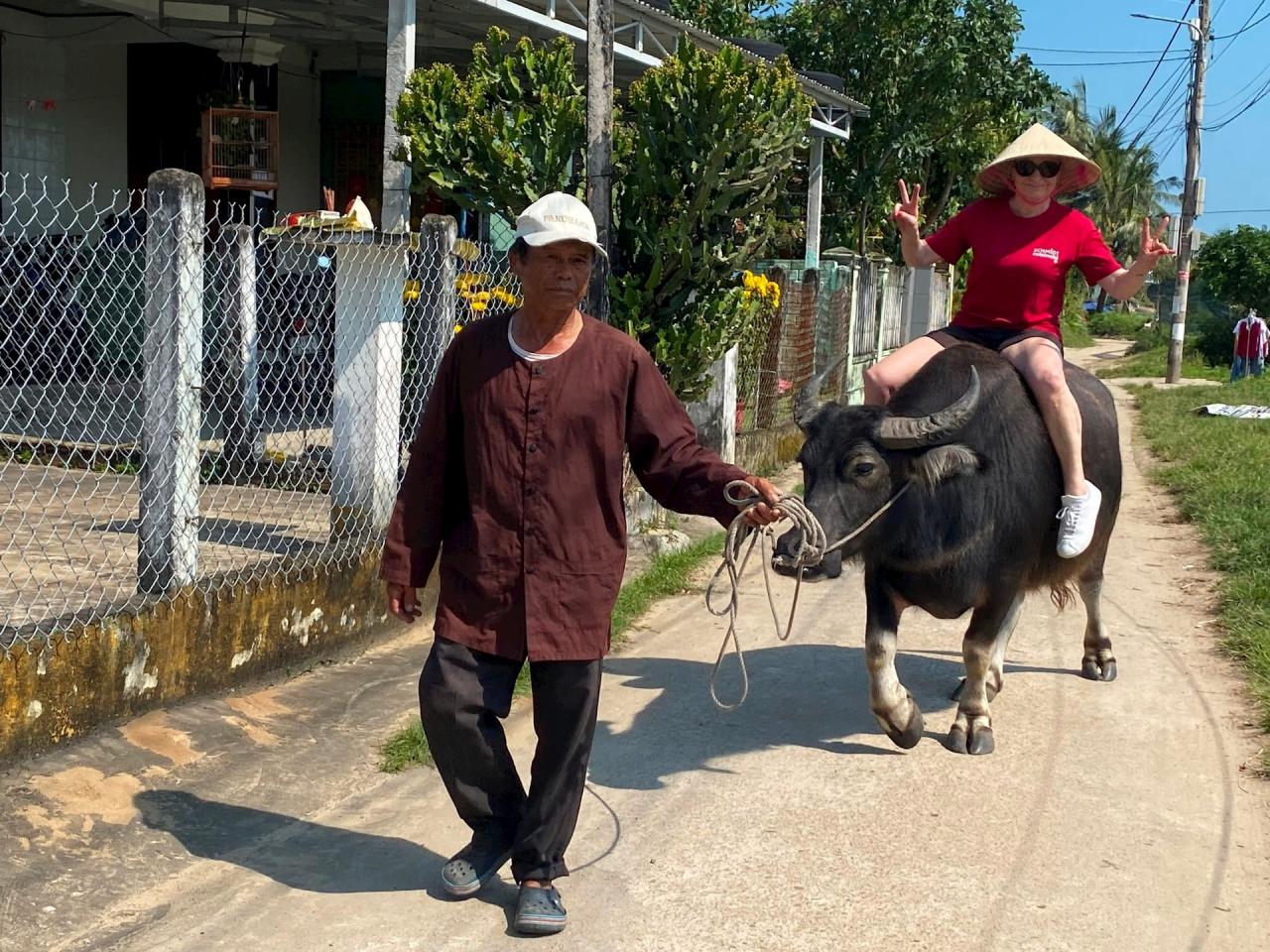
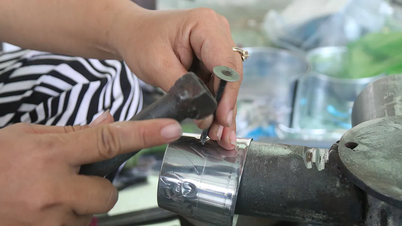
This is most evident in rural villages, community tourism villages, and famous craft villages such as Thanh Ha pottery village, Tra Que vegetable village, and even Zara weaving village (Nam Giang), where most people agree with each other in the decision-making process.
Mr. Pham Van Luong, Director of Habitat Vietnam, believes that empowering communities in Quang Nam's tourism villages should be understood as a process of decentralization, delegation of authority, and enhancement of people's capacity and awareness so that they can achieve the goals of sustainable rural tourism development.
Strengthening public-private partnerships with the active participation of the business community to promote and attract tourists, contributing to boosting the consumption of local products...
Mr. Nguyen Thanh Hong, Director of the Department of Culture, Sports and Tourism, shared that the key issue in developing rural tourism in Quang Nam is promoting public-private partnerships through research into mechanisms to support people, communities, and cooperatives; and attracting businesses to participate. Currently, Quang Nam only integrates and leverages resources from the new rural development program, but lacks a specific mechanism for rural tourism.
“Previously, the Provincial People's Council also issued Resolution 47 for mountainous tourism, but due to the COVID-19 pandemic, only a few projects were implemented before being temporarily suspended. Now, we will have to re-examine the new mechanism. In the long term, we need a strong enough special mechanism to stimulate demand, invite public-private partnerships, and attract businesses to invest in rural tourism effectively,” Mr. Hong said.
Source: https://baoquangnam.vn/trao-quyen-cho-cong-dong-3147172.html




















![[Photo] Reception to welcome General Secretary and President To Lam and his wife on their State visit to the Philippines](https://vphoto.vietnam.vn/thumb/1200x675/vietnam/resource/IMAGE/2026/06/01/1780295488620_vna-potal-chieu-dai-chao-mung-tong-bi-thu-chu-tich-nuoc-to-lam-va-phu-nhan-tham-cap-nha-nuoc-toi-philippines-8798060-7855-jpg.webp)


















































Comment (0)