

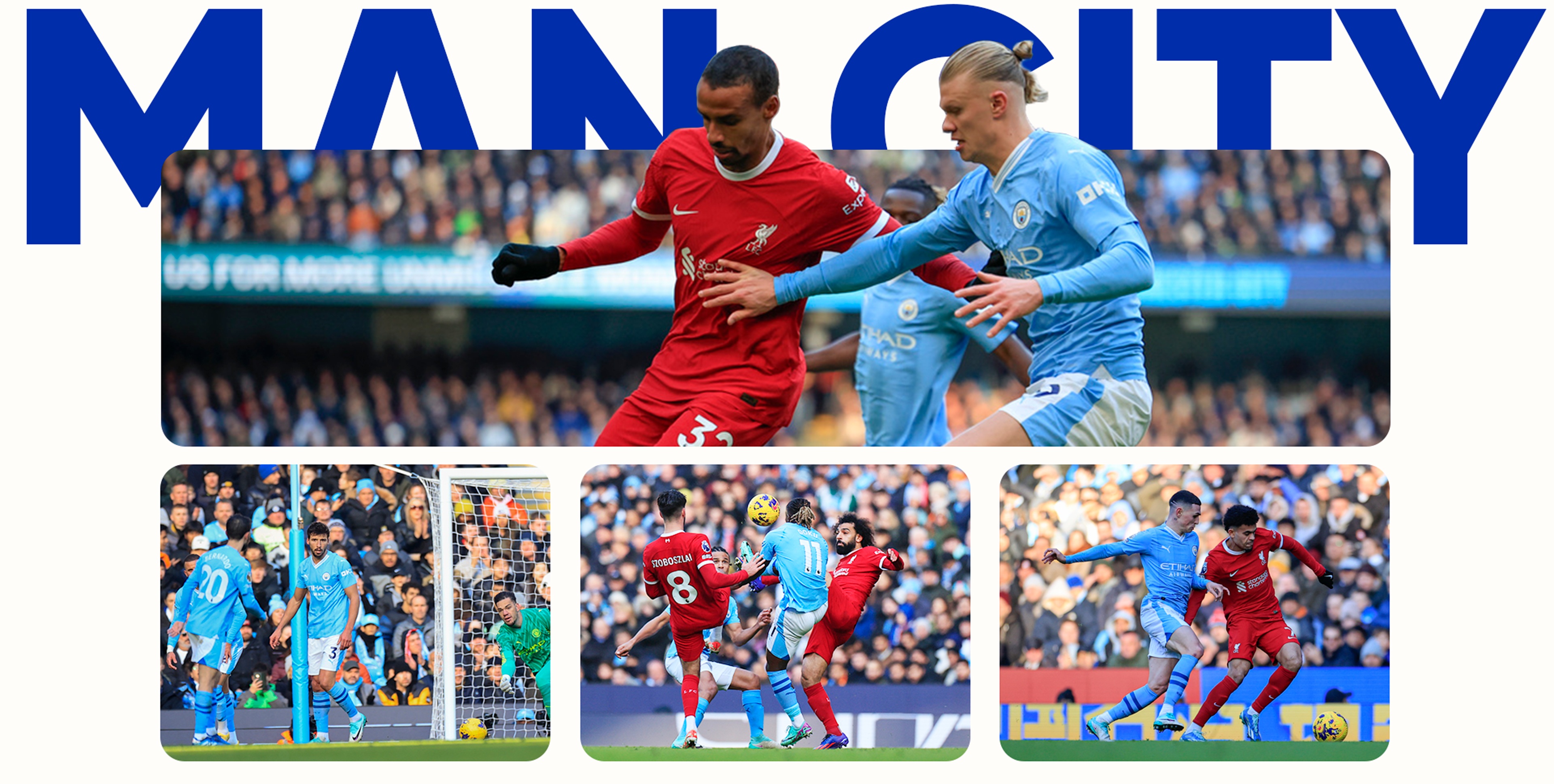
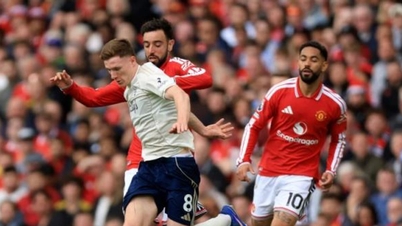
When the clash between Man City and Liverpool ended in a 1-1 draw, the Etihad Stadium issued an announcement that divided public opinion: Jeremy Doku was voted Man of the Match.
Firstly, the organizers' decision was absolutely correct. Doku was the main character on the left flank. Once again, the tactics of the brilliant strategist Pep Guardiola revolved around the Belgian winger, ensuring this young talent received as much of the ball as possible.
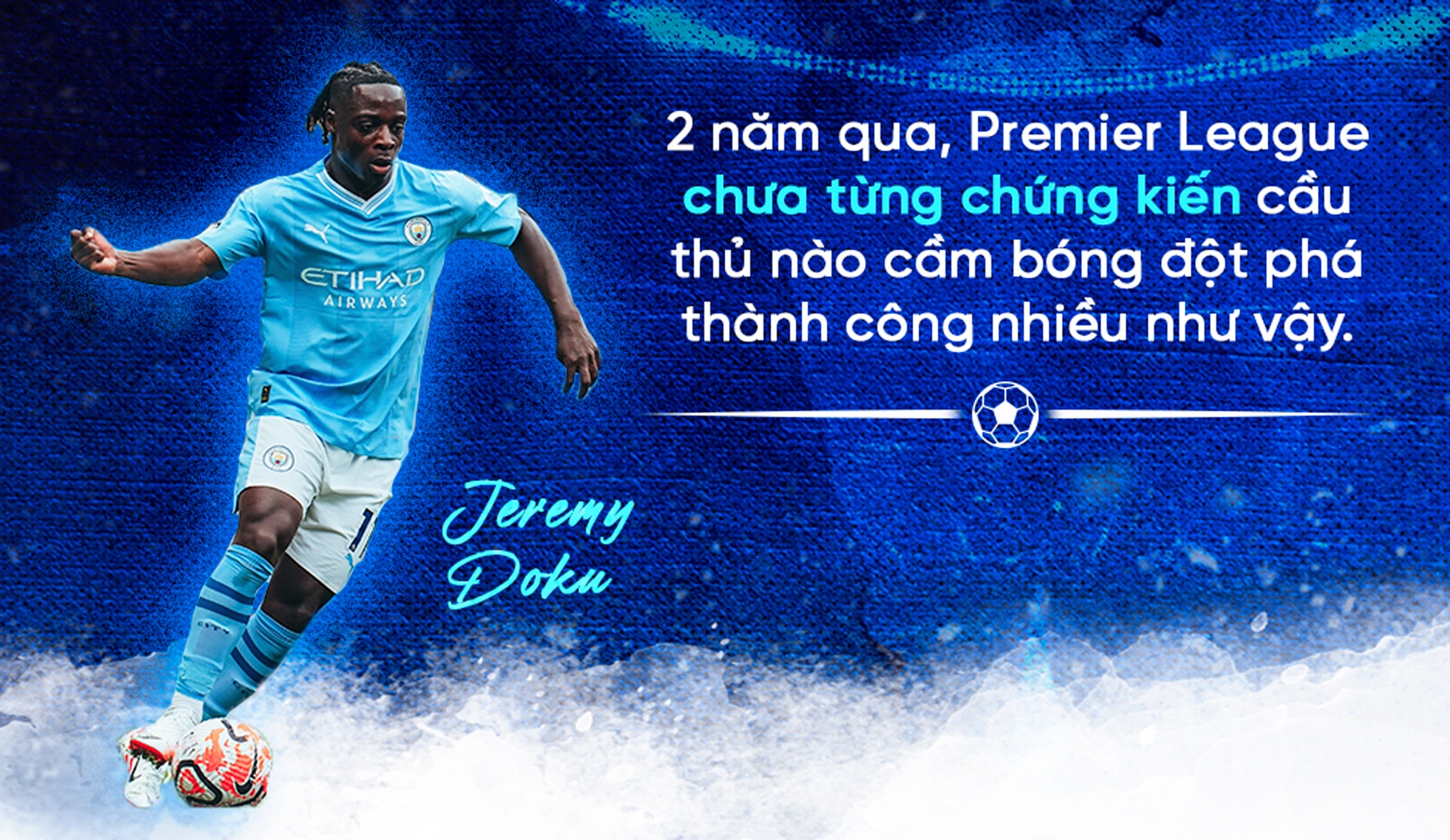
And when he has the ball, Doku consistently creates dangerous situations, exemplified by his 11 successful dribbles in the match against Liverpool. In the past two years, the Premier League hasn't seen a player successfully dribble past so many opponents.
The second viewpoint is the opposite: Doku cannot be considered the best player of the match. While it's true that the winger had a spectacular performance as mentioned, he also frequently lost possession.
In the first half, Liverpool consistently launched quick attacks after winning possession. The Kop created these attacking opportunities precisely because Doku repeatedly lost the ball after his attempts to create chances through fancy footwork.
This is why these two opposing viewpoints make for such a fascinating topic. For those who believe Doku was the best player in the match, they probably don't even bother to consider the minor turnovers made by the young Belgian talent. Doku is a winger expected to make a difference with his dribbling ability, so losing possession is acceptable.
This perspective holds true for the vast majority of teams, but it becomes particularly interesting because the team in question is Manchester City, led by Guardiola, the quintessential manager of the control-oriented philosophy. Throughout his career, the Spanish strategist has cultivated the image of a man obsessed with control.
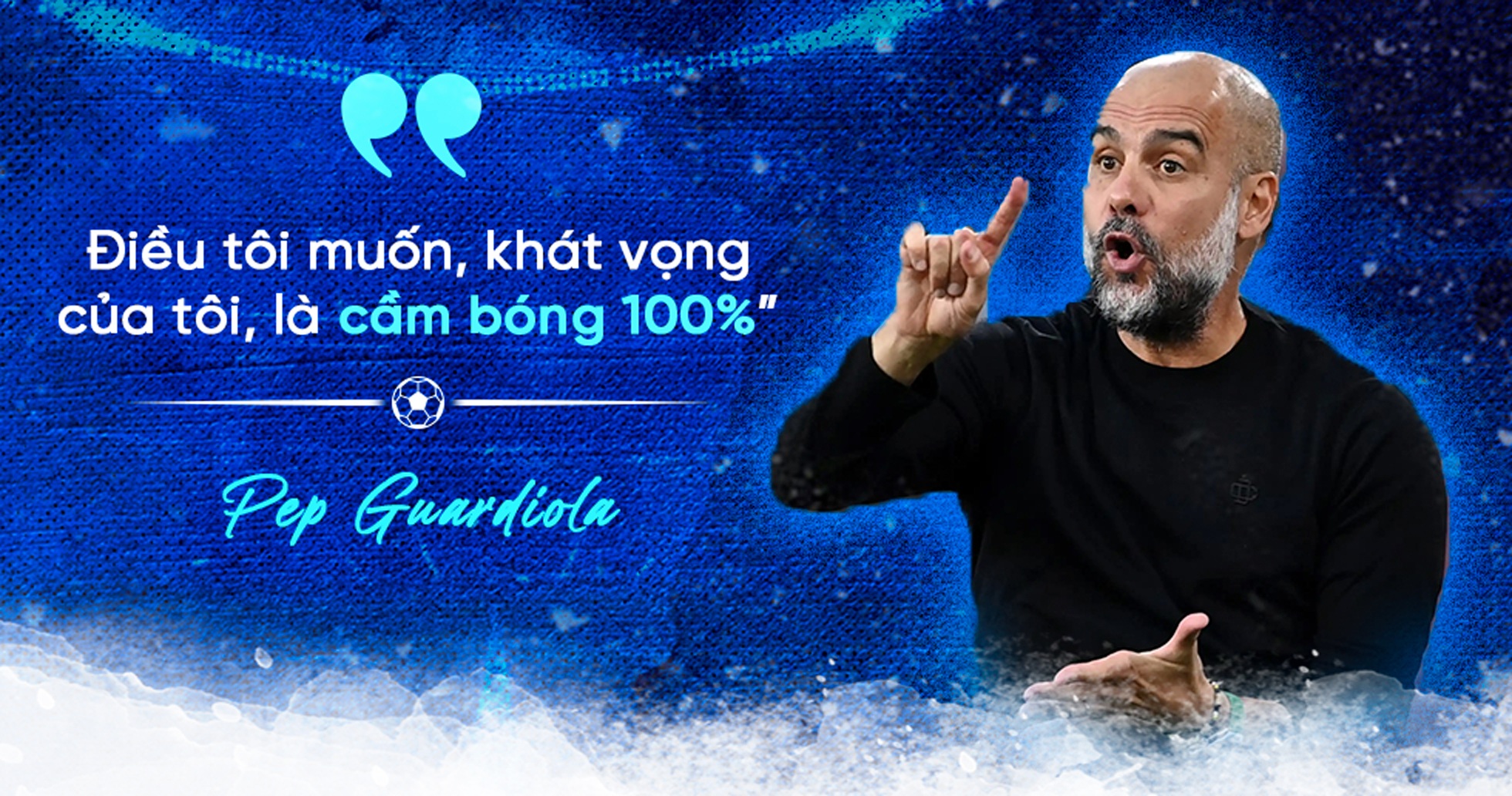
Pep wants to control everything on the pitch, if possible. From controlling the ball, controlling the game, controlling space, controlling players, to even the smallest details like the quality of the pitch. "What I want, my aspiration, is to have 100% possession," Guardiola once said in 2015, when he was managing Bayern Munich.
Despite a dominant 5-1 victory over Arsenal in the Champions League, the Spanish manager frequently lost his temper on the touchline after his players easily lost possession.
Furthermore, Guardiola's unwavering principle is that the ball always moves faster than any player. Therefore, he always prioritizes passing over individual dribbling. But after eight years, at the Etihad last weekend, Guardiola, who once craved breathtaking ball control, showed no annoyance at Doku's performance.
In fact, from the beginning of the season until now, Doku has become a crucial element in the Man City squad, to the point that Guardiola is willing to bench Jack Grealish, a key player in their journey to conquer the treble of the Premier League, FA Cup and Champions League last season.
Even in big matches where Guardiola usually shows maximum caution, such as clashes with Chelsea or Liverpool, he still puts his faith in the young Belgian talent. The result was one goal, five assists, and dozens of dribbles per game.
Doku has the potential to become a star in the Premier League. The young Belgian talent is the type of player who excites fans with his individual skills. Legendary Thierry Henry, who knew Doku well from his time working with the Belgian national team, once said: "When you face him head-on, the only thing you can do is pray."
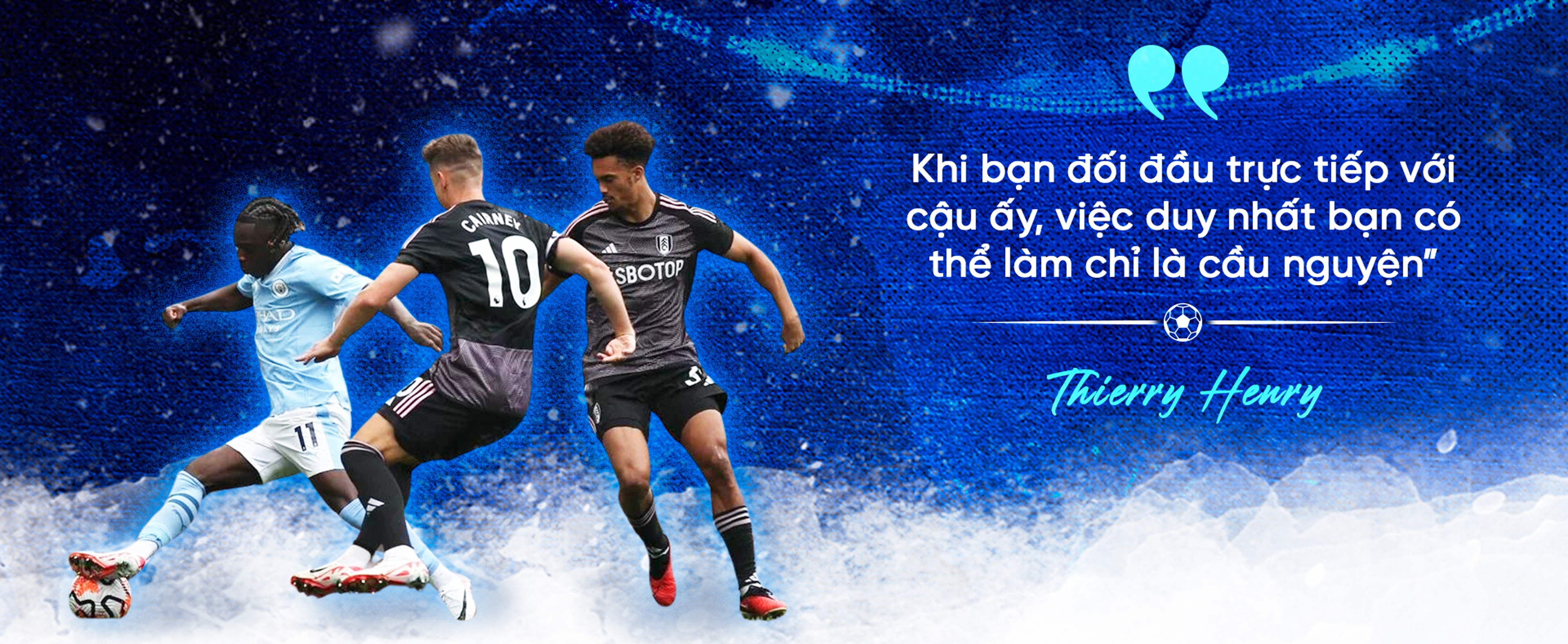
This assessment partly reflects just how dangerous Doku's dribbling ability is. Statistics also show that Doku is the most dangerous dribbler in the Premier League this season. On average, the young Belgian talent makes 8.43 dribbling attempts per 90 minutes.
In recent years, under Pep Guardiola, Man City haven't had this type of player. The contrast is clear in Grealish. The player who plays in the same position as Doku only makes 2.48 dribbling attempts per 90 minutes.
Therefore, in last weekend's clash, or more broadly this season, Man City's transformation lies in players like Doku. Pep Guardiola's men still played well against Liverpool and probably deserved the win. Therefore, at least for now, the reigning Premier League and Champions League champions have no shortcomings that need improvement.
The story here is about Guardiola's self-improvement. The Spanish strategist is always thinking innovatively. Last season, for example, it was John Stones' role as a half-back. This season, it's a trade-off for ball possession to make room for an adventurous player like Doku.
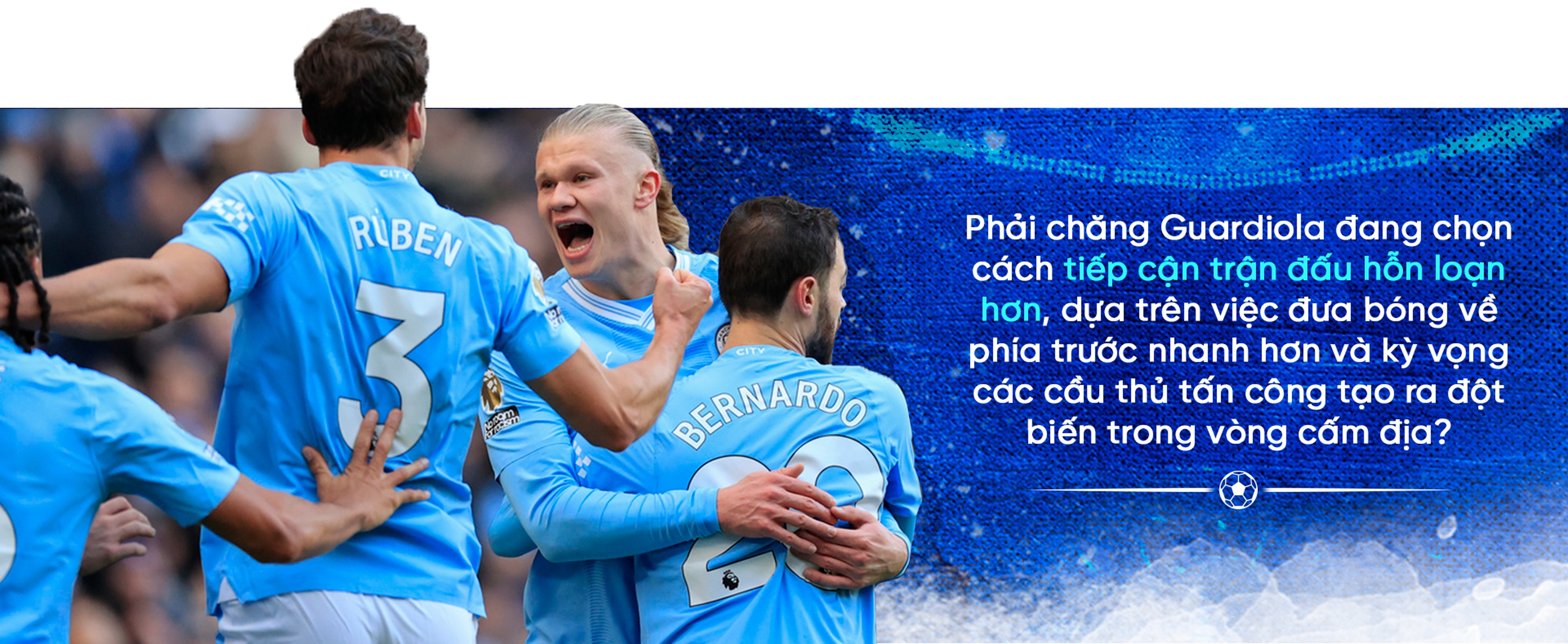
In the Premier League, Man City still has the highest possession rate. However, in the Pep Guardiola era, The Citizens have never had as little possession as they have this season.
Is Guardiola opting for a more chaotic approach to the game, relying on moving the ball forward faster and expecting the attacking players to create chances in the penalty area? The answer is both yes and no.

The answer is yes, because football is changing. Guardiola spent his career seeking control, but the increasing development of man-marking and pressing by teams is creating new problems.
Pep's positional play, or simply put, his strategy of passing the ball to stretch the opponent's defense in order to break through, risks becoming predictable if Man City's passes don't create space. Individual breakthroughs can make the difference.
Coach Unai Emery once shared his opinion on this issue as follows: "Teams tend to use tight man-to-man marking all over the pitch when they don't have the ball. This forces the teams in possession to adapt. The attacking approach will be different when facing opponents who use zonal defense versus man-to-man defense."
Mikel Arteta employed this tactic and surprised Guardiola in the FA Cup last season. "I didn't expect them to choose such a bold approach. The man-to-man marking caused us so much trouble," Guardiola shared after the match, and he certainly hasn't forgotten this painful lesson.
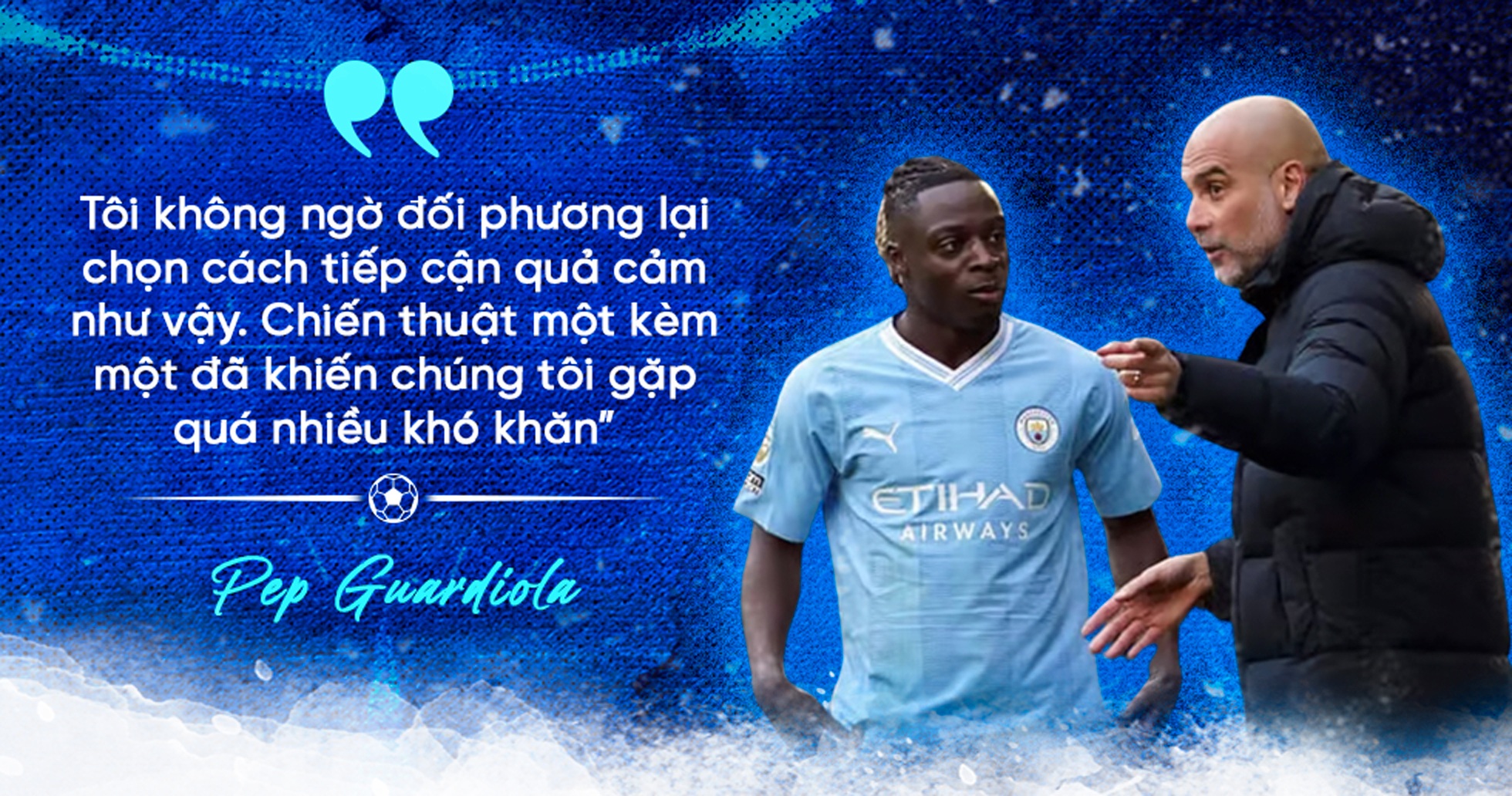
That may have prompted the Spanish strategist to change his approach to team building during the summer transfer window. The realization of the need for players capable of breaking through defenses presented an opportunity for Doku at Etihad.
Another aspect is that personnel changes force Guardiola to adapt to the risk of losing control of the game. For example, the first half of the match against Liverpool, or the unbelievable 4-4 draw against Chelsea.
In the match against Liverpool, Guardiola included eight players on the substitutes list, including two goalkeepers, John Stones (who had just recovered from injury but was not yet ready to play), two defenders, Kalvin Phillips, and two young talents who had come through the academy.
It's not that these players are bad, but none on the bench are of sufficient quality for Pep to implement his possession-based tactics.
In the starting lineup, positioned above Rodri as the "anchor," were Bernardo Silva, Julian Alvarez, Phil Foden, Erling Haaland, and Doku. Most of these players have an attacking inclination, playing direct football, with Doku being a prime example. Therefore, the game was no longer a tightly controlled affair.
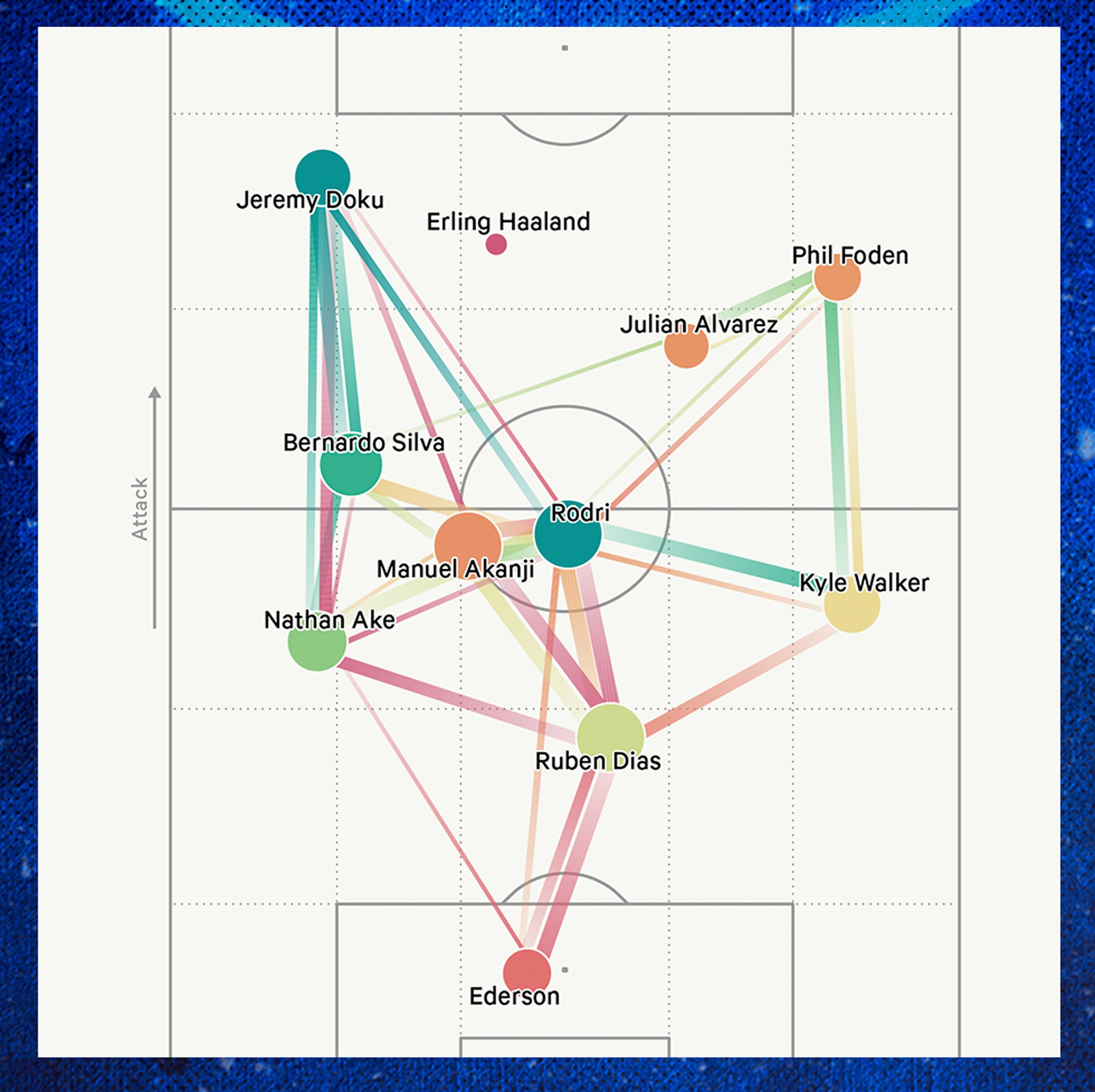
Without Bernardo Silva's skillful link-up play between midfield and attack, the first half could have been even more chaotic. With Stones and Grealish injured, Ilkay Gundogan and Riyad Mahrez gone, and losing Bernardo Silva as well would have severely impacted Man City's control of the game.
It's a matter of personnel; the players determine the course of the game. If Grealish replaced Doku, or Gundogan replaced Alvarez, the game would certainly be very different. Man City would have more passing options, slower build-ups, and more control of the game.
Guardiola still wants to control the game as much as possible, but given the current personnel situation, he has to use players who are better at creating chances rather than holding possession.
The formations previously used by the Spanish strategist always aimed for balance. Kevin De Bruyne's attacking instincts were tempered by the ball-holding abilities of David Silva, and later Bernardo Silva and Gundogan.
The problem only arises when the team is unbalanced. While De Bruyne is undeniably a master playmaker, it's impossible to use three players like the Belgian midfielder in the same lineup at once. Guardiola, or any other strategist for that matter, needs a different type of player to create balance.
Similarly, Silva, Gundogan, and Grealish are excellent players, but they need to be paired with players who can provide attacking impetus through their ability to create breakthroughs. Therefore, the current problem is that the Man City squad is unbalanced, with too many players who play direct and creative football but lack players who can retain possession.
Of course, a good manager is one who not only leaves their mark with their personal philosophy but also knows how to adapt to any situation. Guardiola is a good manager. He adapts to the personnel situation by taking a more direct approach to the game, instead of stubbornly holding onto the ball with players who are not good at retaining possession.
Once their ball-handling specialists return from injury, Man City will reduce their directness and play more like they did before. But even so, quick attacks have become a tactical option that the Blues players have mastered and a choice Guardiola uses when needed.
Overall, Pep may exploit Doku's attacking prowess in a slower, more stable, and balanced way. This is similar to how he integrated Erling Haaland, who almost exclusively played one-touch football, into Man City's possession-oriented formation last season.
In reality, to make room for Haaland, Guardiola accepted losing some control of the game. To put it simply, previously the Spanish manager fielded 11 players all capable of passing the ball to dominate the opponent in terms of possession. By using the Norwegian striker, Pep was left with only 10 players.
With De Bruyne sidelined due to injury, Guardiola opted for Julian Alvarez, another direct player. This meant he accepted not strengthening the team's ball possession. As a result, Man City's ball possession rate dropped from 68.2% in the 2021-22 season to 65.2% in the 2022-23 season.
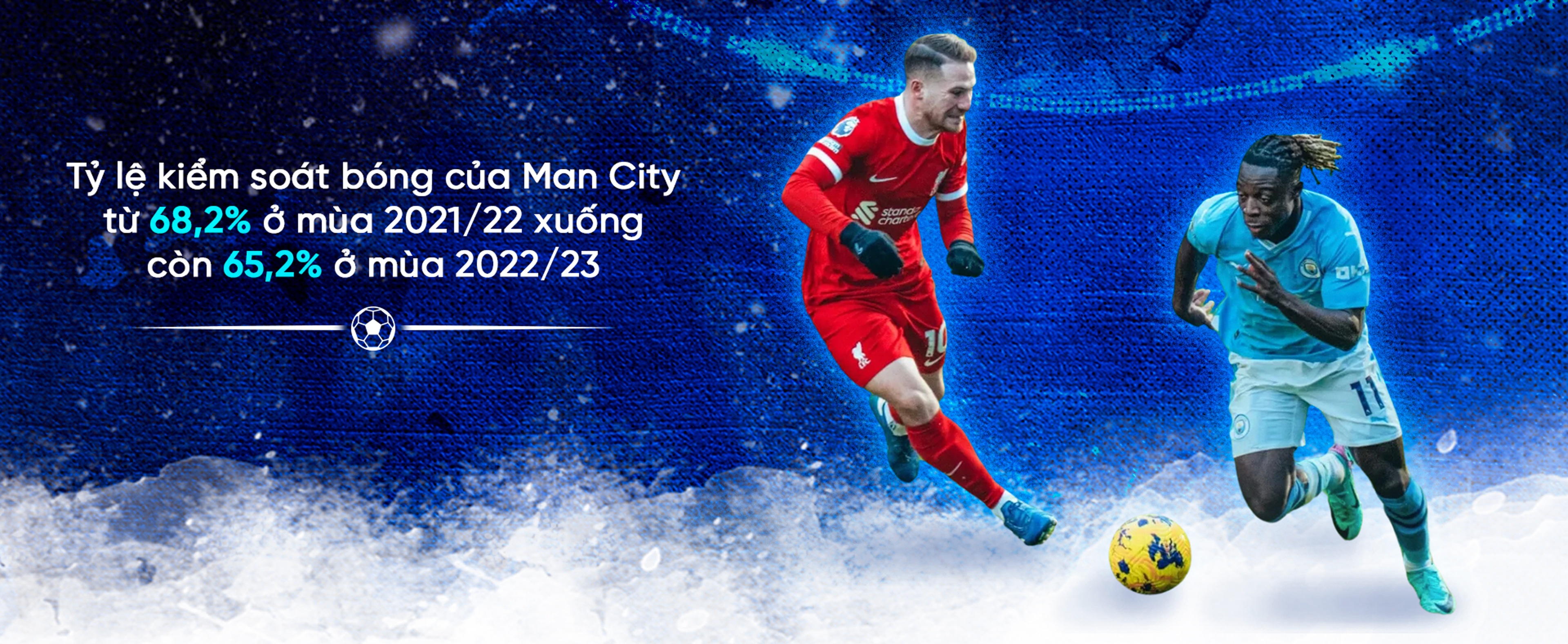
This season, with Doku's arrival, Man City have "lost" nearly 3% more possession, dropping to 62.5%, the lowest in Pep Guardiola's era at Etihad.
In short, due to changing times, from tactics to personnel, Guardiola is no longer the Guardiola who craved 100% possession. But most importantly, Man City remains a fearsome destructive force.
This shows that the Spanish strategist is becoming increasingly skilled and continues to think outside the box. That's why he has remained at the top of football for over a decade.
Source

![[Image] Hanoi Police officially crowned champions of V-League 2025/2026](https://vphoto.vietnam.vn/thumb/1200x675/vietnam/resource/IMAGE/2026/05/31/1780244769054_ndo_br_039d561b692be875b13a-jpg.webp)


















![[Photo] The General Secretary, President and his wife begin their state visit to the Philippines.](https://vphoto.vietnam.vn/thumb/1200x675/vietnam/resource/IMAGE/2026/05/31/1780230559452_anh-man-hinh-2026-05-31-luc-19-28-11.png)



























































Comment (0)