

Scammers use social media accounts (Facebook, Zalo, etc.) to lure victims into clicking on links containing malware. Common tactics include asking people to register to vote on behalf of others or sending gifts.
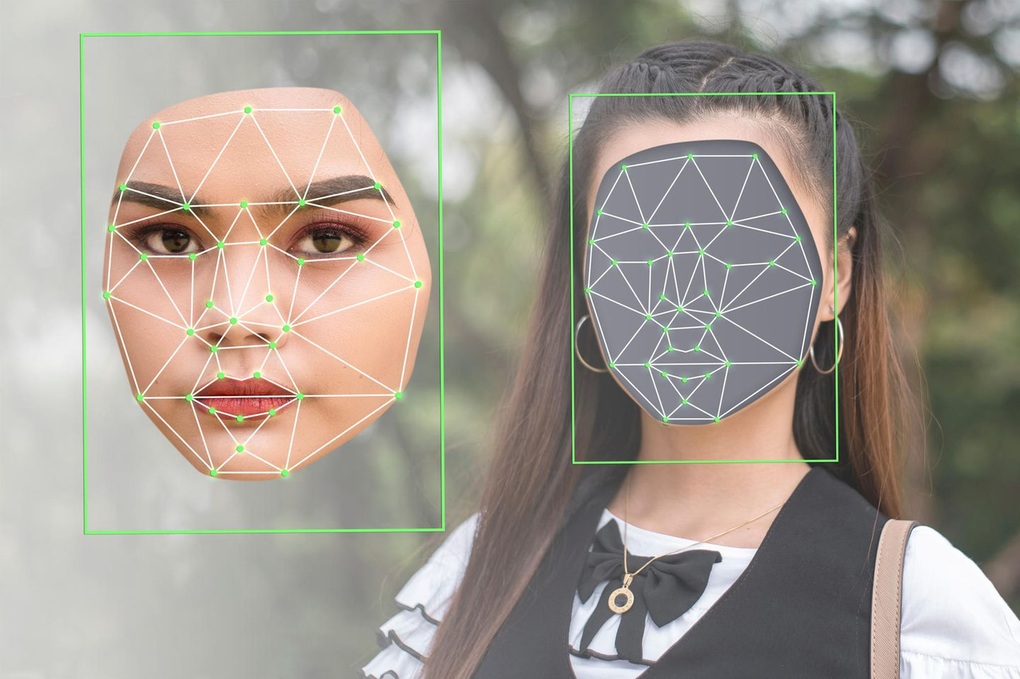
Scammers can also recreate the account holder's face and voice using Deepfake/Swapface technology (Image: GeoLion).
Their goal is to gather information and gain control of social media accounts. Then, the fraudsters will use the compromised accounts to message relatives on the friend list, asking to borrow money or requesting money transfers to bank accounts.
Notably, the scammers will send account information with names matching those of the social media account owner to gain the victim's trust and get them to transfer money. Furthermore, the scammers can even recreate the account owner's face and voice using Deepfake/Swapface technology.
From there, the scammers will create fake videos to make short, low-quality video calls, claiming network errors to trick victims into believing them and transferring money as requested.
To avoid falling victim to scams, users need to be extremely vigilant and always verify the identity of relatives before transferring money by calling them directly via phone. Users should not verify identity through messaging apps or video calls on social media platforms.

Users need to verify the identity of their relatives before transferring money by calling them directly via phone number (Photo: CNN).
At the same time, users should absolutely not take photos of card information or send OTP security codes via any messaging app, website, or to anyone (including those claiming to be bank employees).
Furthermore, users do not provide personal information, identification documents, or bank account information to anyone. Banks state that they never ask customers to provide such information.
In the unfortunate event of falling victim to scammers, users should quickly contact their bank to receive timely assistance.
Source

![[Photo] Ba Lang An Lighthouse - the "eye of the sea" amidst the "rock museum" of Quang Ngai province.](https://vphoto.vietnam.vn/thumb/1200x675/vietnam/resource/IMAGE/2026/05/29/1780038698840_anh-man-hinh-2026-05-29-luc-14-10-42.png)


![[Image] Pleasant weather helps students enter the 10th grade entrance exam with confidence.](https://vphoto.vietnam.vn/thumb/1200x675/vietnam/resource/IMAGE/2026/05/29/1780034401612_ngay-1-thi-lop-10-minh-duy-8-5009-jpg.webp)



























































































Comment (0)