

Reuters, citing satellite images, reported that China is building a vast network of launch pads, bunkers, and communication nodes near isolated nuclear missile silos. These silos house the Chinese military's longest-range missiles.
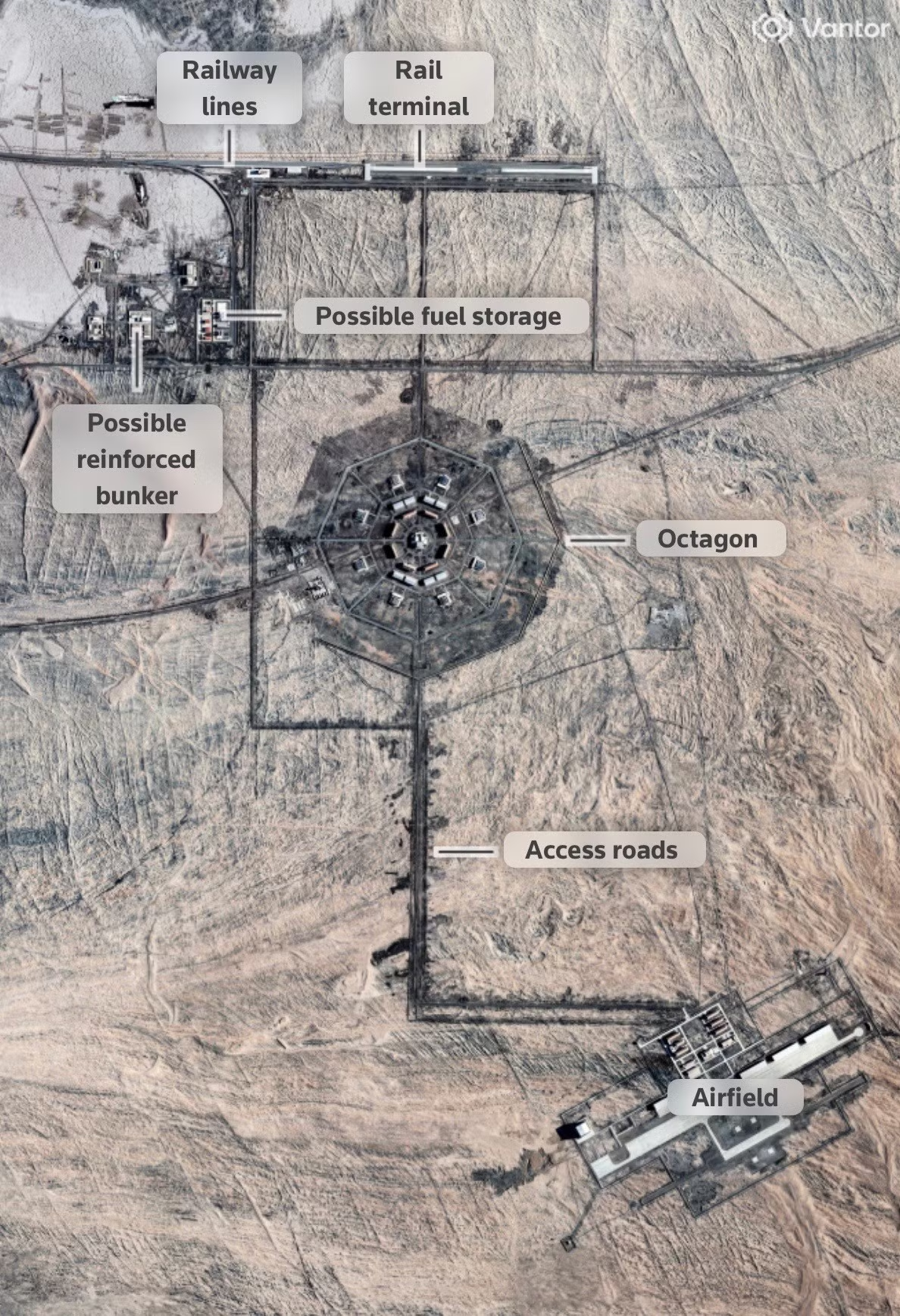
Satellite imagery reveals more than 80 launch platforms that could be used for China's expanding mobile missile launcher fleet and air defense systems. According to image analysts, these facilities could also be used for electronic warfare, satellite communications, and command and control operations.
(Photo: Vantor)
The scale of construction—which China has never disclosed—reveals the robust infrastructure being expanded to protect and operate China's land-based nuclear forces. The overall network suggests China is progressively upgrading its capabilities to build a "second strike" capability, amid escalating nuclear competition with the US and rising tensions surrounding Taiwan.
"We can see this infrastructure being built on a massive scale, spanning thousands of square kilometers across the desert, outside of missile silos," said researcher Alexander Neill, who works at the Pacific Forum in Hawaii.
According to this expert, depending on the specific capabilities of the facilities, "this represents a very significant enhancement and diversification of China's strategic nuclear deterrence capabilities."
The ability to protect missile silos in the desert is crucial to ensuring China's long-standing goal: building a minimum but credible nuclear deterrent force capable of retaliating if attacked first.
Although the Chinese military is capable of launching nuclear weapons from submarines and aircraft, missile silos in Xinjiang and Gansu provinces remain the cornerstone of its nuclear force.
China's nuclear capabilities are being closely watched, amid the ongoing lack of dialogue between Washington and Beijing on the nuclear issue.
One of the fundamental principles of China's nuclear doctrine is the "no-first use" policy, meaning its forces will not proactively initiate nuclear war. However, some Western diplomats and experts suggest that Beijing may use "nuclear coercion" to limit outside involvement should a conflict arise involving Taiwan.
The Chinese Ministry of Defense did not respond to questions regarding its nuclear program and satellite imagery. The Pentagon also declined to comment on intelligence-related matters.
The octagons are eye-catching.
New infrastructure in the desert is centered around two octagonal structures built over the past six years in eastern Xinjiang. Both are located southwest of the Hami nuclear missile silos – one approximately 140 km away, the other approximately 230 km away.
Satellite imagery reveals these octagonal structures contain housing for personnel and large military vehicles. Surrounding them are armored bunkers and fortified weapons storage areas, along with an airfield and railway junction connecting to missile silos in Hami.
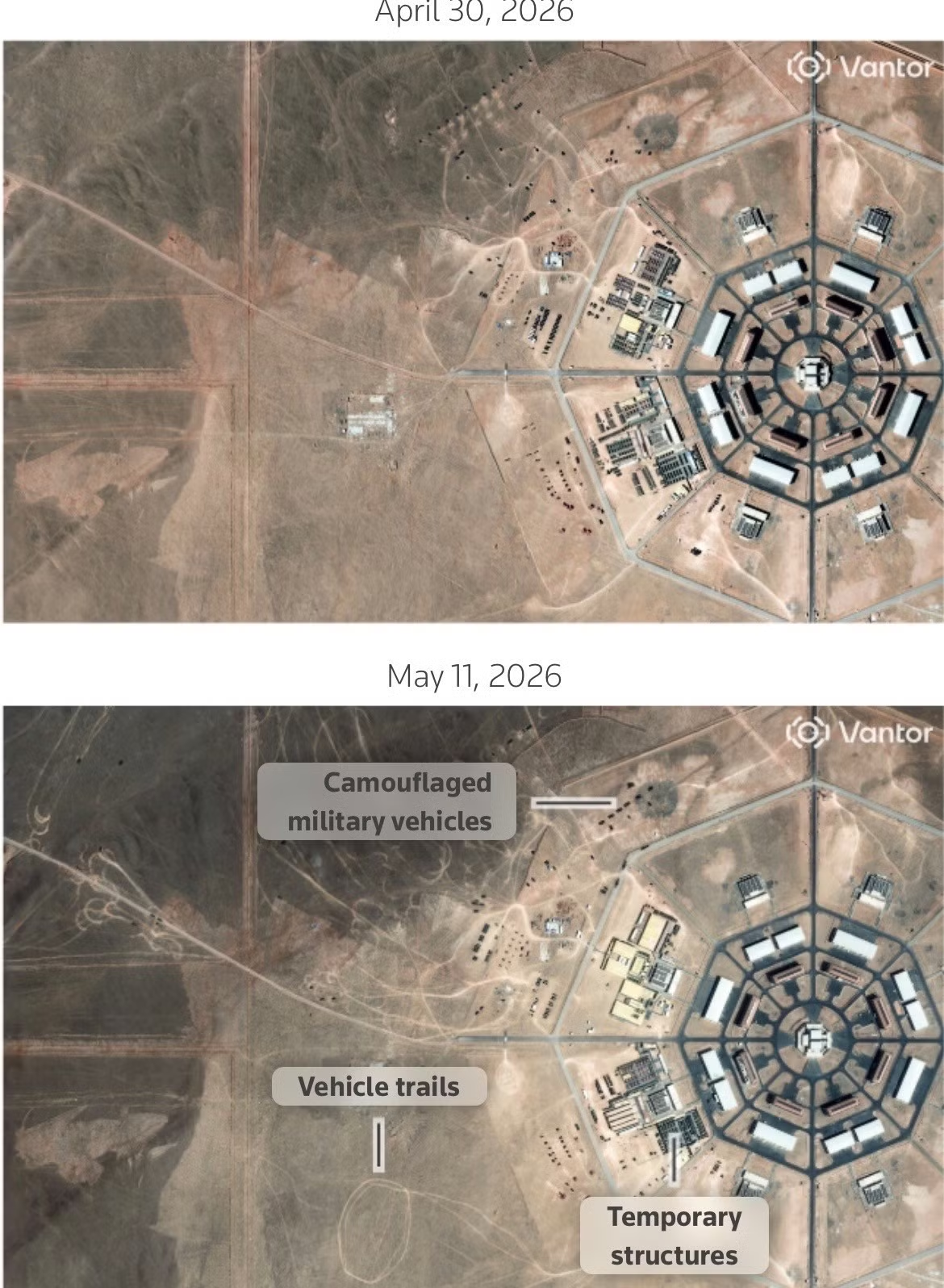
The images also show that this month and throughout April, exercises involving large military vehicles took place around the octagonal structure to the north. In addition, large tents and what appear to be camouflaged launch sites deep in the desert were visible, some accompanied by anti-aircraft missile systems.
Many scholars agree that this infrastructure could generally serve China's nuclear program as well as other military purposes. However, they caution that many details remain unclear, such as the type of weapons that will be deployed at the launch sites and whether the octagonal structures contain truck-mounted ballistic missiles or facilities for laying nuclear warheads.
U.S. officials and arms control experts believe China is expanding and upgrading its nuclear weapons capabilities faster than any other nation. The latest Pentagon report on China's military modernization indicates that the pace of warhead production has slowed, but the country remains on track to possess 1,000 nuclear warheads by 2030. The December 2025 report estimates that China currently has approximately 100 ICBMs deployed in three primary silos.
According to US officials, China is enhancing its early warning system based on the Huoyan-1 satellites. This system can detect incoming ICBMs within just 90 seconds of launch, sending warnings to command centers within 3-4 minutes—enough time for China to launch missiles from silos before being hit.
The scale of the defense network surrounding its missile silos could set China apart from other major nuclear powers.
According to Hans Kristensen, director of the Nuclear Strategy Project at the Nautilus Institute (USA), the US and Russia – countries that possess far more warheads and deployed weapons than China – rely primarily on large numbers of bunkers, isolated locations, and fortified structures to deter a preemptive strike, rather than large-scale missile defense systems.
The scale of what is emerging in the middle of the northwestern Chinese desert has astonished even seasoned experts. “I’ve never seen anything like this. This is an extraordinary feat,” said Hans Kristensen.
Source: https://tienphong.vn/trung-quoc-dung-la-chan-hat-nhan-khong-lo-giua-sa-mac-post1847743.tpo






































![[Photo] Reception to welcome General Secretary and President To Lam and his wife on their State visit to the Philippines](https://vphoto.vietnam.vn/thumb/1200x675/vietnam/resource/IMAGE/2026/06/01/1780295488620_vna-potal-chieu-dai-chao-mung-tong-bi-thu-chu-tich-nuoc-to-lam-va-phu-nhan-tham-cap-nha-nuoc-toi-philippines-8798060-7855-jpg.webp)






































































Comment (0)