

A recent broadcast by China Central Television (CCTV) revealed a simulated air-to-air combat exercise conducted by the Chinese Air Force, in which J-16 fighter jets were placed in a scenario of confronting the French Rafale.
According to CCTV, the exercise included various air combat scenarios, combining computer simulations and tactical analysis to study new combat methods. This was one of a series of training activities held in Xuchang, Henan province, involving approximately 20 units from various branches of the Chinese military and military academies.

Why did China choose the Rafale as its "peer fighter"?
Notably, in the released image, behind the two Chinese Air Force officers is a simulation board depicting a scenario where eight J-16 fighters confront a Rafale force, with one officer pointing out additional threats that have not been disclosed in detail. This raises the possibility that the Rafale in the scenario could operate as part of a linked combat network, coordinating with other assets.
Analysts believe the selection of the J-16 and Rafale was aimed at simplifying the simulation task, serving the purpose of training combat methods and organizing war games for various units.

The J-16 is currently one of China's most powerful fourth-generation fighters, along with its naval variant, the J-15B. However, compared to fifth-generation fighters like the J-20 and J-35, the J-16 is significantly less complex, making simulation and training more feasible on a large scale.
Meanwhile, the Rafale – despite being considered the most powerful European fighter jet currently – is seen as one of the least challenging adversaries the PLAAF could face in practice. Currently, the US, Japan, Australia, and many NATO countries are deploying the 5th-generation F-35A in East Asia, a fighter jet with a level of technology and complexity far exceeding that of the Rafale.
Additionally, the US Air Force plans to permanently deploy F-15EX fighter jets to Okinawa, an area near the Taiwan Strait. This fighter jet is considered superior to the Rafale in most key performance indicators.
The advantage clearly lies with the J-16 in a head-on confrontation scenario.
The likelihood of the J-16 actually facing the Rafale in combat is considered very limited, as the Rafale has repeatedly failed in export competitions against the F-35, F-15, or Russian fighters such as the Su-30MKA and Su-30SM.
In fact, the Rafale's combat effectiveness was questioned during intense dogfights in May 2025, when between one and four Indian Air Force Rafales were shot down by Pakistani J-10Cs, while no other victories were recorded. Notably, the J-10C is a lighter, cheaper fighter jet than the J-16, with engine and radar power only about half that of the J-16.
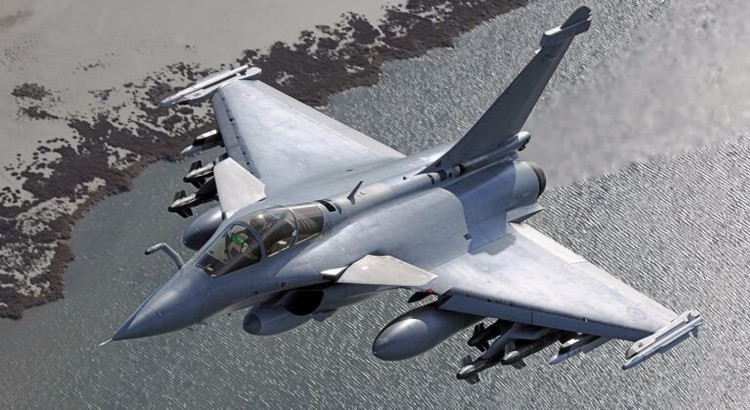
A direct comparison reveals that the J-16 possesses a radar more than three times larger than the Rafale, developed by a larger and more advanced electronics industry. Flight parameters such as ceiling, maneuverability across all speed ranges, and weapons payload of the J-16 are all significantly superior.
Conversely, the Rafale is limited by its M88 engine, which is considered the weakest among currently produced fighter jet engines. This severely restricts the Rafale's competitiveness against leading American and Chinese fighters such as the F-15EX or J-16.
Although the Rafale will remain the backbone of the French Air Force until the 2050s, its role in China's direct security is not significant. Instead, the simulation is believed to be a demonstration of combat thinking and an indirect message to NATO and potential adversaries.
While Europe is still struggling with 4th-generation+ designs, China is believed to be years ahead in the race to develop 6th-generation fighter jets, expected to be deployed from the early 2030s. This reflects a clear trend: the US and China are gradually creating a significant gap in the field of fighter aviation, while Russia and Europe are falling further behind.
Source: https://khoahocdoisong.vn/trung-quoc-tap-tran-mo-phong-doi-dau-giua-j-16-va-rafale-post2149082369.html
![[Photo] First session of the 14th Congress of the Vietnam Trade Union](https://vphoto.vietnam.vn/thumb/1200x675/vietnam/resource/IMAGE/2026/06/03/1780465947883_ndo_br_img-3852-jpg.webp)
![[Photo] General Secretary and President To Lam presides over a meeting with the Central Organizing Committee.](https://vphoto.vietnam.vn/thumb/1200x675/vietnam/resource/IMAGE/2026/06/03/1780482764658_a1-bnd-4741-3342-jpg.webp)
![[Photo] Secretary of the National Assembly Party Committee, Chairman of the National Assembly presides over the meeting of the Standing Committee and Executive Committee of the National Assembly Party Committee.](https://vphoto.vietnam.vn/thumb/1200x675/vietnam/resource/IMAGE/2026/06/03/1780480353201_ndo_br_bnd-2585-jpg.webp)

































![[Video] Sunset at Lap An Lagoon – Where the sun sets over the fishing nets](https://vphoto.vietnam.vn/thumb/1200x675/vietnam/resource/IMAGE/2026/05/31/1780192137701_beach-landscape-sea-water-nature-grass-745871-pxhere-com.jpeg)



























Comment (0)