

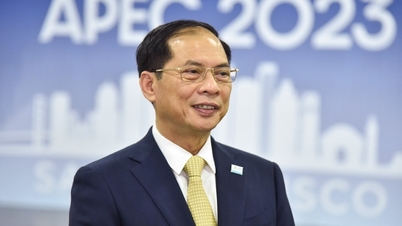
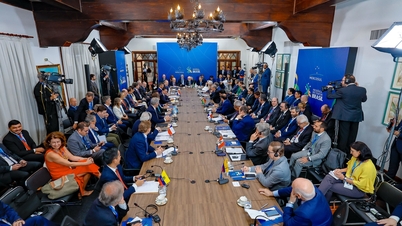
With numerous activities, the centerpiece being the 30th Asia- Pacific Economic Leaders' Meeting on November 17, 2023, this year's APEC High-Level Week focuses on discussions aimed at achieving the goal of "Building a resilient and sustainable future for all"—as proposed by the host country, the United States.
"Connectivity," "Innovation," and "Inclusiveness" for more resilient APEC economies .
These are the three key priorities that will be discussed at this year's APEC High-Level Week. Specifically, within the framework of the Week, the 30th Asia- Pacific Economic Leaders' Meeting (APEC) will discuss the theme "Connectivity and Resilient and Inclusive Economies" ; the 34th Ministerial Meeting of Foreign Affairs and Economic Ministers (AMC) will include sessions on "Building a Resilient and Connected Region to Enhance Inclusive Economic Prosperity" and "Creating an Innovation Environment for a Sustainable Future and Ensuring an Equal and Inclusive Future for All"; and the 30th Finance Ministers' Meeting will include sessions focusing on "The Global and Regional Financial and Economic Situation", "Modern Supply-Based Economic Models", "Sustainable Finance" and "Digital Assets".
Continuing with the overarching theme: “Creating a Resilient and Sustainable Future for All,” delegates attending the APEC High-Level Week focused their discussions on economic issues such as sustainable development, digitalization, women's economic empowerment, trade facilitation, energy security, food security and health, promoting sustainable and inclusive energy transition; strengthening economic relationships and increasing the resilience of supply chains, and promoting the Indo-Pacific Economic Framework (IPEF)...
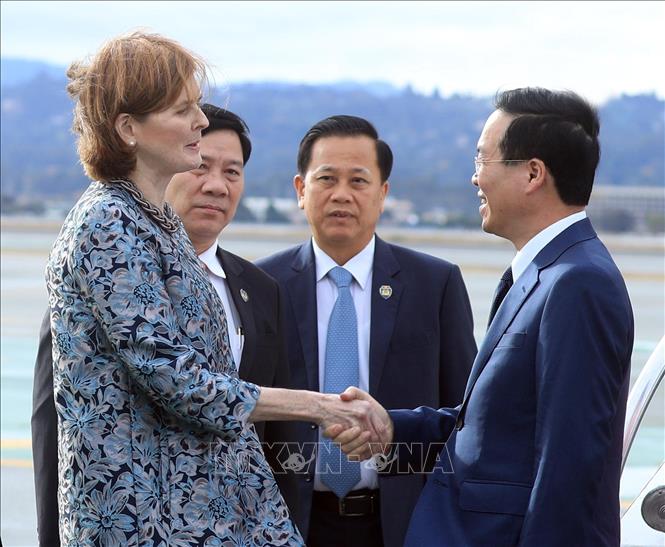
The welcoming ceremony for President Vo Van Thuong at San Francisco International Airport. Photo: Thong Nhat/TTXVN
| A notable event on the sidelines of the APEC Summit is the planned meeting between US President Joe Biden and Chinese President Xi Jinping on November 15th. This will be the first face-to-face meeting between the two leaders in a year. The two leaders are expected to discuss a range of issues, including: the strategic direction of bilateral relations, the importance of restoring bilateral military dialogue, the crisis in Ukraine, and the Israel-Gaza conflict. |
In particular, according to host country the United States, the goal of this year's APEC Summit is to try to make APEC economies more resilient, especially in the face of increasing climate issues and after a global pandemic that has killed millions and strained supply chains. These themes were chosen and prioritized because they are highly practical issues of great concern to APEC members and stakeholders.
Ahead of this year's APEC Summit, the United States worked with APEC partners to develop a set of common principles aimed at promoting sustainable and inclusive cooperation, while ensuring that APEC economies continue to grow and pursue their respective trade policies. Observers believe that the themes and priorities proposed by the US are essentially a continuation of those of APEC hosts in recent years.
Vietnam cooperates and acts together for the sustainable development of the region.
Vietnam became a full member of APEC in 1998. As Deputy Minister of Foreign Affairs Nguyen Minh Hang observed, the decision to join APEC in 1998 was a strategic one in the country's international economic integration process, laying the foundation for global integration and contributing to the development of Vietnam as well as the region.
According to Deputy Minister of Foreign Affairs Nguyen Minh Hang, over the past 25 years, Vietnam has made positive, responsible, and effective contributions to all areas of cooperation, leaving many important marks on the APEC process. Three of the most prominent marks are: Firstly, Vietnam is one of the few economies that has twice been trusted and supported by member countries to host APEC years in 2006 and 2017. Under Vietnam's chairmanship, both the APEC Summits in Hanoi in 2006 and Da Nang in 2017 were considered highly successful, achieving important results with strategic significance for the APEC Forum as well as economic cooperation and integration in the Asia-Pacific region. At APEC 2006, we made our mark with the Hanoi Action Plan.
Secondly, Vietnam is one of the most active members in proposing cooperation initiatives and projects, with nearly 150 projects. These initiatives and projects, on the one hand, promote APEC cooperation in line with the interests and benefits of the members, and on the other hand, effectively serve Vietnam's socio-economic development goals.
Thirdly, we have affirmed our role in leading and promoting the implementation of APEC cooperation programs by assuming important positions within the Forum's mechanisms. Notable examples include the role of Executive Director of the APEC Secretariat, Chair of the ASEAN Group within APEC, and Chair/Vice Chair of numerous important committees and working groups of the Forum. Vietnamese businesses have also contributed and actively participated in the APEC Business Advisory Council and the APEC Business Summit.
The success of APEC 2006 and APEC 2017, along with other important contributions of Vietnam at the Forum, has helped to enhance the country's role, position, and prestige on the international stage, maximizing opportunities and resources from APEC cooperation and other regional economic cooperation and integration mechanisms to serve the country's socio-economic development.
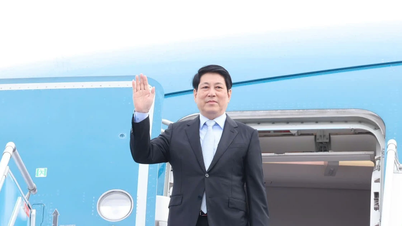
During this APEC Summit, on the morning of November 14th (local time), President Vo Van Thuong and his wife, along with the high-level Vietnamese delegation, arrived at San Francisco International Airport, USA, beginning their working trip to attend the APEC Summit and participate in bilateral activities in the United States at the invitation of President Joe Biden. Against the backdrop of the continued strong development of Vietnam-US relations in recent times, with the two countries having established a framework for a Comprehensive Strategic Partnership, the President's trip to attend the APEC Summit and participate in bilateral activities in the United States is of significant importance.
The President will join APEC leaders in discussing key issues of importance to the global and regional economy, outlining directions for cooperation in trade, investment, science and technology, innovation, and many other fields. Vietnam will work with other members to promote dialogue, constructive engagement, responsibility, multilateralism, and joint cooperation and action for the sustainable development and prosperity of the region.
The President will attend, speak, and hold numerous working sessions at the APEC Business Summit. This is the largest event of its kind for the business community in the region, with the participation of over 2,000 leaders from leading global and Asia-Pacific corporations. At this summit, the President will deliver a strong message to the business community, urging them to work together, overcome current challenges, and seize opportunities to promote sustainable development in the region and for each economy, including Vietnam.
With regard to the United States, the President's activities at the APEC Summit and bilateral activities with senior leaders and US partners, especially in California, will continue to promote bilateral relations in the spirit of the recent Joint Statement on establishing a comprehensive strategic partnership between Vietnam and the United States, particularly in the fields of education and training, science and technology, innovation, and connectivity between localities.
| Established in 1989, APEC currently has 21 member economies. With the participation of many of the world's leading economies, such as the United States, China, Japan, and nine members of the Group of Twenty (G20) and many other dynamic developed economies, APEC represents approximately 38% of the world's population, contributes 62% of global GDP, and nearly 50% of global trade. Operating on the principles of consensus, voluntariness, and non-binding agreements, APEC emphasizes cooperation centered on three main pillars: trade and investment liberalization; business facilitation; and economic and technical cooperation, capacity building, equitable development, and sustainable development. |
Nguyen Ha
Source


![[Photo] Prime Minister Pham Minh Chinh presides over a meeting on private sector economic development.](/_next/image?url=https%3A%2F%2Fvphoto.vietnam.vn%2Fthumb%2F1200x675%2Fvietnam%2Fresource%2FIMAGE%2F2025%2F12%2F20%2F1766237501876_thiet-ke-chua-co-ten-40-png.webp&w=3840&q=75)
































































Comment (0)