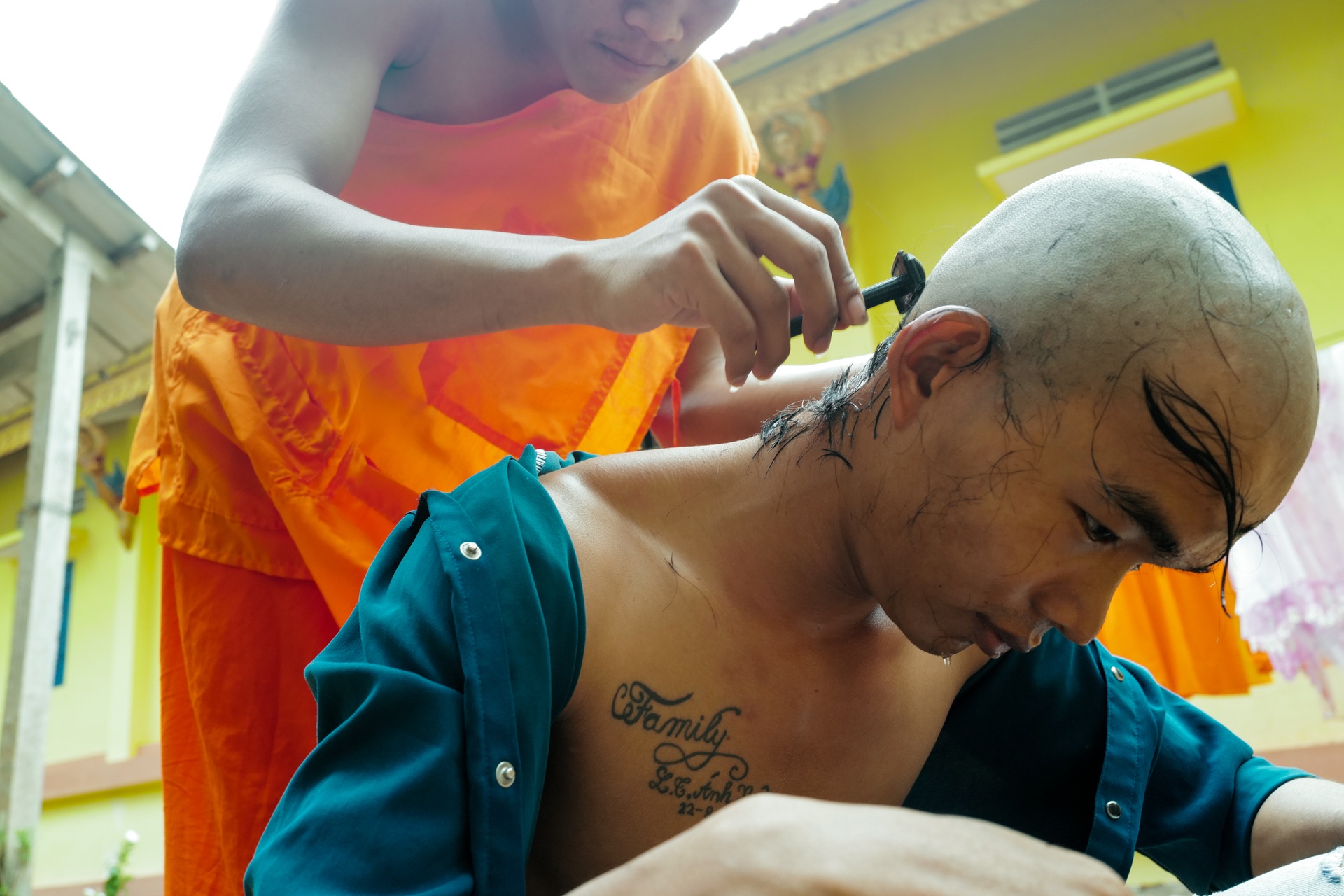
The Khmer people in Tra Vinh province practice monastic life as a way of showing filial piety, a long-standing tradition that reflects many cultural and educational values within the Khmer community. The monastic training lasts at least three months, depending on the circumstances and wishes of each individual.
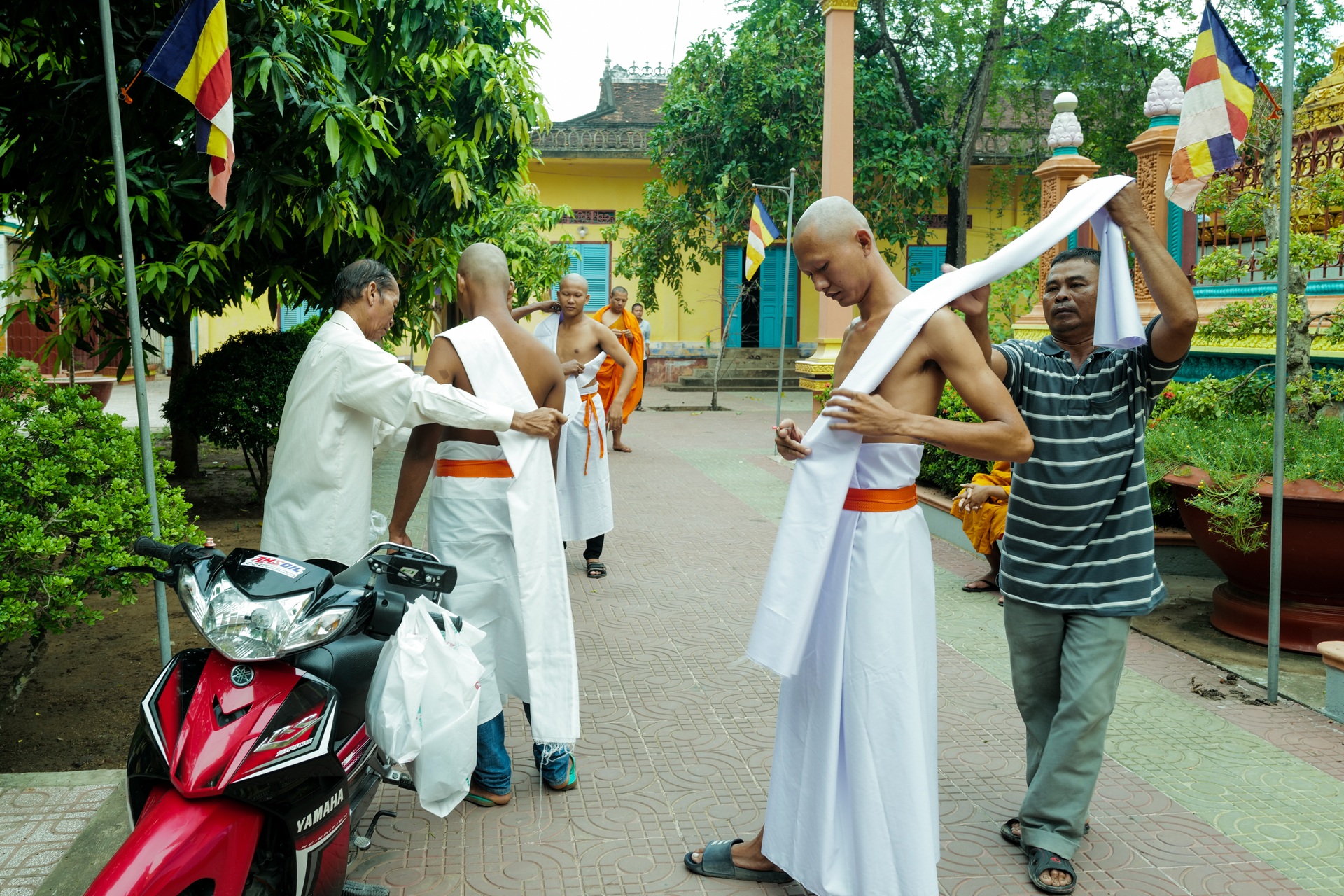
On the first day, the boy's head was shaved by the monks, his trousers were replaced with a sarong, and his shirt was replaced with a white cloth draped over his shoulders from left to right. This new white cloth is called Penexo, and once he wears it, it signifies his renunciation of worldly life.
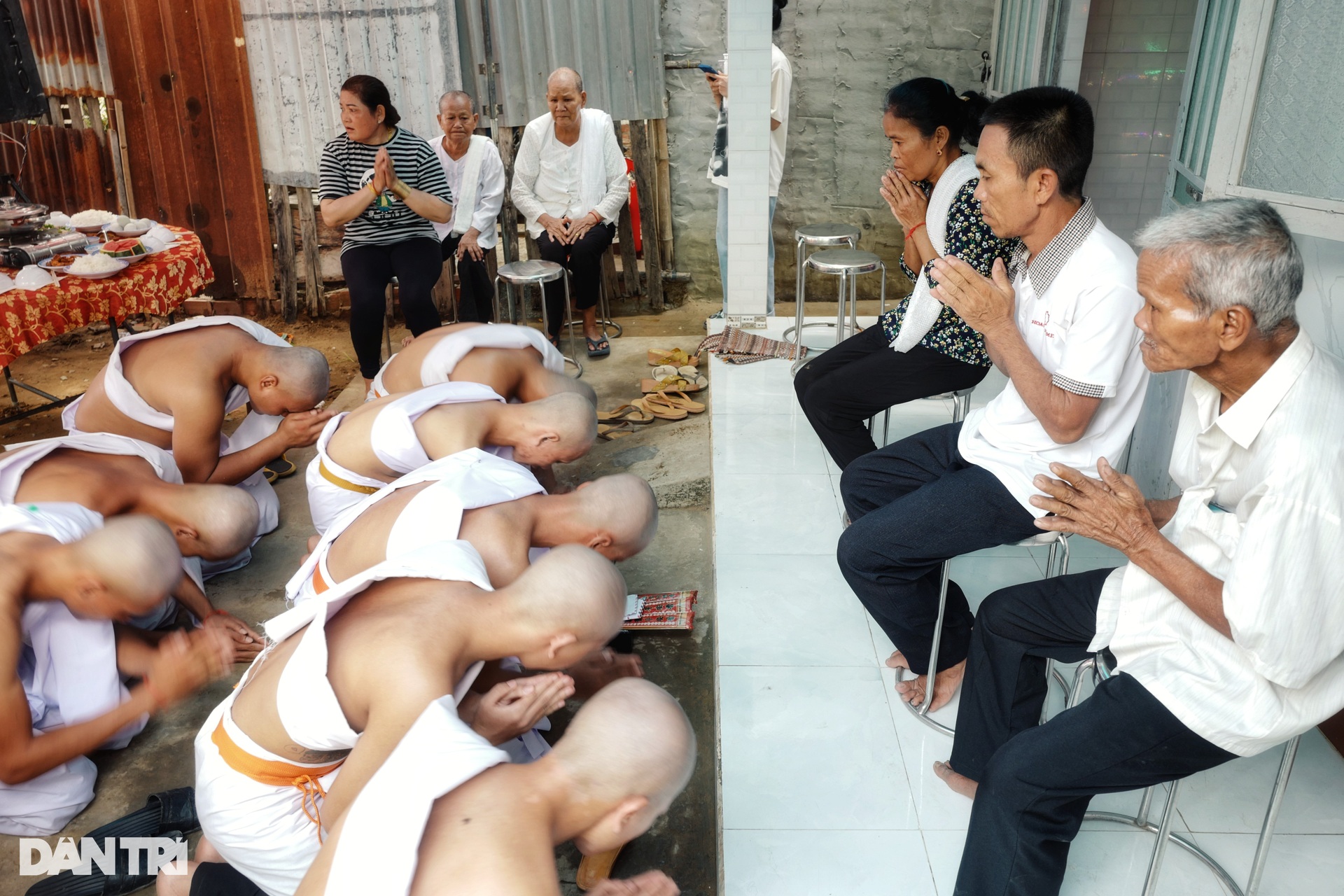
The hair-shaving ceremony is held at the same time, bringing together many people to reduce costs and avoid having to hold it multiple times.
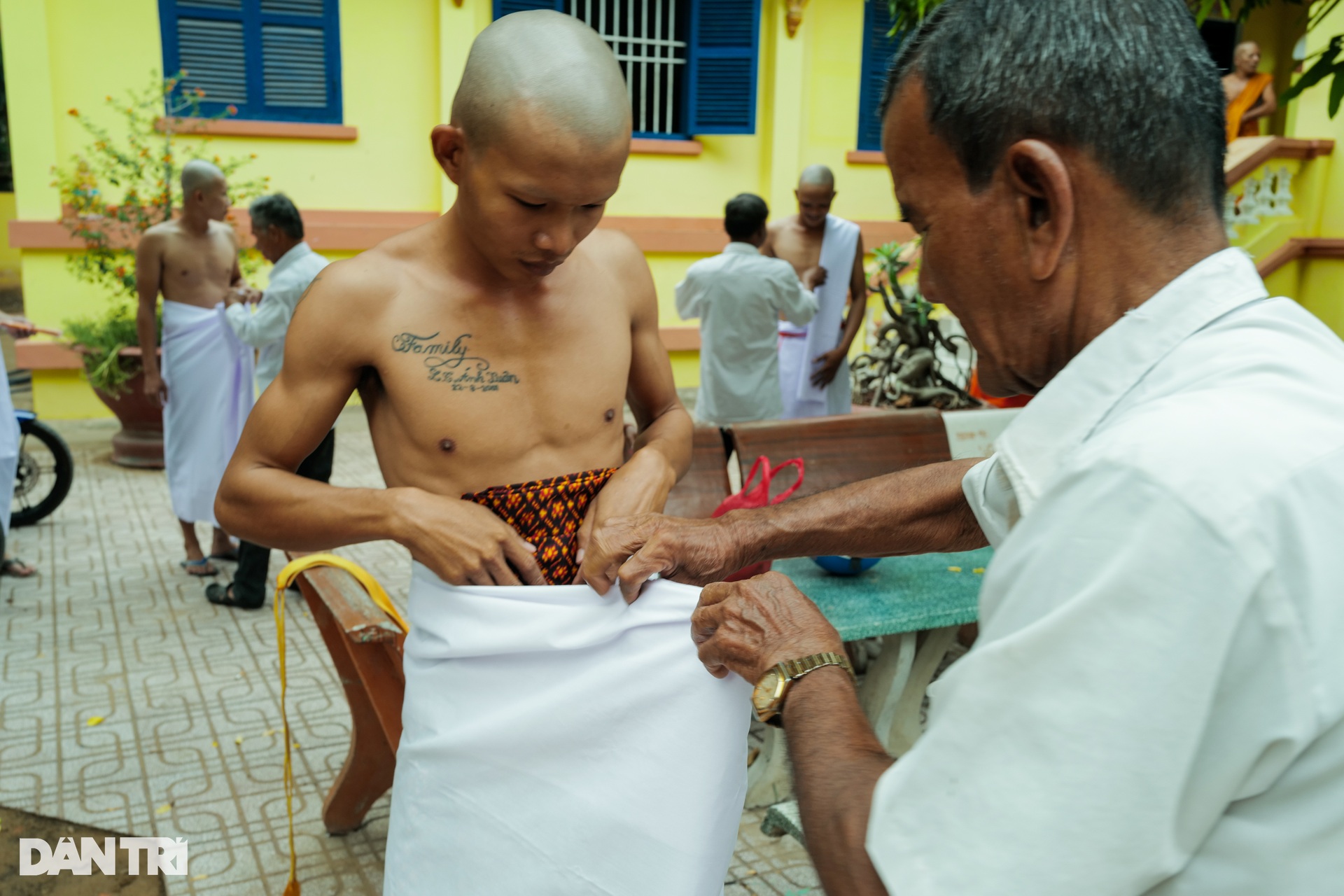
After the head monk decides on the date for their child's entry into the monastic life, the family must prepare the monastic robe, alms bowl, and some other items for their child.
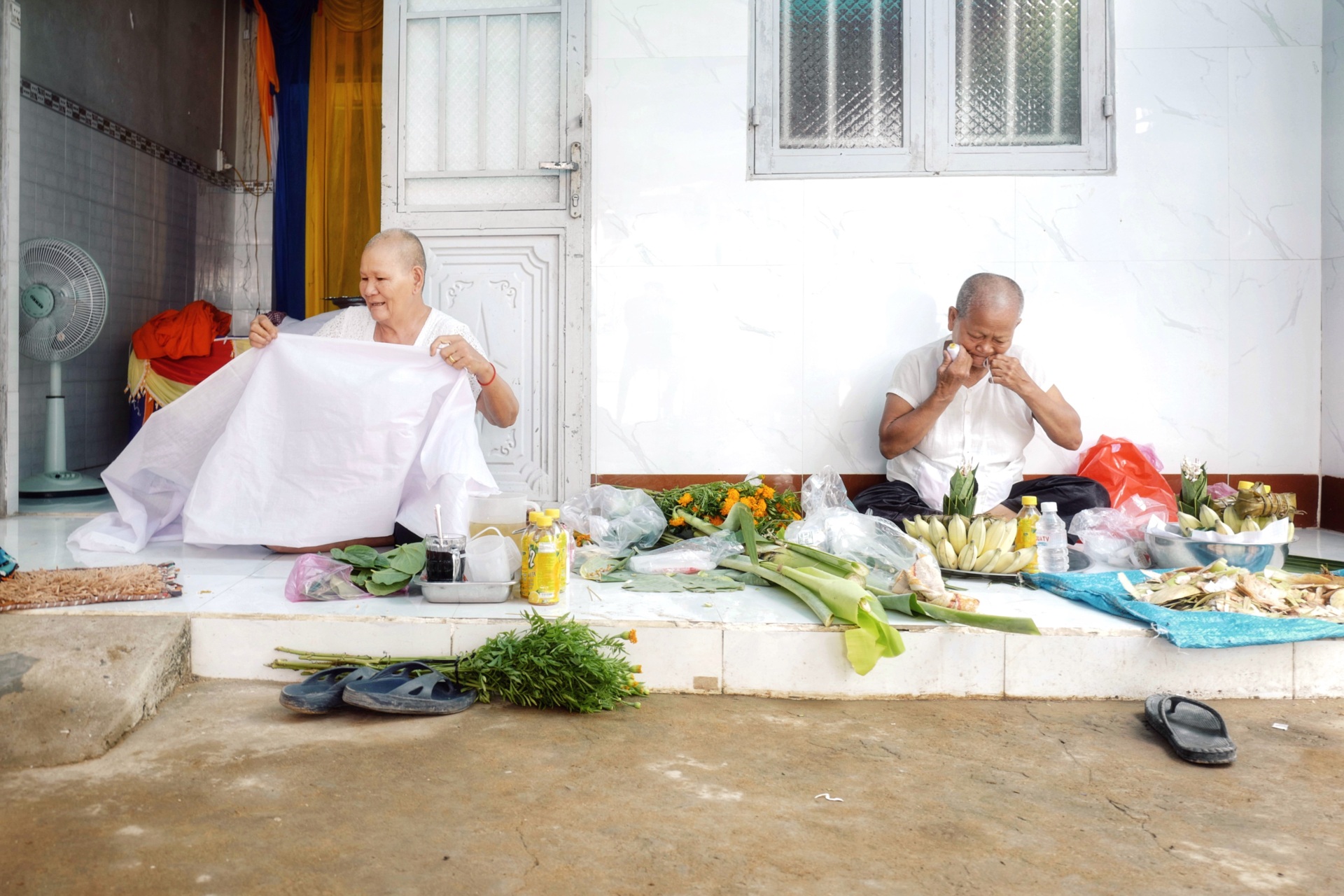
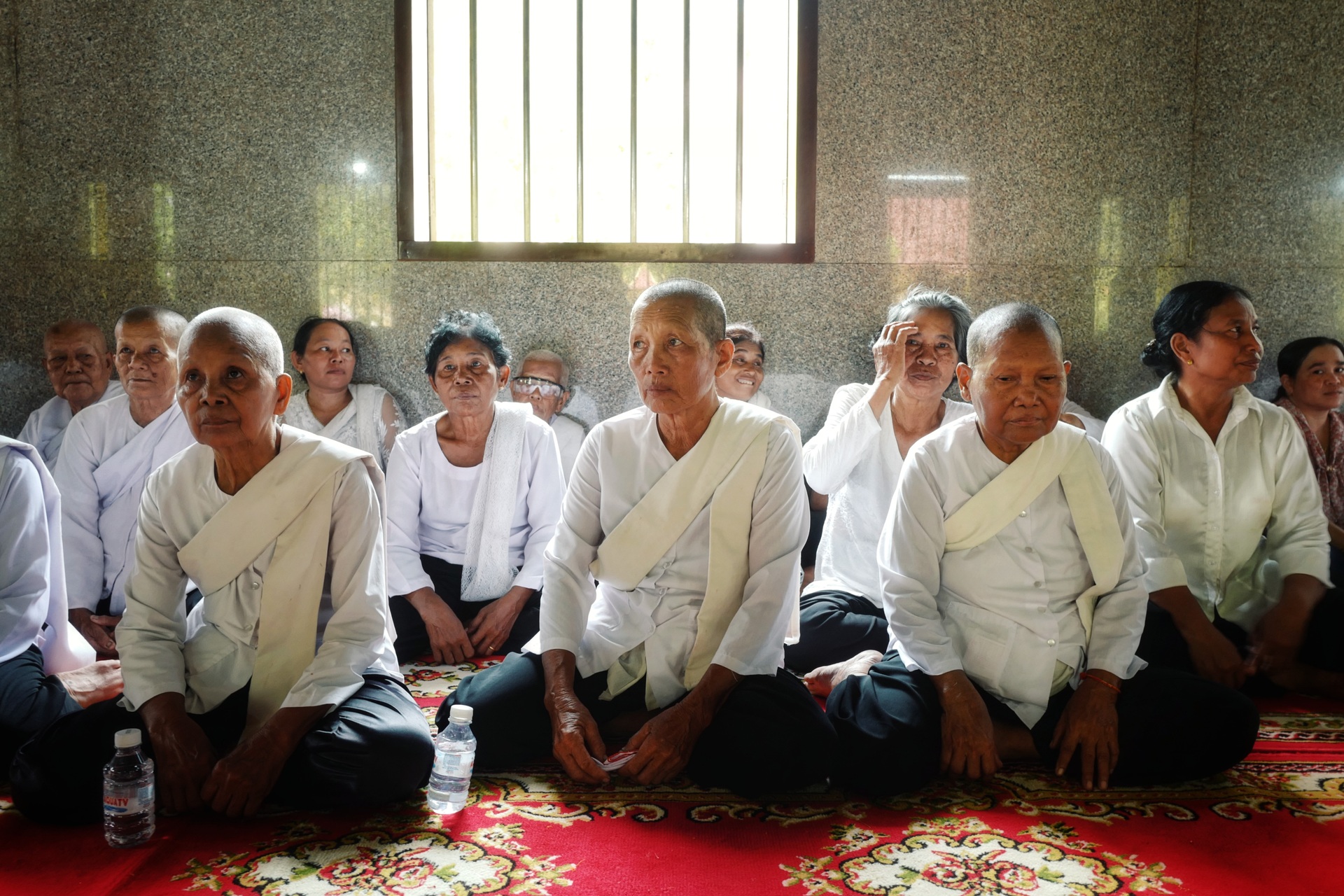
On the day of the ordination ceremony, family and relatives attend in large numbers to congratulate their children on becoming monks or nuns, adding merit to the family lineage.
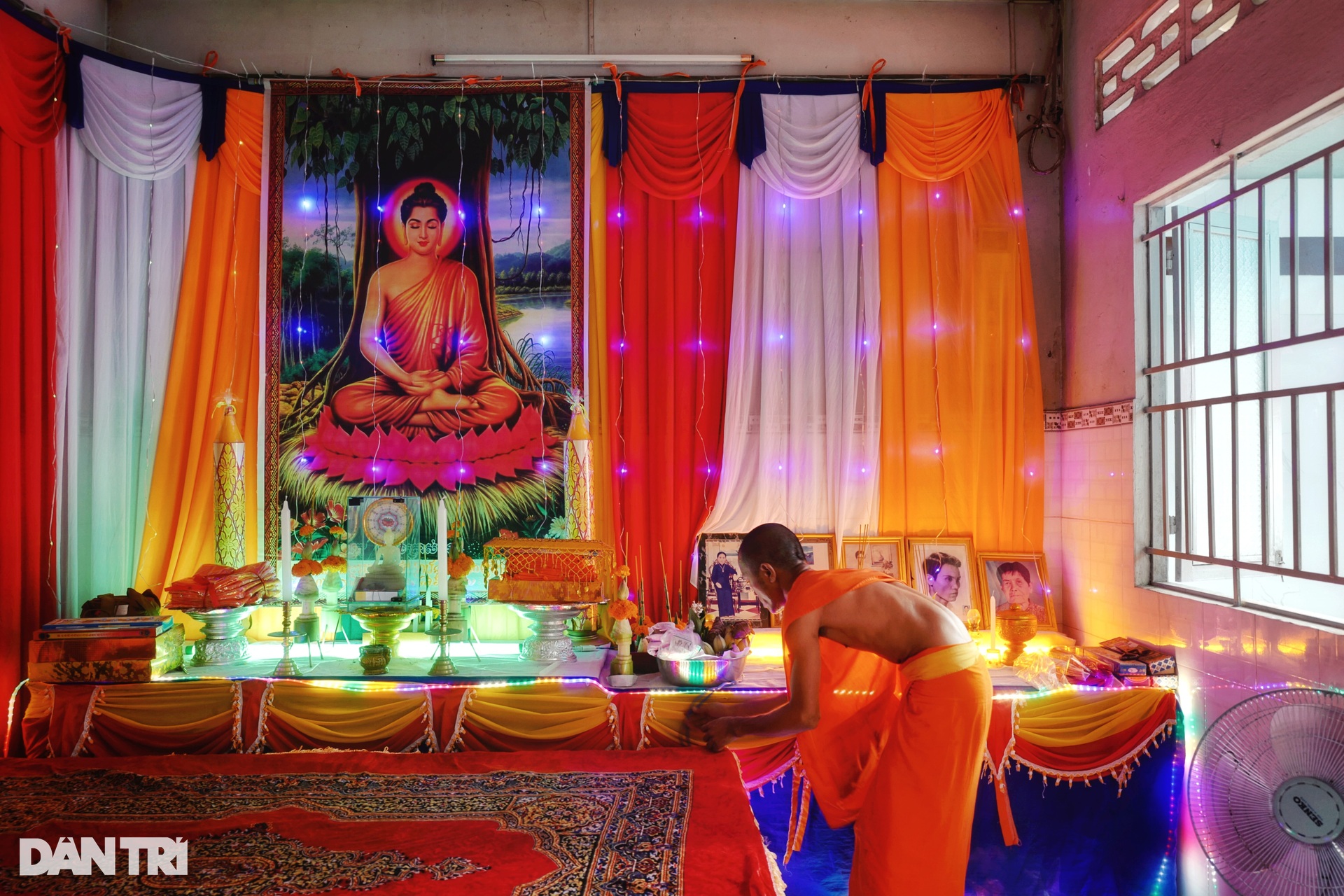
Becoming a monk is considered a social act for Khmer men. Those who complete their monastic life and then return to secular life are respected by society because the Khmer people generally believe that such individuals have fulfilled their responsibilities and learned how to be good people and become literate.
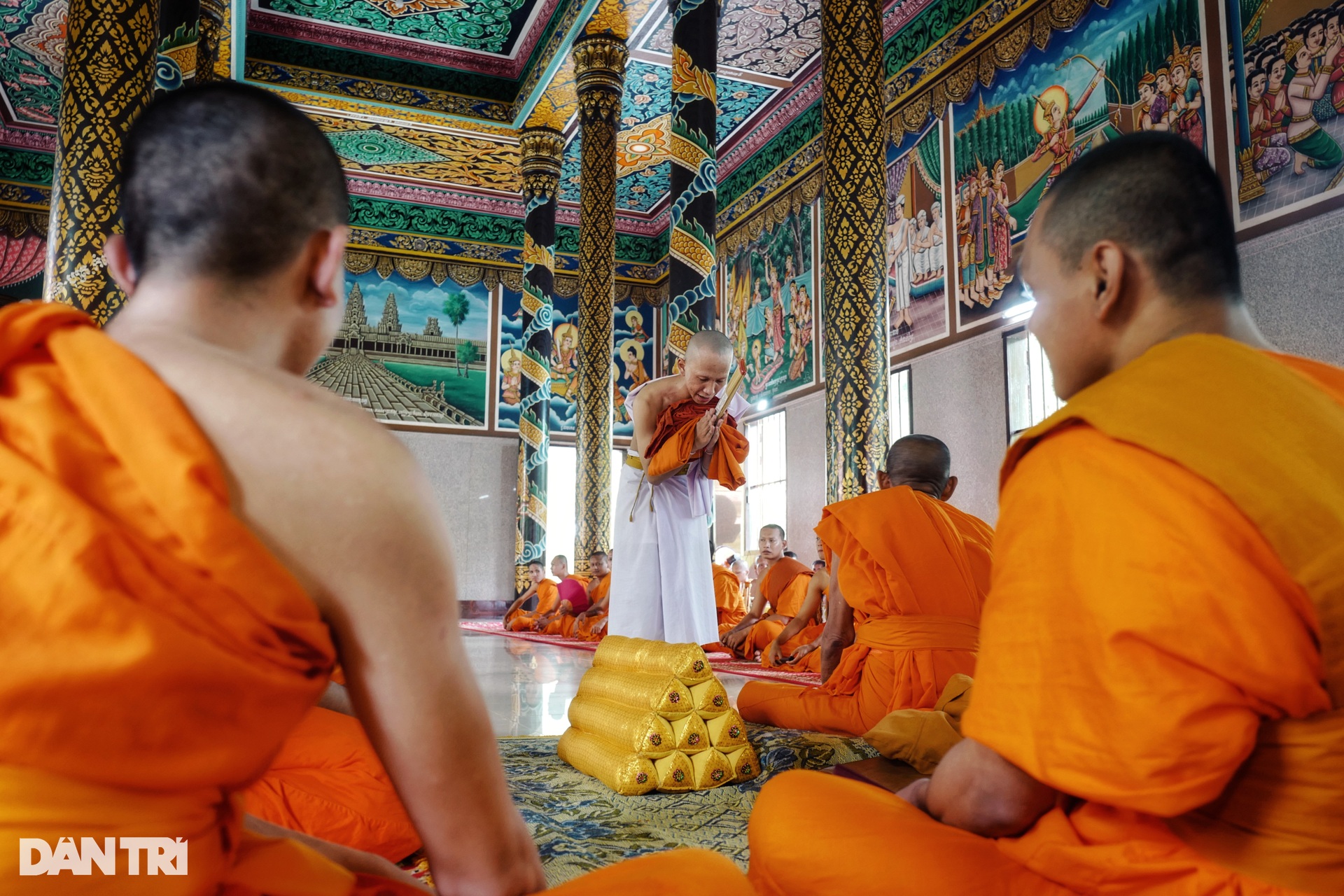
The origin of the Khmer tradition of filial piety stems from the story of a Khmer family whose father died early, and whose mother earned a living by hunting wild animals. Seeing his mother committing the sin of killing animals, Socpenh Kokma (the only child) secretly left home to become a monk to atone for her sins. When Socpenh's mother died, she was punished by evil spirits, but none could torment her because her son's virtuous practice of monasticism had atoned for her sins.
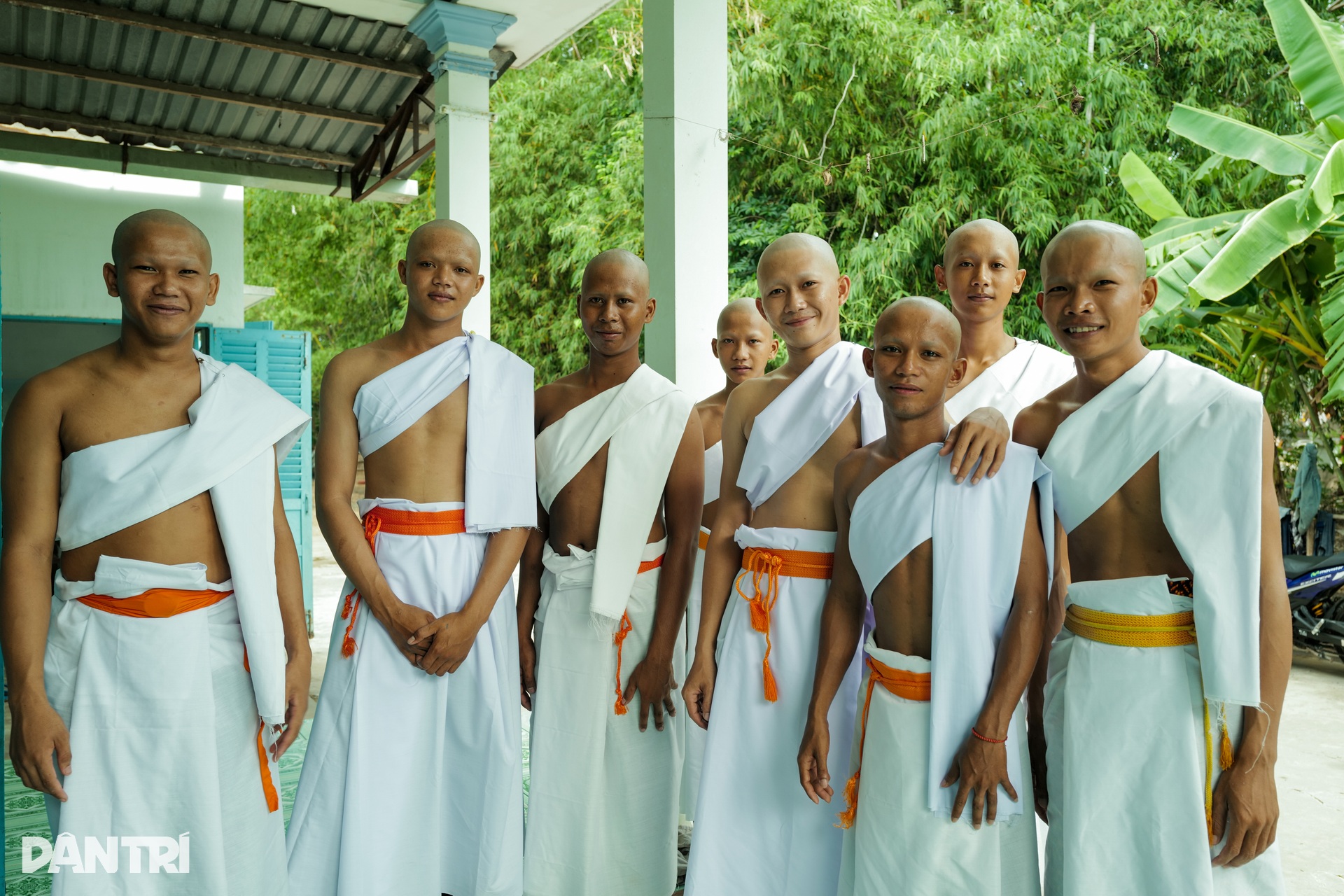
In addition, Khmer people often visit and offer prayers at temples and shrines to ask for peace and good fortune for their families. They also participate in activities to help those around them.
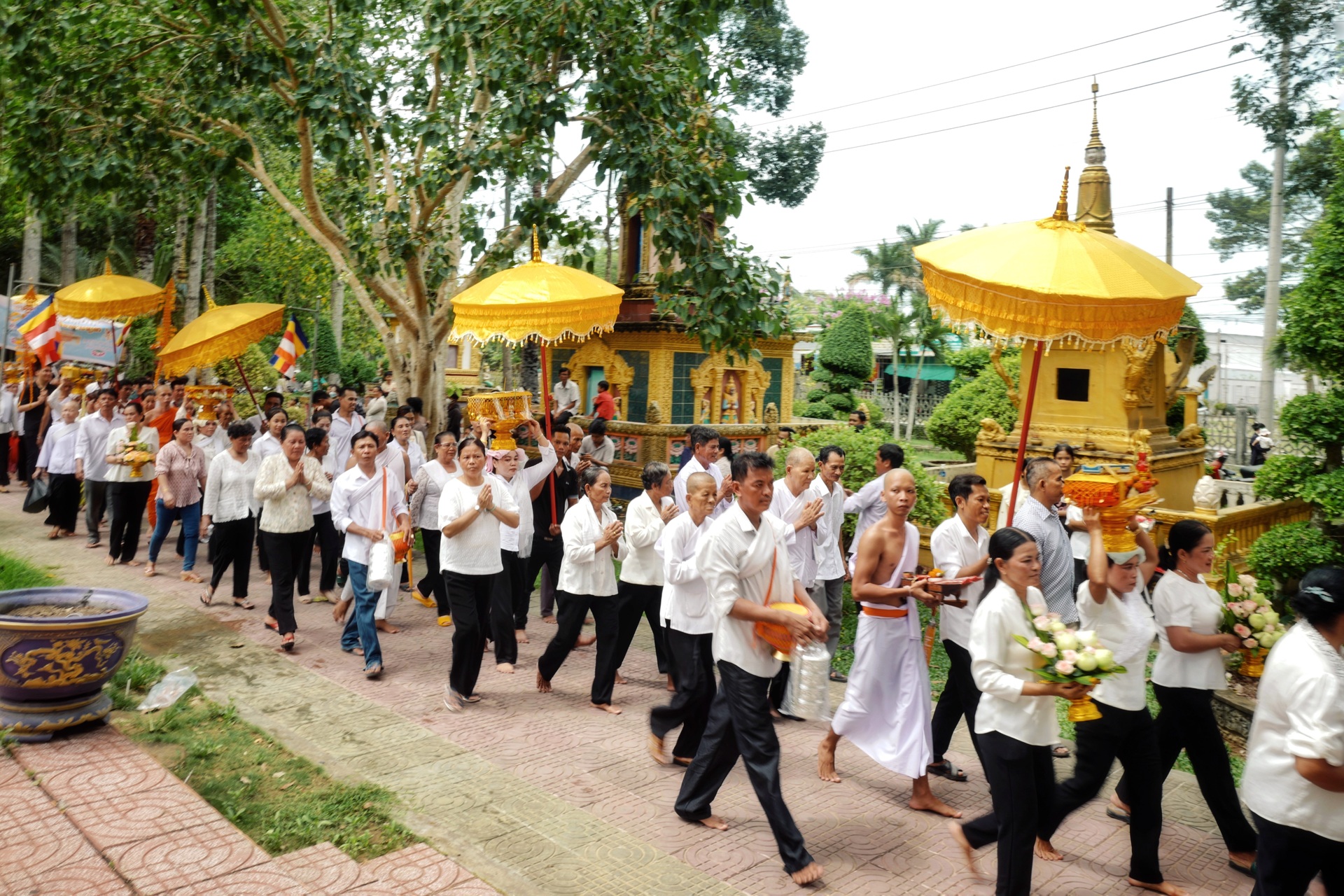
The farewell ceremony for the monks heading to the temple was held very solemnly, with the monks riding on horseback under canopies, as a way to commemorate the Buddha's departure from the capital city in ancient times.
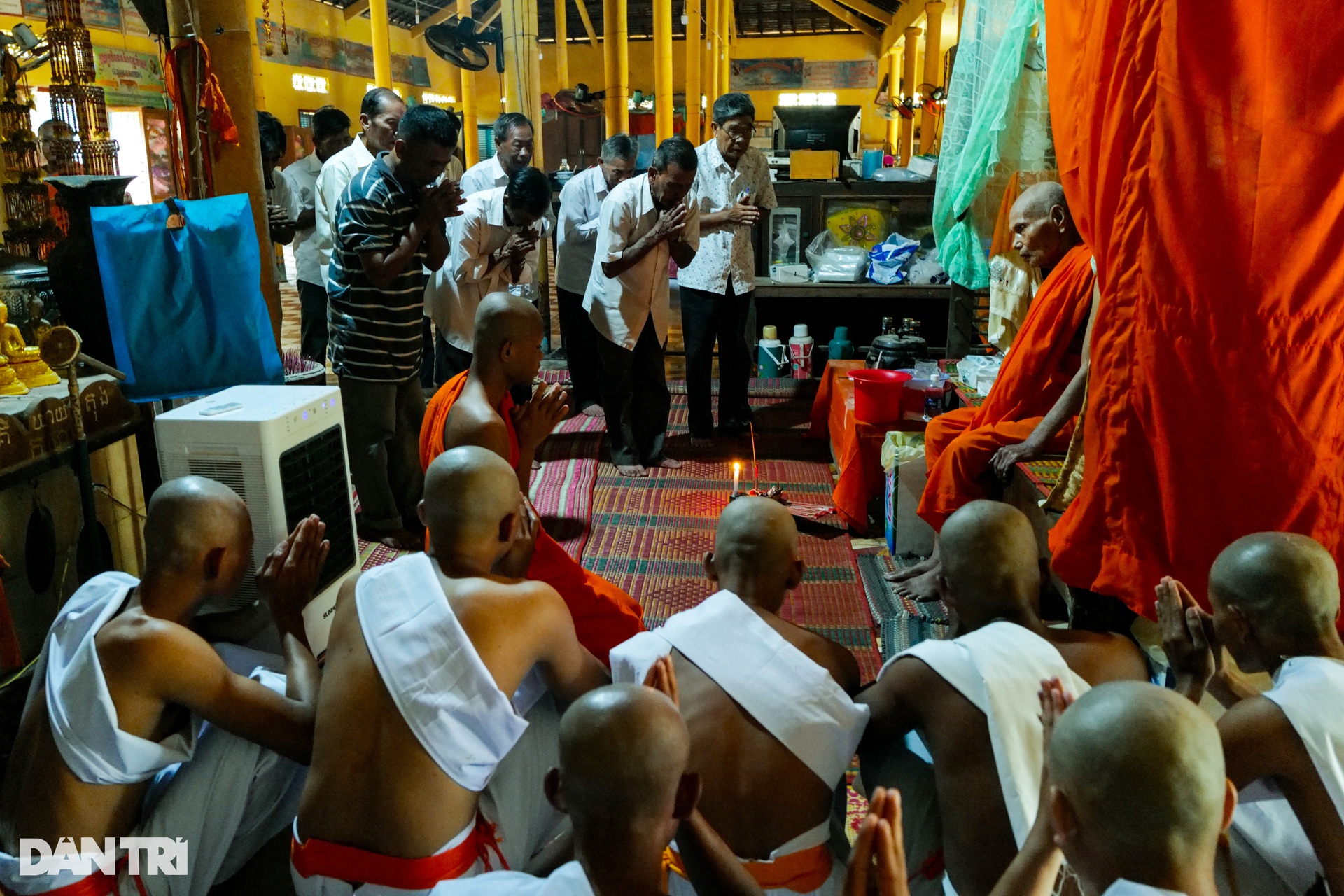
To prepare for the monastic training, the monks' family members prepared food to offer to the temple. The new monks would then be given saffron robes.

The act of becoming a monk or nun to show filial piety to one's parents and grandparents is a beautiful tradition within the Khmer Buddhist community. For the Khmer people, becoming a monk or nun is not about becoming a Buddha, but about becoming a person of morality, wisdom, and especially compassion for others.
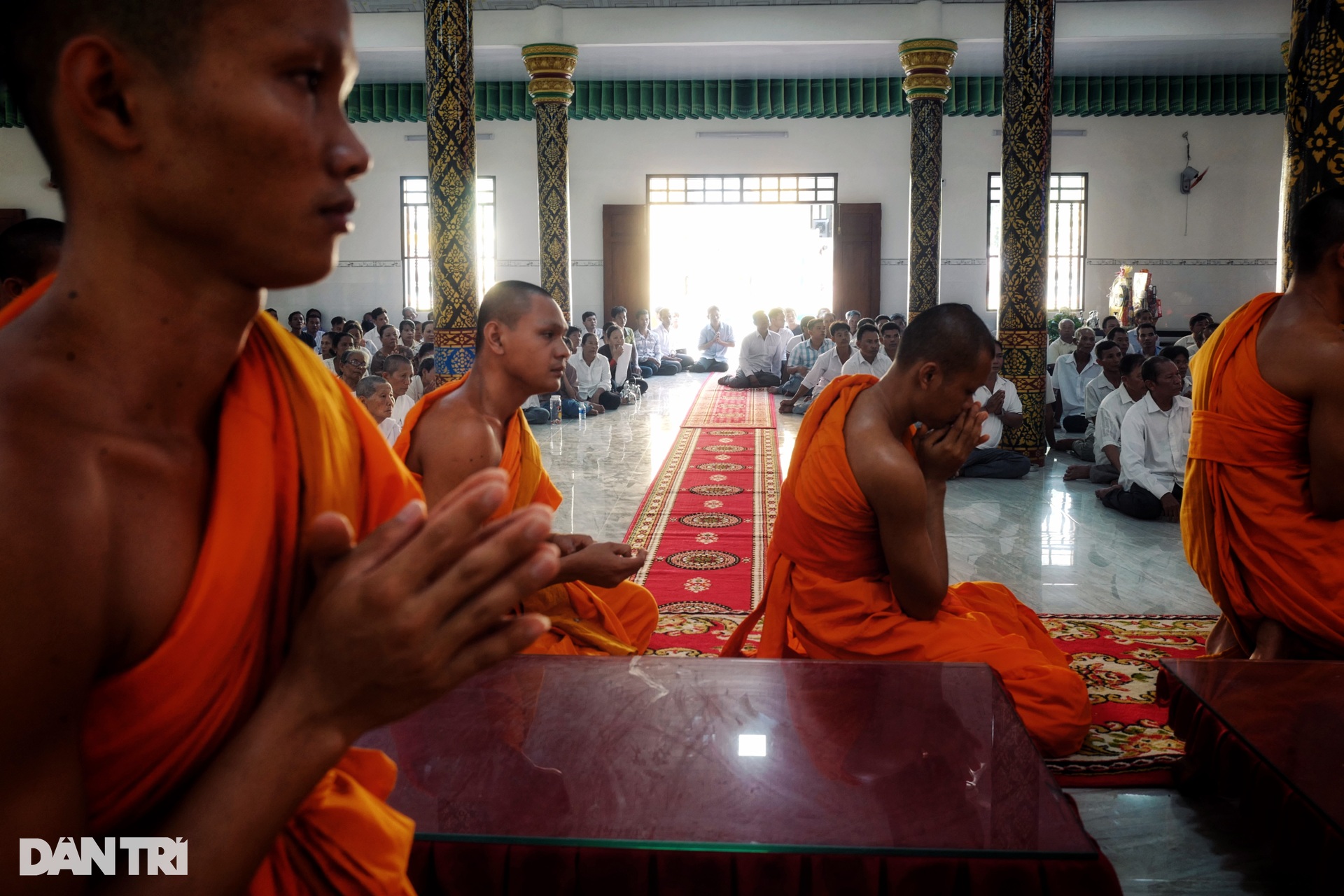
For the Khmer people, the act of becoming a monk as a filial piety not only carries religious value but also expresses gratitude and respect for family and community. It is an important part of their culture and plays a role in preserving and developing the spiritual values of society.
Performed by: Eason Chang


![[Photo] Ba Lang An Lighthouse - the "eye of the sea" amidst the "rock museum" of Quang Ngai province.](https://vphoto.vietnam.vn/thumb/1200x675/vietnam/resource/IMAGE/2026/05/29/1780038698840_anh-man-hinh-2026-05-29-luc-14-10-42.png)
![[Image] Pleasant weather helps students enter the 10th grade entrance exam with confidence.](https://vphoto.vietnam.vn/thumb/1200x675/vietnam/resource/IMAGE/2026/05/29/1780034401612_ngay-1-thi-lop-10-minh-duy-8-5009-jpg.webp)






































































Comment (0)