

Complexity in real estate documentation
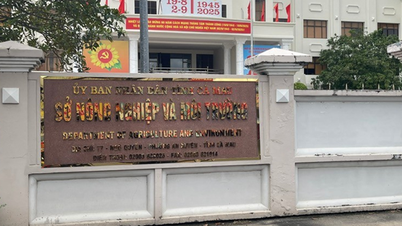
In early December 2023, the Ho Chi Minh City Department of Natural Resources and Environment requested the People's Committees of districts, Thu Duc City, the Ho Chi Minh City Land Registration Office and its branches to resolve cases of unauthorized land use change, unauthorized land subdivision, and transfer of ownership by handwritten documents.
According to a report from the Ho Chi Minh City Department of Natural Resources and Environment, there are cases in Ho Chi Minh City where households and individuals use agricultural land for which they have been granted land use right certificates by the district-level People's Committee. During the course of use, changes have occurred such as: households separating to live independently; inheriting, receiving as gifts, or transferring a portion of the land area...
To address this practical need, land users have resorted to unauthorized land subdivision, transferring partial land ownership via handwritten documents (without drawing up contracts for the transfer of land use rights and assets attached to the land as required), and arbitrarily changing the land use purpose (building houses and structures on agricultural land...).
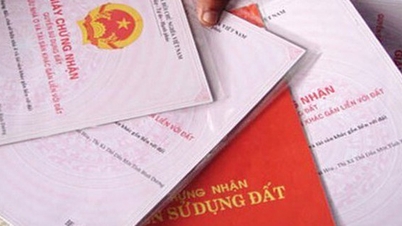
Due to the lack of timely and comprehensive regulations in land laws over various periods, those who receive the transfer of ownership in these cases have not been granted Certificates of Land Use Rights, Ownership of Houses and Other Assets Attached to Land (certificates).
The aforementioned problem persisted until the provisions in Clause 2, Article 82 of Decree No. 43/2014/ND-CP allowed for the resolution of cases involving the receipt of transfers, inheritances, and gifts by handwritten documents before July 1, 2014.
However, because the land was subdivided and transferred without authorization, a large portion of the transferred land area does not comply with the regulations of the provincial People's Committee.
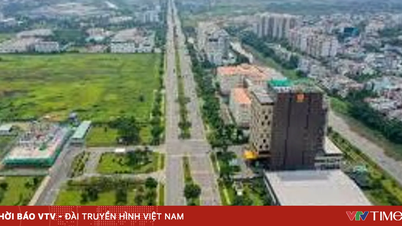
Mr. Nguyen Toan Thang, Director of the Department of Natural Resources and Environment of Ho Chi Minh City, assessed: "Currently, there are no specific statistics because the declaration and registration process has not yet been organized. However, according to our observations, these cases are mainly concentrated in suburban areas, especially in districts with rapid urbanization rates such as Binh Chanh District, Hoc Mon District, and Binh Tan District,..."
To obtain relatively accurate figures, the Ho Chi Minh City Department of Natural Resources and Environment needs to conduct a city-wide survey and declaration with close coordination between districts, Thu Duc City, wards, and communes, as well as residents who currently "own" properties in that situation.
Citizens must clearly understand their responsibilities and rights in order to cooperate in transparent declarations, only then can we obtain specific and accurate figures.
To issue land ownership certificates for properties bought and sold using handwritten agreements, Ho Chi Minh City needs to consider issues such as the timing of the transaction; the handling of land and construction violations (fines, forced demolition, or permission for registration, forced return of illegal profits, etc.); and a review of planning to ensure compliance with regulations on land subdivision limits and infrastructure... in order to determine each specific case meets the eligibility criteria.
At the same time, because informal land transactions lack official confirmation from authorities, verifying the authenticity of the transaction date is difficult and easily exploited to violate regulations. If not strictly enforced, it can easily lead to "circumvention of the law" and the division of land plots exceeding the permitted limits.
"Therefore, resolving the issuance of land use certificates in these cases according to legal regulations requires considering and handling administrative violations in the field of land. The issuance of certificates for each case also needs to be based on land use planning, conditions for land subdivision, and infrastructure. These are issues within the authority of the district People's Committee," Mr. Thang affirmed.
Legal issues that need clarification.
According to lawyer Quách Thành Lực, Director of LSX Law Firm, real estate transactions between individuals using handwritten documents, without notarization or certification, are relatively common nowadays.
The reasons the two parties entered into such a transaction were due to a lack of understanding of legal regulations, the absence of a land use certificate, mutual trust, a reluctance to publicize the transaction, and an attempt to avoid paying taxes.
The law stipulates that the transfer of land and houses must be documented in a notarized contract. Land laws throughout different periods have consistently stipulated that contracts for the transfer of land use rights must be notarized by a notary public or certified by the People's Committee of the commune, ward, or town where the land is located.
Lawyer Luc pointed out that real estate transactions conducted with handwritten documents do not comply with regulations regarding form, and the ownership cannot be transferred to the new owner on official land use rights documents, therefore they are not recognized by law.
The buyer is not legally identified as the owner or lawful user of the land and house.
If the buyer is not recognized as the legal owner of the land, they are not allowed to transfer, assign, inherit, or mortgage the property. In the event that the state reclaims the property, the ownership of the land will still belong to the seller.
If there is a dispute between the two parties regarding compensation for land clearance, the money will be deposited into a temporary holding account at the bank until a judgment or decision is reached to resolve the dispute.
Disputes between the seller and the buyer will arise if an agreement or reconciliation cannot be reached; in such cases, one of the parties must file a lawsuit in the court where the property is located for resolution.
Currently, there are still a relatively large number of properties without land ownership certificates. Although many people know that transactions involving properties without certificates carry significant risks, they still proceed because the greater the risk, the higher the potential profit.
"In this case, to ensure the buyer's rights, a handwritten sales contract should be drafted with a deposit clause stating: 'When the land is granted a land use right certificate, the seller is responsible for carrying out the legal transfer procedures to the buyer; otherwise, they will be penalized double the amount of the deposit received.' This clause will minimize the possibility of disputes, or if a dispute does arise, the buyer's rights will be protected according to the law," lawyer Luc said.
Source


![[Photo] Secretary of the National Assembly Party Committee, Chairman of the National Assembly presides over the meeting of the Standing Committee and Executive Committee of the National Assembly Party Committee.](https://vphoto.vietnam.vn/thumb/1200x675/vietnam/resource/IMAGE/2026/06/03/1780480353201_ndo_br_bnd-2585-jpg.webp)
![[Photo] General Secretary and President To Lam presides over a meeting with the Central Organizing Committee.](https://vphoto.vietnam.vn/thumb/1200x675/vietnam/resource/IMAGE/2026/06/03/1780482764658_a1-bnd-4741-3342-jpg.webp)
























![[Photo] First session of the 14th Congress of the Vietnam Trade Union](https://vphoto.vietnam.vn/thumb/1200x675/vietnam/resource/IMAGE/2026/06/03/1780465947883_ndo_br_img-3852-jpg.webp)






















![[Video] Sunset at Lap An Lagoon – Where the sun sets over the fishing nets](https://vphoto.vietnam.vn/thumb/1200x675/vietnam/resource/IMAGE/2026/05/31/1780192137701_beach-landscape-sea-water-nature-grass-745871-pxhere-com.jpeg)






























Comment (0)