

After experiencing prolonged rectal bleeding for a month, Mr. N.D.D, 42 years old, from Hanoi, assumed it was just a common case of hemorrhoids and treated himself at home without seeking medical attention from a specialist.
Only when his condition did not improve, accompanied by bowel dysfunction, did he go to K Hospital for examination. A gastrointestinal endoscopy revealed a proliferative tumor in the rectum, occupying approximately one-third of the intestinal lumen circumference. A subsequent biopsy confirmed that the patient had rectal cancer.
Advanced investigations revealed the tumor was at stage cT3N0M0, with no distant metastasis observed. After consultation, the doctors at the Department of Gastrointestinal Surgery 1 decided to perform robotic surgery to resect the rectal segment containing the tumor, perform lymph node dissection, and anastomose the bowel during the same operation.
According to Associate Professor Kim Van Vu, Head of the Department of Gastrointestinal Surgery 1, this case requires a comprehensive evaluation to ensure complete removal of the lesion while optimizing post-surgical recovery.
The case presented many challenges because the patient was young, male, and had a narrow pelvis, making manipulation in the surgical area more difficult.
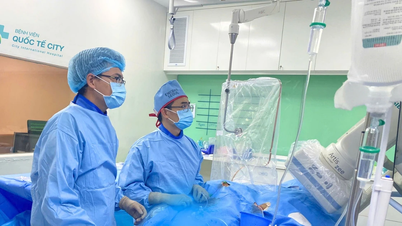
The surgical team removed the entire rectal tumor along with lymph node dissection using a robotic system. With clear magnified images and a highly flexible robotic arm, the doctors performed precise dissection layer by layer, thoroughly freeing the tumor from surrounding structures before completing the resection and anastomosis process.
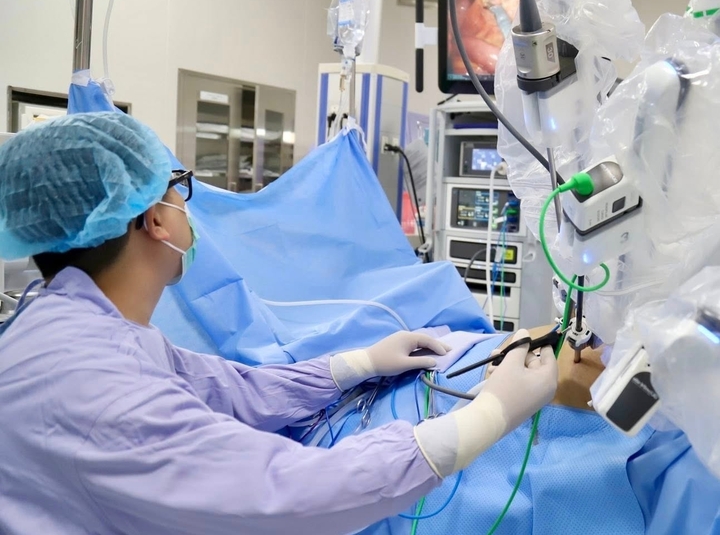
The doctor is treating a case of rectal cancer.
According to MSc. Dr. Tran Dinh Tan, robotic surgery is now routinely implemented in the department for the treatment of many types of gastrointestinal cancers such as stomach cancer, colon cancer, and rectal cancer. This technique contributes to reducing tissue trauma, limiting complications, shortening recovery time, and improving the quality of life for patients after treatment.
One day after the surgery, Mr. D. was able to sit up and walk around. The patient said he had complete confidence in the doctors' treatment plan.
Experts warn that bloody stools, changes in bowel habits, persistent abdominal pain, or unexplained weight loss can be warning signs of serious gastrointestinal diseases. Many people easily mistake these symptoms for hemorrhoids or anal fissures and self-treat at home, delaying diagnosis.
Early examination when abnormalities appear and regular screenings increase the chances of detecting cancer at an early stage, thereby improving treatment effectiveness and prognosis for patients.
Source: https://vtcnews.vn/tuong-bi-tri-di-kham-phat-hien-ung-thu-truc-trang-ar1021433.html
![[Photo] Delegation attending the 14th Congress of the Vietnam Trade Union visits the Mausoleum of President Ho Chi Minh.](https://vphoto.vietnam.vn/thumb/1200x675/vietnam/resource/IMAGE/2026/06/03/1780451842301_ndo_br_img-3824-jpg.webp)

































































































Comment (0)