

What kind of plant is a dandelion?
According to the Health & Life newspaper, dandelion has many folk names such as wild lettuce, sky lettuce, plowshare lettuce, toad lettuce, wild lettuce, or spearhead lettuce. Its scientific name is Lactuca indica. This herbaceous plant belongs to the daisy family and has a short life cycle, usually lasting only 1 to 2 years.
Dandelions are quite easy to find, often growing wild in many areas of Northern and North Central Vietnam. In the wild, the plant can also be grown from seeds around March–April or September–October, or propagated from root cuttings, and can be harvested and used after about 4 months.
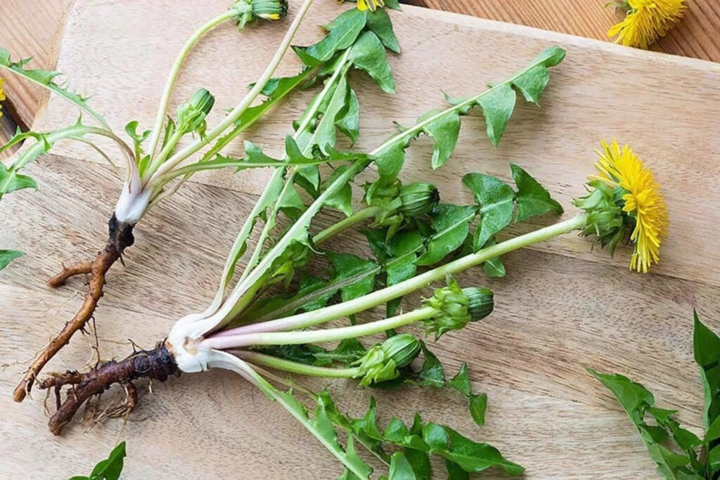
Drinking dandelion leaf tea helps to cool the body, detoxify, and reduce inflammation (illustrative image).
What are the benefits of drinking dandelion leaf tea?
Dandelion leaves have long been used in traditional medicine for their cooling, detoxifying, and anti-inflammatory properties. Below are some common uses and applications of dandelion leaves.
Treating breast swelling and blocked milk ducts.
Prepare about 20-40g of fresh dandelion leaves, wash them thoroughly, and crush them with a little salt. Then squeeze out the juice to drink, and use the remaining pulp to apply directly to the swollen and painful breast area. Do this regularly until the symptoms subside.
Treats poor digestion and frequent boils/acne.
Prepare 10-15g of dried dandelion leaves, put the leaves in 600ml of water, and simmer until only about 200ml remains. Drink continuously for 3-5 days. If the boils do not subside, you can continue using it.
Treating boils and snake bites.
Prepare fresh dandelion leaves. After first aid and cleaning the wound, crush the dandelion leaves with a little salt and apply the mixture to the affected area (such as boils or snake bites). Secure it with a thin cloth. Do this once a day for about a week.
Supports the treatment of cholecystitis and gallbladder polyps.
Steep about 30g of dried dandelion leaves in boiling water like tea and drink daily.
Support for people with diabetes
Steep about 35g of dried dandelion in boiling water and drink daily, similar to tea.
People with diabetes still need to adhere to their treatment regimen and blood sugar control as directed by their doctor.
Notes on using dandelion
Dandelion is a familiar herb in traditional Eastern medicine and is used by many people to support their health. However, when using dandelion leaves, some issues need to be considered to ensure safety for health.
Dried dandelion should be stored in a cool, dry place, away from moisture and mold, and protected from direct sunlight. Improper storage can cause the herb to deteriorate and reduce its effectiveness.
While using dandelion to support treatment, it is important to monitor for any unusual bodily reactions such as contact dermatitis, rashes, allergies, sensitivity, itching, or discomfort.
If these symptoms appear, stop using the product immediately and go to a medical facility for examination and accurate diagnosis.
Who should not use dandelion?
There are some cases where dandelion should not be used for self-treatment, including: children; pregnant women; breastfeeding women; people sensitive to the herb's components; people with irritable bowel syndrome; people with intestinal obstruction; and people with bile duct obstruction.
For those undergoing treatment for underlying medical conditions or taking Western medicine, it is advisable to consult a doctor before using dandelion to avoid unwanted interactions.
According to Vinmec International General Hospital, dandelion is a medicinal herb with many health benefits and is used in many remedies. However, similar to other medicines, dandelion can cause side effects. Therefore, it is necessary to consult a doctor before using it to achieve the best results.
Source: https://vtcnews.vn/uong-nuoc-la-bo-cong-anh-co-tac-dung-gi-ar1020047.html
















































































































Comment (0)