

It can be said that Resolution 09 is not just a resolution on urban development, economic development, or reorganizing the growth space for Ho Chi Minh City. More profoundly, it is a resolution on the stature, identity, and mission of the city in the new era of the nation.
Because a city that wants to become a global metropolis cannot simply grow with skyscrapers, financial centers, modern transportation networks, or international investment flows. A truly global city must possess a cultural soul, a unique identity, creative people, a humane way of life, and the ability to make all its residents feel a sense of belonging.
Ho Chi Minh City is a unique cultural space in Vietnam. It is not only a hub for economy, trade, services, science, and technology , but also a meeting place for many layers of memories, diverse cultures, communities, and aspirations for career development from all over the country.
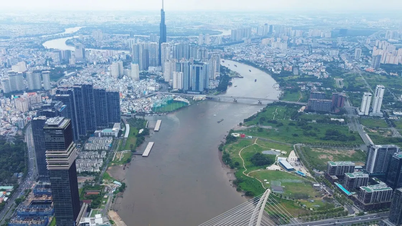
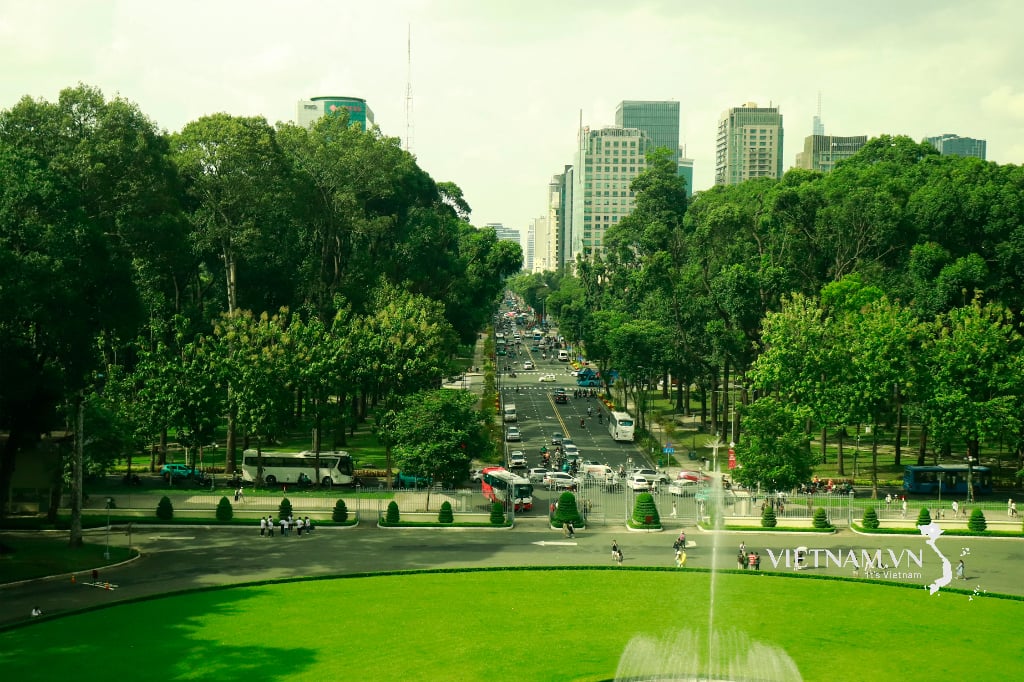
There, you'll find a glorious history of revolutionary struggle; the Nha Rong Wharf; the Independence Palace, the Cu Chi Tunnels, Cholon Market, the Saigon River, Can Gio; and unique markets, alleyways, ports, canals, streets, culinary spaces, and the vibrant urban life of the South. All of these elements combine to create a Ho Chi Minh City that is not only dynamic and modern, but also rich in memories, affection, and cultural vitality.
Therefore, the requirement for the comprehensive development of Ho Chi Minh City's culture and people—a civilized, modern, and compassionate city—as outlined in Resolution 09 should be seen as a pillar of development, not merely a supplementary element. Culture here is not just about festivals, art performances, monument preservation, or event organization.
Culture should be understood more broadly, encompassing how cities plan their living spaces; how the government serves its citizens; how businesses interact with society; how citizens participate in traffic, protect the environment, and behave in public; how cities care for children, the elderly, the vulnerable, and immigrants; and how each community preserves its memories, way of life, and neighborly spirit in a rapidly changing urban environment.
A civilized Ho Chi Minh City must first and foremost be a city of people. People need not only housing, jobs, and income, but also parks, libraries, museums, theaters, creative spaces, children's playgrounds, basic cultural institutions, and community spaces.
When a new urban area is built, the question isn't just how many apartments or how many square meters of commercial space there will be, but also where residents will meet, where children will play, where the elderly will socialize, and how the community will connect. A modern city cannot do without spaces that nurture the soul.
A modern city must also be a city that knows how to use science and technology to serve culture and people. In particular, Ho Chi Minh City has the potential to become a leading cultural industry center in the country and the region. With a young population, a large market, an open spirit, a community of artists, creative businesses, universities, research institutes, and a strong media and technology force, the city can strongly develop film, music, performing arts, fashion, design, advertising, fine arts, cuisine, video games, digital content, cultural tourism, and the night-time economy. These are not only areas that enrich spiritual life, but also high-value-added economic sectors that create jobs for young people, enhance urban competitiveness, and project the city's image to the world.
However, the cultural industry can only thrive when a city knows how to nurture its creative ecosystem. Creators need space to experiment; cultural businesses need mechanisms for investment; artists need an environment to contribute; heritage needs to be revived through new approaches; riverside areas, old factories, historical buildings, and historic neighborhoods need to be reborn as spaces for culture, art, creativity, and tourism. A city with identity is not one that freezes the past, but one that knows how to keep the past alive in the present and inspire the future.
Throughout this journey, the words "compassion and solidarity" hold special significance. Ho Chi Minh City is attractive not only because of its business opportunities and vibrant pace of life, but also because of the tolerance, generosity, and openness of its people. Generations of immigrants have arrived in the city with nothing, yet found opportunities, a place to belong, and human connection. This compassion and solidarity is a unique form of "soft power" of the city. In its process of becoming a global metropolis, the city needs to preserve this quality as an irreplaceable cultural identity.
From a policy perspective, it is crucial to institutionalize culture in all development decisions. The city's centenary plan needs a cultural vision. The Urban Planning Law specifically needs space for creativity, heritage preservation, the development of cultural institutions and industries, and ensuring people's access to culture. Large infrastructure projects should be evaluated not only by their traffic or economic efficiency, but also by their impact on the landscape, community, heritage, and quality of life. Social welfare policies need to be imbued with a humanistic spirit, so that no one is left behind in the development process…
Resolution 09 has opened a new horizon for Ho Chi Minh City. That horizon will be truly sustainable when culture becomes the foundation, people become the center, creativity becomes the driving force, compassion becomes the identity, and civility becomes the standard of daily life.
Source: https://baovanhoa.vn/chinh-polit/van-hoa-hon-cot-cua-thanh-pho-mang-ten-bac-232054.html
![[Photo] Standing Committee member of the Party Central Committee Tran Cam Tu working with the Central Inspection Committee](https://vphoto.vietnam.vn/thumb/1200x675/vietnam/resource/IMAGE/2026/05/28/1779969579668_ndo_br_bnd-2495-jpg.webp)

















































Comment (0)