

Honoring workers, therefore, is not just an expression of gratitude on a holiday, but must become a commitment to development: building a humane working environment, improving material and spiritual well-being, so that every Vietnamese worker can live better, be more creative, and enjoy more deservedly the fruits of the country's development.
Labor – a cultural value that gives the nation its vitality.
Every May 1st, as the whole country looks forward to International Labor Day, we have another opportunity to reflect more deeply on the ordinary people who are working day and night to shape the image of our nation.
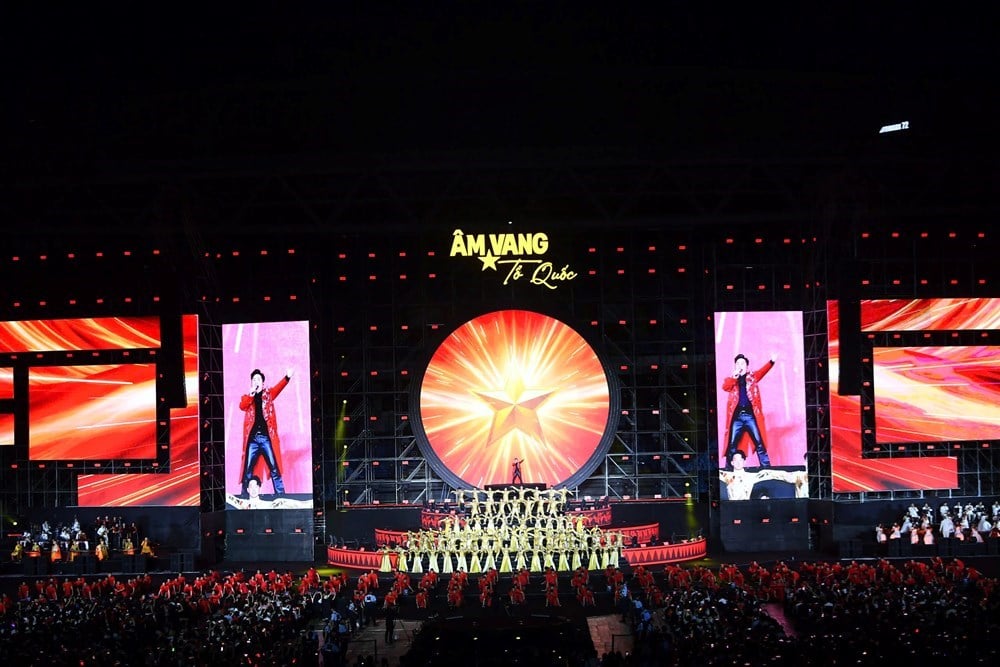
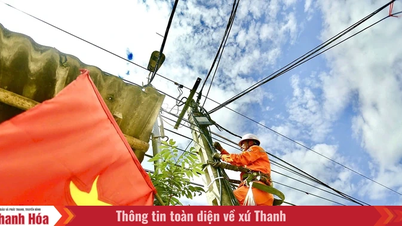
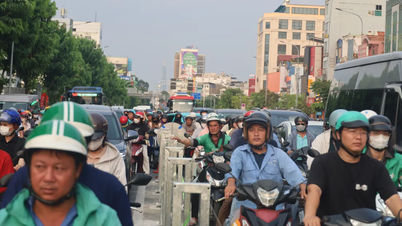
They are workers in industrial zones, laborers on construction sites, farmers in the fields, doctors and nurses in hospitals, teachers in classrooms, artists behind the scenes, street cleaners, service workers, journalists, scientists, entrepreneurs, and workers in the digital economy .
They may differ in profession, circumstances, and work environment, but they all share one thing in common: through their labor, they are creating wealth, knowledge, services, cultural values, and fostering a belief in societal development.
From a cultural perspective, Vietnamese history is also a history of labor, creativity, and overcoming difficulties. Our ancestors built villages and established the nation with their own hands; defended the country with unwavering will; restored the nation after war with perseverance; and today continue to build the future with knowledge, technology, creativity, and aspiration for progress.
Throughout history, Vietnamese workers have always been a silent but persistent force, not only producing material goods but also shaping the character, integrity, and extraordinary resilience of the nation.
Therefore, labor is not merely an economic category. Labor is, first and foremost, a cultural value. Through labor, people affirm their dignity, responsibility, and creative capacity. Through labor, communities form discipline, habits, norms, professional ethics, and a spirit of cooperation. Through labor, a nation expresses its attitude towards the future.
A society that respects honest labor is a society with a sound moral foundation. A nation that cares for its workers is a nation with a vision for sustainable development.
In his address to workers in Ho Chi Minh City on April 27, 2026, in anticipation of International Labor Day on May 1, General Secretary and President To Lam emphasized the need to care for workers not only through support during holidays and Tet (Lunar New Year), but more importantly, through stable employment, better income, a safer working environment, better housing, schools, healthcare , and a better cultural and spiritual life; and affirmed: "Workers must live in increasingly better conditions."
That message is profound because it places workers at the center of development. Development is not just about economic growth, expanding production, or enhancing competitiveness. First and foremost, development must make people live better lives, work more safely, receive more education, be better cared for, enjoy a fuller cultural life, and have the opportunity to unleash their creative potential.
If those who directly create wealth for society still have too many worries about housing, income, health, their children's schooling, and spiritual well-being, then that development cannot be complete.
Building a work culture in the new era.
In this era of national development, Vietnamese workers are facing new demands. The world of work is changing faster than ever before. Artificial intelligence, automation, digital transformation, the green economy, the circular economy, and the platform economy are transforming the structure of employment, professional skills, and labor relations.
Old jobs may disappear, new ones emerge; skills once considered stable can quickly become obsolete; traditional labor models are under intense pressure to change.
In this context, workers cannot be viewed merely as a simple labor force. They must be seen as creative subjects, lifelong learners, cultural subjects, and subjects of development.
Today's workers need not only skilled hands, but also digital skills, work discipline, adaptability to technology, teamwork abilities, and an innovative mindset.
Today's farmers not only produce agricultural products, but also need to understand quality standards, traceability, e-commerce, agricultural tourism, and the cultural stories behind their products.
Artists, artisans, designers, and digital content creators not only create works of art but also participate in the cultural industry, in building national brands, and in spreading Vietnam's soft power.
This is precisely the time when we need to talk more about labor culture. Vietnamese labor culture in the new era must inherit very valuable traditional qualities: diligence, hard work, solidarity, loyalty, perseverance, and creativity in the face of difficulties.
But those qualities alone are not enough. A new work culture must be elevated by professionalism, discipline, punctuality, respect for commitments, respect for quality, cooperation, innovation, lifelong learning, and the ability to work in an integrated environment.
A modern economy cannot rely solely on cheap labor. A country that wants to prosper cannot simply boast about the hard work of its laborers, but must create conditions for that hard work to be transformed into high productivity, high value, and high innovation.
Diligence must go hand in hand with intelligence; hard work must go hand in hand with skill; dexterity must go hand in hand with standardization; compassion must go hand in hand with professionalism; creativity must go hand in hand with social responsibility.

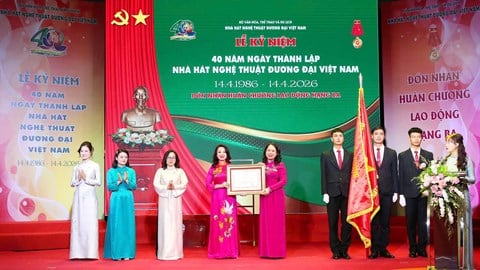
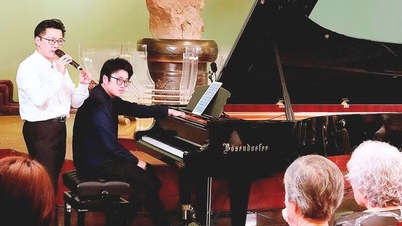
For the cultural sector, this story is especially significant. Cultural workers are not just artists on stage, actors in front of the camera, or authors of a work.
These also include directors, sound and lighting technicians, stage designers, artists, producers, editors, curators, museum and library staff, filmmakers, performers, fine arts professionals, video game developers, digital media professionals, cultural tourism professionals, and heritage conservationists.
They are the ones who are directly creating intellectual products, creating community memories, creating symbols, and creating stories about Vietnam in the hearts of the public at home and friends abroad.
For the cultural industry to develop, we must first take care of cultural workers. Artists, artisans, content creators, technicians, and cultural institution workers must receive better training, better protection of intellectual property rights, better access to technology, and be able to earn a living from their profession and be proud of it.
High-quality cultural products cannot be created if those who produce them lack adequate working conditions, a creative environment, proper compensation mechanisms, and the respect they deserve.
From that perspective, International Labor Day is not just a day for factory workers in the traditional sense, but also a day for all workers who create value for society, including those working in the cultural sector. They also need to be seen within the new development structure: not only as guardians of heritage and beautifiers of spiritual life, but also as a force contributing to the creation of economic value, social value, symbolic value, and national soft power.
Taking care of the cultural and spiritual lives of workers.
If we look closely at the lives of workers, we will see that their needs extend beyond just wages, employment, or insurance, although these are essential basic necessities. Workers also need a fulfilling cultural and spiritual life. They need rest, recreation, reading, watching movies, listening to music, playing sports, participating in community activities, taking their children to school safely, and living in an environment of sharing and respect.
Creativity based on identity, development of the cultural industry.
A person cannot fully develop if they only have a job but lack living space; only income but lack culture; only shifts but lack time for family, learning, and nurturing their soul.
This is a crucial point that needs to be emphasized in current development. In many industrial zones, export processing zones, and workers' dormitories, cultural living conditions are limited. Many workers, after work, return to cramped rented rooms lacking living space, playgrounds for children, libraries, cultural facilities, and readily available medical and legal services.
If we focus solely on production without paying sufficient attention to the cultural lives of workers, then development will lack humanistic depth.
A civilized industrial park should not only consist of factories, gates, and production lines. It needs decent housing, kindergartens, schools, health clinics, sports facilities, libraries, cultural centers, arts programs for workers, and a legal and psychological counseling system.
A modern city cannot simply attract workers and then leave them marginalized from its cultural life. Migrant workers, freelancers, digital workers, and service workers are all contributing to the city's operation; therefore, they should also benefit from the city's development.
Caring for the cultural and spiritual lives of workers is caring for the sustainability of society. When workers have rich spiritual lives, they will be less lonely, less vulnerable, more connected to the community, and have more motivation to learn, work, and contribute. When the children of workers have access to education, recreation, and culture in a healthy environment, it is an investment in the future generation.
When businesses care about the cultural well-being of their employees, they not only retain talent but also build a strong corporate culture, trust, and long-term commitment.
At the policy level, caring for workers must be understood as a complete ecosystem: stable employment, better wages, inclusive social security, suitable housing, vocational training, healthcare, workplace safety, cultural institutions, lifelong learning opportunities, and worker participation in the development process. These are not isolated policies, but rather pieces of a humane development model.
Therefore, International Labor Day on May 1st reminds us of our responsibility to translate gratitude into action. A kind wish for workers is necessary, but not enough. A gift on holidays is valuable, but not sufficient.
What workers need more is a safe working environment, an improved standard of living, decent housing, a clear career future, a rich cultural and spiritual life, opportunities for their children to receive a better education, and a society that respects their silent contributions.
In this era of national progress, we talk a lot about grand goals: rapid and sustainable development, increased productivity, innovation, digital transformation, development of the cultural industry, building well-rounded Vietnamese people, and promoting national soft power. All these goals must begin with people, with the workforce being the central force.
There can be no modern industry without modern workers. There can be no developed culture if cultured workers are not cared for. There can be no happy society if those who directly create material and spiritual wealth are not yet living in conditions they deserve.
Ultimately, honoring workers is honoring human dignity. It is honoring the hands that create products, the minds that generate innovation, the hearts that foster responsibility, the perseverance that builds faith, and the aspirations that shape the future. A country that values honest labor will have a solid moral foundation. A society that cares for its workers will have lasting unity. A culture that prioritizes the dignity of labor will produce individuals who are more confident, creative, compassionate, and responsible.
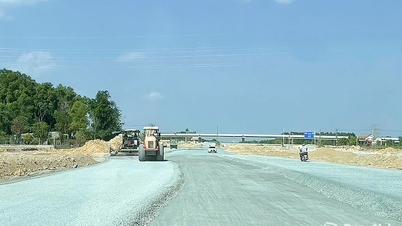
On May 1st this year, when we think about Vietnamese workers, we think not only about shifts, production lines, construction sites, fields, clean neighborhoods, classrooms, hospitals, theaters, museums, libraries, film studios, and traditional craft villages.
We think about the future of our country being built by these very people. And we increasingly understand that the era of national progress will only truly be stable when every worker is more respected, better protected, has more opportunities for learning, is more creative, and receives a more deserving reward.
It's not just an economic requirement. It's a cultural requirement. It's also a measure of the humanistic development of Vietnam today.
Source: https://baovanhoa.vn/chinh-polit/van-hoa-lao-dong-nen-tang-nhan-van-cua-phat-trien-224043.html


![[Image] Nearly 125,000 Hanoi students completed the Literature exam for the 10th grade entrance exam.](https://vphoto.vietnam.vn/thumb/1200x675/vietnam/resource/IMAGE/2026/05/30/1780117233041_ndo_br_thiet-ke-chua-co-ten-2-png.webp)







![[QUIZ] When was International Labor Day first celebrated in Vietnam?](https://vphoto.vietnam.vn/thumb/402x226/vietnam/resource/IMAGE/2026/05/05/1777999061293_fb_dia-ddienj-quiz-png.webp)








































































Comment (0)