

Amidst ongoing global economic uncertainty, gold remains a focal point of investment discussions. However, while previously this precious metal was often seen as a "safe haven" with slow and steady price increases, the narrative is rapidly changing as we approach 2026.
What the market has shown in the last two years indicates that the price of gold is no longer simply a matter of supply and demand, but is reflecting a complex shift in capital flows, sentiment, and market structure.
From the $1,900-$2,100/ounce range in 2023, gold prices entered a strong upward cycle, surpassing the $3,000 mark in early 2025 and breaking above $4,000/ounce just a few months later. This development marks a structural shift in the global gold market.
This is a clear signal that the nature of the money flow has changed. Unless a major unexpected shock occurs, from May 2026 onwards, the gold market could enter a new phase with three notable developments.
The upward trend is no longer 'smooth', prices are rising but in a jerky manner.
In the past, many investors were familiar with the scenario of "buying gold, holding it long-term, and waiting for the price to rise." However, recent events show that this trend is being broken.
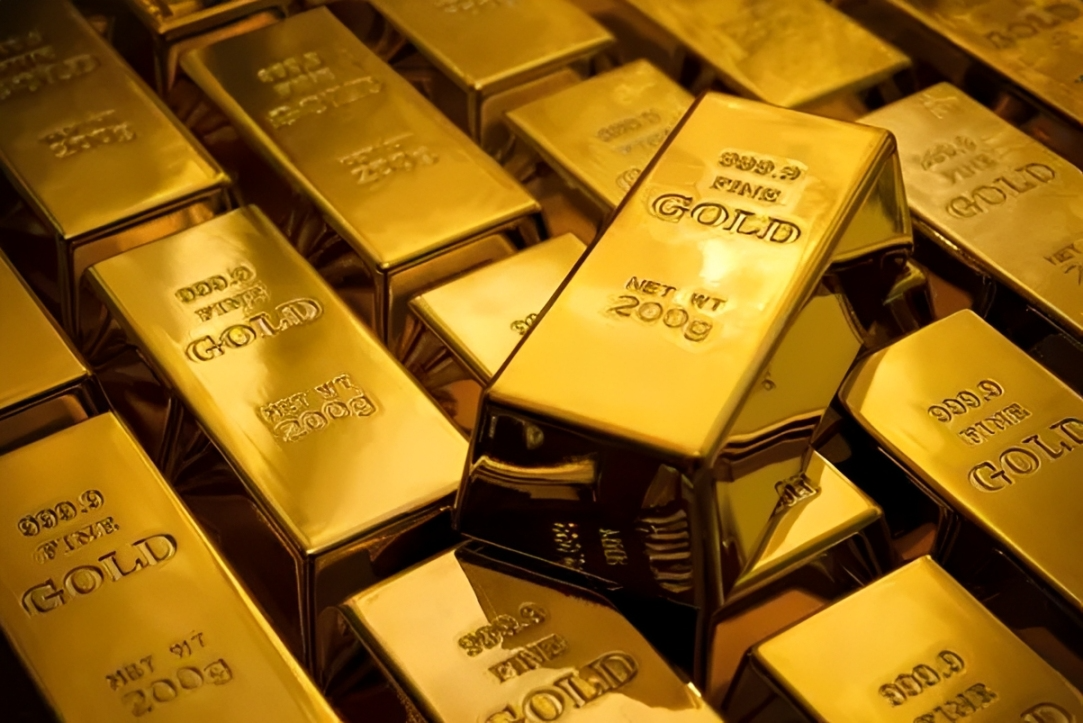
While gold prices still have an upward trend in the long term, they are interspersed with sharp corrections, sometimes fluctuating by tens of USD per ounce within a few weeks.
This reflects an increase in short-term cash flow, meaning investors who do not intend to hold the assets for the long term, but instead take advantage of price fluctuations to make quick profits.
When the structure of money flows changes, so does price behavior. The market is no longer as "tame" as before, but becomes more sensitive and volatile in response to news and crowd sentiment.
This makes the buy-and-hold investment method less safe than before, while short-term trading requires more skill and discipline.
The high price range is 'persistent' instead of breaking out quickly.
Another notable characteristic is that as gold approaches high price levels, the market no longer easily forms a clear trend.
While the $2,000 mark used to be the "battleground" between buyers and sellers, psychological levels like $3,000 or $4,000 per ounce are gradually becoming new tug-of-war zones, as the market continuously witnesses periods of breaking highs followed by sharp corrections.
This shows a clear divergence in capital flows, instead of the one-way upward trend seen previously.
This trend is expected to continue into 2026, with gold prices consistently experiencing prolonged periods of sideways movement within high price ranges.
For individual investors, this is not an easy environment to make money: buying on the dip can easily lead to getting stuck, while selling off can easily cause them to miss the rebound.
In other words, gold is no longer moving in a clear trend but is instead fluctuating within a large range, giving an advantage to disciplined and strategic investors rather than those reacting to short-term emotions.
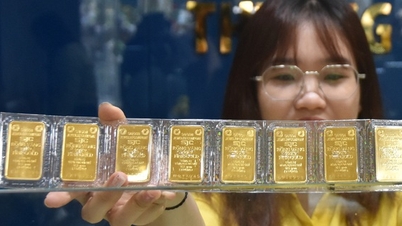
Demand for physical gold is weakening.
Gold is not only a financial asset but also a consumer commodity, especially in Asian markets. However, this demand is not evenly distributed throughout the year.
Holidays, wedding seasons, or other special occasions often see a surge in purchasing power, which in turn supports gold prices.
Conversely, during periods of stagnation, weaker demand makes prices more susceptible to financial fluctuations.
This cyclical nature means that gold prices are not only dependent on global financial markets but also influenced by consumer behavior. When these two factors work together, price fluctuations become even more unpredictable.
When the market changes, the story is no longer about the price of gold, but about how buyers react to the fluctuations.
If you're looking for long-term investment, you need to accept short-term corrections and avoid being swept away by daily fluctuations. Conversely, if you're trading based on price movements, you need a clear strategy, strict discipline, and good risk management.
One undeniable fact is that gold increasingly reflects market sentiment and money flows more accurately than just traditional fundamentals. This makes it a sensitive "mirror" of the global economy.
According to Baidu
Source: https://vietnamnet.vn/vang-doi-luat-choi-nha-dau-tu-doi-mat-3-chuyen-bien-lon-2509461.html
![[Photo] First session of the 14th Congress of the Vietnam Trade Union](https://vphoto.vietnam.vn/thumb/1200x675/vietnam/resource/IMAGE/2026/06/03/1780465947883_ndo_br_img-3852-jpg.webp)
































































































Comment (0)