

Legend of the precious tree
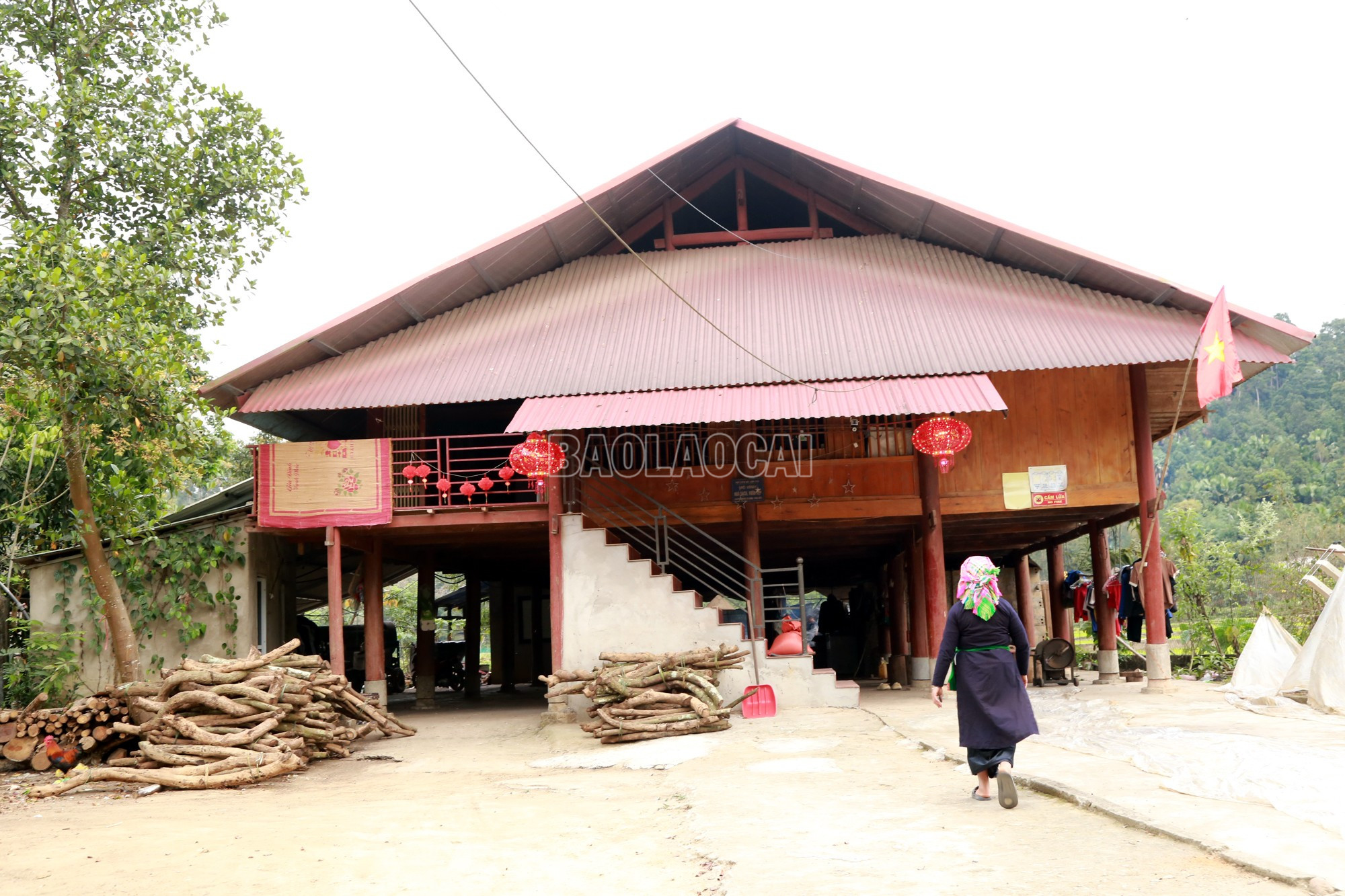
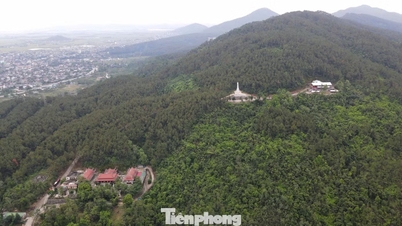
It had been a long time since I last had the opportunity to return to Liem Phu (now part of Khanh Yen commune). Despite the passage of time, the area retains its original character, with traditional stilt houses of the Tay ethnic group nestled peacefully amidst the forest. Liem Phu lies in a flat basin, boasting clear streams, fertile fields, and surrounded by lush green forests.
In early March, in her stilt house in Liem village, Mrs. Hoang Thi Phien was chatting with her children, grandchildren, and esteemed guests. At 70 years old, Mrs. Phien was still healthy and able to help with many household chores. She confided that due to her age, she occasionally suffered from joint pain, but thanks to treatment with herbal remedies, her condition had improved. When asked about her secret to maintaining good health, Mrs. Phien revealed that the Tay people in Liem Phu have many traditional remedies, but for treating bone and joint diseases, they mainly use the Gắm tree from the forest, boiled into a paste and consumed.
Gam is a woody vine that grows abundantly in the remote rocky mountain forests of the Van Ban area. For generations, the Tay people have passed down interesting folk legends about this plant.
The story goes that, long ago, a king, while traveling incognito in the mountains, encountered a treacherous section of road where his carriage couldn't pass. The king had to walk, causing his feet to swell and ache, making it impossible to continue. At that time, an elder from the village gathered a handful of precious herbs and gave them to the king, instructing the royal physician to brew them. Surprisingly, after only a few bowls of the medicine, the king's pain subsided. Grateful to the villagers, the king asked the name of the plant, and the elder called it "gắm vine." Respecting this precious herb, the king renamed it "Vương Tôn đằng" (vine of the royal prince). From then on, this common plant acquired a regal name.
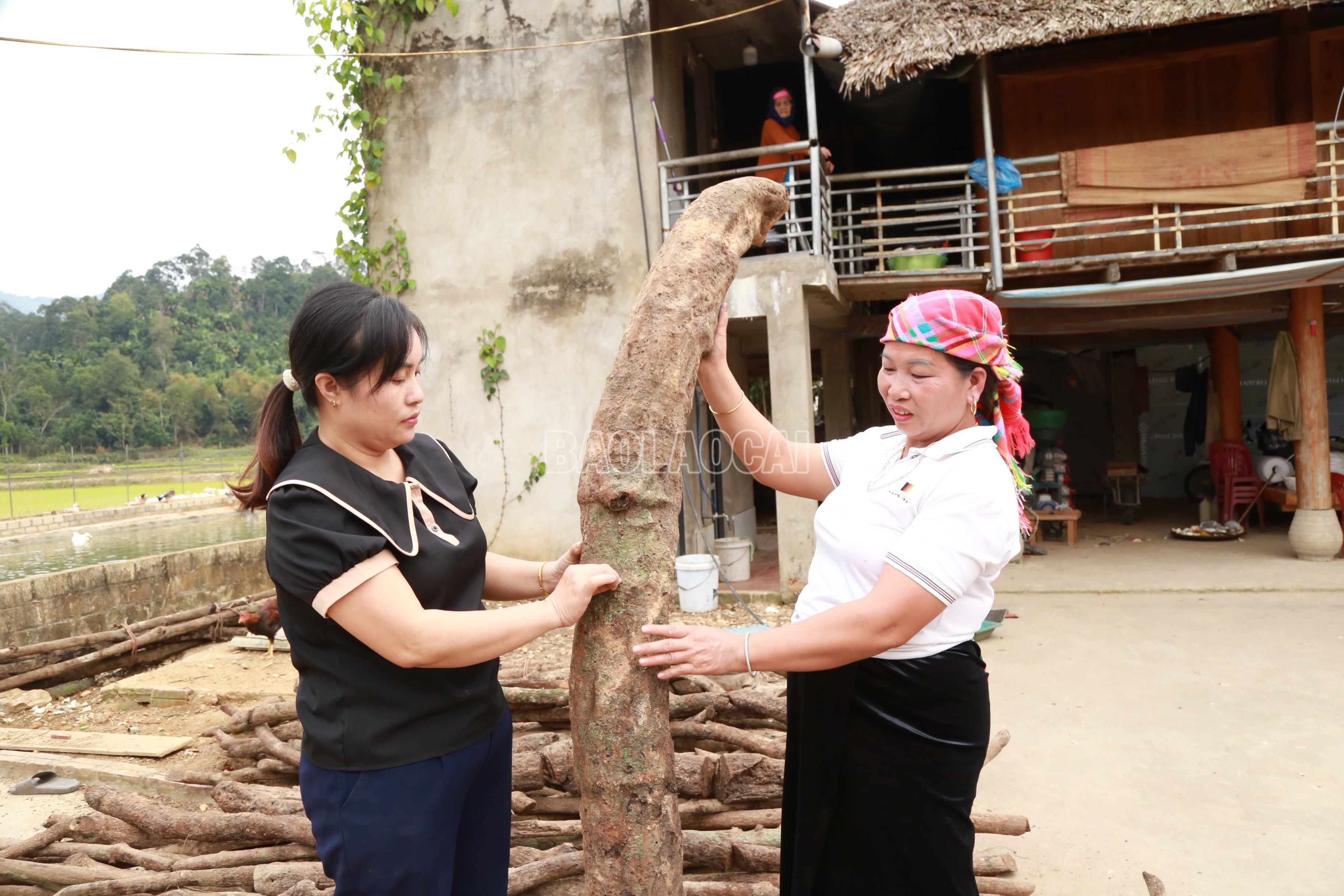
In fact, the Gắm vine is a familiar folk medicine of the Tay people (also known as Khau mác muối, dây xót, dây mẫu, dây gắm lót). Each mature Gắm vine can grow up to 10-12 meters long, with a diameter of 15 cm, and flowers from June to August every year.
According to traditional medicine, the Gắm vine has a bitter taste and neutral properties, with effects of dispelling wind, eliminating dampness, detoxifying, and reducing inflammation. The roots and stems are often used to relieve pain, treat rheumatism, malaria, or high blood pressure. Crushed Gắm leaves are also used to treat snake bites. From this wild-growing plant, the Tay people have processed it into an extract to effectively treat bone and joint diseases.
According to Dr. Mai Xuan Trung, Director of the Provincial Traditional Medicine Hospital, numerous documents and scientific studies have shown that the Gắm vine contains the active ingredient resveratrol, which has anti-inflammatory effects, supports the elimination and reduction of excess uric acid levels in the blood, thereby contributing to the treatment of diseases such as arthritis, muscle strain, and malaria.
Transforming forest trees into bone and joint pain relief cream.
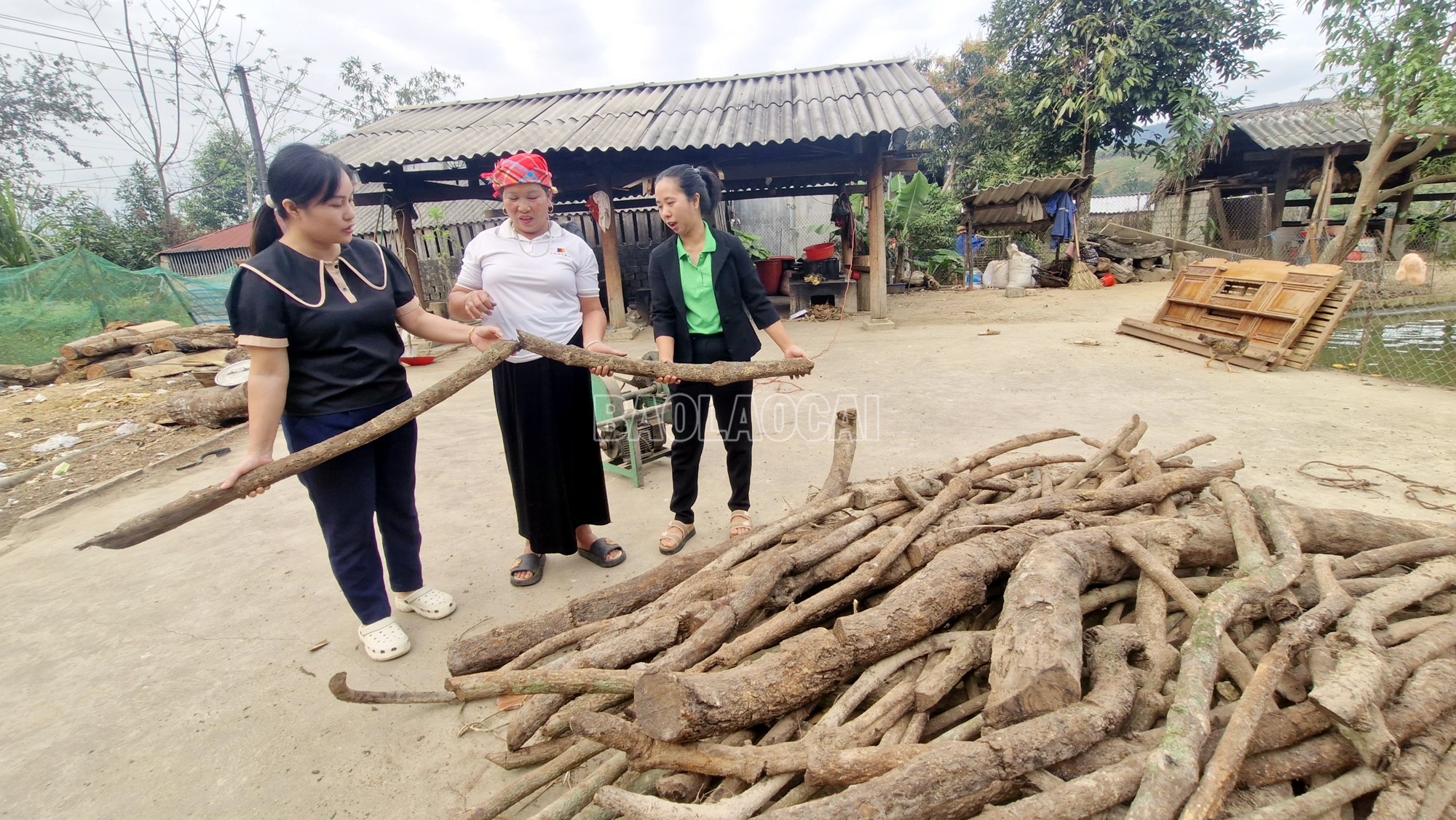
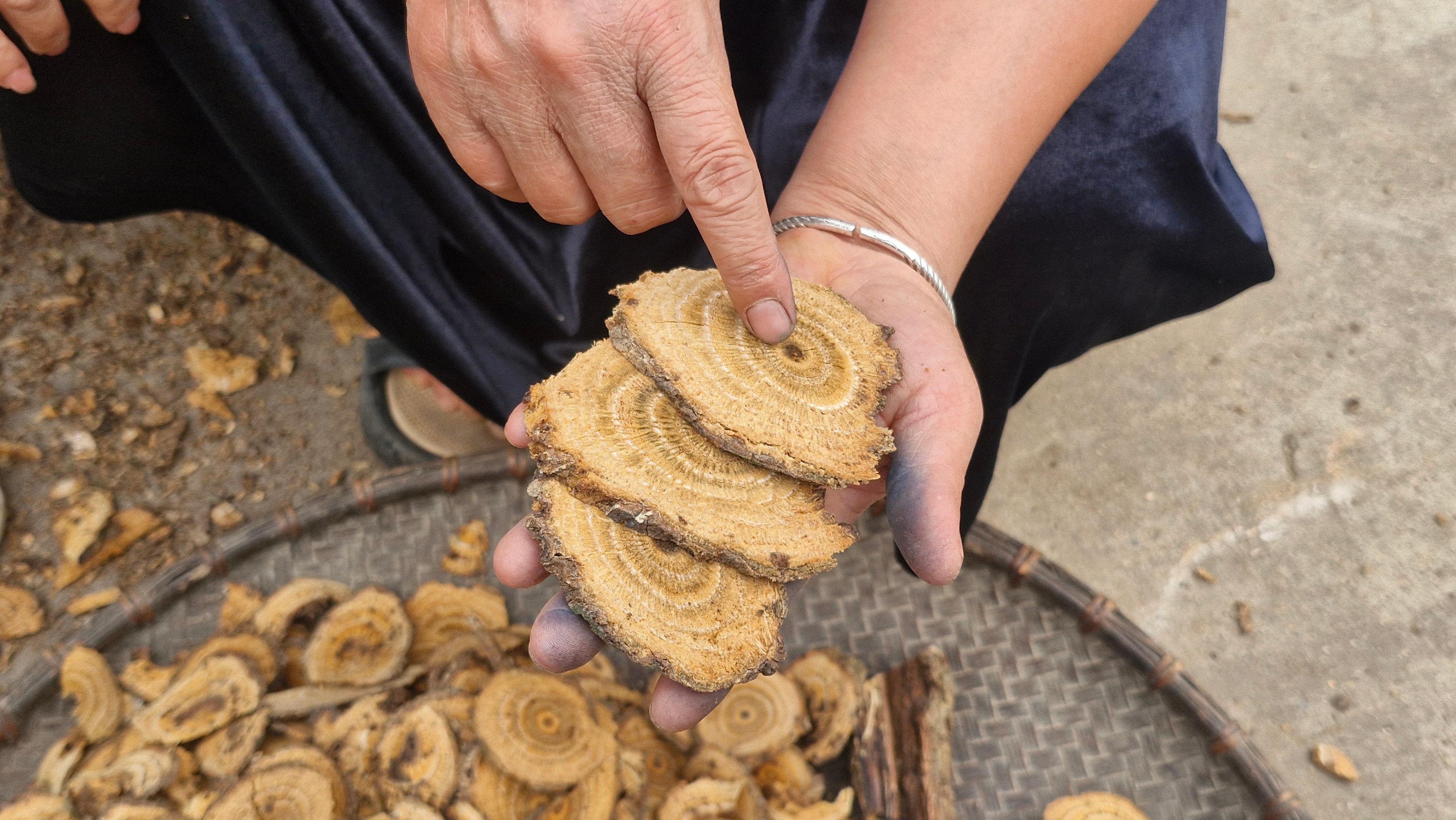
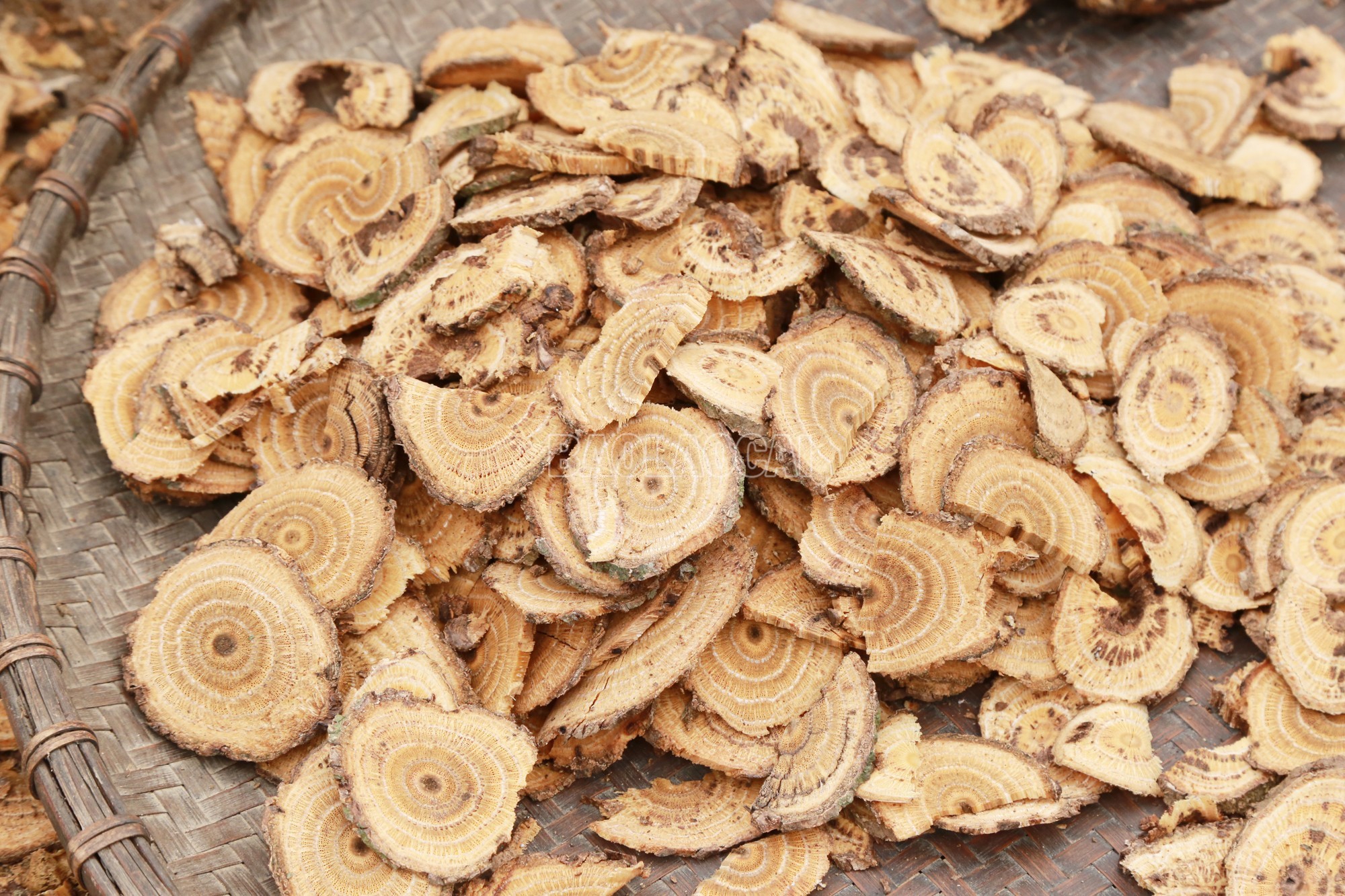
Visiting Liem village in the days following the Lunar New Year of the Horse 2026, I encountered the sight of many stilt houses with red-hot fires and billowing smoke. In the courtyard, piles of dry firewood were neatly stacked; strangely, the cuts on each piece of wood had beautiful concentric circular patterns. Seeing my surprise, Mrs. Hoang Thi Dung smiled and explained: "That's not firewood, but the trunk of the Gắm tree used to make medicinal paste."
Unless you're a local, it's easy to mistake the stems of the Gắm plant for firewood. Showing me a piece of Gắm vine as thick as my calf, Mrs. Dung said it's a precious medicinal herb, but due to over-exploitation, there isn't much forest left around the Liêm Phú area, so people have to order it from as far away as Hà Giang or Hòa Bình.
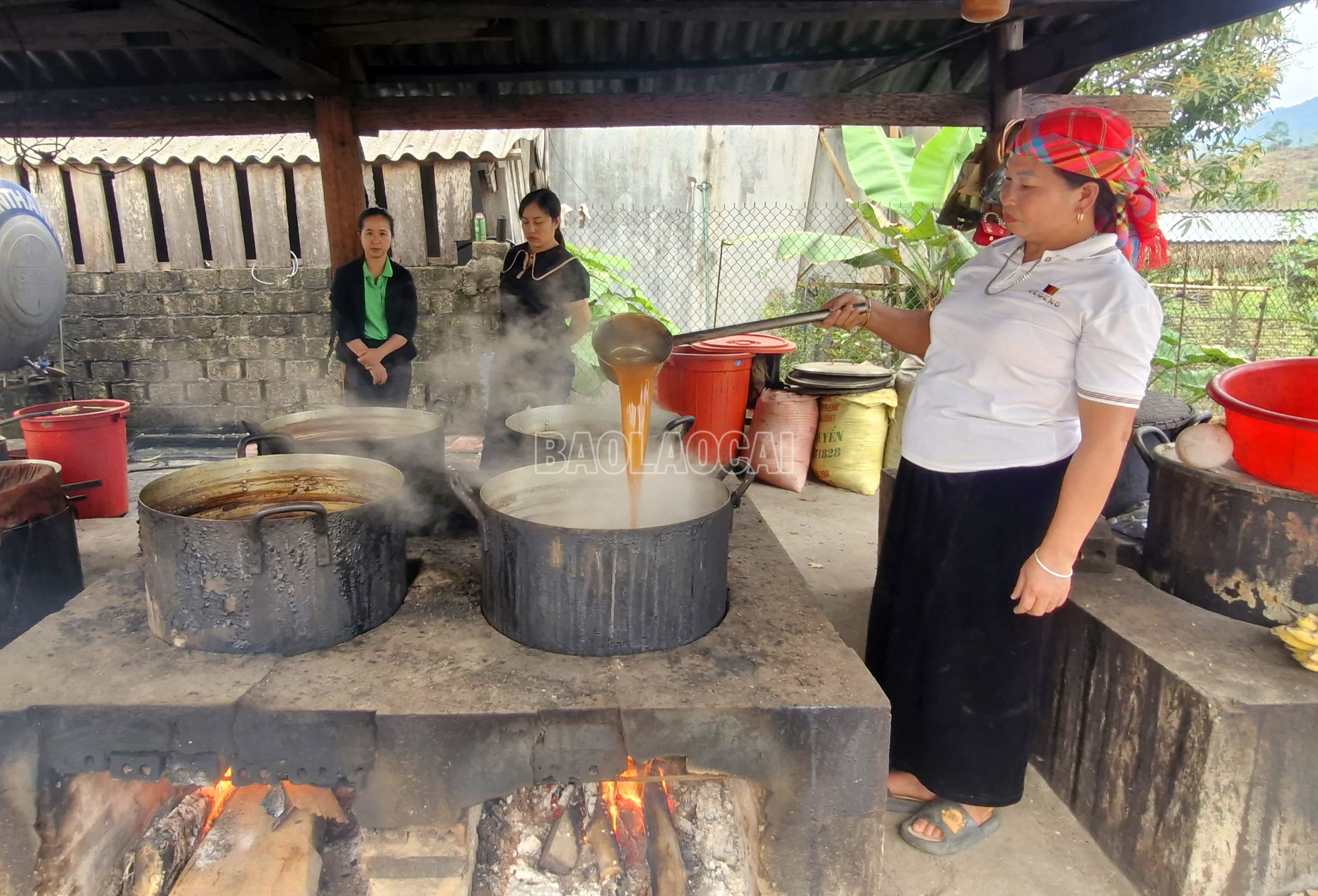
Returning to the story in Liem village, Ms. Hoang Thi Dung said that the best time to make the herbal extract is when the Gắm vine is 4 to 5 years old; the age of the plant is determined by counting the wood rings, with some old vines reaching up to 15 rings. The process of making a batch of extract involves many steps: The Gắm vines are brought in, washed, dried, chopped into thin slices, and then put into a large pot to boil. The extract is then filtered, transferred to another pot, and boiled continuously for at least 3 days and 3 nights, until it thickens into a viscous liquid, black or amber in color.
Having been making herbal extract for 17 years, Ms. Dung shared: "100 kg of herbal vines yields about 6-7 kg of extract. Making herbal extract is very hard work, especially the simmering process. It requires constant stirring for many hours to prevent burning, until the extract reaches the desired consistency and viscosity before it can be poured into bags, left to cool, and solidify into cakes."
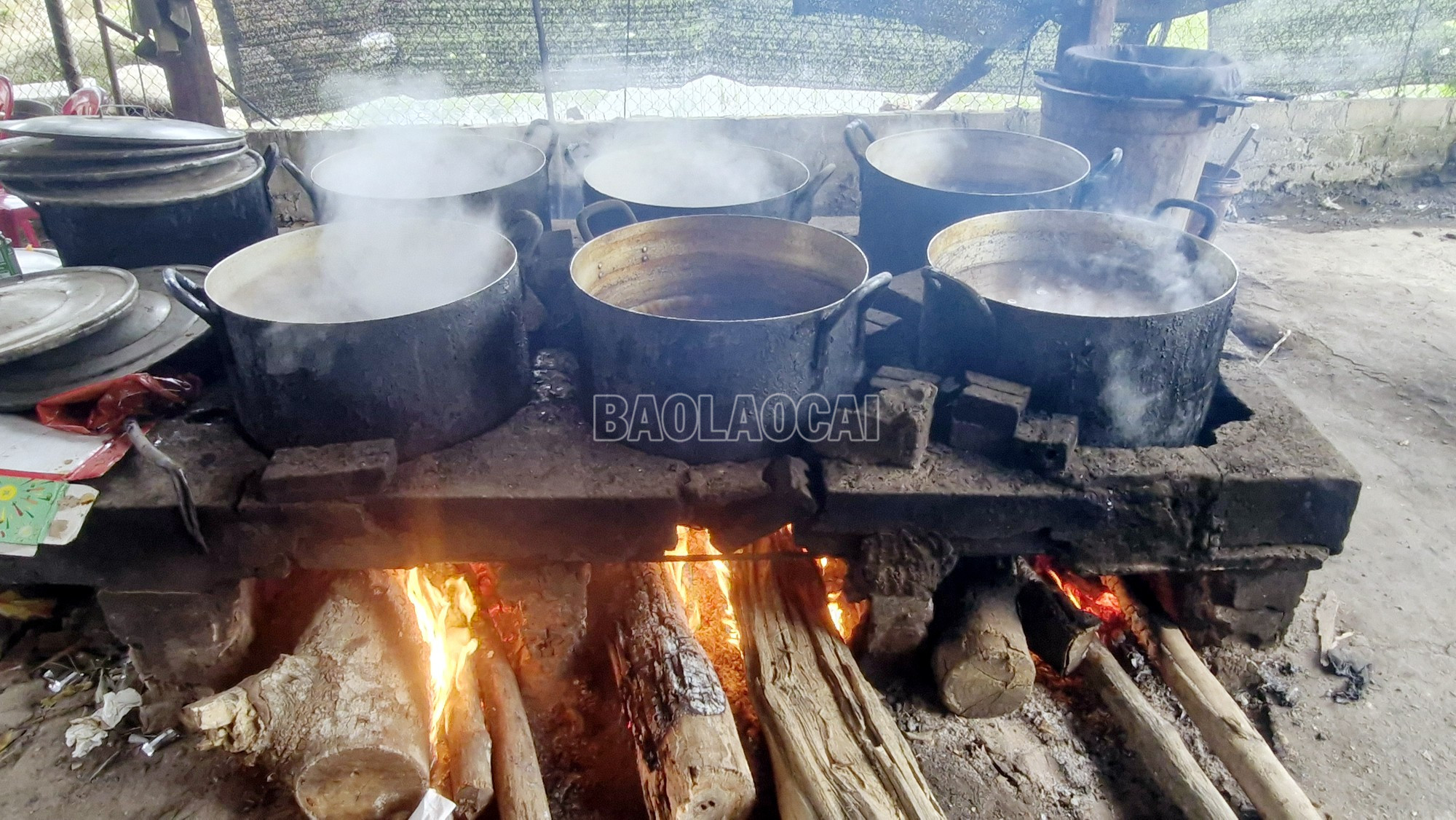
The extract made from mature vines is usually black, while the extract from younger vines is reddish-brown. Liêm village's Gắm extract is made from 100% pure Gắm vine, without additives; although slightly bitter, when brewed as a tea substitute, it is very effective in relieving joint pain and gout.
Increase income from the business of making herbal medicine.
Previously, the Tay people in Liem village only cooked the herbal extract for family and clan use. However, when many people from other places came to buy and try it and found it effective, they introduced it to others and placed regular orders. Recognizing the market demand, many households developed the herbal extract cooking into a commercial product. In 2018, the Women's Union of the former Van Ban district established a herbal extract cooking group in Liem village to help women increase their income.
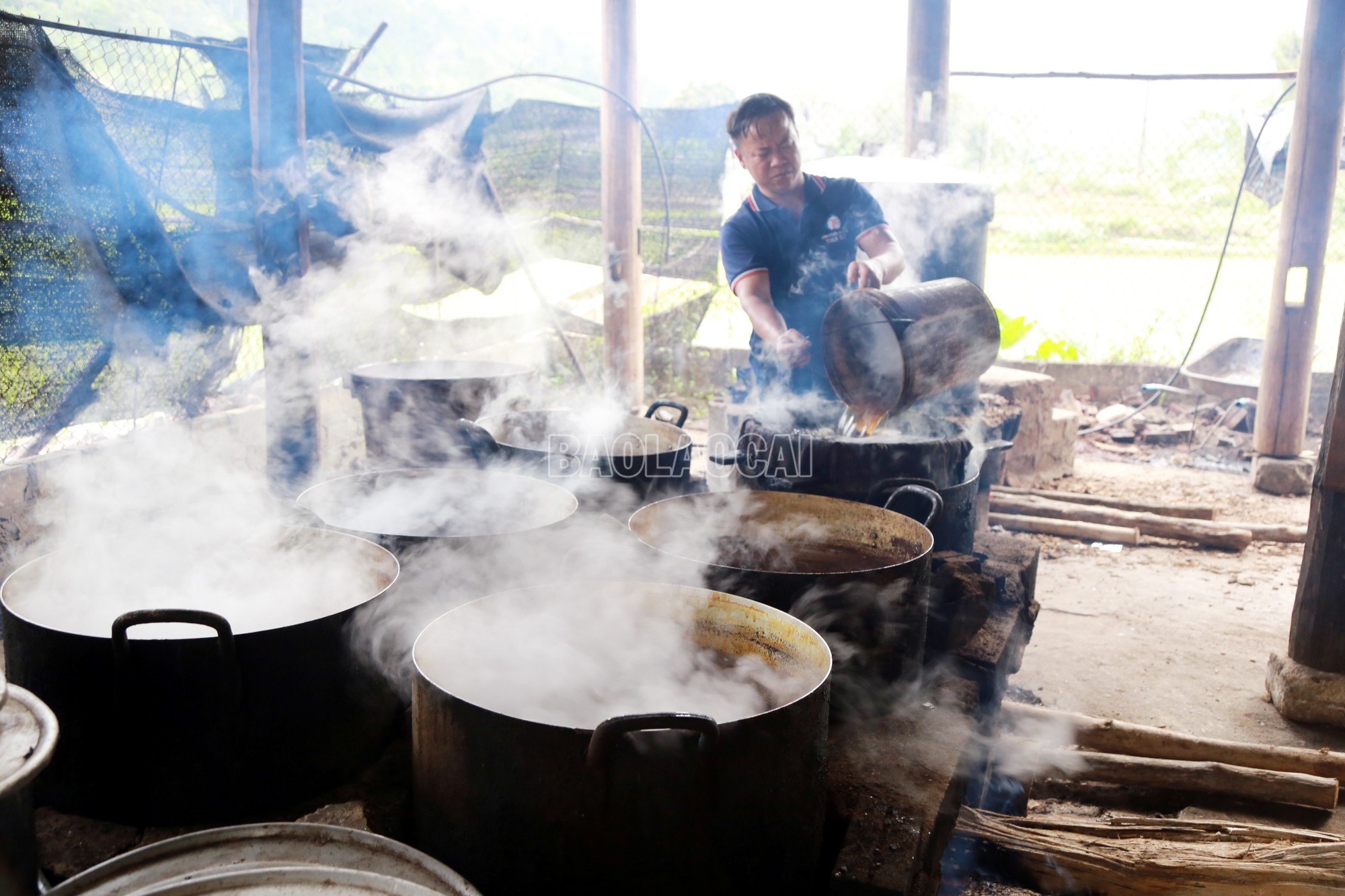
Not far from Mrs. Dung's house is the family of Ms. Vi Thi Nghiep, who has been involved in this profession for 10 years. When we arrived, Ms. Nghiep and her relatives were busily boiling a new batch of herbal extract. While Mr. Thom (her husband) was filtering the extract, Ms. Nghiep's hand never left the large chopstick, continuously stirring the thick, viscous extract in the pot. Ms. Nghiep said that each batch yields about 15 kg of finished herbal extract. Thanks to the daily boiling of the extract, after deducting expenses, her family earns between 20 and 30 million VND per month, while also providing employment for 4 local workers at a salary of 300,000 VND per day.
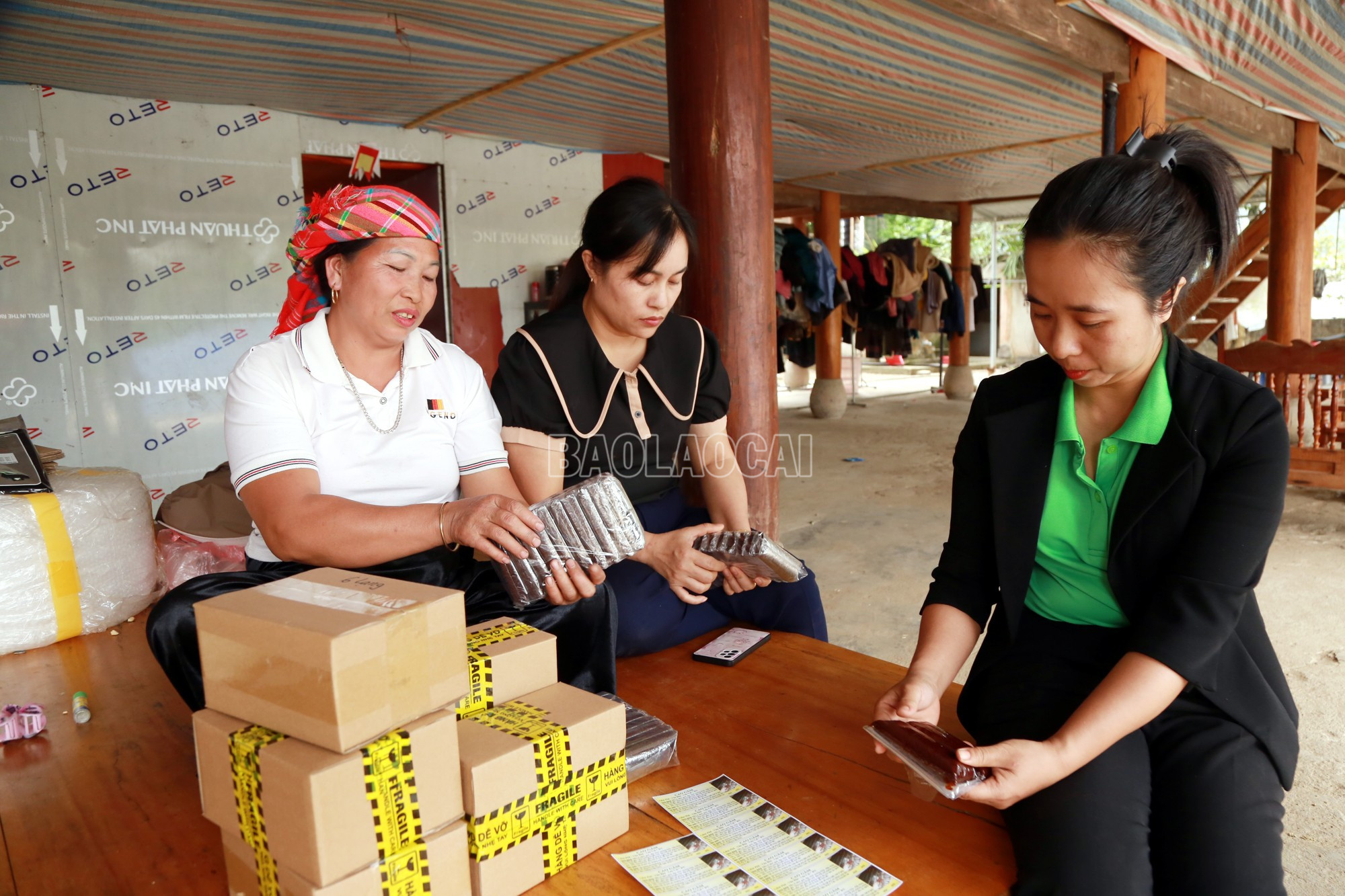
Ms. Vi Thi Thu, Vice President of the Women's Union of Khanh Yen commune and Head of Liem village, said: Currently, the village has nearly a dozen households engaged in this profession professionally, such as the families of Ms. Dung, Ms. Nghiep, Ms. Lang, Ms. Phan, etc. In addition, Dong Qua village also has households that regularly cook and sell through social media or supply to wholesale buyers. The biggest difficulty now is the increasing scarcity of natural ingredients, forcing people to purchase them from other provinces. The government and the Women's Union regularly educate the villagers to purchase ingredients with clear origins, ensuring quality and food safety to maintain the brand's reputation.
A day spent experiencing the traditional craft of making Gắm vine extract, passed down through generations of the Tay people. From a medicinal plant associated with ancient legends, the Gắm vine has now become a familiar and useful remedy. Batches of Gắm vine extract are now sold throughout the provinces, contributing to community health care and bringing prosperity to the Tay people in this area.
Source: https://baolaocai.vn/ve-lang-cao-gam-liem-phu-post896598.html

![[Image] "Journey of Hope" promotes the organ and tissue donation movement in Vietnam.](https://vphoto.vietnam.vn/thumb/1200x675/vietnam/resource/IMAGE/2026/05/20/1779294400833_1-8910-jpg.webp)
![[Photo] General Secretary and President To Lam works with the Party Committee of the Ministry of Health on the work of Vietnamese traditional medicine.](https://vphoto.vietnam.vn/thumb/1200x675/vietnam/resource/IMAGE/2026/05/20/1779294323718_a1-bnd-2978-3319-jpg.webp)
![[Photo] National Assembly Chairman Tran Thanh Man working with the Standing Committee of the National Assembly's Delegation Affairs Committee.](https://vphoto.vietnam.vn/thumb/1200x675/vietnam/resource/IMAGE/2026/05/20/1779294340023_ndo_br_1-1691-jpg.webp)














































































Comment (0)