

The "demolishing old dams to save the river" movement
There is a very special moment on the Hiitolanjoki River in Finland when the water begins to flow faster, cooler, and emits the natural sound of a river after more than a century of being dammed by hydroelectric dams.
According to CNN , for the first time in over 100 years, schools of salmon are swimming upstream, past what were once three hydroelectric dams, to return to their old spawning grounds. Instead of continuing to conquer nature with concrete and barriers, humans are beginning to learn how to give space back to nature to function.
Across the "old continent" of Europe, a wave of "dam removal to save rivers" is taking place on an increasingly large scale. According to the latest report by Dam Removal Europe , in 2025 alone, 603 river barriers, including dams, sluices, and dikes, will be removed in 21 European countries, an 11% increase compared to the previous year and six times the number recorded in 2020.
For centuries, dams have served hydroelectric power generation, waterway transportation, and agricultural production. However, over time, thousands of these structures have become obsolete or no longer of significant use.
The AMBER research project estimates that Europe currently has around 1.2 million "barriers" that are dividing rivers, many of which have existed for decades, even centuries. The worrying aspect is that they not only block the flow of water but also alter entire ecosystems.
When a river is dammed, the water shifts from a flowing state to a stagnant, pond-like state. The water temperature rises, oxygen levels decrease, sediment accumulates, and organic matter decomposes, producing methane—a potent greenhouse gas that contributes to global warming.
Scientists also warn that fragmented river ecosystems make it more difficult for nature to adapt to floods, droughts, and extreme weather events. In the last 10 years, approximately 90% of natural disasters in Europe have been water-related.
In particular, the disruption of waterways is pushing many aquatic species to the brink of severe decline. More than 42% of freshwater fish species on the continent are threatened. That is why dismantling these "barriers" is seen as the most effective and rapid solution for climate change and ecological restoration.
Rapid recovery speed
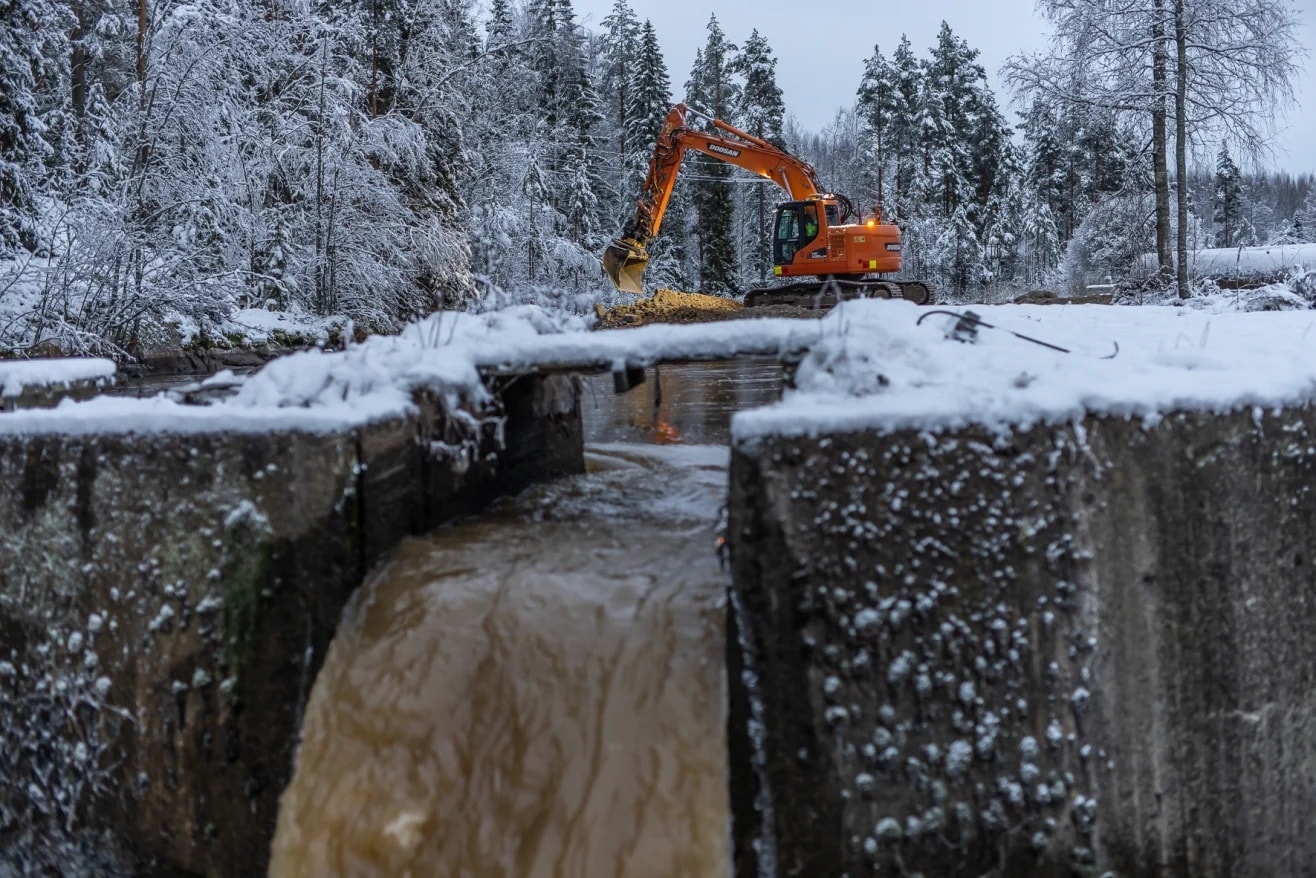
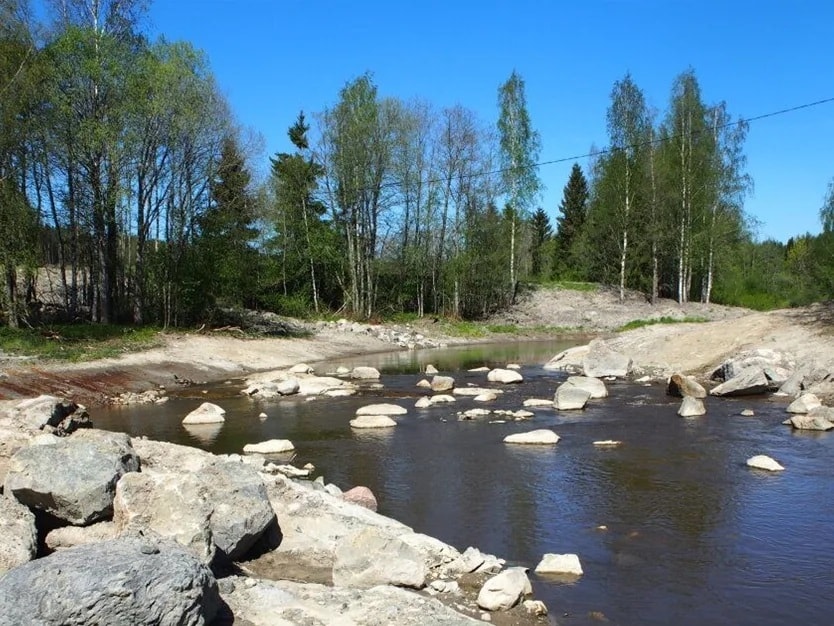
What surprised many experts was the speed of nature's recovery after the dams disappeared. In Finland, during the first migration season after three hydroelectric dams on the Hiitolanjoki River were removed between 2021 and 2023, salmon immediately returned to waters that had been blocked for more than a century.
In France, the dismantling of the Vezins and La Roche-Qui-Boit dams restored nearly 90km of free flow to the Sélune River, one of Europe's largest river restoration projects. Meanwhile, Sweden leads Europe in the number of dams to be dismantled by 2025 with 173, followed by Finland with 143 and Spain with 109.
The European Union's (EU) Nature Restoration Regulation, effective from 2024, sets binding targets to restore at least 20% of the EU's land and sea areas by 2030, including restoring at least 25,000 km of rivers to their natural flow state.
This regulation aims to restore almost all of the ecosystem in need of rehabilitation by 2050. This is the first time the issue of connecting rivers and removing barriers such as dams has been directly included in EU law.
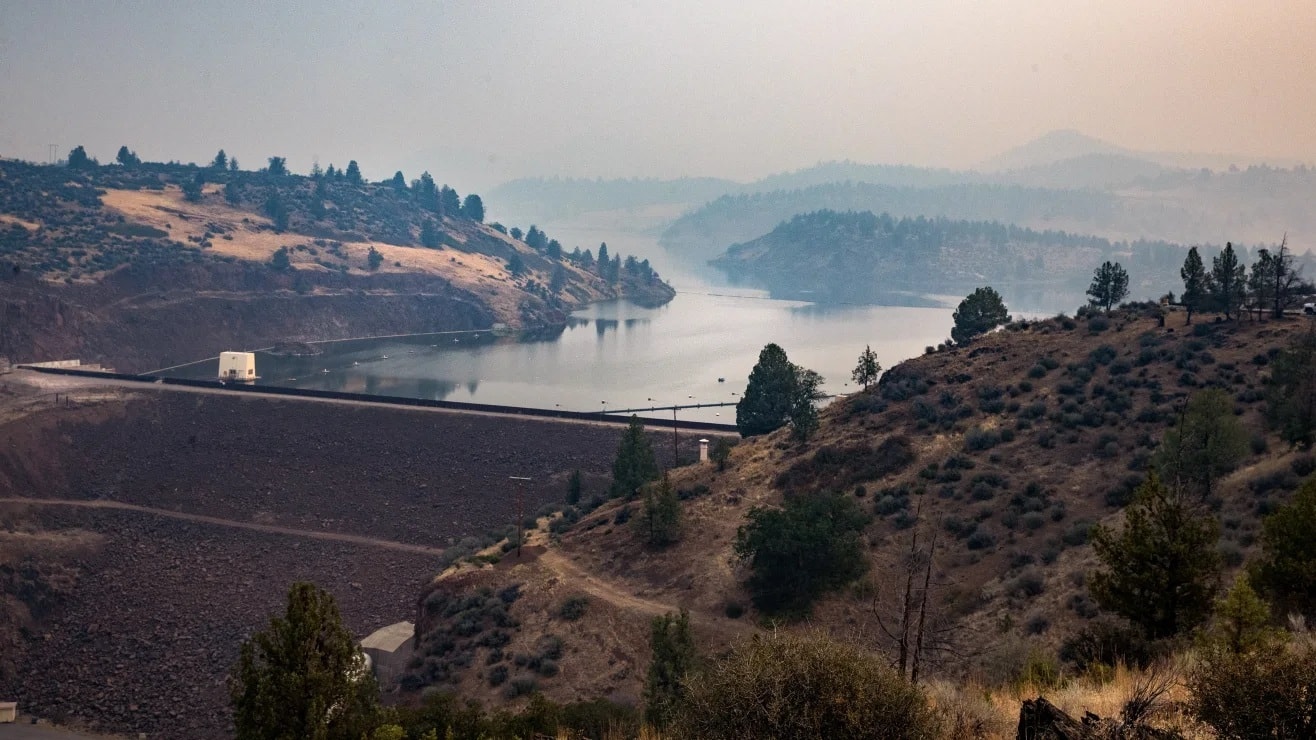
Looking at the US, after four dams on the Klamath River in California were dismantled in the largest dam-breaking project in the country's history in 2024, hundreds of kilometers of migratory fish habitat were reopened.
Of course, dismantling a dam is not as simple as demolishing a concrete structure. Each project typically takes years of environmental impact assessment, sediment management, riverbank stabilization, and negotiations with stakeholders.
Alongside this, some also express concerns about the impact on hydropower, agricultural production, or local livelihoods. However, what makes many environmental experts optimistic is that nature often recovers faster than expected when given the opportunity.
After decades of prioritizing the conquest of nature with concrete and barriers, humanity is beginning to realize that sometimes the most effective solution is to return nature to its original state. When a river is "alive," it will resonate with the rhythm of life. And now, across Europe, the free breath of rivers that were once divided is gradually being heard again.
Source: https://baodanang.vn/vi-sao-chau-au-thao-do-hang-tram-con-dap-3338556.html

![[Photo] Ba Lang An Lighthouse - the "eye of the sea" amidst the "rock museum" of Quang Ngai province.](https://vphoto.vietnam.vn/thumb/1200x675/vietnam/resource/IMAGE/2026/05/29/1780038698840_anh-man-hinh-2026-05-29-luc-14-10-42.png)
![[Image] Pleasant weather helps students enter the 10th grade entrance exam with confidence.](https://vphoto.vietnam.vn/thumb/1200x675/vietnam/resource/IMAGE/2026/05/29/1780034401612_ngay-1-thi-lop-10-minh-duy-8-5009-jpg.webp)

























































































Comment (0)