

Since the Covid-19 pandemic, the land market has not seen any significant positive signs, with absorption rates consistently remaining low, generally below 20%. A report by DKRA Consulting shows that in 2023, the land absorption rate was only about 10%, in 2024 it was 15.15%, and in 2025 liquidity improved only slightly, with the overall market absorption rate around 18%. Throughout the past year, the Southern market recorded approximately 9,450 land plots offered for sale, with nearly 1,700 products absorbed.
Online data platforms also reflect a similar trend. According to the online real estate website Batdongsan, after a localized surge in April, the demand for land plots quickly cooled down, decreasing by an average of 15-20% compared to the same period last year, with searches for land plots dropping by 30-40% at many times. Sales of land plots in newly launched projects remained at around 20-30% of the available inventory.
Meanwhile, Nha Tot assesses that, excluding the localized boom following the provincial merger announcement, the land market last year was generally sluggish, with the number of buyers decreasing by 35-50% compared to the same period in 2024, and declining in most areas.

Real estate in Ho Chi Minh City, including land plots and agricultural land. Photo: Quynh Tran
Explaining the reasons for the slow recovery of land liquidity , Mr. Phan Dinh Phuc, CEO of Seenee Vietnam, believes that the biggest obstacle currently lies in cash flow and investor sentiment. In the previous cycle, most investors lost money when investing in land – a type of asset that is truly "immovable," mainly bought to wait for price increases before selling, without generating any use value or cash flow during the holding period. When the market declines, poor liquidity causes many land buyers to have their capital tied up for a long time. This experience has led many investors to reconsider and appreciate segments that can generate cash flow, such as apartments, because even if they haven't sold them yet, the property can still be rented out.
From a supply perspective, Mr. Vo Hong Thang, Deputy General Director of DKRA Group, analyzed that the land market is experiencing a serious shortage of new projects as many investors are gradually withdrawing from this segment. Over the past year, new supply only accounted for about 13% of the total primary supply, with most products on the market being inventory from previous years. Tay Ninh , the province with the largest proportion of land supply in the South, only recorded two new projects: the Dragon Eden residential area (146.8 hectares) and The Solia urban area (20.5 hectares). In Ho Chi Minh City (after the merger of Binh Duong and Ba Ria - Vung Tau), the supply offered for sale mainly consists of existing inventory or the relaunch of previous phases.
Supply and demand are therefore out of sync, with approximately 69% of demand concentrated on new projects, evidenced by the fact that projects in Tay Ninh accounted for over 53% of the liquidity in the Southern land market last year.
From the business perspective, the trend of withdrawing from land plots is becoming increasingly evident. Many developers such as Thang Loi Group, Cat Tuong, Tran Anh, and Khai Hoan Land, who once considered this segment a pillar, are no longer prioritizing it in their 2026 business plans.
According to a representative of a real estate company, developing land plots is becoming increasingly difficult due to stricter legal regulations, sharply rising investment costs from infrastructure and land use fees to amenities, while the implementation time is prolonged. Conversely, selling prices are difficult to compete with townhouses and apartments, narrowing profit margins and even making the project unprofitable. This reality has forced many developers to adjust, causing primary land plot prices to increase by 20-30% over the past year, mainly to offset development costs.
Forecasting for 2026, experts believe that the investment balance in the real estate market is gradually shifting, opening up the possibility of land plots being reconsidered by some investors. Mr. Phan Dinh Phuc noted that the sharp increase in apartment prices is causing this segment to become increasingly unbalanced compared to income and usability. When apartment prices in many areas exceed reasonable thresholds and approach land prices in the same location, the difference becomes less convincing. He cited the example of Long An, where apartment prices have reached approximately 35 million VND per square meter, while land plots in projects with 1/500 scale planning and complete infrastructure only range from 20-25 million VND per square meter.
However, according to Mr. Phuc, the return of land plots, if it occurs, will not be widespread like in previous cycles, but rather selective, focusing on areas with complete infrastructure, connectivity, amenities, employment, and especially real cash flow from residents. The shortage of new supply, land prices approaching market value, and increasingly high demands for quality of life will continue to reshape this segment.
Sharing the same view, real estate expert Tran Hoang believes that the land market is undergoing a significant change. Previously, many projects only involved subdividing land, building internal roads, and selling plots. Now, businesses must develop in a more systematic way, investing in infrastructure, amenities, schools, shopping centers, and other essential services, approaching the model of a complete urban area. This change stems from the new Land Law, effective from August 1, 2024, which virtually eliminates the traditional method of subdividing and selling land plots. Projects must complete infrastructure, amenities, and housing according to the plan before being inspected and granted land titles.
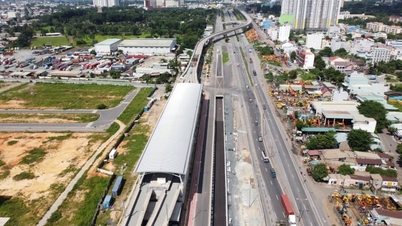
According to experts, shifts in development models coupled with the impetus from transportation infrastructure could cause land prices to increase by 10-20% in 2026. However, price differences between areas will continue to be strongly differentiated, reflecting variations in location, product, and local demand. Therefore, land prices are unlikely to create major price surges or drive market liquidity as before, although localized price increases may occur.
Mr. Phan Dinh Phuc believes that this segment still suffers from psychological "scars" after the recent cycle, especially regarding liquidity and the ability to generate cash flow. Only projects that are well-developed, form a real residential community, and generate internal cash flow can overcome this weakness, thereby laying the foundation for the sustainable recovery of the land market.
According to Vnexpress.net
Source: https://baophutho.vn/vi-sao-dat-nen-kho-ra-bang-245736.htm




![[Photo] General Secretary and President To Lam receives Amazon's Senior Vice President David Zapolsky](https://vphoto.vietnam.vn/thumb/1200x675/vietnam/resource/IMAGE/2026/05/22/1779466547770_a1-bnd-3513-6601-jpg.webp)












































































Comment (0)